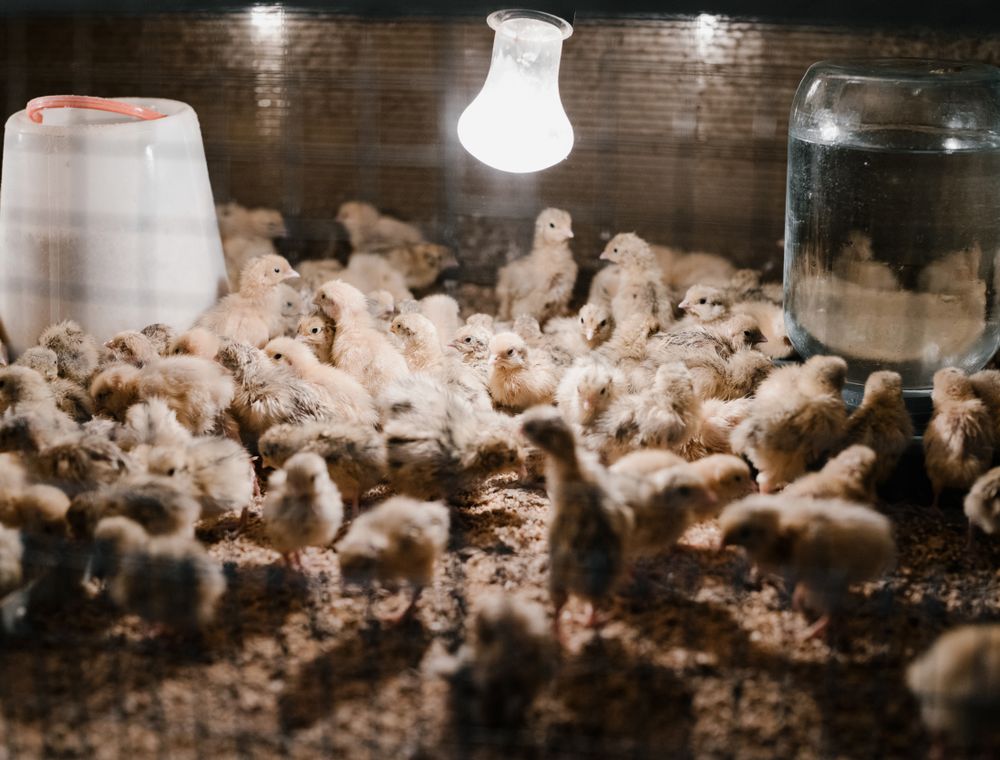
Short answer: A 500-bird broiler house in Ghana uses about 5.7 kWh a day once the chicks are grown, and about 17.7 kWh a day during the brooding weeks when electric heaters are running. Fans and the water pump are the loads you cannot give up, especially in the hot months, so backup should cover them first and the lights second. Work out the kilowatt-hours for your own house from the nameplates, then choose between a generator, an inverter with batteries or a mix, sized for the outage hours you actually get.
Key takeaways
- Write down every electrical load with its watts and hours, then convert to kilowatt-hours a day.
- Fans and the water pump are the critical loads, and lights are usually the first to drop in an outage.
- Brooder heat is the biggest electrical load in the first two weeks, so decide early whether it runs on power or gas.
- An inverter with batteries covers short outages, while a generator covers long ones, and many farms need both.
- Keep the wiring off the floor, use damp-rated fittings and test the backup in daylight before you need it.
Power is the one supply that touches every part of the farm
Feed is the biggest cost on most farms, and water is the thing the birds notice first. Electricity is quieter. It does not appear on the feed invoice, and it only gets attention when the lights go out. Yet on a broiler house in the hot months, the fans are doing the work that keeps the birds alive, and the water pump is the thing that keeps the tank full enough for the fans and the drinkers to matter.
So think of power as a list of jobs, not a bill. Each job has a load, a number of hours and a consequence if it stops. Once you have that list, the choice of lights, backup and wiring follows from it.
List every load before you buy a single bulb
The table below is for a 500-bird broiler house, about 10 by 6 metres. If you are still deciding how big the house should be, our house size guide works out the floor first. The watts are typical values, so take the real figures from the nameplate on each lamp, fan and pump before you buy. The hours are the ones we would plan for, not the ones the box claims.
| Load | Assumed use | Watts | Hours a day | kWh a day |
|---|---|---|---|---|
| LED lights, 10 bulbs | 10 × 9 W | 90 W | 16 | 1.44 |
| Exhaust fans, 2 units | 2 × 150 W | 300 W | 10 | 3.00 |
| Water pump | 1 unit, refilling the tank | 750 W | 1 | 0.75 |
| Outdoor and security lights | 2 × 20 W | 40 W | 12 | 0.48 |
| Electric brooder heaters | 4 × 250 W, first 2 weeks only | 1,000 W | 12 | 12.00 |
| Total after the brooding weeks | 5.67 | |||
| Total during the brooding weeks | 17.67 | |||
Two things stand out. The brooder heaters are the largest load by a wide margin for the first fortnight. And the fans, which are the least glamorous item on the list, are the only load you cannot switch off in the afternoon of a hot April day.
Watts, hours and kilowatt-hours, with the sum written out
The arithmetic is short. Multiply the watts by the hours, then divide by 1,000 to get kilowatt-hours. A 150 W fan that runs for 10 hours uses 150 × 10 = 1,500 watt-hours, which is 1.5 kWh. Two of them use 3 kWh. That is the number your electricity bill is counted in, and it is the number to use when you compare one option with another.
- A 9 W LED running 16 hours uses 9 × 16 = 144 watt-hours, or 0.144 kWh.
- A 750 W pump running one hour uses 0.75 kWh.
- Ten of those LEDs running 16 hours use 1.44 kWh a day.
Multiply the daily figure by 30 to get a monthly total. For the 500-bird house above, the after-brooding figure is about 170 kWh a month, and the brooding figure is about 530 kWh a month. Multiply by the unit rate on your own ECG bill to get the cost. Use the rate printed on your latest bill rather than a figure from a friend, because tariffs change, and the bill will also show any fixed charges you pay whether the lights are on or not.
Keep a simple log. Write the meter reading on the same day each week, and record the hours the fans ran in the hot spell. The log turns a guess into a figure you can plan a generator or inverter around, and the same habit feeds into the broader records in our piece on poultry record keeping.
Lighting: fewer, better-placed bulbs beat many weak ones
Lighting is the easiest load to cut and the easiest to get wrong. Most farms over-light the house, using a bulb every few metres at full brightness, which costs power and gives the birds nothing they need. The aim is steady, even light at bird height, enough to see the feeders and drinkers and to let the birds rest. The exact light schedule, including the hours and the step-down, is set out in our lighting program for layers, and the broiler version is in our broiler house setup guide.
LED bulbs are the sensible choice. They draw a fraction of the power of an incandescent bulb, they run cool, and the cost of replacing a failed one is small. If you run an egg cooler, it belongs on the same backup list, and our table egg storage guide explains why it matters. Fit them on a timer, or on a dimmer if the birds need a gradual change in the evening. Clean the bulbs and the shades every few weeks, because dust and ammonia film cut the light output more than most people expect.
Fans: the load you cannot give up
In a closed or semi-closed house, fans run the air. When the power goes, the house stops moving air within minutes, and the temperature climbs. On a hot afternoon with 500 broilers in a sealed room, the temperature can climb to a dangerous level within an hour or two. That is why we rank the fans above the lights on any backup plan.
Fans also draw more power than most people guess, and their running hours change with the season. In the cool months they might run a few hours a night. In a hot spell they run most of the day. Size the backup for the hot spell, not for an average week, and check the nameplate on each fan so you know the true load. A fan that is worn, dirty or fitted with the wrong blade will draw more current for less air, which is a poor trade in April. Our article on cooling a poultry house in hot weather explains how the fans fit into the rest of the cooling plan.
Water pumps and the raised tank
A nipple line runs on gravity, but the tank has to be filled, and a pump usually does the filling. A 750 W pump running an hour a day uses only 0.75 kWh, so it is not a large load. What makes it awkward is the start-up surge. A motor draws much more current for a moment as it starts, and that surge is the thing that trips a small inverter or a weak generator.
Use a float switch or a level sensor so the pump runs only when the tank is low, and keep the tank full before the afternoon. A tank that is full when the power goes out will last a surprising time on drinkers alone, which buys you hours for the fans. Note the tank level in your daily check, because a pump that has been off for two days in an outage is a harder thing to recover than a pump that was left running.
Brooding heat: electric, gas or both
Electric infrared heaters are simple to fit and simple to control. If you are buying the chicks for this house, our broiler chick page shows the box sizes, and our delivery page explains how they travel. They are also the largest single load in a brooding house, and they run for many hours a day in the first two weeks. The same 500-bird house that uses 5.67 kWh a day later on uses roughly 17.67 kWh a day while the brooders are on. Across two weeks, the brooder heat alone comes to about 168 kWh, which is roughly the same as a whole month of lights, fans and pump for the same house.

Many farms in Ghana therefore run the brooding on gas, with an LPG brooder, and keep the electricity for lights, fans and pumps. The choice depends on what is cheaper where you are and on how reliable the power is. If the power fails during brooding, an electric heater goes out with it, and a chick house can lose its warmth in a few hours. Gas does not depend on the grid, but it needs careful ventilation and a leak check. Our piece on heat sources for brooding in Ghana compares the options side by side. Whichever you pick, have a plan for the first two weeks that does not rely on one supply alone.
Planning for dumsor
Outages happen at the worst times. They come in the afternoon when the house is hottest, in the middle of a feed delivery, or at night when a chick house has just been closed up. Plan for the outage you would get on a bad week, not the one you would like to get.
Start by writing down the hours without power that your house can take. Then decide what has to keep running in those hours. For a broiler house that is usually the fans, the pump and the brooder heat in the first weeks. The lights can go out for a few hours with little harm, as long as the birds can still see the feeders and drinkers before dark. Write this list on the wall of the switch room, so whoever is on duty knows what to switch off first.
- Fans and pump: keep them on the backup first.
- Brooder heat: keep it on the backup during the first two weeks, or move to gas.
- Lights: switch off or dim them to save backup for the things that matter.
- Outdoor and security lights: leave these off during an outage unless you need them for safety.
Need chicks for your next batch?
Send breed, number and town. We reply with price, hatch date and delivery cost in writing.
Backup options compared
There is no single best answer. The right backup depends on how long the outages last, how much you can spend on fuel or batteries, and how much attention you can give the kit. The table sets out the usual choices.
| Option | What it covers | Running cost | Upkeep and risks | Best for |
|---|---|---|---|---|
| Generator | Anything you connect, for as long as there is fuel | Fuel every hour it runs | Servicing, starting, fumes and noise | Long outages and bigger loads |
| Inverter with batteries | Chosen loads, for the time the batteries hold | Low once installed, batteries need replacing | Battery care, ventilation and load limits | Short, frequent outages on fans and pumps |
| Solar with batteries | Daytime loads and some night use, depending on the battery bank | Low running cost, high upfront cost | Panels, batteries and a qualified installer | Farms with reliable sun and long-term plans |
| Mains only | Everything, while the supply is on | Units billed each month | None on your side, but outages are unmanaged | Houses with few outages and a light load |
For most farms we would not pick one option alone. A small inverter takes the fans and pump through the short outages, and a generator is started when the outage runs past the battery time. That combination costs more to set up but spares you the fuel bill for the short cuts. Our egg incubator guide makes the same point for hatching, where an inverter bridges the gap until the generator starts.
Worked example: backup for a 1,000-bird broiler house
Take a house twice the size of the earlier example, 10 by 12 metres with 1,000 broilers. Assume four exhaust fans of 150 W each, a pump of 750 W, and ten LED bulbs. In a hot spell the fans run 12 hours a day.
- Fans: 4 × 150 W × 12 hours = 7.2 kWh a day.
- Pump: 0.75 kWh a day for an hour of filling.
- Critical total: about 8 kWh a day for the hot spell.
The backup does not need to cover a whole day, though. Suppose the outage typically lasts three or four hours in the afternoon. Four fans for four hours use 600 W × 4 hours = 2.4 kWh. Add a little for the pump, and the inverter has to deliver around 3 kWh.
A lead-acid battery should not be drained much below half its capacity if you want it to last, so 3 kWh of use needs roughly 6 kWh of nominal battery. Your installer will check the battery type and the inverter size, and the battery sizing is where most backup systems go wrong. A generator in the 3 to 5 kVA range can carry the fans, the pump and the lights together, with room for the surge when the pump starts. Either way, test it. We would rather a farmer finds a weak battery on a Tuesday afternoon than on a Sunday with the fans off and the temperature rising. If you are planning a new house and want the chicks timed to it, message us on WhatsApp at +233 24 915 1503, or place an order through our order form.
Wiring, damp and safety in the house
A poultry house is a hard place for electrics. Ammonia eats through copper and connectors. Dust settles in every fitting. Damp rises from wet litter. Rats chew cable, and birds peck at anything that dangles. Fit the wiring as if the house will be wet and dusty every day, because it will be. Plan the switch room and the cable routes alongside the house itself, using our housing design guide as the starting point.
- Use cable and fittings rated for damp, dusty places, and keep joints in sealed boxes above the litter.
- Run cables in conduit or trunking, fixed up off the floor and away from where birds roost or perch.
- Have a qualified electrician install the circuits and fit an earth and a residual current device, so a fault trips the supply before it reaches a bird or a worker.
- Never run an extension lead across wet litter, and never leave a plug in a puddle.
- Keep generators outside, away from the air inlets, with the exhaust pointing away from the house and from anywhere people sit.
- Check the earth and the wiring every few months, and replace any cable that has gone brittle or warm to touch.
Mistakes we see on power and backup
- Sizing the backup for the lights. The lights are the load people think about, and the fans are the ones that matter. Size for the fans first.
- Buying a battery bank that is too small. A battery that cannot deliver the afternoon run is a battery that fails when you need it.
- Forgetting the start-up surge. A pump or fan that starts fine on the mains can trip a small inverter or a light generator.
- Running fans from a single fuse or socket. One fault takes out the whole ventilation for the house.
- Never testing the backup. A backup that has never run under load is only a hope.
- Brooder heat on the same circuit as the fans. When the brooder trips, the fans go too, and the chicks can be cold and hot in the same afternoon.
Power checklist before the chicks arrive
- Every load listed with its watts, hours and kilowatt-hours a day
- Brooder heat, fans and pump on circuits of their own, not shared
- Fans and pump on the backup first, and tested under load
- Battery or generator sized for the afternoon outage, not the average day
- Damp-rated fittings, cable run off the floor and an earth with a residual current device
- Generator placed outside, away from the air inlets
- Meter reading logged each week and compared with the bill
- A dry weekday in the diary for a full backup test
Questions farmers ask
How much electricity does a poultry house use in Ghana?
It depends on the house and the stage of the flock. As a worked example, a 500-bird broiler house with ten LED bulbs, two exhaust fans and a water pump uses about 5.7 kWh a day once the chicks are grown. During the brooding weeks, electric heaters can add around 12 kWh a day more. Measure your own house with a meter reading each week, because the actual figure depends on the fans, the hours and the fittings you use.
Do I need a generator or an inverter for my poultry house?
For short, frequent outages, an inverter with batteries is usually the better choice, because it switches over in seconds and runs quietly. For long outages, or for bigger loads, a generator is needed. Many farms use an inverter for the fans and pump, and a generator that starts when the battery runs low. Size either one for the critical loads, not for everything in the house.
Which loads should be on backup power first?
Put the exhaust fans and the water pump first, because they keep the air moving and the tank full. Brooder heat comes next during the first two weeks. Lights can usually go off for a few hours without serious harm, as long as the birds can see their feed and water before dark. Outdoor and security lights are the first to switch off.
Is solar power worth it for a poultry farm?
It can be, especially if your farm has good sun and you plan to stay for years. Solar panels and batteries have a high upfront cost, but the running cost is low once they are in place. Solar works best for daytime loads such as fans and pumps. It is less useful for night brooding unless the battery bank is large. Get a qualified installer to size the system against your real loads, and compare the figures with a generator.
Should brooder heat run on electricity or gas?
Both work. Electric heaters are simple to fit and control, but they are the largest electrical load in the first two weeks and they stop when the power fails. LPG brooders depend on gas supply and need ventilation and leak checks, but they do not use grid power. Choose the one that suits the local price of each and the reliability of your power, and have a plan for the other if the first one fails.
Can I run the whole house from a small generator?
Often not, unless the generator is sized for the load. A small generator can carry the lights and perhaps one fan, but the start-up surge from a pump or several fans can overload it. Add up the watts of what you need to run at the same time, add a margin for the surge, and buy a generator that covers that total. Keep it outside the house.
How often should I check the wiring in a poultry house?
Look at the wiring and fittings every few months, and after any heavy rain or outage. Check for brittle cable, warm plugs, corroded connectors and damp boxes. Have a qualified electrician check the earth and the residual current device once a year, or after any fault. A few minutes of checking costs far less than a fire or a lost flock.


