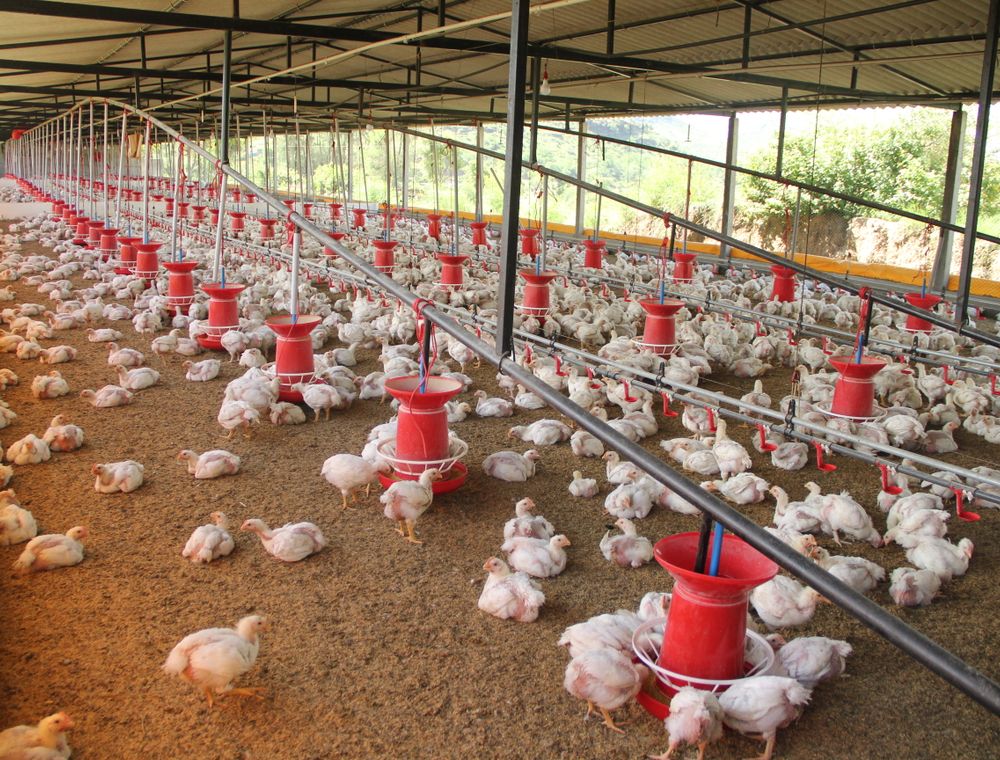
Short answer: All-in all-out means one flock goes into a house, the whole flock leaves together, and the house is emptied, cleaned and rested before the next flock arrives. It is the simplest way to stop disease carrying from one batch to the next, but it only works when the calendar is planned in advance. Plan at least two weeks of empty house between batches, stagger your houses so there is always a sale or a placement in the month, and treat the empty weeks as part of production.
Key takeaways
- One age of bird in each house, and everything leaves together.
- Build the batch calendar backwards from the sale date, not forwards from the chicks.
- Plan at least two weeks empty per house, and treat the rest as production.
- Stagger two houses by about three weeks to keep sales and cash flowing.
- Keep a dated record of every clean-out step, so you can see what was done and when.
The house that is never empty
Farms that fight the same disease batch after batch often have one thing in common. The house is never empty. New chicks go in while the last lot are still on the floor, a few birds get left behind at the sale, the drinkers are rinsed rather than cleaned, and the litter from the last batch is topped up for the next. Each step looks small. Together they carry disease straight from one generation of birds to the next.
All-in all-out is the fix, and it is not complicated. The house takes one flock at a time. All of them arrive together and all of them leave together. Then the house is emptied, cleaned, disinfected and rested before the next arrival. It sounds like a lot of downtime to pay for, and the rest of this article shows how to plan it so the downtime does not sink the farm.
What the system asks you to do
In practice there are four rules. Only one age of bird is in each house at a time. Everything in the house leaves on the same day, or within a day or two if the sale is spread out. The house is cleaned and disinfected completely before a new flock comes in. And the people, equipment and crates that go into one house are kept out of the next until they have been cleaned. Break any of those and you are running overlapping flocks, which is exactly what the system is meant to stop.
Why does the age matter so much? Older birds shed more virus, bacteria and coccidia into the litter, and the litter stays infected long after the birds have gone. Young birds have little protection, so they pick up what is in the litter and the air. A house with birds of two ages is passing disease from the older group to the younger one every day. Our biosecurity article covers the footbaths and visitor rules that keep that boundary between houses.
Build the calendar backwards from the sale
Start with the sale date and count back. The flock is at its target weight on that day, so the placement date is the sale date minus the growing period. For a six-week broiler that means 42 days. Then add the empty time after the sale, your clean-out and rest window, to find the date the house is free for the next placement. The next placement date is that free date, not the day you feel like restocking.
Here is a worked example for one house with a two-week rest. The sale is on 10 February 2027. Forty-two days earlier, the placement was on 30 December 2026. Fourteen days after the sale the house is clean and rested, so the next placement is on 24 February 2027, and that flock sells on 7 April 2027. Each house runs on an eight-week cycle: six weeks with birds, two weeks empty.
Why the empty weeks do the real work
Two weeks sounds like nothing. In practice the empty time is when you can do the jobs that cannot be done with birds in the house. Litter comes out, dust comes down, the drinkers come off the lines, and the walls and floor can be washed properly. Disinfectants work best on clean, dry surfaces. Litter and dirt in the cracks will hold a disease through a poor clean, however much product goes on top. The rest is not wasted. It is the time for the house to dry and for the disinfectant to stay on the surfaces long enough to do its job.
Some pathogens survive in dry litter and dust for weeks, so the rest period is about time as much as effort. Two weeks of clean, dry, empty house does far more than a day of heavy cleaning followed by a new flock on Tuesday. We would not plan less than about two weeks for an old house, and three weeks is better when the walls and floor have been used hard.
The clean-out, day by day
A clean-out runs in a set order. Skipping a step, or doing it out of order, is the usual way a clean house still carries disease. The table is the sequence we would follow on a small farm, with the days counted from the day the last bird leaves.
| Day | Job | Why it matters |
|---|---|---|
| Day 0 | Catch and load all birds, then take the litter straight out of the house | Keeps the old litter from sitting in the house while you work |
| Day 1 | Take out feeders, drinkers, nest boxes and loose equipment, then sweep the house | Dust and feathers hold disease and block the disinfectant |
| Days 2 to 3 | Wash the walls, floor, ceiling and fittings with detergent, then rinse | Grease and muck protect the germs from the disinfectant |
| Day 4 | Let the house dry fully, and repair leaks, cracks and broken curtains | Disinfectant on a wet surface does not work as well |
| Day 5 | Disinfect walls, floor and equipment to the label, then let them dry again | Contact time and dryness decide whether it works |
| Days 6 to 14 | Rest the house empty, keep it closed, control rats and flies | Lets the house clear and keeps the biosecurity intact |
Clean the equipment separately. Feeders and drinkers come out of the house, get washed and disinfected on their own, away from the old litter, and go back in only once they are clean and dry. The line flush and drinker routine that goes with this is in our water management guide.
Staggering two houses so the farm keeps moving
One house on the all-in all-out system means a sale followed by a gap, every time. Two houses placed about three weeks apart smooth that out. While one house is being cleaned, the other is growing, and sales come every few weeks rather than in lumps. The example uses two houses, A and B, each on the same six-week and two-week rhythm.
| Date | House A | House B |
|---|---|---|
| 30 December 2026 | Placed, batch 1 | Empty, cleaned, resting |
| 20 January 2027 | Growing | Placed, batch 1 |
| 10 February 2027 | Sold, clean-out begins | Growing |
| 24 February 2027 | Placed, batch 2 | Growing |
| 3 March 2027 | Growing | Sold, clean-out begins |
| 17 March 2027 | Growing | Placed, batch 2 |
With this rhythm a sale lands every three to four weeks, and the cash comes in on a steadier timetable than one house would allow. The cost is that you need the labour and crates to handle two loads in different weeks, and the rest periods must hold even when the market is strong and tempting you to restock early. Our housing designs article covers layout choices when more than one house shares a site.
What the empty weeks cost, and what they save
The objection is always the same. Two empty weeks in every eight is a quarter of the house's time, and that feels like money thrown away. Look at the other side of the sum. Suppose you place 1,200 chicks at GH₵20 each. That is GH₵24,000 in chicks alone, before feed, labour or the sale. If a disease carried over from the last flock takes 15 per cent of them, that is 180 birds, or GH₵3,600 in chicks alone, and the feed bill and the lost sale still have to be added. Two weeks of empty house cost you time and rent. A disease carry-over costs you the batch.
The empty weeks also protect the next sale. A flock that grows out clean is easier to weigh, easier to sell and easier to keep on your calendar. We are not promising a result from any particular system here. We are saying the arithmetic favours the empty weeks more often than farmers expect. Losses from carry-over are the same losses described in our mortality guide.
Need chicks for your next batch?
Send breed, number and town. We reply with price, hatch date and delivery cost in writing.
Keeping the records that prove the cycle
Each box we send carries a batch record, and it belongs at the front of your house book. Write the batch number, the house, the placement date and the number of birds that arrived. Add the vaccines and their dates from the batch record, the sale date, the number sold, the mortality count, the clean-out dates, and the disinfectant you used and when. Within a year you will have a complete picture of every house, and you will see which house has a problem before the birds show it.
Put the house name and batch number on a board at the door of each house. A board in plain view stops a visitor or a worker walking into the wrong house, and it makes the all-in all-out rule something everyone on the farm can read. Our record keeping guide sets out the book in more detail.
Where all-in all-out goes wrong
- Placing the next flock early because the market is strong, and so skipping the rest.
- Leaving a few old birds behind to sell later, which keeps the old disease in the house.
- Washing the house but not disinfecting it, or disinfecting a wet floor and calling it done.
- Sharing feeders, crates or boots between houses at different ages.
- Leaving old litter in a heap next to the house, where visitors and rats will find it.
- Counting the rest period from the last bird out, rather than from the day the house is clean and dry.
Before each batch change
- Confirm the sale date and the date the house is clear.
- Confirm the clean-out sequence has been done step by step, with dates recorded.
- Check the house is dry, sealed and rat-proof, with curtains and doors in good repair.
- Put the new feeders and drinkers in place, washed and dry.
- Check the batch record for the new flock, and set the vaccine dates in your diary.
- Agree the delivery date with the supplier so the box arrives when the house is ready, not before.
- Mark the house board with the new batch number and placement date.
What we would do on a small farm
If you have one house, plan two weeks empty between every batch and do not negotiate it away when the market is good. If you have two, stagger them by about three weeks, so one is always growing while the other is cleaned. If you are starting from nothing, build the calendar before you buy the first chicks, not after. A farm that plans its empty weeks on paper usually finds they are easier to keep.
When you are ready to place a batch, timing matters more than most people think. Our chicks are dispatched the day they hatch, so the placement date has to be agreed in advance. Call or WhatsApp us on +233 24 915 1503 to talk through the date, and use the order form once the dates are fixed. Delivery arrangements are on our delivery page, and the transport guide covers the journey itself.
Questions farmers ask
What is all-in all-out poultry farming?
All-in all-out means one flock of one age occupies a house at a time. The whole flock goes in together and leaves together, and the house is cleaned, disinfected and rested before the next flock arrives. It stops older birds passing disease to younger birds in the same house, and it breaks the cycle that keeps disease alive on a farm.
How long should a poultry house stay empty between batches?
We would not plan less than about two weeks for an empty house, and three weeks is better for a house that has been used hard or has a history of disease. The clean-out itself takes a few days. The rest is what lets surfaces dry and the disinfectant work, and it is the part farmers most often cut short.
Can I keep an old bird in the house when the others go?
It is better not to. Leftover birds keep old disease in the house and expose the next flock. If a bird has to stay, treat the house as still occupied and do not start the clean-out until it has gone. Ask your vet about any bird that looks unwell before it leaves, rather than moving it to another house.
How many houses do I need for all-in all-out?
One house works, but you will have a gap in sales and cash flow every cycle. Two houses placed about three weeks apart smooth out the sales, because one is growing while the other is cleaned. More houses do the same job on a larger scale, but each one needs its own clean-out and its own records.
What should I clean first in a broiler house?
Start by removing the birds and the litter, then take out the feeders and drinkers. Sweep and wash the walls, floor and fittings with detergent, let everything dry, and only then disinfect. Disinfectant on dirty or wet surfaces does very little. Follow the product label and your vet's advice on which one suits your farm.
Does all-in all-out cost more?
It costs time, and the empty weeks cut the number of batches a house can produce in a year. It usually costs less than one serious disease carry-over, which can cost the whole batch in chicks and feed. Work the sum with your own figures: the chicks, the feed, the time the house sits empty and the likely losses, as in the worked example in this article.
How do I plan delivery of chicks for a new batch?
Plan the placement date from the sale date and the clean-out, and confirm the house is ready before you order. Our chicks are dispatched the day they hatch, so the timing has to be agreed in advance. Call or WhatsApp us on +233 24 915 1503 to talk through the date, and confirm the delivery cost before you pay.

