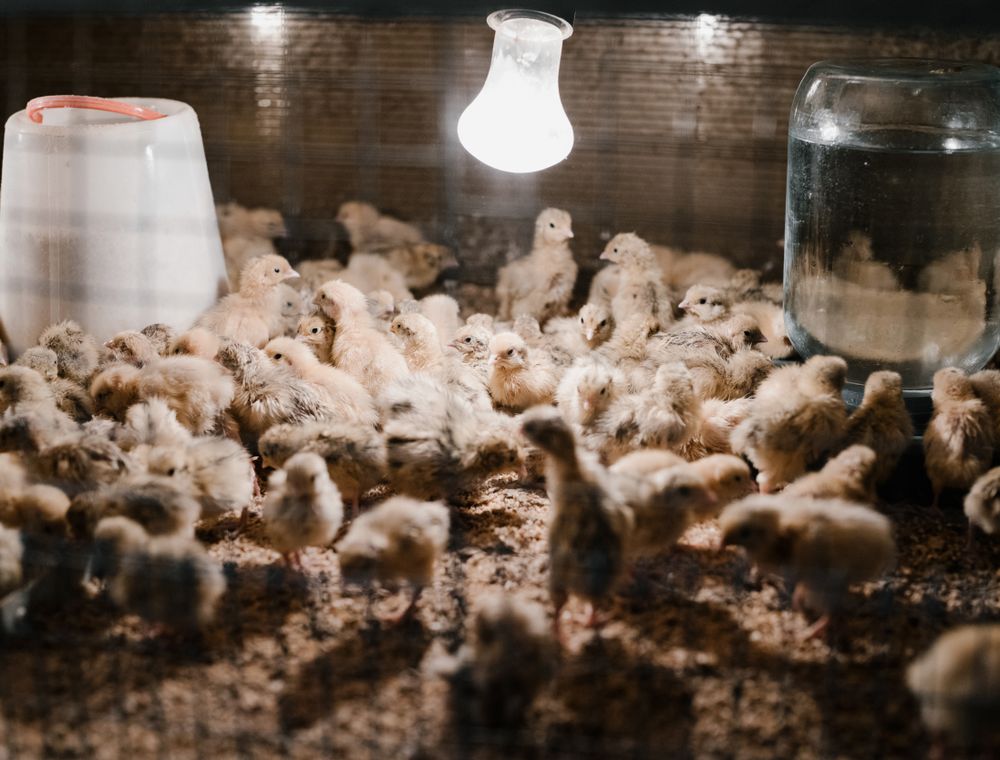
Short answer: Most broiler deaths in Ghana fall into a few groups, and they tend to appear at predictable ages. Losses in the first week usually point to the chick, the box or the brooder. From the second week onward they point more often to disease pressure, wet litter, crowding and heat. Count every death each day, record its age and what it looked like, and call your vet the same day when the count climbs.
Key takeaways
- Count every death every day, with its age and what it looked like.
- Week one losses are decided at the box and the brooder, so count the arrivals on the day.
- Keep booster dates on your vet's schedule and in your diary.
- Weeks three to five bring coccidiosis and Gumboro-type losses, so keep the litter dry and the density sensible.
- Weigh a sample every week, because the weight often dips before the deaths rise.
Count every death, every day
The number that tells you most about a flock is usually the one farmers write down last: how many birds died today, and what they looked like. Most farmers know the total at the end of a batch. Far fewer know the pattern across the first six weeks, and the pattern is where the fixes are.
A few per cent over a six-week batch is common enough to serve as a rough reference point, but the figure to worry about is the trend. A flock losing one or two birds a day that suddenly loses eight in a single day is telling you something new, whatever the total looks like on paper. Your vet should set the target for your flock and your house, because the right figure depends on the breed, the season and the disease picture where you farm.
This article takes the causes stage by stage, then gives the checks and the call points for each one. It assumes chicks are already in the house. If you are still choosing a source, our guide to transporting day-old chicks shows how the first hours on the road shape the first week.
How to classify each death
A death with no note tells you nothing. For each bird, write down the age in days, the house or pen, the date, and what you saw. Keep the carcass fresh for a short time if your vet wants to see it, and do not guess a cause from one bird. The table gives a first look, not a diagnosis.
| What you see | What it often points to | What to do |
|---|---|---|
| Dry, shrivelled, cold chick in week one | Dehydration, chilling or late arrival | Check brooder heat and water access the same day |
| Swollen, unabsorbed yolk or dirty navel in week one | Poor hatch quality or yolk infection | Tell your supplier and keep the carcasses for the vet |
| Dirty, pasty vent in weak chicks | Intestinal upset, wet brooder or poor feed | Dry the brooder, check feed freshness, call your vet |
| Bloody or dark droppings in weeks two to five | Coccidiosis is a common cause | Check the litter, get your vet's advice on control |
| Gasping, rattling, sneezing, watery eyes | Respiratory disease | Call your vet urgently and separate the sick birds where you can |
| Tremors, twisted necks, paralysis | Possible viral disease of the nervous system | Call your vet urgently and note the batch details |
Week one: the chick, the box and the brooder
Most of the losses in the first seven days are decided before the chick reaches the brooder. A chick that sat in a hot or cold vehicle, in a box with poor air, or too long without water starts behind and stays behind. The first thing to check is the arrival count. Count the birds as they come out of the box, and send a photo of any dead ones on WhatsApp the same day, so the dead-on-arrival replacement can go into the next hatch. Our article on chick mortality in transit explains how to make a claim that is easy to check.
In the brooder the questions are simple. Is the heat even across the ring, so the chicks can move away from it? Are the drinkers full and within a few steps of every chick? Is the feed where the chicks can find it? Chicks that huddle at one edge of the brooder are telling you the heat is wrong, and that is a problem to fix that morning, not next week.
Week two: when disease pressure starts to build
From about the second week the birds meet the infections that the hatchery vaccines are designed to prevent. Gumboro, Newcastle and infectious bronchitis are the names most farmers know. The vaccines given at the hatchery, plus the booster programme your vet sets, are the main protection, and a late or missed booster is an easy way for a flock to have a bad week. Our Gumboro guide covers what that window looks like.
Check the batch record against your own vaccine diary. The batch record we send with each box shows what was given and when. If a booster your vet recommended is due this week and has not happened, deal with it before anything else. Do not wait to see whether the flock settles on its own.
In the same week, keep the litter dry and the drinkers tight, because coccidia builds fastest in damp litter. Our coccidiosis article covers the signs and the control approach in more detail.
Weeks three to five: the peak window for losses
For many flocks, weeks three to five are where losses bunch up. Gumboro can still be active in birds that were exposed early or vaccinated late, and it attacks the immune system and the gut just when the birds are growing fastest. Coccidiosis often shows up in the same window, with birds that are ruffled, dull, lagging behind the rest of the flock and passing bloody or dark droppings. Crowding makes both worse, because infection passes from bird to bird through the litter.
The fix is a combination of things, not one product. Keep the density sensible for the house you have. Keep the litter dry, the drinkers working and the feeders full. Get your vet's advice on coccidiosis control, which depends on your house, your flock and your feed. Watch for a flock that has stopped gaining. A dip in weight is often the first sign that disease is at work, well before the deaths start.
Weigh a sample each week in this window and write the average down. Weighing is cheap, and it tells you about the flock before the mortality table does. The feed phases that should match those weights are in our feeding schedule.
Weeks four to six: heat, fast growth and sudden deaths
In the last fortnight the birds are big, the house is warm and the feed is working hard. Heat is the most common trigger of deaths in this window during the hot seasons. Birds that pant, spread their wings, crowd near the drinkers or stand with their beaks open are struggling. Check the house in the afternoon, not just at dawn, and open the sides and curtains to any breeze when the air is still.
Some deaths come with no warning in heavy, fast-growing birds. Sudden death in broilers is linked to fast growth, high energy feed and cardiac stress, and it is more common in heavier males. The best defence is not to push the flock harder than the house can cope with, and to feed in the cooler hours during hot spells. If sudden deaths start to appear in healthy-looking birds, call your vet, and do not treat it as a normal part of the batch.
Leg trouble that looks like mortality
Birds that cannot walk do not reach the feed and water, and they can be trampled or stuck in a corner. A bird that drops out of the flock because of its legs is a death waiting for a day to happen. Leg problems come from fast growth, wet litter, slippery floors and too much weight for the legs, and they climb sharply in the last two weeks of a batch.
When you see birds sitting down, check the litter under them first, because wet caked litter and sore hocks go together. Put water and feed within a short walk of any bird that is sitting, make sure the floor gives grip, and keep the flock on the feed phase the plan intends rather than one that is richer than they need. Remove birds that cannot reach water and record them separately, because that count will tell you whether the problem is growing.
Need chicks for your next batch?
Send breed, number and town. We reply with price, hatch date and delivery cost in writing.
Keep out what you cannot treat
Many of the diseases that kill broilers come in on boots, crates, rats, visitors' clothes and the wind. The cheapest mortality control on any farm is keeping them out. Use a footbath at the door and change it regularly. Keep visitors away from the house if they have been near other flocks. Control rats and wild birds, and keep feed sacks off the floor and under cover. Our biosecurity article covers the routine in detail.
Newcastle disease is one where a missed vaccine or a dirty visitor can cost the most. Our Newcastle prevention guide sets out the signs and the steps. A full clean-out between flocks is the single biggest way to stop a disease carrying over, and it is covered in our all-in all-out guide.
When to call the vet, and what to send
Call your vet the same day if the daily count doubles over two days, birds show breathing noise or gasp, nervous signs such as tremors or paralysis appear, feed or water intake drops sharply, or several healthy-looking birds die in one day. Do not wait for the flock to look worse before you ring. By then the disease has usually been moving for days.
When you call, have the numbers ready. Tell the vet the age of the flock, the daily deaths for the last few days, the feed and water intake, the vaccines given and their dates, and the weather. If the vet asks for carcasses, send two or three fresh birds in a clean container and say when they died. The information you bring is often more useful than the bird itself.
A weekly review that catches trouble early
Set aside ten minutes each week to compare the numbers, and work through the same questions each time so the review does not turn into a list of excuses.
- Total deaths this week, and deaths as a share of the birds still in the house.
- Deaths compared with last week, by age and by pen.
- The most common look of the dead birds, and what you concluded from it.
- The weight sample average against your breed's target for the week.
- Vaccines and boosters due in the next seven days, and whether your vet has confirmed them.
- The one change you will make this week, written down with a date.
A flock that is reviewed every week rarely surprises you. The farmers who get surprised usually have the numbers somewhere but never sit down with them. Keep the book, keep the numbers, and keep the review short enough that you will actually do it. Our record keeping guide sets out the book itself.
If a batch keeps arriving with more dead on arrival than you expect, tell us, and send the photos on +233 24 915 1503. We would rather know. Our chicks are sold from the broiler chicks page, and the next order goes through the order form.
Questions farmers ask
What is an acceptable mortality rate for broilers in Ghana?
There is no single correct figure, because it depends on the breed, the house, the season and the disease picture where you farm. A few per cent over a six-week batch is a common reference point. Watch the trend more than the total. A sharp rise over two days is a call to the vet, however small the total looks on paper.
Why do broilers die in the first week?
Most early deaths come from the chick's start rather than the house alone. Late arrival, chilling in transit, dehydration, poor hatch quality and a brooder that is too cold or too hot all show up in week one. Count the arrivals, check the heat and water access the same day, and send photos of dead-on-arrival birds for a replacement.
What causes sudden death in broilers?
Sudden death in healthy-looking birds is often linked to fast growth, high energy feed, heat and cardiac stress, especially in heavier males. It can also be a sign of an infectious disease, so do not assume it is only management. Call your vet if healthy birds die suddenly, and keep the carcasses for a post-mortem if your vet asks for them.
When should I call the vet about broiler deaths?
Call the same day if the daily count doubles over two days, birds gasp or rattle, nervous signs appear, feed or water intake drops sharply, or several healthy birds die in one day. Have the flock's age, recent deaths, intake, vaccines and weather ready when you ring. Do not wait for the flock to look worse, because the disease has usually been moving for days.
Can coccidiosis cause broiler deaths?
Yes. Coccidiosis is a common cause of losses in the middle weeks, especially in damp litter and crowded houses. Look for bloody or dark droppings, ruffled birds and birds lagging behind the flock. Keep the litter dry, the drinkers tight and the density sensible, and get your vet's advice on control, which depends on the house and the feed.
How do I stop heat deaths in broilers?
Open the sides and curtains to any breeze, keep drinkers full and within easy reach, and check the house in the afternoon, not just at dawn. Feed during the cooler hours in hot spells, and avoid pushing the flock harder than the house can cope with. Birds that pant, crowd or hold their wings out need attention that same day.
Do dead-on-arrival chicks get replaced?
Yes. A dead-on-arrival bird is replaced free in the next hatch. Count the birds on arrival and send a photo on WhatsApp the same day, so the claim can be checked. Our article on chick mortality in transit explains how to prepare a claim that is easy to verify.


