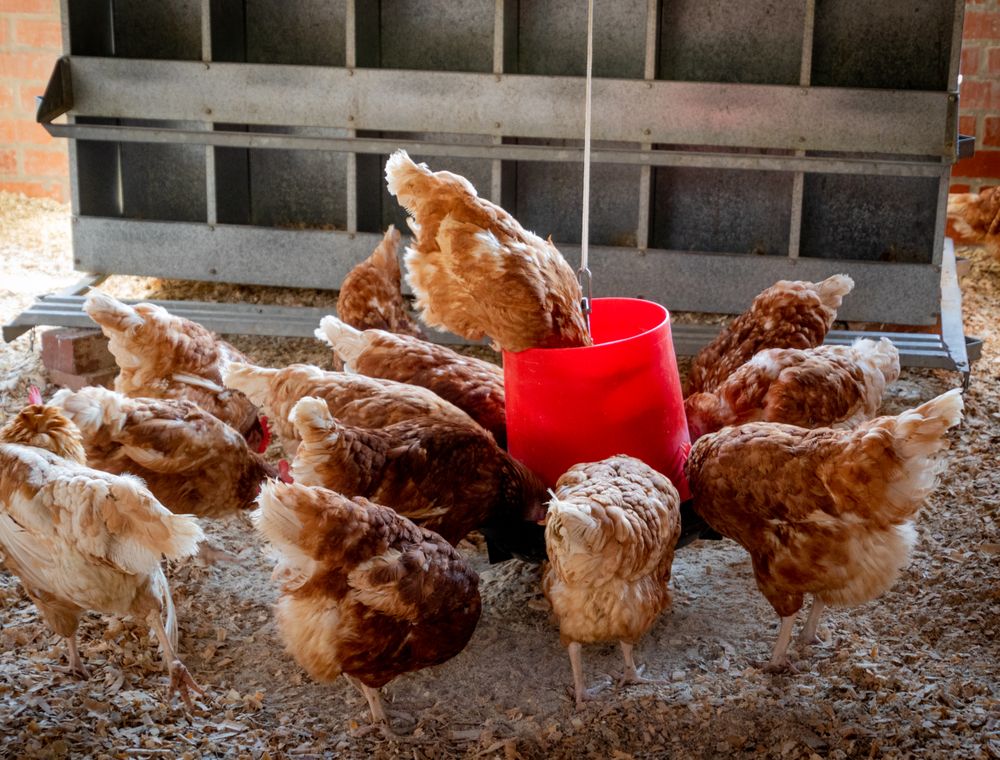
Short answer: Feed conversion ratio, or FCR, is the kilograms of feed a flock eats for every kilogram of live weight it adds. For a fast white broiler on good management, an FCR of about 1.8 to 1.9 is a sound target in Ghana, and on a 50-bird batch of 2.3 kg birds each 0.1 of FCR is roughly 11 kg of feed. Calculate it from the birds you sold and the feed you actually used, including the feed the dead birds ate.
Key takeaways
- FCR is feed divided by weight gained. You lower it by wasting less feed and turning more of it into meat, not by cutting the ration.
- On a 50-bird batch averaging 2.3 kg, each 0.1 of FCR is about 11 kg of feed. At an illustrative GH₵5 per kilogram, that is about GH₵57 a batch.
- Correct for mortality. The feed a dead bird ate is still on your bill, and the bird’s weight should count in the calculation.
- Most FCR losses are wasted feed at the feeder, heat that cuts intake, and disease that steals gain. Measure the waste first.
- Keep a feed book with the kilograms delivered and the kilograms left each week, so the figure comes from your farm and not from a brochure.
What FCR measures, and what it does not
FCR is a ratio of two things you can weigh: the feed a flock has eaten, and the live weight the flock has added. Divide one by the other and you get a single number that tells you how efficiently the birds turned feed into meat.
It does not tell you how much money the batch made. A flock can have a good FCR and still sell poorly because the birds were too light for the market. Another flock can have a mediocre FCR and still earn well because it hit the weight that buyers wanted on the day they wanted it. Read FCR as one part of the margin, not the whole of it.
Most farms work the figure out for the whole batch, from the day the chicks arrive to the day the last bird leaves. Some growers also track a weekly number. Weekly figures are noisy, because a bag delivered on Tuesday and used on Thursday shifts the result. Use the weekly number as a trend line, and the batch number as the grade.
The formula, step by step, with real numbers
The sum is simple. The care goes into collecting the inputs. Here is the method, followed by a 50-bird example.
- Add up every kilogram of feed that went into the house for the batch. Use the delivery notes or the bag count, not your memory.
- Subtract the feed left in the store at the end of the batch. What is left was not eaten.
- Work out the total live weight of the birds you sold, which is the number of birds times the average weight.
- Subtract the weight of the chicks when they arrived. A day-old chick weighs about 40 grams, so 50 chicks weigh about 2 kg in total.
- Divide the feed used from step two by the weight gained from step three minus step four.
Take a batch of 50 chicks. You received 220 kg of feed, 6 kg was left in the store at the end, so 214 kg was used. The 50 birds sold at an average of 2.3 kg, which is 115 kg, and after the 2 kg of chicks is subtracted the gain is 113 kg. The FCR is 214 divided by 113, or 1.89.
That is a good result for a fast white broiler on a farm where the house, the water and the feed are being managed. Now look at what the same batch would show if the farmer had forgotten the 6 kg left in the store. The number would drift, and the farmer would never know why the feed bill looked so high.
Where FCR is won and lost, week by week
Cumulative FCR starts low and climbs as the birds age. The early weeks are cheap to win and expensive to lose later, so the table shows what a sound grow-out looks like at each stage and what usually pushes the number up.
| Stage | Cumulative FCR you should see | What usually pushes it up |
|---|---|---|
| Weeks 1 and 2 | About 1.1 to 1.3 | A cold brooder, chicks that do not find the feed in the first 48 hours, feeders placed too far from the chicks |
| Weeks 3 and 4 | Rising gently toward 1.4 to 1.5 | Feed that is too fine and gets blown or scratched out, starter kept too long, heat building in the house from week four |
| Weeks 5 and 6 | About 1.8 to 1.9 at sale | Midday heat that cuts intake, wet litter and ammonia, overfull feeders that spill, coccidiosis or other gut disease |
Notice where the damage is done. A bad week two is easy to repair, because the birds are small and the feed bill is small. A bad week five cannot be undone at week six, because by then the birds are eating most of the batch’s feed, and every kilogram of waste is a kilogram you paid for.
Why 0.1 of FCR is worth more than you think
Farmers often shrug at a difference of 0.1 on FCR. On a single batch it looks small. Put it in kilograms and cedis and it is not small.
The table below uses the same 50-bird batch, averaging 2.3 kg, with a gain of 113 kg after the chick weight is taken off. The feed price is an illustrative GH₵5 per kilogram, so swap in your own mill price before you plan with it.
| FCR | Feed needed for the batch (kg) | Feed cost (GH₵) | Feed cost per bird (GH₵) | Extra over FCR 1.8 (GH₵) |
|---|---|---|---|---|
| 1.8 | 203 | 1,017 | 20.34 | 0 |
| 1.9 | 215 | 1,074 | 21.47 | 57 |
| 2.0 | 226 | 1,130 | 22.60 | 113 |
| 2.1 | 237 | 1,187 | 23.73 | 170 |
Each 0.1 of FCR is worth about GH₵57 on this batch. Across ten batches a year, that is about GH₵565, and that is before you count the extra days the birds spend in the house, the labour and the litter. The bigger the batch, the more a small FCR slip costs, which is why we push farmers who are scaling up to weigh feed every week rather than every month.
Mortality-corrected FCR: the feed the dead birds ate
Mortality changes the sum in a way that catches people out. A bird that dies in week five has already eaten most of its feed, and that feed is still on the bill. If you divide the total feed by the weight of the birds you sold alone, the result looks worse than the flock really performed. If you leave the dead birds out of everything, the result looks better, and the cost of the deaths disappears from view.
The corrected method adds the weight of the dead birds to the weight of the birds sold, then divides the total feed by that combined figure. Use the average weight of the birds at the time they died. Here is an example from a 50-bird batch. Forty-six birds sold at an average of 2.3 kg, which is 105.8 kg. Four birds died at an average of 1.2 kg, which is 4.8 kg. The combined live weight is 110.6 kg, and after the 2 kg of chicks is taken off the gain is 108.6 kg. If the flock ate 230 kg of feed, the mortality-corrected FCR is 230 divided by 108.6, or 2.12.
Dividing by the sold birds alone gives 2.22, which overstates the problem. Leaving the deaths out altogether understates the cost, because it hides four birds that ate feed and never made it to market. The corrected figure is the one to use when you compare batches, because it counts every kilogram of feed against every kilogram of meat the batch produced.
Deaths are also the reason why the flock should be checked every morning. We see farmers treat mortality as a cost of doing business and never add it to the FCR. Add it, and the cost of a sick bird becomes visible in the same column as the feed.
Where the feed goes when FCR slips
When the number drifts, the feed has gone somewhere. The table lists the usual places it goes and what to do about each one. Work through the rows in order, and do not change the ration until you have checked the feeder and the house.
| Where the feed goes | What you see | What to do |
|---|---|---|
| Spilled at the feeder | Feed on the floor, damp clumps under the feeder, bins that empty faster than the birds should need | Set the feeder rim level with the birds’ backs, lower the trough level, and fill in smaller amounts more often |
| Heat cutting intake | Birds standing around in the afternoon, panting, eating mostly at dusk | Move feeding to cooler hours, keep the house ventilated and reduce density if needed. See the heat stress guide |
| Wet litter and ammonia | Watery droppings, damp litter around drinkers, red or sore eyes, footpad lesions | Repair leaks, check drinker height and flow, improve ventilation, and remove the worst litter |
| Gut disease | Blood or unusual droppings, ruffled or sleepy birds, uneven flock | Call your vet, arrange a post-mortem on a sick bird, and follow the vet’s advice on treatment |
| Poor feed quality | Mouldy or musty smell, clumps, birds picking out particles and leaving the rest | Check storage, stop using the suspect bag, and speak to the mill before the next delivery |
| Uneven flock | A heavy top end and a light tail, birds fighting for space | Check feeder and drinker numbers, sex mix and density against the house plan |
| Feed changed too fast | Intake falls for a day or two after a switch, then recovers | Use a three- to four-day transition next time |
The first row is the one most farms are losing money on. Feed on the floor looks harmless, but a kilogram swept out of the feeder every morning across a 50-bird batch adds up to a visible sum by the end of the grow-out.
Feeder habits that protect the number
Most of the FCR you can win is won at the feeder. These habits cost nothing except attention, and they show up in the feed book within two weeks.

- Walk the feeders every morning before the first feed round, and rake spilled feed out of the litter. Do not feed it back to the birds if it is damp or dusty.
- Adjust the feeder height every week as the birds grow, so the rim sits level with their backs. A feeder set too low spills; one set too high starves the small birds.
- Fill feeders in smaller amounts several times a day. A full trough leaves the feed to sit, get wet and be scratched out.
- Count feeder space against the birds in the house, not the birds on the day you ordered them. Mortality and growth both change the count.
- Keep feed off the floor during brooding. Chicks scatter feed in the first days, and an open tray in a corner wastes more than people expect.
If you are short of feeders, the broiler house setup guide has the numbers we use as a starting point, and the broiler house setup guide explains how to count equipment for the final flock, not the chick numbers.
Water and the ratio: the link people miss
A flock that drinks less eats less, and a flock that eats less stops adding weight at the rate its feed bill implies. Water problems therefore show up as FCR problems, even though the feed bag looks fine.
Watch the water meter or the bucket count each day. Water use should rise steadily as the birds grow, and it rises further in the hot season. A sudden fall in water use, even on a cool day, is the first sign to look for. It is usually a blocked nipple, a drinker that has run dry, or water that has gone warm in an exposed pipe. Once the birds drink less, their intake of feed follows, and the batch slips without any obvious reason.
Our water management guide covers drinker numbers and cleaning in detail. For FCR purposes, the test is simple: if water falls, feed falls, and the ratio gets worse at the same time.
Need chicks for your next batch?
Send breed, number and town. We reply with price, hatch date and delivery cost in writing.
Market age and the last weeks of the batch
Each extra week in the house costs more feed per kilogram gained than the week before. The last week of a batch is almost always the most expensive in feed per kilogram, because the birds are large, they eat a lot, and the gain per day levels off. A flock that stays one more week to pick up another 200 grams may have spent more on feed than the 200 grams is worth, unless the buyer is paying a premium for heavier birds.
Work out the marginal cost before you decide. Take the feed used in the last week, divide it by the extra weight gained in that week, and compare the answer with the price you will get for the extra kilograms. If the extra kilogram costs more in feed than it earns at sale, sell.
Our guide to when to sell broilers looks at the market side of that decision, and the heavy broilers guide covers the levers that help a flock reach a good weight without wasting the last weeks.
A monthly FCR check, as a checklist
Run this check at the end of each month of the batch, or at each weigh-in if you are growing larger flocks. It takes twenty minutes and gives you a number you can act on before the batch is over.
- Write down every bag delivered to the house this month, with the date and the weight on the bag.
- Weigh or count the feed left in the store and the bins at the end of the month.
- Calculate feed used this month, and the cumulative feed used so far.
- Take the average live weight from your last weigh-in, and multiply by the number of birds alive.
- Count deaths this month and estimate the average weight of the birds that died.
- Work out the cumulative FCR, corrected for mortality, and write it beside last month’s figure.
- If the number has risen by more than 0.05 in a month, walk the house before you touch the feed.
- Write one change you will make, such as raising feeders, cutting spills or moving feeding to cooler hours.
Chick quality sets the ceiling, not the result
Good chicks do not guarantee a good FCR, but poor chicks put a ceiling on it. A flock that arrives uneven, weak or under-vaccinated will struggle to convert feed evenly from the start, and the spread shows up in the feed book as birds that eat but do not gain at the same rate.
Every batch from Halaal Farms is vaccinated at the hatchery against Marek’s disease, Newcastle disease, Gumboro, infectious bronchitis and coccidiosis, and it comes with a batch record. Keep that record with your feed book. When an FCR drops at week three and the batch record shows a vaccine you did not plan for, you have a clue to follow with your vet. If you are choosing between fast-growing breeds, the Ross 308 guide and the Cobb 500 guide set out how each one behaves in Ghanaian conditions.
Where to start if your FCR is already high
If your batch is already in the house and the figure is above 2.0, start with the cheapest fixes. Walk the feeders and rake the spills. Count the drinkers and watch the flow. Check the store for damp or mouldy bags. Then decide whether the problem is in the feed, the water, the heat or the birds.
If you are about to order your next batch, plan the feed book and the weekly weigh-in before the chicks arrive. Our day-old chick prices show the current starting figures, and the order form lets you confirm the breed and quantity before payment. WhatsApp +233 24 915 1503 if you want to talk through your house first. Farm visits are by appointment, and our delivery page covers how we send chicks across Ghana.
Questions farmers ask
What is a good FCR for broilers in Ghana?
For a fast white broiler of the Ross 308 type on good management, an FCR of about 1.8 to 1.9 at market age is a sound target. Slower and dual-purpose birds run higher, and that is expected. Judge your figure against the breed you bought, the age you sold at and the feed you used, not against a number from another farm.
How do I calculate FCR for my flock?
Divide the total feed used, in kilograms, by the live weight gained, in kilograms. Feed used is the feed delivered minus the feed left at the end. Weight gained is the live weight of the birds at sale, plus the weight of any birds that died, minus the weight of the chicks at arrival. Keep the figures for each batch in the same format so you can compare them.
Why is my FCR higher when some birds died?
The feed eaten by the birds that died is still on your bill, and their weight is missing from the sold figure. Mortality-corrected FCR adds the weight of the dead birds back in, so the figure reflects the feed used against all the meat the batch produced. A higher figure from deaths is a real cost, not a calculation error.
Does a lower FCR always mean more profit?
Not on its own. A lower FCR helps, but the batch can still lose money if the birds are too light for the buyer, if the market price falls or if mortality is high. Look at FCR together with weight at sale, mortality and the price you received.
How much does 0.1 of FCR cost me on a 50-bird batch?
On a batch averaging 2.3 kg, 0.1 of FCR is roughly 11 kg of feed. At an illustrative feed price of GH₵5 per kilogram, that is about GH₵57 per batch. Use your own mill price in the calculation, because the figure changes with the cost of feed and the number of birds.
Should I weigh feed every week?
Yes, if you can. A weekly feed record shows where the waste is, while a monthly record only tells you the total. Weekly figures are noisy, so use them as a trend, and let the batch figure at the end be the grade.
Can I improve FCR by cutting the feed?
No, and it usually makes things worse. Cutting feed slows growth and pushes the flock below the weight that buyers want. Improve FCR by reducing waste, keeping the house cool and dry, keeping the flock healthy and feeding the right phase at the right time. Talk to your feed supplier or nutritionist before you change the ration.


