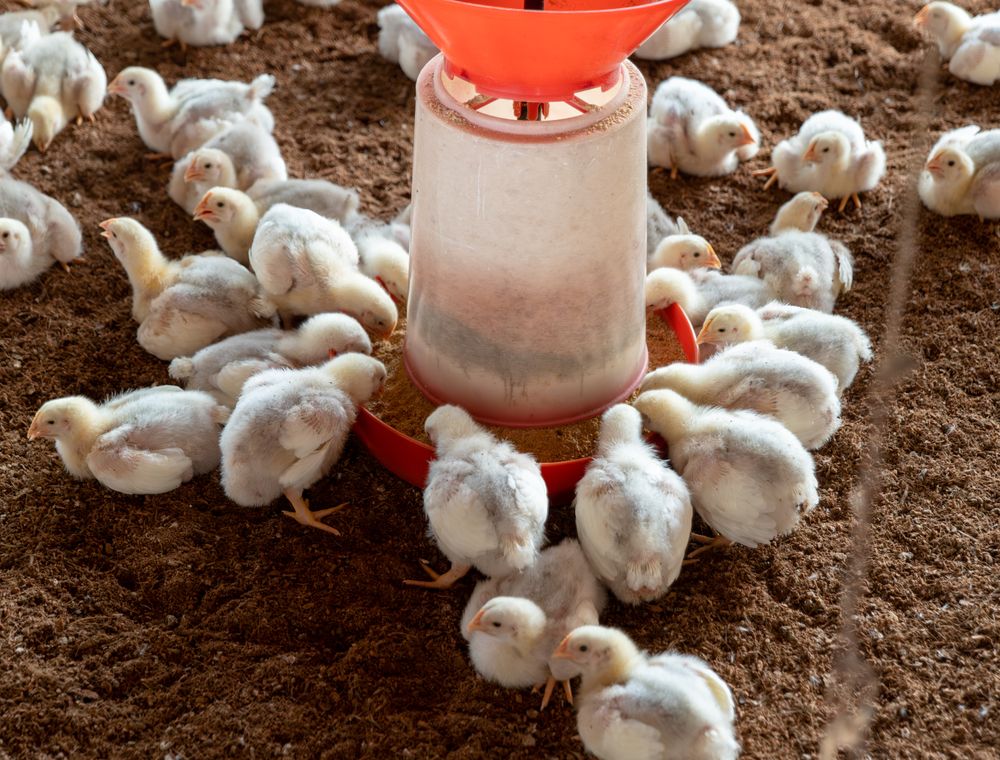
Short answer: Sell broilers when the next day's feed no longer pays for itself, not on the day the calendar says six weeks. For most flocks in our area that falls between five and seven weeks, and the buyer decides where in that window you land. Traders paying by the kilogram reward weight, while households and food sellers often pay by size band. Plan the sale backwards from the festival you are aiming for, counting from the day the chicks are placed.
Key takeaways
- Sell when the next day's feed stops paying for itself, not when the calendar says six weeks.
- The last kilogram costs more feed than the first, and the gap widens after week five.
- Per-bird buyers pay for size bands, so the band sets the sale age.
- Count backwards from the festival: chicks go in about six weeks before the sale.
- A week of holding can cost more in losses and missed orders than it earns in weight.
Start with who is buying, not with the calendar
Most farmers ask how many weeks to keep the birds. The better first question is who is standing at the gate. A trader buying live birds by the kilogram wants total weight and birds that stand up well on the scale. A chop bar buying for the day wants a size it can cut and cook. A family buying one bird for a naming ceremony wants a bird that fills a pot and does not look like a skinny cockerel. Each of those buyers pulls the sale age in a different direction.
Our hatchery reference price for a live broiler of about 2.5 kg is GH₵110, and a dressed broiler is GH₵120 on our price list. Those numbers are the anchor for everything below. They are not a promise of what your local market will pay on the day, which moves with the season, the festival and the road.
Why the last kilogram costs the most
A young broiler turns feed into weight very efficiently. In the middle weeks, a good flock typically needs somewhere around 1.6 to 1.8 kg of feed for each kilogram it gains. That ratio gets worse as the birds age, because more of what they eat goes into keeping the body running and into fat, and less goes into new muscle. By the last week before sale, the feed cost of each extra kilogram can be well above the cost in week four. The feeding phases behind that curve are in our feeding schedule.
The bird does not stop growing when the ratio worsens, so the question is not whether the flock is still gaining. The question is whether the gain is still worth the feed, the house, the labour and the risk of keeping birds one more week. Those are different costs, and you should price each one.
Heat and legs make it harder. A heavy bird in a hot house eats less and drinks more, its legs carry more weight than they were built for, and the flock becomes harder to keep calm. A week that looks cheap on paper can cost you birds.
A worked example: is one more day worth it?
Take a flock of 800 birds in week six. Each bird eats about 160 g of feed a day and gains about 75 g. Assume you pay GH₵6 per kilogram of feed. Put in your own price, the sum works the same way.
| Item, per bird, per day | Amount |
|---|---|
| Feed: 0.16 kg at GH₵6 per kg | GH₵0.96 |
| Other daily running costs (house, labour, power, water, litter), assumed | GH₵0.80 |
| Total daily cost | GH₵1.76 |
| Value of 75 g of extra live weight at GH₵44 per kg (GH₵110 for 2.5 kg) | GH₵3.30 |
| Margin for the day, before any losses | GH₵1.54 |
On paper, one more day still pays by about GH₵1.50 a bird. Across 800 birds that is roughly GH₵1,230 for the day. Now look at what one bad day costs. If two per cent of the flock dies on that same day, that is 16 birds. At a live value near GH₵110 each, they take GH₵1,760 with them, which is more than the whole day's margin. A single heat spell or a respiratory outbreak in the last week can wipe out several days of gain.
Keeping birds a few extra days often still pays, but only if the flock is healthy, the house is cool and the buyer is ready to take them. When any of those three slips, the margin disappears fast.
Matching the sale age to the buyer
Pricing changes the sale age more than most farmers expect. If your buyer pays per kilogram, every gram counts, and the worked example above is the right way to think. If your buyer pays per bird, weight counts only when it moves the bird into a higher price band, so a bird at 2.3 kg and one at 2.45 kg can sell for the same money. In that case the band sets the sale age, not the kilogram.
- Traders buying by weight reward a uniform flock. Sell when most birds are near the weight the trader wants, and sell the flock together rather than in pieces.
- Chop bars and food sellers usually want a consistent size and a steady supply over several weeks, so ask whether they will take a regular order before you set the age.
- Households for a family occasion want a bird that looks right and is ready on the day. Sell a few days before the event, not on the morning of it.
Live or dressed: what changes the timing
Selling live puts the weighing, plucking and dressing on the buyer, and the price follows live weight. Selling dressed puts that work on you, and the buyer pays for the carcass. A dressed bird has no slack. It must be cleaned, cooled and sold within hours, and a sale that slips a day can cost you the margin. If you sell dressed, plan the dressing day into the calendar and have a cool place to hold the carcasses before they leave.
Whichever way you sell, weigh a sample of live and dressed birds before you agree the price. The gap between the two depends on feathering and on how the birds were handled, and the buyer will not be sympathetic if the carcass comes out lighter than the number you quoted. The selling side of both routes is in our how to sell poultry guide.
Planning backwards from Christmas, Easter and Sallah
Count backwards from the sale, not forwards from the chicks. Christmas falls on 25 December. From the middle of October, when we update our price list, that is about ten weeks away. If you want six-week birds ready for buyers between 19 and 21 December, the chicks have to be in the house by about 7 to 9 November, because six weeks is 42 days. Add two or three days for transport and settling, and the house needs to be ready before the box arrives.
Easter moves every year, so check the date rather than trusting last year's calendar. Sallah is the same story. The Islamic calendar runs about eleven days earlier each year, so this year's Eid falls about eleven days before last year's. Write the festival date in your diary, then count back the weeks, the transport and the house readiness, in that order.
Two habits protect the festive sale. Sell into the festival, not on its last morning, because the buyers who came early have already bought. And do not plan to hold birds through the festival week itself. Roads are busy, buyers are distracted, and birds that are ready to sell get stuck waiting. Our Christmas chick timing article covers the placement side of the same calendar.
A sale-age guide by week
The table sets out what usually happens to a flock week by week. The numbers are approximate and depend on breed, chicks, house, feed and weather, so use them to frame your own decision rather than as a rule.
| Age at sale | What the flock is doing | Who it suits | Watch for |
|---|---|---|---|
| 5 weeks | Quick turnover, lighter birds, cheapest feed per kilogram | Cash-flow needs and buyers who want smaller birds | Birds may fall short of a size band |
| 6 weeks | Gain still strong, feed cost per kilogram rising | Most household, chop bar and festive buyers | Heat and disease in the final fortnight |
| 7 weeks | Gain slowing, feed cost per kilogram clearly higher | Buyers paying for a heavier band | Each extra day costs more, and losses matter more |
| 8 weeks or more | Small gains for a large feed bill | Seldom worth it for a commercial broiler flock | Leg problems, crowding, house tied up for little return |
For most small and medium flocks we would sell at six weeks, and go to seven only when the buyer is paying for the band and the birds are still clearly growing. Five weeks works well when cash is tight and a trader has asked for smaller birds. Eight weeks is seldom worth it unless the price has jumped and the house is cool.
Need chicks for your next batch?
Send breed, number and town. We reply with price, hatch date and delivery cost in writing.
Holding birds too long: the hidden cost
Waiting for a better price is the most common way a good flock loses money. A farmer holds the birds one more week, hoping the market will rise. By the time they leave, the festive buyers have placed their orders, the price has eased, and the house has spent another week of feed, power and labour on birds that are gaining more slowly. The price can rise, but it rarely rises by enough to cover the week.
Holding also lets disease build. Each extra week in the house is another week for a virus or parasite to multiply in the litter. Losses in the last weeks are covered in our mortality guide. If you can, sell on the day the flock reaches your target, and do not let one slow market decide the timing for the whole house.
Before you call the buyer
- Weigh a random sample of at least 20 birds from different parts of the house, the day before the sale.
- Work out the average and the spread. A flock where some birds are 1.8 kg and others are 2.6 kg needs a different plan from one that is tight around the average.
- Count the feed left, and work out how many days it will last if you hold the birds.
- Confirm the vehicle, the crates or baskets, and the loading time with the buyer.
- Agree the price per kilogram or per bird in writing before any bird is loaded.
- Respect any withdrawal period your vet gave you for medicines, and do not sell birds still inside it.
- Keep the batch record with the house records, so you can show what the flock was given and when.
What we would do in your place
If the flock is for your household and a small local market, sell at six weeks and do not chase seven. The extra week rarely pays for the risk, and the buyers you already have will be happy with a bird that is ready on time. If you are supplying a trader who pays by the kilogram, weigh every week from week four and sell the day the average reaches the weight they want, not the day after.
If you are planning a festive run and want to talk through placement dates, call or WhatsApp us on +233 24 915 1503. Our broiler chicks page has the breeds we hatch and import, and you can place the order through the order form once the dates are fixed. Our chick price list is updated as prices change, so check it when you plan the budget. For the wider timing of selling birds by weight, our water management guide is worth reading before the final fortnight, because thirst is the first thing to slow a flock at market weight.
Questions farmers ask
What age should I sell broilers in Ghana?
For most household and festive buyers, six weeks is the sensible target. Five weeks is a good choice when cash is tight, and seven weeks suits a buyer who is paying for a heavier band. Set the age by the weight your buyer pays for, then check the flock's average each week from week four. The calendar is a guide, not the decision.
What weight should a broiler be when I sell it?
Our reference is a live bird of about 2.5 kg, which is the weight behind our GH₵110 live price. Your buyer may want more or less. Weigh a random sample of 20 birds the day before the sale and compare the average with what the buyer will pay for. Dressed weight is lower than live weight, so agree which one the price applies to before any bird is loaded.
Is it worth keeping broilers past seven weeks?
Rarely, for most commercial flocks. Gain slows and feed per kilogram rises, while the risk of leg problems, heat losses and disease keeps building. Work out the day's margin against the day's likely losses, as in the worked example above. If a single bad day would cost more than the margin, sell.
How do I plan a Christmas sale of broilers?
Count back from the date buyers want the birds. Six weeks before the sale is the placement date, and you should add a few days for transport and settling. For birds ready between 19 and 21 December, placement falls around 7 to 9 November. Have the house ready before the box arrives, and sell into the festival rather than on its last morning.
Should I sell live or dressed birds?
Live sales move the work to the buyer and price by live weight. Dressed sales put the work on you, and the buyer pays for the carcass, so the dressing day has to be planned with the same care as the sale itself. Weigh both before you agree a price, because the gap depends on feathering and handling.
Does the Sallah date stay the same each year?
No. Sallah follows the Islamic calendar, which runs about eleven days earlier each year. Check the exact date for the year you are planning, then count back the placement and house readiness. Using last year's date is a common and costly mistake, because the birds will be ready about eleven days after the festival has passed.
Why are my broilers not heavy enough to sell at six weeks?
Common causes are a weak start, a feed programme that changed too early, water problems, heat in the hot season, and crowding. Weigh the flock weekly, check the water and feed, and talk to your vet if the average is falling behind your breed's target. Our heavy broilers guide walks through the levers in order.


