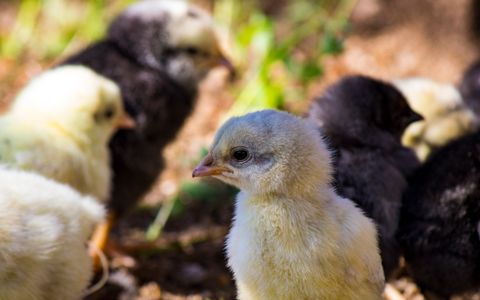
What a turkey farm really is
A turkey is a larger, slower bird than a broiler chicken, and it asks more of the farmer in space, feed quality and patience. A broiler is usually sold at about six weeks. A turkey is raised for months, so the farmer who sells turkeys well is the one who plans the calendar from the first day. At our hatchery in Opeikuma, Kasoa, we sell turkey poults in boxes of 10 at GH₵ 65 each, which makes a box GH₵ 650 at the starting price. Every poult is a commitment of feed, space and time for several months.
Turkeys also behave differently from chickens. They are curious, they spook easily, and young birds need to learn where the water and feed are. A turkey flock that is calm, fed and dry grows evenly. A flock that is crowded, hot or short of feed starts to peck, pile up in corners and fall behind. Much of turkey farming is the daily work of keeping the birds quiet and comfortable, and the rest is keeping records so you can see early when something changes.
The production cycle from poult to sale
Think of a turkey flock as four stages, each with its own job. The stage you are in tells you what to buy, what to check each morning and what to avoid. The ages below are a rough guide only. The weight your buyers want, not the calendar, decides when you sell.
| Stage | Rough age | Your main job |
|---|---|---|
| Brooding | Weeks 0 to 4 | Warmth, clean water, starter feed, and watching every bird eat and drink |
| Growing | About weeks 5 to 12 | Floor space, grower feed, sorting out weak birds, first weigh-ins |
| Finishing | The last stretch to sale weight | Finisher feed, shade, weekly weighing, separating toms and hens if needed |
| Sale | When buyers need them | Feed withdrawal as your vet advises, calm transport, final records |
Most of the money in this cycle is lost in the brooding stage and the finishing stage. Losses in brooding are the most expensive, because the birds have eaten feed for weeks and still have not reached the weight that earns money. Losses in finishing are costly for a different reason: the birds are heavy and expensive to feed, and any delay pushes the sale date toward the wrong part of the calendar.
Prices
 Imported
Turkey poults
Day-old turkeys in boxes of ten. For December, poults should start by July or August.
 Local hatch
Guinea fowl keets
Day-old guinea fowl. Little housing needed and a premium price, especially up north.
 Local hatch
Sasso
Coloured, slower-growing bird with firm, tasty meat. Hardy on free range and lays fairly well.
 Local hatch
Kuroiler
Strong scavenger that grows far bigger than local fowl on forage and kitchen scraps.
Toms and hens grow at different speeds
In a mixed flock, toms are the heavier birds and they take longer to reach a large weight. Hens are lighter and reach a useful weight sooner. If you want birds of different sizes for different buyers, you can sell hens first and keep the toms longer. If one event needs uniform birds, it is easier to sell the flock on one day, using a weekly weigh-in to choose that day.
The practical problem is feeding. Toms that share a pen with smaller hens may get less than their share, and hens get pushed away from the trough. Give enough feeder and drinker space for the whole flock, check the weight of the smallest birds each week, and separate the group if the small ones are clearly falling behind. When you order, ask us how your batch is made up, so you can plan the pens before the birds arrive.
The first weeks in the brooder
The first two weeks decide how evenly the flock grows, and most early losses on turkey farms start in the brooder. Poults need a warm, dry, draught-free space, with heat from a lamp rather than from crowding. Set up the brooder the day before the birds arrive, so the litter is warm and dry and the drinkers have been filled and checked. Our brooder set-up guide covers the basics that apply to poults as well.
When the box opens, the first job is water. Show each poult where the drinker is, dip its beak gently if it does not drink on its own, and watch the first hour closely. A poult that pecks at litter and drinks is settling. A poult that stands alone under the lamp with its eyes half shut needs attention at once. Watch the flock, not only the thermometer. Birds that pile tightly under the lamp are too cold, and birds that spread to the edges and pant are too hot.

Feed should be fresh and easy to reach, with a few trays of crumbles spread out at first so every poult finds food. Keep the litter dry. Rake out and replace wet patches near the drinkers, because damp litter raises the risk of disease and chills the birds. Weigh a sample of poults at the end of the first week and write the figures down. Those first weights are the baseline for everything that follows.
Feed phases and why protein matters
Turkeys move through feed phases, and the change happens at set ages rather than when the birds look hungry. A starter feed carries the high protein a young poult needs for bone, feather and muscle. A grower feed follows, then a finisher feed for the last stretch before sale. Each change should be gradual. Mix the new feed with the old for a few days so the birds do not refuse it and lose weight during the switch.
| Phase | When you use it | What to check |
|---|---|---|
| Starter | From arrival until the poults are several weeks old | Crumble size small birds can eat, and the protein figure on the bag |
| Grower | The middle of the growing period | Steady gain on your weekly weigh-in, without sudden fat or slow growth |
| Finisher | The final stretch before the sale | The feed withdrawal time your vet recommends before slaughter |
Read the label. A bag made for broilers or layers may not carry the protein profile a turkey needs at each stage. Ask your feed seller for the protein figure printed on the bag, and compare it with what your vet recommends for your birds. Do not guess. A flock on feed that is too low in protein grows slowly and looks poor at sale time, even when the birds stayed healthy from the start.
Housing, space and ventilation
A turkey house should be dry, airy and high enough that the birds can stand upright and move without bumping into roof beams. Ventilation matters more than most new farmers expect. Warm, damp air over wet litter builds up ammonia, and ammonia burns eyes and airways. Netted open sides, a roof that keeps out rain and a floor that stays dry will do more for the flock than any supplement you can buy.
Give turkeys more floor than you would give chickens. Crowding is the main cause of feather pecking and corner piling, and it spreads disease fastest. As the birds grow, add perches at a height they can reach, because turkeys like to roost and the older birds will use them at night. Provide shade outdoors in the hot months, and keep the range area clear of standing water.

Predators are a constant risk. Rats take feed and sometimes bite young birds, dogs chase flocks, and snakes and birds of prey pick off poults in the open. Close the house every night, check the netting each morning and keep the feed store sealed. A few hours of extra work on the fence in the first month can save a whole box of birds.
Health, biosecurity and working with your vet
A healthy turkey flock is mostly the result of routine. Walk through the house at least twice a day, look at the droppings, watch how birds stand and eat, and remove any bird that is off its feed. Write down each death and what you saw before it. Those notes are the most useful thing you can give your vet, and they cost nothing.
Biosecurity is simple in principle. Keep visitors out of the house, use a footbath or disinfect boots at the door, and do not share feeders, drinkers or equipment with other poultry without cleaning them first. Keep wild birds away from the feed. When you add birds, house the new group apart for a period and watch it before the groups mix. Ask your vet to confirm the timing for your farm.
Follow your vet's schedule for any vaccines, deworming or treatments, and do not self-dose antibiotics bought from a shop shelf. Turkeys can catch some diseases that also affect chickens, so keep a close watch if other poultry are kept nearby. If several birds fall sick at once, call your vet the same day rather than waiting to see what happens. For general questions about running a flock, our FAQ is a good place to start.
Worked example: starting a 30-bird flock
Suppose you want to start with 30 poults. At the starting price, that is three boxes of 10, so the cost of the birds is GH₵ 1,950. Feed, housing, litter, labour and transport are your own costs and depend on your area, so we do not quote them here. Our poultry budget guide shows how to build those costs into a plan. The planning rule for turkeys is to budget for the birds you will sell, not the birds you started with.
| Item | Quantity | Amount |
|---|---|---|
| Turkey poults, 3 boxes of 10 at GH₵ 65 each | 30 poults | GH₵ 1,950 |
| Feed, litter, housing, labour, vet visits | Your own figures | Not quoted by us |
Expect some losses. If you lose two birds in the first month, you have 28 to sell, not 30, and the sale plan should show that. Plan a little extra space and feed so a few early deaths do not leave you short. Every bird lost early has already eaten feed for weeks, so early losses cost more than late ones.
Book your chicks for your farm
Send breed, number and town. We reply with price, hatch date and delivery cost.
Timing the sale and finding buyers
Turkey farming is a calendar business. Work backwards from the date you want birds ready. Count the weeks the birds need to reach the weight your buyer wants, add the weeks you need for brooding, then add time to book the poults. Festive peaks at Christmas and Easter fill quickly, and buyers who order late often end up with smaller birds or none at all. Our Christmas planning article shows the same back-planning for broilers, and the logic applies to turkeys too.
Find your buyers before the birds are ready. Speak to households who order a bird for the festive table, to caterers and event hosts, and to food sellers who want a steady supply. Agree on a weight range and a collection date, and write both down. A turkey that is ready on the day a buyer is waiting is worth more than a larger bird that arrives a week late.
Mistakes that cost turkey farmers money
Most turkey losses come from a handful of habits that are easy to fix once you see them. The list below covers the ones we hear about most often from farmers who are new to turkeys.
- Booking late. The festive window closes before the birds are heavy enough to sell.
- Crowding the house. Crowding brings pecking, bruising and uneven weights.
- One feeder for a big flock. The strongest birds eat first, and the smallest fall behind.
- Feed that does not match the stage. Protein that is too low slows growth, and feed that is wasted costs money.
- Skipping the weigh-in. Without weights you cannot tell whether the flock is on track.
- Adding new birds straight into the flock. A short separation period gives you time to spot problems first.
- Keeping no records. Without notes you cannot tell your vet what happened, or why.
Ordering turkey poults from Halaal Farms
We sell turkey poults in boxes of 10 at GH₵ 65 each, so a box is GH₵ 650 at the starting price. The price is confirmed in writing before you pay, and payment is by mobile money, bank transfer or cash. You do not pay through the website. Place your order through the order form, or message us on WhatsApp at +233 24 915 1503 with the number of birds, your town and the date you need them.
Turkey poults are packed for the journey, and we will tell you which dispatch day suits your order. Delivery reaches all 16 regions, and the cost to your town is confirmed before payment. For the full picture, read our delivery page, check current starting prices on the price list, or read our turkey poults page for notes on ordering the birds themselves. If you are still deciding whether turkeys fit your farm, our breeds page compares them with other birds.
Questions farmers ask
What do turkey poults cost from Halaal Farms?
Our poults are GH₵ 65 each, sold in boxes of 10, so one box costs GH₵ 650 at the starting price. The figure is written down before payment, and you can pay by mobile money, bank transfer or cash. Prices move, so check the list or send a WhatsApp message on +233 24 915 1503 before you set your budget.
How long does a turkey take to reach market weight?
It depends on the sex of the bird, the feed you use and the weight your buyer wants. Hens are usually ready sooner and lighter than toms, and toms take noticeably longer to reach a large weight. Weigh a sample of birds every week and let those figures, along with the calendar, set your sale date. Your vet can help you judge when the birds are ready.
Are turkeys harder to keep than chickens?
They are more demanding in space, feed quality and attention, but they are not beyond a careful keeper. Turkeys spook easily, need dry litter and more floor space, and get into trouble quickly when they are crowded or short of feed. A farmer who already keeps chickens well can learn turkeys quickly by watching the flock closely each morning and keeping records.
How much space do turkeys need?
Give turkeys more floor than you would give chickens, enough that they can walk past each other and reach feeders without pushing. The exact space depends on the size of the birds, the climate and whether they have outdoor range, so ask your vet or a local extension officer to check your plan before you build. Crowding is the most common cause of pecking and losses.
Can I keep turkeys and chickens in the same house?
It is better to keep them apart. Turkeys and chickens can carry and pass on some diseases, they compete for feed, and bigger birds can injure smaller ones. If you must share space, separate them with a solid barrier, feed them in different places and talk to your vet about the risks before you start.
What feed should I give turkey poults?
Use a starter feed made for turkeys, or a well-balanced poultry starter with a protein level suited to young turkeys. Check the label, then move to a grower and later a finisher feed at the right ages. Do not switch suddenly. Mix the new feed with the old over a few days, and ask your feed seller or vet to confirm the protein figure on the bag you buy.
When should I book turkey poults for a festive sale?
Start from the sale date and count back. Allow for the weeks the birds need to reach the weight your buyer wants, then add time to brood them and to book the box. Festive dates fill quickly, so message us early on WhatsApp at +233 24 915 1503 with your town, the number of birds and the date you need them.
Do you deliver turkey poults outside Kasoa?
Yes. Halaal Farms delivers to all 16 regions of Ghana. Poults travel in packed boxes to a station in your town. Collection from our farm at Opeikuma, Kasoa, is also possible, by appointment. We give you the delivery figure in writing ahead of payment.
Prices and details checked 18 October 2026 by the Halaal Farms hatchery team, Opeikuma, Kasoa.