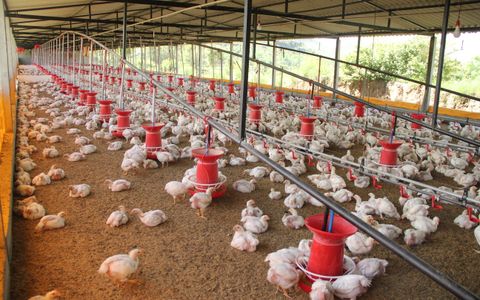
Who Buys a Hundred Chicks at Once
A batch of 100 is the size where a hobby starts to feel like a small enterprise. It is large enough that a mistake costs real money, but small enough that you can still look after every bird yourself. Most people who order two boxes at once are either finishing a first round and ready to scale a little, or they have a clear buyer lined up before the chicks arrive.
If you have never raised birds before, a single box of 50 teaches you the routine with less risk. Two boxes make sense when you already know how to brood, when you have space for a second group, and when you know where the finished birds or eggs will go. Those three things matter more than the chick price.
Ross 308 or Hy-Line Brown for This Batch
The breed decides the whole plan, so decide it first. A batch of 100 broilers and a batch of 100 layers look nothing alike by the end of the year.
- Ross 308 is an imported broiler, sold at GH₵ 20 a chick or GH₵ 1,000 for a box of 50. A broiler batch is ready for sale in weeks, not months, so your money cycles faster. You sell meat, and you have to find buyers for a fixed set of birds at the end.
- Hy-Line Brown is an imported layer, sold at GH₵ 23 a chick or GH₵ 1,150 for a box of 50. It costs more upfront and takes around 18 to 20 weeks before it lays. After that, it gives you eggs over a long period, which suits a steady local egg trade better than a single sale.
If you want quick cash and have a buyer for dressed chicken, pick Ross 308. If you want something that keeps paying, pick Hy-Line Brown. Our broiler chicks for sale and layer chicks for sale pages go deeper on each.
Prices
 Imported
Ross 308
The world's most widely grown broiler. Even, fast growth and strong feed conversion.
 Imported
Hy-Line Brown
Calm brown-egg layer bred for high egg numbers and strong shells over a long cycle.
Adding Up the Cost of a Hundred Chicks
The chicks are the first line on the sheet, and they are the easiest to see. The rest of the cost comes later and is easier to underestimate. Start with the table, then fill in your own local figures for feed, housing and labour.
| Item | Ross 308 (GH₵) | Hy-Line Brown (GH₵) |
|---|---|---|
| Chicks, two boxes of 50 | 2,000 | 2,300 |
| Chicks, per box of 50 | 1,000 | 1,150 |
| Feed for the cycle | Your local quote | Your local quote |
| Housing and equipment | Your own cost | Your own cost |
| Delivery | Quoted in writing | Quoted in writing |
All chick prices are starting prices. We confirm the exact amount in writing for each order, along with the delivery cost, before you pay. We accept mobile money, bank transfer and cash. Online card payment is not available.
To see how the chick cost fits into the whole budget, try the day-old chicks cost calculator. It lets you change the batch size and see the total move.
Space for a Hundred Birds, From Brooder to Market
A hundred chicks start in a small space and grow into a much bigger one. Plan for the final size, not the first week. In the first days, a corner of a room or a brooder ring with a heat source is enough. Chicks need warmth, dry litter and close watching.

By the time broilers approach market weight, a hundred birds need a much larger floor. A common planning figure for a simple house is around 10 birds per square metre for broilers, though local conditions and your ventilation change that. For layers, the house should give each hen room to move, reach feeders and nest comfortably. Work out the square metres before the chicks arrive, not after.
Good airflow is not optional. A hot, damp house makes birds sick and slows growth. Open sides, a raised roof or fans where power allows all help, and so does keeping litter dry.
Feed: The Number That Decides Your Margin
For most small producers, feed is the largest running cost by a wide margin. The chicks are a one-time payment. Feed is a weekly one, for as long as the birds are alive, and it rises and falls with the market. Build your budget around feed first and let everything else fit around it.
Broilers move through a starter, grower and finisher feed as they grow, and each stage has a different protein level. Layers need a laying feed once they start producing, with extra calcium for strong shells. Ask your feed supplier for the exact bag sizes and prices in your area, then multiply by the number of weeks in the cycle.
A practical habit is to weigh a few birds each week and compare the number with what you expected. If they are behind, the problem is usually feed, water or disease, and you can fix it early. Our poultry feed calculator helps you estimate how much feed the batch will need across each stage.
The Likely Return, Worked Through
Returns depend on your buyers, your prices and how well the birds perform. The honest way to see them is to write the sums out in full, using your own numbers, and test a few scenarios. Below is a simple method, not a promise.
For a broiler batch, the usual market weight in good conditions is somewhere around 1.8 to 2.2 kilograms, reached at roughly five to six weeks. Multiply the number of birds that reach that weight by the price per kilogram you can get, then subtract the chicks, feed, housing and transport. Leave a margin for birds that do not make it. A planning figure of 3 to 5 percent loss is sensible, though a well-run flock can do better.
For a layer batch, the return is spread over many months. Multiply the eggs you expect each week by the price you can reliably get, subtract feed and running costs, and compare the result with the chick cost over the first year. The layer and egg profit calculator and the broiler profit calculator both let you test these sums before you order.
The Time You Will Actually Spend
A hundred birds is manageable for one determined person in a normal week, but it is not light work. In the first three weeks, expect to check the brooder several times a day. After that, feeding, watering, cleaning and checking the birds take a steady hour or two morning and evening, depending on your setup.
Plan for the busy days. Vaccination days, a bird that falls ill, a power cut that cuts the fans, and a buyer who wants delivery on a Saturday all land on the same week eventually. If you have family or a helper you trust, arrange their help before the chicks arrive, not when things go wrong.
The First Three Weeks Decide the Batch
Chicks that arrive in good health and are brooded properly give you the best return. Warmth is the first priority. Chicks that huddle tightly in one corner are cold. Chicks that spread out and pant are too hot. Watch their behaviour, not just the thermometer.

Give fresh water with the right temperature and a clean feeder at all times. Keep the litter dry and replace any that gets wet. Stick to the vaccination schedule, because the hatchery vaccinations do not cover every disease a flock can meet on your farm. Our vaccination schedule calculator lays out the dates so you can plan around them.
Each order comes with a batch record. Keep it with your own notes of mortality, feed used and weight checks, so you can compare your results with what you expected.
Book your chicks for your farm
Send breed, number and town. We reply with price, hatch date and delivery cost.
Selling Birds or Eggs From This Batch
Find your buyers before the chicks arrive. For broilers, that means people who buy dressed chicken regularly, such as chop bars, food sellers, cold stores and families who buy in bulk. A hundred birds finishing in the same week is a lot to sell quickly, so talk to two or three buyers and agree on a rough quantity and timing.
For layers, the buyers are slower to find but easier to keep. Neighbours, small shops and regular households will take eggs every week if the supply is steady. Sell at a price you can hold, and do not drop it just to clear a bad week.
Whichever route you pick, write down each sale. Your records tell you whether the batch paid off, and they help you price the next one more accurately.
Losses, Mortality and Your Safety Margin
Some birds will not make it, and that is part of raising livestock. The trick is to plan for it. If you budget for every chick surviving, a few lost birds will feel like a crisis. If you budget for a small loss, it becomes a normal line in the records.
When a chick arrives dead, we replace it free in the next hatch, and you should tell us as soon as you can after delivery. Deaths after the first days are a different matter. They usually point to brooding, water, disease or feed problems on the farm, and it helps to look for the cause early rather than replace birds and hope for the best.
Keep a little spare cash for feed and medicine. A batch that runs short of money in week five is much harder to rescue than one with a reserve.
Ordering Two Boxes With Us
Orders go through WhatsApp or phone. Tell us the breed, that you want two boxes, and the town where the chicks will be delivered. We confirm the price per chick, the box price and the delivery cost in writing, and you pay by mobile money, bank transfer or cash before dispatch.
- Message us with the breed, two boxes and your delivery town.
- We confirm the chick prices and delivery cost in writing.
- You pay, and we schedule the hatch so chicks leave the day they hatch.
- Your chicks arrive with a batch record and the vaccinations already given at the hatchery.
Chicks can travel about 48 hours on the yolk they carry, and our delivery information explains how we pack and ship. For a full list of prices, see the price list, and if you are thinking about growing beyond this batch, the bulk day-old chicks page covers larger orders.
Questions farmers ask
How much does 100 day-old chicks cost in Ghana?
At our starting prices, 100 Ross 308 chicks come to GH₵ 2,000 for two boxes of 50, and 100 Hy-Line Brown chicks come to GH₵ 2,300. The exact amount is confirmed in writing per order, and delivery is quoted separately before you pay.
Is a batch of 100 chicks enough to make money?
It can be, depending on your buyers, your feed costs and how the birds perform. Broilers can be sold within weeks, while layers pay back over many months. Work through the numbers with your own prices before you commit.
How much space do 100 chicks need?
Chicks start in a small brooder and need much more floor by market age. A common planning figure for simple broiler houses is around 10 birds per square metre, though ventilation and local conditions change that. Plan the final size from the start.
Should I choose Ross 308 or Hy-Line Brown for 100 birds?
Ross 308 is the quicker, cheaper cycle if you have a buyer for dressed chicken. Hy-Line Brown costs more and takes around 18 to 20 weeks to lay, but then produces eggs over a long period. Choose based on whether you want meat or eggs.
How much feed will 100 birds eat?
Feed amounts depend on breed, age and the stage of production, so there is no single figure that fits every farm. Your feed supplier can quote the bag sizes and prices in your area, and our feed calculator helps you estimate the weekly total.
What if some of the 100 chicks die?
Chicks dead on arrival are replaced free in the next hatch, so tell us as soon as possible after delivery. Losses after the first days usually point to brooding, water, disease or feed problems that are worth fixing early. Plan a small loss margin in your budget.
Can I order two boxes and pay in instalments?
No. We do not offer financing or instalments. Payment is made in full by mobile money, bank transfer or cash before dispatch, and the amount is confirmed in writing for each order.
Do the chicks come vaccinated?
Yes. Our chicks are vaccinated at the hatchery against Marek's, Newcastle, Gumboro (IBD), infectious bronchitis and coccidiosis, and a batch record comes with your order. You will still need to keep a vaccination plan on your own farm for other risks.
Prices and details checked 18 October 2026 by the Halaal Farms hatchery team, Opeikuma, Kasoa.