The short answer for a 1,000-chick order
A thousand chicks is 20 boxes of 50, and it is the point where Halaal Farms moves from a standard list order to an individual quote. The list from-prices are GH₵ 20 for Ross 308 and Cobb 500 broilers, and GH₵ 23 for Hy-Line Brown layers. On those prices, 1,000 Ross 308 chicks come to GH₵ 20,000 and 1,000 Hy-Line Brown chicks come to GH₵ 23,000, before delivery.
Those two figures are arithmetic from the list, not your quote. For orders of 1,000 chicks and above, we confirm the breed, the hatch or import plan, the box count, the transport, the delivery cost and the terms in writing. Nothing is paid until you have that written figure. The rest of this page explains how to plan the order so the quote arrives quickly and is easy to check.
Box maths: how 1,000 chicks are packed and counted
Chicks travel in ventilated boxes of 50. The box count is the number of chicks divided by 50, so 1,000 chicks need 20 boxes. The table shows how the list arithmetic scales for common order sizes, using the two breeds that buyers ask about first.
| Boxes | Chicks | Ross 308 at GH₵ 20 (GH₵) | Hy-Line Brown at GH₵ 23 (GH₵) |
|---|---|---|---|
| 1 | 50 | 1,000 | 1,150 |
| 5 | 250 | 5,000 | 5,750 |
| 10 | 500 | 10,000 | 11,500 |
| 20 | 1,000 | 20,000 | 23,000 |
Count the boxes twice when you plan. A short count on the day is a problem for everyone, and a clear box count in the written quote is what makes the arrival check fast. If your order is not a clean multiple of 50, say so at the start, and we will tell you how the final box is packed. For a quick check of any order size, our price list gives the from-price for every breed.
Prices
 Imported
Ross 308
The world's most widely grown broiler. Even, fast growth and strong feed conversion.
 Imported
Cobb 500
A heavy, efficient meat bird with high breast yield that copes well on lower-cost feed.
 Imported
Hy-Line Brown
Calm brown-egg layer bred for high egg numbers and strong shells over a long cycle.
 Imported
Bovans Brown
Tough Dutch layer that keeps laying through heat. A safe first choice for new egg farms.
What 1,000 chicks means on your farm
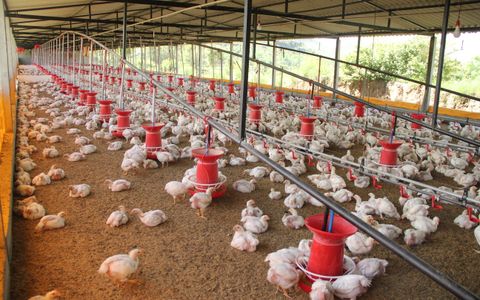
A thousand chicks is a large batch to brood at once. Before you commit, check that you have a house, a brooding plan and labour that can handle the whole flock on arrival day. A thousand chicks in one brooder is a different job from fifty. Plan the floor space for the birds at market weight, not for the chick they arrive as, because the house has to hold them for the rest of the cycle.
Think in stages. The first weeks need heat, close attention and feed at short intervals. Later weeks need more floor space, more feeders and drinkers, and good airflow. If your house can only hold part of the flock in the first weeks, ask us about a split plan before you order, and include the second placement date in your calendar.

Our brooder setup guide lists the checks to make before any chicks arrive. Apply them to the whole flock, not to a single box. A brooder that works for fifty birds can fail badly when the number is twenty times larger.
Choosing the breed for 1,000 chicks
A 1,000-chick order is a large commitment, so the breed has to match your house, your feed supply and the buyers waiting for the birds. Price should be the last thing you consider, not the first. Three breeds cover most of the 1,000-chick enquiries we get, and the table sets out what each one needs from you.
| Goal | Breed | List from-price (GH₵) | What to check first |
|---|---|---|---|
| Market broilers on a short cycle | Ross 308 or Cobb 500 | 20 | Feed supply, ventilation, clean litter and buyer demand |
| Brown eggs from a layer flock | Hy-Line Brown | 23 | Long rearing before lay, so plan the layer house in advance |
| Brown eggs on a different line | Bovans Brown | 25.50 | The same long rearing; confirm your egg buyers want brown shells |
Pick one breed per house. Mixing lines in one house makes the flock harder to manage and makes the sale harder to plan. If you want both broilers and layers, run them in separate houses, and place them on separate calendars.
For the growth and feed side of the broiler lines, read the broiler day-old chicks guide. For the layer timeline, read the layer day-old chicks guide.
Lead time: when to place a 1,000-chick order
Lead time is the single biggest factor in a large order. The table works backwards from the day the chicks arrive. Use it as a checklist, and adjust the dates to your own house and your own calendar.
| When | What to do |
|---|---|
| Four weeks before arrival | Message us with breed, count, date and town, and ask for an availability check. For imported chicks, this starts the three-to-four-week window. |
| Three weeks before arrival | Read and confirm the written quote, and agree the delivery or station collection arrangement |
| Two weeks before arrival | Clean, disinfect and rest the house, then check the brooder, heat source, drinkers and feeders |
| One week before arrival | Stock feed, bedding and clean water for the first days, and brief the team who will receive the boxes |
| Arrival day | Count every box, record the number, and send the total and a photo on WhatsApp the same day |
Imported chicks need three to four weeks of notice because they travel with a veterinary health certificate and are cleared under a Ghana import permit from the Veterinary Services Directorate. For local hatch, the same planning steps apply, and the notice you need depends on the date you want. Ask us for the earliest date we can offer for your breed, and book as early as you can for the weeks that matter most to your buyers.
How the 1,000-chick quote is built
A quote for 1,000 chicks and above is built from the same parts as a standard quote, with more detail. It should show the breed and the box count, the hatch or import date, the transport plan, the delivery cost for your town or the collection arrangement, and the payment terms. Ask for each part to be written out, so you can check the total against your plan line by line.
The list arithmetic is the starting point, and the quote is the figure you pay. Do not compare a 1,000-chick quote with the list price of a single box and decide that one of them is wrong. They are different documents that do different jobs. The single box shows what one unit costs, and the large quote shows what your whole order costs once the transport and terms are added.
When the quote arrives, budget the lines in order. Start with the chick line, then add the delivery line, then add the feed you expect to buy for the first weeks, the bedding, the vet visits and your own labour. That gives you a working total you can defend to a lender, a partner or your own household.
Moving 20 boxes: transport and arrival
Twenty boxes is a real load. We pack every box in ventilated boxes of 50, and each box is dispatched on the day its chicks hatch. Confirm in the quote whether the order travels in one dispatch or in more than one, and which station or collection point you will use. If your towns are spread out, ask whether a split dispatch is possible, and include its cost in the quote so you can see it before you pay.
On arrival, plan a team big enough to unload twenty boxes quickly, move them into a warm house, and count them before the chicks settle. A quick, organised unloading protects birds that have been travelling for hours. For the far north and east, the journey takes longer, so plan the arrival time around daylight and the heat of the day. Our delivery page explains how chicks reach each region.

Keep the first few hours calm. Chicks that have just arrived need warmth, water and quiet more than anything else. Handle the boxes gently, do not crowd the brooder, and check the birds again after an hour rather than repeatedly during the first minutes.
Vaccination and records for a flock of 1,000
Each chick leaves the hatchery vaccinated against Marek's, Newcastle disease, Gumboro, infectious bronchitis and coccidiosis, and each batch comes with a record. For a 1,000-chick order, the record covers all 20 boxes, and it is the document your vet will use to plan boosters.
Keep the record with the written quote and the arrival count. If you have more than one house, label the record by house, so the batch history follows the birds. Follow your vet's schedule for boosters, and do not rely on a single calendar, including ours. Your vet knows your region, your water source and your flock's history.
Dead on arrival across a thousand birds
On a large order the count matters more than the impression. Count every box on arrival, not just a sample. Write the number for each box in your records, and send the total count and a photo on WhatsApp the same day. Dead chicks on arrival are replaced free in the next hatch. Because the replacement is linked to the count, a clear record on the day protects both sides.
Do not throw away the boxes until the count is confirmed and the photo has been sent. If you see a problem that you cannot explain, keep the chicks warm and quiet, call us, and send the details straight away. Good records on arrival are the difference between a quick replacement and a slow, frustrating exchange.
Book your chicks for your farm
Send breed, number and town. We reply with price, hatch date and delivery cost.
Payment and paperwork for a large order
You can pay by mobile money, bank transfer or cash. We do not take online payment. For large orders, agree the payment terms in writing with the quote, and keep that message as your record. Nothing is paid until the written figure is agreed.
If the order includes imported chicks, the paperwork is more involved. Imported chicks travel with a veterinary health certificate and are cleared at Kotoka International Airport in Accra under a Ghana import permit from the Veterinary Services Directorate. Start that paperwork early, because it sets the earliest date on which you can receive the chicks. Read our imported day-old chicks page before you commit to an import.
Mistakes on a 1,000-chick order
Most large-order problems are planning problems that were visible weeks before the chicks arrived. These are the ones to avoid:
- Ordering before the house is ready, so the chicks wait on a vehicle or at a station while the house is still being cleaned.
- Counting the boxes but not the birds, which hides a short count until it is too late to claim a replacement.
- Choosing a breed for its price alone, rather than for the feed, housing and buyers you have.
- Booking the hatch date in the middle of a festive peak, so the birds finish in the wrong week.
- Treating the list arithmetic as the final price, and budgeting without the delivery and terms lines.
The fix for most of these is the same: write the plan down, check it against the lead-time table, and agree every figure in writing before the chicks are booked.
How to place a 1,000-chick order
- Message us on WhatsApp at +233 24 915 1503 with the breed, the total chick count, the date and your town.
- Agree the breed and the hatch or import date, and confirm the box count for your order.
- Read the written quote, and check the box count, the delivery or collection arrangement, the total and the payment terms.
- Confirm the order in writing, and pay by mobile money, bank transfer or cash.
- Prepare the house, then count and record every box on arrival.
You can also start from the order form on our home page. If your need is smaller, or you plan to repeat the purchase across the year, the wholesale page explains how repeat cycles work. The bulk day-old chicks page covers the wider bulk route, and our FAQ answers the common questions.
Questions farmers ask
How many boxes are in 1,000 day-old chicks?
At 50 chicks per box, 1,000 day-old chicks fill 20 boxes. Every box is ventilated and dispatched on the day its chicks hatch. Your written quote will show the box count, so check that it matches the number you asked for before you pay.
How much do 1,000 day-old chicks cost?
At the list from-prices, 1,000 Ross 308 or Cobb 500 chicks come to GH₵ 20,000, and 1,000 Hy-Line Brown chicks come to GH₵ 23,000, before delivery. Orders of 1,000 or more are quoted individually, so the figure you pay is the written quote for your breed, dates and town.
How much notice do I need?
For imported chicks, allow three to four weeks, because of the veterinary health certificate and the import permit. For local hatch, message us as early as you can and ask for the earliest date. Book early for festive weeks, when you want your birds to finish in a particular week.
Can 1,000 chicks be delivered in several dispatches?
It can be arranged in some cases. Tell us your towns and dates, and we will say whether a split dispatch works for your order. The cost of any extra dispatch is part of the written quote, so you see it before you pay.
What if some chicks are dead on arrival?
Count every box on arrival and send the total and a photo on WhatsApp the same day. Dead chicks on arrival are replaced free in the next hatch. Keep the box counts in your records so that any claim matches the figures you wrote down on the day.
Is it better to buy 1,000 chicks in one go or in stages?
It depends on your house and your labour. One large placement is simpler to manage in one brooding plan, but it needs a big house. Staggered placements suit a steady market and let you clear the house between groups. Tell us which you prefer, and we will plan the dates with you.
Which breeds suit a 1,000-chick order?
The most common choices are Ross 308 and Cobb 500 for market broilers, and Hy-Line Brown or Bovans Brown for layers. Pick one breed per house. Your feed supply, housing and buyers should decide the breed, not the price alone.
How do I pay for a large order?
You can pay by mobile money, bank transfer or cash. We do not take online payment. Agree the payment terms in writing with your quote, and keep that message as your record before any money moves.
Prices and details checked 18 October 2026 by the Halaal Farms hatchery team, Opeikuma, Kasoa.