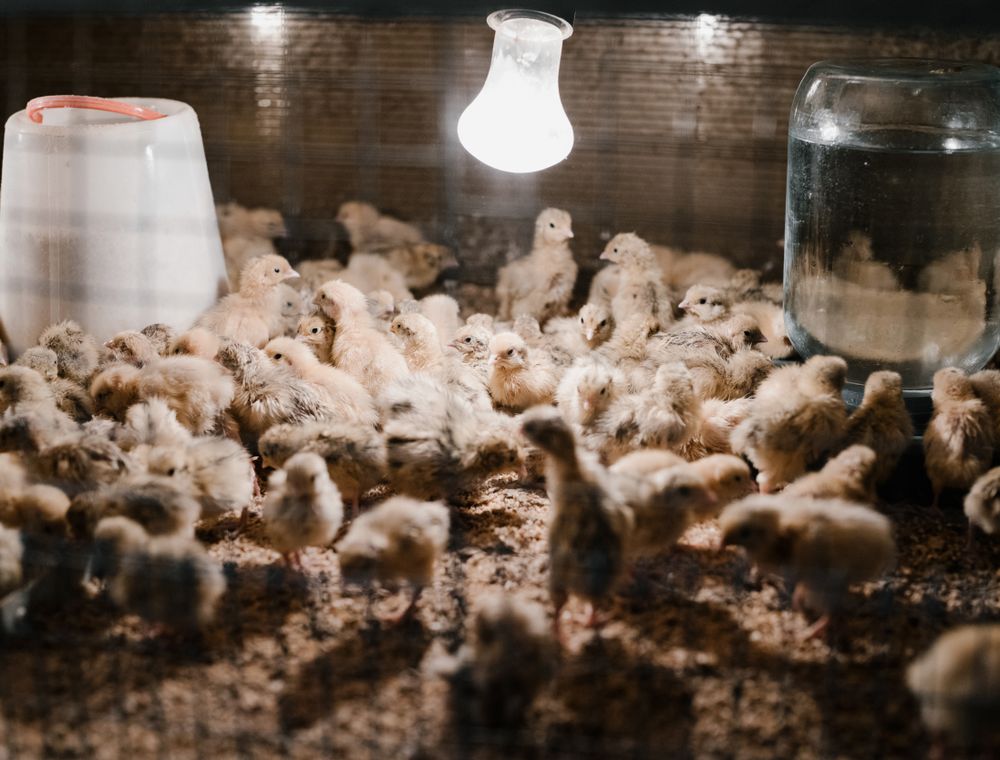
Short answer: Warm the brooder to 32–34 °C at chick level for several hours before the chicks arrive, spread 5–8 cm of dry wood shavings, give water with glucose or vitamins first and starter feed two to three hours later, then lower the heat by about 2–3 °C each week. Most early losses come from cold, thirst or wet litter, and all three are in your control.
Key takeaways
- Switch on the heat several hours before the chicks arrive, and measure it at chick level.
- Give water first, with glucose or vitamins, then starter feed two to three hours later.
- Use 5–8 cm of dry shavings and remove wet litter around drinkers every day.
- Lower the brooder temperature by about 2–3 °C each week, guided by how the chicks behave.
- Count, check and record in the first week, and report dead on arrival the same day.
Why the first week decides the flock
Most chick losses happen in the first seven days, and almost all of them come down to three things: cold, thirst and wet litter. The good news is that all three are in your control, and most of the work happens before the boxes arrive. At our hatchery in Kasoa we dispatch chicks on the day they hatch, in ventilated boxes, so they leave us in good condition. What happens in the first hours on your farm is up to you.
A good brooder does not need to be expensive. It is a clean, dry, draught-free space where the chick can find heat, water and feed within a few steps of each other. Get the basics right and the chicks will show you what else they need.
Plan the brooder for a box of 50, and expect to use it for the first three to four weeks before the flock moves into the wider house.
Two days before: prepare the house
- Clean out old litter, then wash and disinfect walls, floors, drinkers and feeders. Let the house dry fully before you bring in new litter.
- Close gaps that let in draughts at chick height. Fit curtains or sacking you can open and close, so you control the air without shutting the chicks in.
- Spread dry wood shavings 5–8 cm deep. Cover the first few days with clean paper so chicks find feed easily and do not eat litter.
- Set up a brooder ring of hardboard, sheeting or similar, about 45 cm high, to keep chicks close to the heat. Make it wide enough for the whole box of 50 with room to spread.
- Check your heat source: a charcoal pot with a chimney, a gas brooder or bulbs. Run it for at least one night before the chicks come.
Write these tasks on a list and tick them off. A simple list stops things being forgotten when you are busy on delivery day, when the boxes are waiting and the station is calling.
Arrival day: heat first
Switch on your heat source several hours before the chicks arrive. The floor under the ring needs time to warm, and the air needs to settle at the right temperature. Measure at chick level, about 2–3 cm above the litter, not at head height. A thermometer hung high on a wall will read warmer than the chicks feel.
Warm the whole brooder, then let one corner cool slightly. Chicks need a warm zone to go to and a cooler zone to move away to. A brooder with no cooler area leads to panting and crowding.
Target temperature by age
| Age | Temperature at chick level |
|---|---|
| Week 1 | 32–34 °C |
| Week 2 | 29–31 °C |
| Week 3 | 26–28 °C |
| Week 4 | 23–25 °C, heat at night only |
Lower the heat by about 2–3 °C each week, but judge by the chicks rather than the table alone. Cold nights during the harmattan in the north may mean you keep heat for longer than the table suggests.
Read the chicks, not just the thermometer
- Huddled under the heat, loud cheeping: too cold. Add heat, lower the lamp or close the curtains.
- Pressed against the ring, panting, wings held out: too hot. Raise the heat source, open the curtains or move the chicks to a cooler corner.
- Crowded on one side: a draught or a cold spot. Find it and block it.
- Spread evenly, eating, drinking and resting: just right.
- Standing still with ruffled feathers, or sleepy birds away from the heat: check water and feed straight away, then look for the cause.
Check the flock in the morning, afternoon, evening and at night. A quick walk-through with a torch at night shows you more than any single reading.
Water before feed
When you unbox the chicks, dip the beaks of a few into the drinker and the rest will follow. Use clean water with glucose or a vitamin mix for the first day. The glucose gives quick energy after a long box journey and helps the chicks settle. Give starter feed on paper and in shallow trays two to three hours after arrival, once they have drunk.
As a rule of thumb, allow one small chick drinker and one feeder tray per 50 chicks, placed inside the ring near the warm zone. Chicks that have never seen feed may not eat at first, so scatter a little on the paper and keep the trays topped up.
Refill and wash drinkers daily. Water that sits in the sun or fills with litter can make chicks sick, and wet litter around the drinker is the first thing to remove.
Space and equipment as they grow
Start broiler chicks at about 30 per square metre inside the ring, then widen the ring every few days as they grow. By the third week most broilers need the whole house, with drinkers and feeders spread along its length. Overcrowding causes wet litter, smell and disease, and it is one of the easiest ways to lose a good batch in the middle weeks.
Worked example (assumed numbers). A box of 50 Ross 308 chicks at GH₵ 20 each costs GH₵ 1,000. At 30 chicks per square metre, the starting ring needs only about 1.7 m². That is why the brooder does not need to be large. Plan to open the ring out in stages, and make sure the whole house is ready before week three so you are not rushing to build more space while the birds are growing fast. If you are raising broilers for sale, our broiler day-old chicks guide sets out the full cycle, and our breed comparison helps you pick the right bird first.
Litter, ventilation and wet patches
Dry litter protects chicks from the bacteria and parasites that thrive in damp conditions, and it stops ammonia building up from droppings. Ventilation has to do two jobs at once: remove stale, damp air, and avoid a draught at chick height.
- Check the litter under and around drinkers every day. Remove and replace wet patches straight away.
- Open the curtains a little higher on warm days and lower them at night, so air moves without blowing across the chicks.
- On the coast, humidity stays high for much of the year. Watch for condensation under the roof and on the walls.
- In the north, dust and cold can arrive together. Keep litter clean and dry, and do not close the house so tightly that the air goes stale.
Need chicks for your next batch?
Send breed, number and town. We reply with price, hatch date and delivery cost in writing.
Adjusting the brooder for the season
The same brooder needs different care in different months. The major rains, roughly April to July, and the minor rains, roughly September to November, bring damp litter and cooler, wetter nights. Plan drainage and raised feeders, and check the litter twice a day. The harmattan, roughly December to February, brings dry, dusty air and cold early mornings, especially in the north, where chicks may need more heat for longer.
Festive peaks at Christmas, Easter and Eid al-Adha mean many farmers receive chicks at the same time. If your batch falls in one of those peaks, keep the brooder ready and brief your helpers in advance. For the timing of a batch against the festive market, read our guide to Christmas broilers.
Plan the collection so chicks go straight into the brooder
Chicks are dispatched on the day they hatch and sent by trusted transport to the transport station in your town, or you can collect them from our farm in Opeikuma, Kasoa. Confirm the station, the time and the delivery cost before you pay. The delivery cost is confirmed before payment, so there are no surprises on the day.
Make sure someone is at the station and ready to carry the boxes straight to a warm brooder. A chick that waits for hours in a cold or bright place starts its first day at a disadvantage. Day-old chicks can survive a journey on the yolk they absorbed before hatching, but a short, well-planned trip is kinder to them. Our delivery page explains the process step by step, and our hub of regional pages lists the route for every region.
Ready to order? Place your order here, or see today's chick prices before you plan the batch.
The first week checklist
- Count the chicks on arrival. Send us a photo of any dead on arrival on WhatsApp the same day, at +233 24 915 1503. They are replaced free in the next hatch.
- Check the temperature at chick level, and the chicks' behaviour, morning, afternoon, evening and at night.
- Refill and wash drinkers daily, and check the water is clean and cool.
- Remove wet litter around drinkers straight away and replace it with dry shavings.
- Lower the heat only when the chicks show they are comfortable, and note the change.
- Follow your vet's vaccination schedule from the batch record we give you, so boosters are planned, not guessed.
- Keep a simple daily record of losses, feed used and anything unusual. It is the best basis for changing your setup next batch. Our frequently asked questions cover the most common first-week problems.
Common mistakes to avoid
- Switching the heat on when the chicks arrive, rather than hours before.
- Measuring temperature at head height instead of at chick level.
- Giving feed before water, so chicks eat dry feed and become thirsty.
- Using damp or dusty shavings, or reusing litter that was wet and not cleaned out.
- Leaving drinkers unwashed, or placing them where litter splashes into them.
- Overcrowding the brooder to save space, then losing birds to heat, damp or smell.
- Lowering the heat too quickly because the chicks look bigger.
Most of these come from rushing. A brooder checked the night before and a plan written down are the best protection. Before you commit money to a bigger batch, read our guide to starting a poultry farm on a budget.
Questions farmers ask
What temperature do day-old chicks need?
About 32–34 °C at chick level in the first week. Lower it by roughly 2–3 °C each week, until around week four when most chicks no longer need extra heat during the day. Measure at chick level, and judge by behaviour: huddling means too cold, while panting and spreading out means too hot.
Should day-old chicks get water or feed first?
Water first, ideally with glucose or a vitamin mix on the first day. Dip a few beaks in the drinker as you unbox them. Give starter feed on paper and in shallow trays two to three hours later, once the chicks have drunk. Keep both topped up and fresh throughout the first week.
What bedding should I use for a brooder in Ghana?
Dry wood shavings, spread 5–8 cm deep, are a good choice. Cover the first few days with clean paper so chicks do not eat litter. Avoid damp, mouldy or dusty material, and never reuse litter that has been wet without cleaning it out. Replace wet patches around drinkers every day.
How many chicks fit in a brooder?
A box of 50 starts in about 1.7 m² of ring at roughly 30 chicks per square metre. Widen the ring every few days as they grow, and by about week three most broilers need the whole house. Crowding causes wet litter, smell and disease, so give the flock room as it grows.
What do I do if chicks arrive dead or weak?
Count the chicks when they arrive and send a photo on WhatsApp to +233 24 915 1503 the same day. Dead on arrival chicks are replaced free in the next hatch. Weak chicks should get water with glucose and a warm, quiet corner. If several are struggling, call your vet and tell us the batch details.
When can I stop using brooder heat?
Usually around week four, once the house is warm enough during the day. Keep heat at night for longer, especially in the north during the harmattan, and watch the chicks. Lower the heat gradually and move the heat source out of the way as the flock grows.


