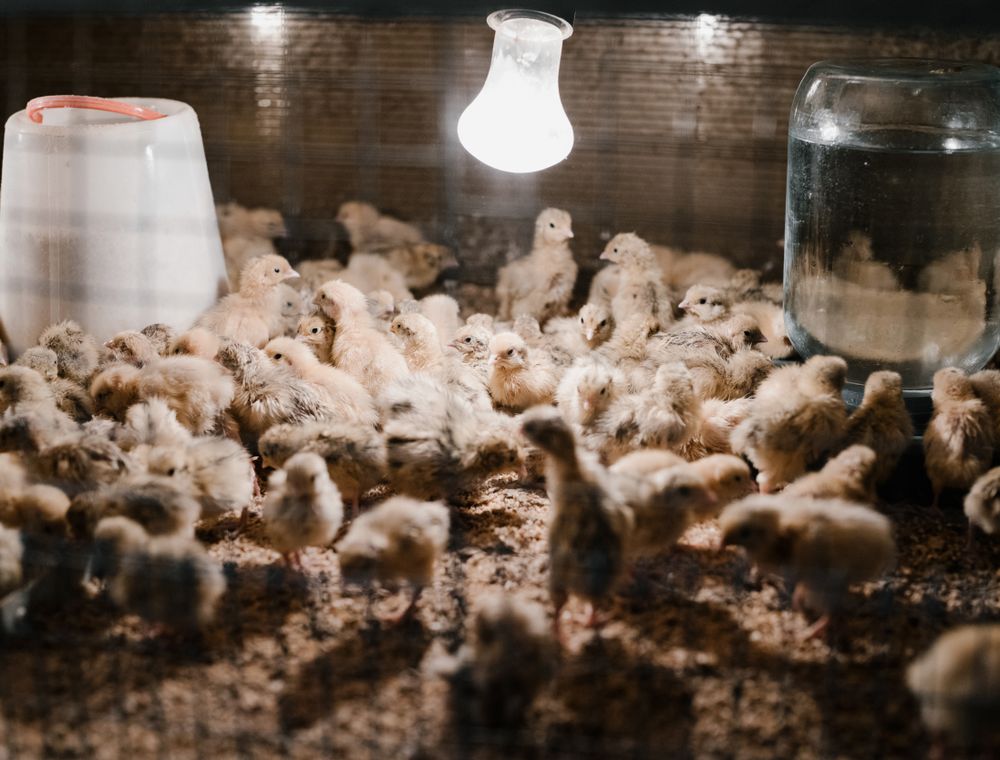
Short answer: A brooder ring is a round wall of panels around a heat source, sized so that a 50-chick brood sits at about 20 birds per square metre in week one, then opens up as the birds grow. Use about five centimetres of dry, clean litter, a lamp or gas brooder at chick height, at least one feed and water point per 50 chicks, and paper on the floor for the first days. Expand the ring around day seven and again in the second week, on a schedule written down before the chicks arrive.
Key takeaways
- Size the ring for the first week, then open it up on a schedule you can write down.
- About 20 chicks per square metre in week one is a planning figure, not a law.
- Five centimetres of dry litter, changed when it wets, beats a deep bed that rots in the damp.
- Set the heat by the chicks' behaviour and by a thermometer at chick height.
- Expand before the chicks start to pile, not after.
What the ring does, in plain terms
The first two weeks of a chick's life are about three things: keeping it warm, keeping it close to feed and water, and keeping it out of trouble. A brooder ring does all three inside a space you can see from one spot.
Think of the ring as a warm, safe room the size of the brood, not the size of your shed. A small ring is easier to heat evenly and easier to check in the dark. A ring that is far too big is cold at the edges, and the chicks spread out where you cannot see them, which is when deaths go unnoticed.
The ring does not replace the shed. It sits inside it, and the shed still has to be dry, draught-free at chick height and clean. We cover the wider house in our guide to broiler house setup, but the ring is where the first two weeks are decided. Before you buy anything, our piece on getting the brooder ready before the chicks arrive sets out the order of jobs.
Sizing the ring for your first batch
Start with the number of chicks you will receive, then work backwards to the diameter. The planning rule we use is around 20 chicks per square metre in the first week, and about 12 per square metre by the end of the second week. Treat both as starting points. The birds will tell you when they need more room.
| Batch size | Ring diameter | Floor area | Chicks per m² (approx.) |
|---|---|---|---|
| 50 chicks, week one | 1.8 m | 2.5 m² | 20 |
| 50 chicks, end of week two | 2.3 m | 4.2 m² | 12 |
| 100 chicks, week one | 2.5 m | 4.9 m² | 20 |
| 100 chicks, end of week two | 3.2 m | 8.0 m² | 12 |
The area is worked out from the diameter, so a 1.8 m ring is about 2.5 square metres. Check the figures against your own shed before you buy anything. A ring that will not fit in the room is no use to you.
If you are starting with a small batch and expect to buy more within a month, it is cheaper to build a ring that can be extended with extra panels than to build a second brooder later.
Building the ring from materials you can buy locally
You do not need a catalogue brooder. The ring is a wall, and the wall needs to be smooth on the inside, tall enough to keep the first-week chicks in, and firm enough to stand a bump from the feed bucket. Most farmers build one from one of four things.
- Plywood or timber panels tied or bolted into a circle. Strong, reusable and easy to extend. Keep the inside face smooth.
- Bamboo or wooden strips lashed to a frame, with a cloth or plastic sheet fixed to the inside. Cheap and light, but the cloth needs replacing when it tears.
- Galvanised or corrugated sheet set upright. Durable, but it heats up fast in direct sun, so keep it out of the sun or shaded.
- Cardboard works for a day or two only. In Ghana's humidity it softens and sags, and the chicks start pecking at it.
Whatever you use, check the inside for nails, sharp edges and gaps wider than a chick's head. A chick can squeeze through a gap that looks too small for a finger. Set the ring on a floor that is flat and dry. Chicks slide on smooth concrete, and a slippery floor is one of the common routes to splayed legs.
Heat: height, distance and the first-week target
The heat source sits at the centre of the ring, and its height decides almost everything else. A lamp hung too high warms the roof and leaves the floor cold. A lamp hung too low burns any chick that gets underneath it. Start with the lamp high enough that chicks cannot touch it, then adjust by watching the birds and the thermometer.
Read the thermometer at chick height, not at the lamp and not on the floor directly under it. Take one reading at the centre and one at the edge. In week one, a common planning target at chick height is somewhere around 33 to 35 °C, falling by two to three degrees each week as the feathers come in. Check that figure against your vet's advice or your supplier's brooding notes, because the right target depends on the heater, the shed and the weather.
The birds have the final say. Chicks spread evenly with a little room to move are at about the right temperature. Chicks bunched under the lamp need more heat or a draught fixed. Chicks spread out and panting need less. For how to read those behaviours in more depth, our guide to preventing chick piling goes through each one.
In the harmattan, plan for colder nights and check the temperature again after dark. In the rainy season, expect a cooler, damper shed, and check that the litter under the lamp stays dry.
Litter: five centimetres of dry and clean
Litter absorbs droppings and water, keeps the floor warm and gives the chicks something to scratch. In Ghana's damp months it is also the part most likely to go wrong. A deep litter bed looks cosy, but once it turns wet under the drinkers it rots, smells, and carries the germs that cause pasting.
Use about five centimetres of dry, clean litter. Dry wood shavings from untreated timber, or clean rice husk, both work well. Avoid chopped straw or grass, which goes mouldy quickly. Fresh sawdust from a sawmill can be dusty and sometimes comes from treated wood, so check before you use it. Keep a bag of spare litter in the store, so you can replace the wet patch around the drinkers without emptying the whole ring.
For the first three days, cover the litter with clean paper, cut so the chicks can walk and reach the feed. Chicks that eat litter can run into crop problems, and paper also makes the feed easy to see. Remove the paper once the chicks are pecking the feed properly, usually by the end of the first week.
Feed and water points inside the ring
Chicks drink more than most new farmers expect, and they are most likely to suffer when the drinker is out of reach or empty. Put the water where a one-day-old chick can reach it without climbing. Shallow drinkers with clean pebbles or a chick drinker base are best for the first days, because they stop the chicks drowning.
As a rule for week one, plan at least one feed tray and one drinker for every 50 chicks, and put them on the cooler half of the ring, not directly under the heat. Refill the water several times a day. Put a tray or raised base under each drinker, so spills do not reach the litter.

- Drinkers level, filled with fresh water, and on a tray or raised base.
- Feed on paper or trays for the first days, dry and fresh.
- No drinker or feeder sitting directly under the lamp.
- Extra points added as the birds grow, so they never have to crowd one dish.
Feed choice is its own decision, and our guide to poultry feed formulation basics is the place to start. For the first-week feed trouble that can come from a poor feed set-up, see our notes on pasty butt in chicks.
Expanding the ring: a schedule you can write down
Expansion is where most rings go wrong. Farmers open the ring too late, and the birds pile in the corner for days. Or they open it too early, and the chicks lose heat in the middle of the night. The answer is a fixed schedule, written in your record book, with changes made from what you see.
| Day | What to do | What to watch for |
|---|---|---|
| Day 1 | Set the ring, lamp and paper, and check the temperature at the edge and centre | Chicks spread around the heat and drinking within hours |
| Days 3 to 5 | Check the paper, replace wet patches, make sure feed is being taken | Pasting, night piling, dusty or wet spots |
| Day 7 | Widen the ring by about a third, or add a second section | Chicks spread into the new space within a day |
| Days 10 to 14 | Remove the paper once feed is taken well, and add feed and water points | Wet litter under drinkers, chicks chasing the edge |
| Days 14 to 21 | Open the ring fully or remove it, and reduce the heat by the planned amount | Chicks spread evenly and stay warm at night |
The table is our usual pattern, not a rule. A cold harmattan week may mean keeping the ring closed a little longer. A wet week may mean changing the litter sooner than planned. What matters is that each change is made on purpose and written down, so you know what worked next time.
Need chicks for your next batch?
Send breed, number and town. We reply with price, hatch date and delivery cost in writing.
Ghana's seasons: what changes in the ring
The harmattan, December to February, brings cool nights and dust. Keep the windward side closed at chick height, cover the feed, and check the thermometer after dark. Dust settles on paper and feed, and chicks will eat it if you let it.
The rains bring damp, and damp is the enemy of a brooder. Keep the ring on a raised, drained base if you can, change wet litter every day, and do not let puddles form near the ring door. Rats and cats follow the damp too, so check the floor for holes and any gap a rat can use to get in.
Hot spells can also push the ring to overheat, even in the cooler months. If the chicks are spread out and panting in the afternoon, raise the lamp or reduce the heat, and open a side of the shed to move the air.
Cleaning and resetting the ring between batches
A ring is only as clean as the last batch left it. Between batches, remove all the litter, scrub the panels and drinkers with clean water and a suitable detergent, let everything dry in the sun, and only then set up again. Never put a new batch onto the litter from the last one.
Keep the ring away from the feed store, and wash your hands and boots before you go in. If you have had sick chicks in the ring, ask your vet which disinfectant to use, and how long to leave it before you restock. Our page on biosecurity on a poultry farm explains the boot dip and the order of work.
Set-up checklist before the chicks arrive
Run this list the day before the box is due, and again four hours before it lands. If anything is missing, the chicks will arrive to a set-up that is not ready, and the first night will be the one you remember.
- Ring built to the planned diameter, smooth inside, with no gaps wider than a chick's head.
- Floor flat, dry and not slippery.
- Heat source hung at the planned height, centred or at one side.
- Temperature checked at the edge and the centre, with both readings written down.
- About five centimetres of dry, clean litter in place.
- Clean paper ready to cover the litter for the first days.
- One drinker and one feed tray per 50 chicks, on the cooler side, on trays or raised bases.
- Fresh water in the drinkers, and feed dry and covered.
- Draughts closed at chick height, with air still moving above.
- Expansion dates written in your record book.
When the chicks arrive, check their condition against the points in our guide to telling a healthy chick from a weak one. If you are costing the whole set-up, our budget guide for starting a poultry farm is a useful companion. The current chick prices are on our site, and you can start an order at the order form. Delivery cost is confirmed before you pay, and we give you the figure in writing.
Questions farmers ask
How big should a brooder ring be for 50 chicks?
For 50 chicks in week one, plan on about 2.5 square metres, which is a ring about 1.8 metres across. By the end of the second week the same 50 need roughly 4 square metres, or about 2.3 metres across. These are planning figures. If the chicks pile at the edge, the ring is too small or too cold. If they all sit far out and the middle is empty, the ring is too big or the heat too strong.
What litter is best for chicks in Ghana?
Dry wood shavings from untreated timber and clean rice husk are the two most practical options. Both absorb droppings and stay light. Avoid chopped straw and grass, which go mouldy in the damp months, and be careful with fresh sawdust, which can be dusty or come from treated wood. Whatever you use, replace the wet patch around the drinkers every day.
Can I use a gas brooder instead of a lamp?
Yes, many farmers do. A gas brooder gives more even heat over a wider area and suits larger rings, but it needs proper ventilation and careful handling, and its settings are different from a lamp. Whichever you choose, read the temperature at chick height, watch the chicks' behaviour, and follow the heater's own instructions when you set up the ring.
How long should the paper stay down?
Usually the first week, until the chicks are eating properly from the feed tray and not pecking at the litter. Remove the paper gradually once they are taking feed well, and watch for chicks that still try to eat the litter. Paper is a short-term aid. Leaving it down too long makes the floor harder to keep clean and keeps the chicks from settling onto the litter they will live on.
What temperature should the brooder be?
A common planning target for the first week is around 33 to 35 °C at chick height, reduced by two to three degrees each week as the chicks feather out. Use that figure as a starting point, and let the chicks show you whether it is right. Spread out and panting means too hot. Bunched and peeping means too cold. Confirm the target with your vet or your supplier's brooding notes.
When should I expand the ring?
On a planned day, usually around day seven, and again as the birds fill the ring by the end of the second week. Do not wait for piling. A brood that piles at the edge is already short of room or heat. Write the expansion dates in your record book before the chicks arrive, so the change is made on time and not in a rush.
Can I reuse the same ring for the next batch?
Yes, but only after it has been emptied, washed, dried and rested. Putting back-to-back batches into a ring that has not been cleaned is a common way to carry disease and wet litter problems forward. If you can, keep two rings in rotation, so one is always drying while the other is in use.


