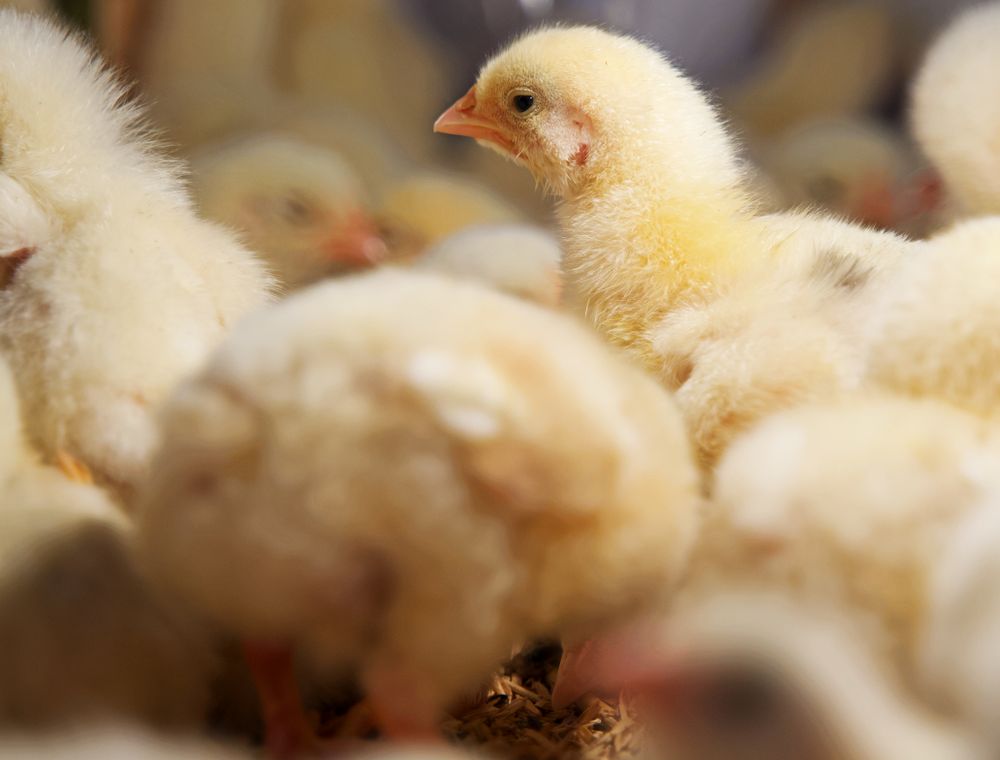
Short answer: Chick piling happens when chicks are cold, frightened or caught in a draught, and they crowd into one spot to share heat. The birds at the bottom of the heap can suffocate, and the morning count shows the damage. Prevent it by reading the temperature at chick height, sealing draughts without blocking fresh air, and building a ring with no corners where chicks can trap themselves.
Key takeaways
- A heap in one corner is a warning about the brooder, not bad luck with the chicks.
- Read the chicks: spread out means too hot, bunched means too cold, and both can happen in one night.
- Stop draughts at chick height, but keep fresh air moving so ammonia stays low.
- A round ring with no corners, and heat from the centre, lets chicks move away from the warmth.
- Check the brood at night for the first three nights, not only at the morning count.
Why do my chicks pile in one corner every night?
It is the question we hear most from first-time farmers in the first week, usually sent as a photo at six in the morning: a dark mound of chicks in one corner, the rest of the ring empty, and a few birds on the top layer already still.
The chicks are telling you something. Piling is what a chick does when it is cold, frightened or in the wrong place. It is an alarm, and most of the time the alarm is about the brooder rather than the chick. A brooder that is set up properly rarely piles, so when it does, look at the set-up first and the birds second.

Piling is also not the same as huddling. A brood that clusters loosely around the heat, with a few chicks sitting apart, is usually fine. A dense heap in one spot, with the rest of the ring empty, is the one that kills.
What happens to the chicks at the bottom
A chick on top of a heap is warm and fine. A chick underneath can be pressed flat, starved of air and crushed. The ones at the bottom are usually the youngest, the weakest or the ones that arrived last and were pushed to the edge, and they are the ones you find dead in the morning.
Smothering does not always look like a single crushed chick. You may find a dead cluster of five or six in one corner, with the others standing beside them, a little dazed. That is a dangerous pattern. It means the heap was big enough and tight enough to kill, and it will happen again tonight unless the brooder changes.
Dead chicks from piling also tell you what not to do. Do not leave them in the heap for the others to climb over. Remove them, count them and write the number down. Your record of piling deaths is the best evidence you have for fixing the set-up. If the chicks arrived in poor shape to begin with, our notes on chick mortality in transit help you sort out whether the journey or the brooder is to blame.
Reading the three behaviours in the brood
Chicks give you three clear signals. Learn them and you can adjust the brooder in minutes, instead of guessing at the thermometer.
| What the chicks do | What it means | What to change |
|---|---|---|
| Spread out, panting, beaks open, away from the lamp | Too hot | Raise the lamp or reduce the heat, and check the thermometer at chick height |
| Bunched under the lamp or in one corner, peeping steadily | Too cold, or a draught on one side | Lower or move the lamp, close the gap on the cold side, check the corner |
| Loud, continuous, high-pitched peeping across the whole ring | Distress from noise, light, hunger or thirst | Check water and feed, quieten the shed, and keep the light steady |
Two behaviours in one ring at the same time usually means a gradient. The chicks under the lamp are too hot, and the ones at the edge are too cold. That is the right kind of problem, because it means the set-up needs spreading, not that the chicks are sick.
The picture you are aiming for is a brood spread evenly with a few steps of room between birds, and fresh feed and water within reach. If you have not yet decided how big the ring should be, our brooder ring set-up guide gives the sizes for 50 and 100 chicks.
A ring with no corners for chicks to hide in
Most piling starts in the corner of a square or rectangular brooder. Chicks walk into a corner because it feels safe, more chicks follow the first ones in, and the pile grows. A round ring, or a square with rounded inner corners, takes away that dark dead spot.
- Round or rounded. Use a circle or a shape with no sharp inner corners. A corner is a trap.
- Wall height. Walls should be high enough that chicks in the first week cannot climb out, while still letting you see into the ring. Smooth walls stop chicks clinging and climbing.
- Heat from the centre, or from one side at a lower level. The warmth should reach the outer edge of the ring, so chicks can walk from hot to cool.
- No hard shadows. Chicks freeze in dark corners. Keep the ring evenly lit, and check for shadows from the wall or equipment.
- Feed and water away from the lamp. If the drinkers sit directly under the heat, the chicks crowd there, and you get a second pile.
The full sizing and build details are in our brooder ring guide. Read it before the next batch arrives, not after the first pile.
Draughts: harmattan nights and wind-driven rain
In Ghana the cause of piling is often the wind, not the air temperature. In the harmattan, from about December to February, the dry north-easterly wind comes through every gap in a wall, and the night can turn cool enough that a chick at the edge of the ring feels it straight away. In the rains, the wind drives water through open sides, and a wet chick in a draught chills faster than a dry one.
The fix is to block the draught at chick height and keep fresh air moving above. For the wider shed and its ventilation, our poultry housing designs guide is the next read. Hang a curtain of cloth or tarpaulin on the windward side, tied at the top and loose at the bottom, so it moves without flapping at the chicks. Do not close the shed so tightly that ammonia builds up. Chicks breathe the ammonia from wet litter, and a shed that smells sharp at night is a shed where chicks will struggle.
To check for draughts, hold a lit match or a strip of tissue at chick height around the ring. If the flame leans or the tissue moves, the gap is still there.
Noise, light and handling that set chicks off
A dog barking near the shed, a child running past the door or a loud radio can send a brood into a pile in seconds. Chicks are startled easily in the first week, and they run to the nearest dark place. Keep the brooder away from the main path, and keep the radio off near the chicks.
Light matters too. Patchy light from a torch at night, or a flickering bulb, makes chicks freeze and bunch. Use a steady light. When you check at night, use a dim torch held low, and do not sweep it across the ring.
Handling is the last trigger, and a sudden new visitor to the shed can do the same job as a dog. A healthy chick check at the box is a calmer way to see the birds. Chicks that are chased around the ring to be counted pile straight afterwards. Count from the outside, slowly, and handle only the birds you need to.
Night checks for the first three nights
Most piling deaths happen overnight, when nobody is watching. A farmer who checks the brood at six in the morning sees the outcome, but not the cause. Set alarms for three checks on each of the first three nights: around ten at night, around two in the morning, and again before first light.
At each check, do the same five things. Stand quietly at the edge and listen. Look at how the chicks are spread. Hold a hand flat, not moving, a few centimetres above the litter at the edge and at the middle, to feel the warmth. Count any chicks in a pile without disturbing them. Note the time and what you saw.
If you find a heap, spread it gently with a flat hand or a soft cloth rather than scooping chicks out. Give them a minute to walk away from the heat. If the heap rebuilds within the hour, the set-up is wrong, and the lamp or the wall needs to change now, not in the morning.
Need chicks for your next batch?
Send breed, number and town. We reply with price, hatch date and delivery cost in writing.
A worked example from a harmattan night
Here is a set-up we would sooner see than the one most farmers start with. A 50-chick brood goes into a rectangular box in December. The lamp sits in one corner, the drinkers sit on the far side, and the box has a gap under one wall where the harmattan comes through. At ten at night, the chicks are packed into the corner furthest from the lamp. By six in the morning the farmer finds twelve dead under the pile, and the rest still crowded in the same spot. Farms in the north, where the harmattan bites hardest, should check the set-up before the first cold week.
The fixes are simple and cost next to nothing. Move the lamp to the centre of a round ring. Hang a cloth on the windward side, tied at the top. Move the drinkers to a cooler edge that is still easy to reach. Check the temperature at chick height again, and note the reading at the edge.
The next night, the brood spreads across the ring. The count the following morning shows no new deaths, and the farmer writes down the lamp height that worked. That note is worth more than any general advice, because it describes the set-up that works in your own shed.
Rescuing a brood that has already piled
If you arrive to a pile, your first job is the chicks, not the set-up. Work quietly and in this order:
- Remove the dead chicks and count them. Note the number and the time.
- Lift the chicks from the top of the heap first, gently, and check them for warmth.
- Put the cold chicks under the lamp in a small box, not back into the heap.
- Spread the rest across the ring, with feed and water within easy reach.
- Look for the reason: draught, lamp height, a corner, noise. Fix one thing at a time and recheck.
Do not stand chicks in cold water or leave them in the sun to warm up, and do not give them anything from a bottle until your vet has said so. Separate any chick that is injured, pale, or still not standing an hour later, and ask your vet for advice. A piling incident is also a good moment to check the brood for pasting, which often follows chilling. Our guide to pasty butt in chicks covers what to look for.
Checklist for tonight
If your chicks arrive today, run this list before the lights go off. It is not long, and it covers the causes that show up most often.
- Lamp height set, and the edge reading noted at chick height.
- Every corner of the ring checked for shadows and traps, and rounded where needed.
- Gaps on the windward side closed at chick height, with air still moving above.
- Drinkers and feed away from the hottest spot, and within easy reach of the edge.
- Shed quiet, with dogs and children kept away from the brood.
- Night torch dim, with a plan not to sweep it across the ring.
- Three check times set on your phone for each of the first three nights.
- Count and photo ready for the morning, in case of dead on arrival birds.
If you are still short of answers after a bad night, message us on WhatsApp at +233 24 915 1503 with the temperature readings and the time you noticed the pile. We would rather see the numbers than the photo alone. If you are ready for the next batch, the order form is the quickest way to start. For the breed side of the decision, see our breeds page.
Questions farmers ask
Is piling always a sign of cold?
Not always. Chicks also pile when they are frightened by noise, sudden light or a strange smell, and when they are too hot in a corner they cannot leave. Check the chicks' behaviour and the thermometer at chick height before you decide. If the pile forms only at night, cold or a draught is the likely cause. If it forms during the day after a noise, fear is the more likely cause.
Can I use a cardboard box as a ring to stop piling?
You can use one as a starting point for the first day, but cardboard gets damp and soft within a day or two in Ghana's humidity, and it hides the corners. A plywood, bamboo or wire ring with rounded corners is more practical for the whole first week. Whatever you use, keep the inside smooth and dry, with no sharp edges that can cut feet.
Should I completely seal the shed to keep the chicks warm?
No. Sealing the shed stops the draught, but it also traps ammonia from wet litter and dust. Chicks in a sealed, smelly shed struggle to breathe and become weak. Block draughts at chick height with a cloth or tarpaulin on the windward side, and keep ventilation above the chicks, so the air moves without blowing on them.
How long does the piling risk last?
The highest risk is in the first week, when the chicks are small and the heat matters most. Keep checking nightly through the first three nights, and watch again at the second and third week as you expand the ring or move the lamp. Chicks grow fast, so a set-up that worked on day two may need changing by day seven.
Do I need a thermometer, or can I judge by hand?
Use both. Your hand tells you whether a spot feels warm, but it does not give you a number, and hands get used to heat quickly. A thermometer at chick height, read at the edge and the centre, gives you a figure to write down and compare from night to night. Keep one for the brooder and use it for nothing else.
What if the chicks still pile after I change everything?
Go back to the list. Check the thermometer again, the draughts, the corners, the lamp itself, and whether the brood is too dense for the ring. If the pile still forms, look at health. Chicks that are sick, weak or pasted tend to huddle. Call your vet, and tell them what you changed and what you saw, with the times.
What should I tell Halaal Farms if chicks pile on arrival?
Tell us the count on arrival, whether any were dead in the box, and whether the pile started during the journey or after you put them in the brooder. Send a photo the same day to +233 24 915 1503. A pile in the box is usually a transport question. A pile in a well-set brooder is usually a set-up question, and the two need different answers.

