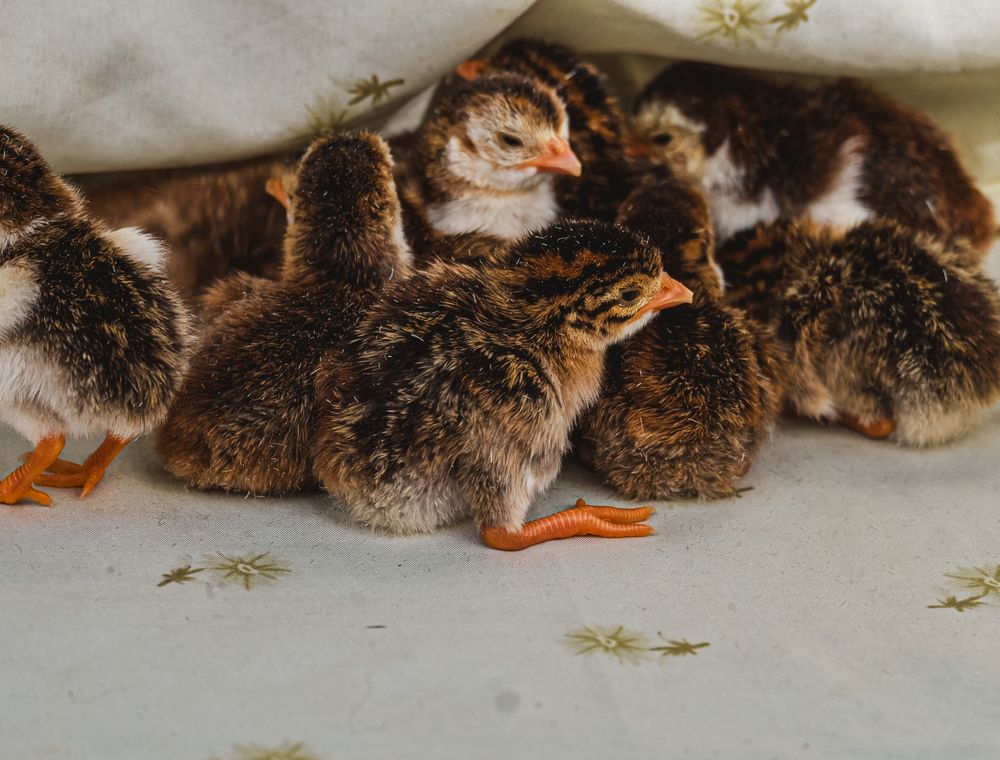
Short answer: Ducklings, turkey poults and guinea fowl keets each need their own start, and none of them does well in a brooder set up the way you would set up for chicks. Ducklings need steady warmth and water they can drink without soaking their down. Poults need the most heat and the strictest separation from chicken litter, and keets need a tight, high-walled brooder because they are fragile and fly early. Match the heat to the age, let the birds spread away from it, and keep the three species apart.
Key takeaways
- Ducklings need warmth and a shallow drinker with a lip, because wet down chills fast and deep water can drown them.
- Poults need about 35 °C at chick level in week one, and strict separation from chickens because of blackhead.
- Keets are fragile and easily startled. A high-walled, quiet brooder with a cover keeps them calm and in.
- Step the heat down gradually, roughly 3 degrees a week, and let the birds' spread tell you whether it is right.
- Brood each species separately, with its own litter, feeders and drinkers, and keep all three away from chicken litter.
Three starts that look alike and are not
Day-old ducklings, poults and keets all arrive as small, fluffy, slightly bewildered birds, and that is where the similarity ends. Each one has its own temperature habit, its own feed, and its own early weakness. The table below sets out the planning figures we use as starting points. Treat them as targets to watch, not as settings to leave alone.
| Species | Week one at chick level | Step-down | Starter feed | Main early risk |
|---|---|---|---|---|
| Ducklings | About 32 °C | Roughly 3 °C a week | Duckling starter with niacin, checked on the label | Chilling when wet, drowning in deep water, leg problems on damp litter |
| Turkey poults | About 35 °C | Roughly 3 °C a week | Turkey poult starter, higher in protein than chick starter | Blackhead, poor feed intake, crowding and piling |
| Guinea fowl keets | About 35 °C | Roughly 3 °C a week | High-protein starter made for keets or game birds | Panic and crowding, early flying, sudden deaths from fright |
Notice that the three numbers look close, and the reasons behind them are not. The duckling is a water bird with thinner down than a chick. The poult is the most cold-sensitive of the three. The keet is nervous, and most of its losses come from the brooder being noisy, cramped or too open.
Ducklings: warmth, and water they can drink without soaking
Ducklings look like small chicks until they reach water. Their down is not waterproof when they hatch, and it gets soaked by splashing and spilled drinkers. Wet down chills fast, and a duckling that gets damp in a draughty corner can be in trouble within hours, even in a room that feels warm to you.
Give them water to drink, but not a deep bath. The classic mistake is a bowl deep enough for the duckling to dunk its head, which is also deep enough to drown a bird that slips in. Use a shallow drinker with a lip, filled to a few centimetres, and place it so the birds can reach it without climbing into it. Smooth pebbles or clean grit in the drinker help a young bird that does get its head under to find its footing.
Keep the heat steady at about 32 °C in week one, measured at the height of the birds rather than at the lamp. Ducklings spread out when they are comfortable, and they huddle at one edge when they are not. Watch them rather than the dial for the first few days.
Ducklings in the brooder: dry litter and a feed that suits a duck
Wet litter is the duckling's second enemy. Splashed water soaks the bedding around the drinker, and damp litter cracks the feet and invites the birds to sit in cold, wet corners. Put the drinker on a wire or mesh tray above the litter, or move it every day, and lift out any clumped litter as soon as you see it. A dry floor is more important for ducklings than for chicks.
Feed a duckling starter and check the label for added niacin, because ducklings need it for healthy legs and steady growth. Do not assume that chick starter is enough, and do not mix feed that has been sitting in a damp store. Our duck farming guide covers the longer picture, including when the birds start laying and what they need once they are feathered.
Poults: the most heat, and the disease that chicken litter carries
Turkey poults need the most heat of the three in week one, and they are less forgiving of chills than chicks are. A chilled poult stops eating, huddles at the edge of the brooder and declines quickly. Set the heat at chick level, and judge it by the poults' behaviour as well as the thermometer. If they cluster tightly under the lamp in the first hours, the heat is short.

The disease to plan for is blackhead, a parasite that turkeys pick up easily and that chickens can carry without showing any signs. A poult kept on litter that chickens have used, or near a chicken run, can be exposed with no warning at all. Keep poults on clean litter away from chickens, and never share feeders, drinkers or tools between the two species. If you see signs in your poults, call your vet straight away. Follow their advice on treatment and prevention, not a farm rumour. Our turkey farming guide sets out the wider routine for a flock.
Getting poults to eat and drink in the first two days
Poults do not always find their feed on their own. A few stand at the feeder with empty crops, and by the second morning they are weak and slow. Dip each bird's beak gently into the water, then into the feed, so it learns where both are. Scatter a little starter on a flat tray or paper under the lamp, and keep the light bright enough that the birds can see the feed clearly.
Count the birds at dawn. A poult that has not eaten in twelve hours needs attention before you assume the heat is wrong. Feel the crop, which should be soft and full after a feed, and move the bird to the drinker if it has not been near water. Quiet birds that stay at the edge are telling you something, and it is usually about access to feed and water.
Keets: fragile, nervous and quick to fly
Guinea fowl keets are the most nervous of the three. A sudden noise, a shadow across the brooder or a hand moving too fast can send the whole brood into one corner or over the wall. A keet that has been piled on or trampled rarely survives the shock, even if it looks unhurt at first. Work quietly, move slowly and keep your routine the same every day.
They also fly early. Within the first couple of weeks, a keet that jumps can clear a low wall, and it lands hard on the far side. Keep the brooder walls high enough to stop the jumping, and fit a light mesh cover if your birds keep getting out. Our guinea fowl farming guide covers the longer flock routine once the keets are feathered.
A brooder layout that suits all three, one species at a time
The layout matters more for keets and ducklings than for chicks, and the principle is the same for all three. The birds need a warm zone, a cooler zone to move into, and a quiet dark corner where they can hide. A ring of panels around the heat gives them that, and our brooder ring guide shows how to build one. Put the feed and water on the cool side, so the birds have to walk away from the heat to eat and drink.
Keep the floor clean and the bedding dry. Keets in particular will pick at anything, so keep sharp edges, loose wire and small objects out of reach. Make sure no gap at the base of the walls lets a rat, a cat or a draught in. Each species needs a brooder that is checked, cleaned and reset before the next brood arrives.
Keeping the three species, and the chickens, apart
Brood each species on its own. Ducklings splash, poults are vulnerable to disease, and keets are nervous, so mixing them in one ring means each one suffers the others' habits. Keep the litter, feeders, drinkers and tools separate for each pen, and wash your hands between pens. Never move litter from a chicken house into a poult or keet brooder, because organisms can travel in litter, and the chicken may be carrying something it does not show.
If you have to share a room, put the pens at opposite ends and keep their doors shut. A shared room is still a risk, but it is a manageable one when the pens are kept apart in every other way.
Need chicks for your next batch?
Send breed, number and town. We reply with price, hatch date and delivery cost in writing.
Stepping the heat down, and reading the birds as they grow
Reduce the heat gradually, roughly 3 degrees a week for each species, and let the birds decide the pace. A brood that spreads comfortably across the floor is ready for the next step. A brood that stays bunched at the edge is not, and you should hold the heat for another day or two before trying again. Changing the lamp height is a gentler step than changing the setting, so try that first.
- Ducklings: by the third week they should be moving about freely on dry litter, with the heat reduced at each weekly check.
- Poults: by the end of week three they should be eating and drinking evenly, with the heat stepped down to the level the house can hold.
- Keets: by the end of the first month they should be calm around you, roosting off the floor, and ready for a larger pen.
Our brooder temperature chart sets out the chick version of the same weekly step, which is a useful reference when you compare notes on the three species.
A worked example: forty keets in a small brooder
Suppose a keeper brings forty keets into a brooder that is a little over a square metre in floor space, with the lamp hung at the middle. On the first morning the keets bunch under the lamp in a tight pile, and the keeper raises the lamp a few centimetres to spread the warmth. By the evening, most of the birds sit on the edge of the warm zone and a handful are still under the lamp.
On day three the keeper sees a different pattern. Some keets are stuck in the far corner, out of the heat, and their feathers look ruffled. The keeper moves the heat source slightly to cover that corner, and gives the birds a second feeder on the cool side. By day seven the brood spreads evenly across the warm half, and the keeper begins the weekly step-down.
The lesson is that the same brooder can be too small for forty birds at one stage and too warm for them at another. Watch the spread, and change the space or the heat to match. A crowded, silent brood is never a good sign, however calm it looks from the door.
Signs each brood is right, species by species
Use this checklist at each morning visit. A brood that ticks most of the boxes for its species is coping. A brood that misses two or three needs a fix that day.
- Ducklings: dry feathers around the vent, eating and drinking evenly, and no birds sitting in the drinker.
- Turkey poults: crops soft and full, birds moving between heat and feed, and no birds standing apart at the edge.
- Guinea fowl keets: calm voices at the usual pitch, no piles in corners, and no birds clinging to the walls.
- All three: clean dry litter, no smell of ammonia, and the brooder sealed against rats and cats.
Ordering the right stock and planning the brooder
Our price list covers turkey poults and guinea fowl keets, and you can see the current starting prices on our site. Turkey poults are sold in boxes of 10, from GH₵ 650 a box, and guinea fowl keets come in boxes of 50, from GH₵ 850 a box. Those are starting prices, confirmed at order. We do not list ducklings on the price sheet, so message our WhatsApp line, +233 24 915 1503, before you plan a duckling brood.
Plan the brooder before the birds arrive, and build it to the species you are brooding that week. Our turkey poults page and guinea fowl keets page cover the stock in more detail, and the breeds page helps you compare the birds you are considering. If your first brood comes on a long road, our delivery page explains how the birds travel. Ready to commit? Start on the order form, and expect the quote in writing before you pay.
Questions farmers ask
What temperature do ducklings need in the first week?
A common planning figure is about 32 °C at chick level in week one, reduced gradually over the following weeks. Judge the heat by the birds. Spread out and calm means it is about right, crowded at one edge means too cold, and panting or pushing toward the far corner means too hot.
Do ducklings need water to swim in when they hatch?
They need water to drink, but not a deep bath. Until their feathers are fully developed, a duckling can soak its down and chill, and deep water can drown it. Use a shallow drinker with a lip, keep the litter dry around it, and check the birds after each refill.
Can I brood turkey poults with chicks?
It is not advisable. Poults are more sensitive to chills than chicks, and they are vulnerable to blackhead, which chickens can carry without showing signs. Keep poults on clean litter, with their own feeders and drinkers, and do not share tools or litter between the two.
How hot should a guinea fowl keet brooder be?
About 35 °C at chick level in the first week is a common planning figure, stepped down over the following weeks. Keets are more nervous than chicks, so keep the brooder quiet, the walls high and the heat steady, rather than checking the thermometer every hour and changing things.
Why do my keets keep jumping out of the brooder?
Keets are strong jumpers and they fly early. A low wall gives them a route out, and the drop on the other side can injure them. Raise the walls, fit a light mesh cover if needed, and check the base of the walls for gaps at every visit.
What is blackhead, and how do I keep it away from my poults?
Blackhead is a parasite that turkeys pick up easily, and chickens can carry it without showing signs. Keep poults on clean litter away from chicken runs, with feeders and drinkers used only by poults. Ask your vet about the signs and about prevention, and follow their advice rather than general rules.
Which starter feed should I use for ducklings, poults and keets?
Use a starter made for the species, and read the label rather than assuming it is right. Ducklings need niacin in their diet, poults need a higher-protein starter than chicks, and keets do well on a high-protein starter too. If a species-specific feed is not available, ask your vet or a feed adviser before you substitute.

