
Why Dormaa is Ghana's best-known poultry hub
Dormaa has earned its reputation the slow way. Over many years, farmers in the town and the villages around it built broiler houses and layer units, and the businesses that serve them grew up alongside: feed sellers, equipment dealers, vaccine and medicine stockists, transporters and the traders who buy live birds and eggs. Few towns in Ghana have that depth of poultry trade, which is why we give Dormaa its own page rather than folding it into the wider Bono region.
A hub is useful to a newcomer, because the knowledge is close by. It is also demanding, because everyone else is competing for the same birds, the same feed and the same buyers. Our advice to a Dormaa farmer is to plan for competition from the first day: efficient feed use, clean houses, good records and a chick that is healthy when it arrives.
Competition in a broiler and layer town
In a town where many farmers run similar flocks, margins are thin in a bad month and generous in a good one. The farmer who comes out ahead is usually the one who controls costs. That means choosing a bird that converts feed well, placing batches so that sales come in steadily rather than all at once, and keeping mortality low. A cheap chick that arrives weak costs more than a good chick sold at a fair price.
We price our chicks openly so you can compare. Ross 308 and Cobb 500 broilers start from GH₵ 20 a chick, and a box of 50 is GH₵ 1,000 before delivery. Hy-Line Brown layers start from GH₵ 23 a chick, which is GH₵ 1,150 a box. Confirm the final delivery cost in writing before you pay, so the number in your budget is the number you actually pay. Our day-old chick prices article puts these figures in context.
Prices
 Imported
Ross 308
The world's most widely grown broiler. Even, fast growth and strong feed conversion.
 Imported
Cobb 500
A heavy, efficient meat bird with high breast yield that copes well on lower-cost feed.
 Imported
Hy-Line Brown
Calm brown-egg layer bred for high egg numbers and strong shells over a long cycle.
 Imported
Bovans Brown
Tough Dutch layer that keeps laying through heat. A safe first choice for new egg farms.
 Local hatch
Sasso
Coloured, slower-growing bird with firm, tasty meat. Hardy on free range and lays fairly well.
Feed, maize and the Bono supply chain
Feed is the biggest running cost on any Dormaa farm, and the surrounding region is one of the main maize-growing areas in the western part of the country. Feed mills, grain traders and the smaller grinders in the towns all compete for local maize, so prices move with the harvest. A farmer who buys feed in the lean months pays more than one who buys after harvest, and a well-run flock plans its feed purchases around that cycle.
Broilers use the most feed per bird, and small feed errors show up quickly in weight and cost. Layers need a steady ration with enough protein and calcium once they come into lay, which means a layer flock needs a feed plan that starts before the chicks arrive. Ask your feed supplier for a stage-by-stage programme and use it consistently. Changing feed every week makes it impossible to tell what is working.
Selling live birds, dressed birds and eggs
A Dormaa farmer has more ways to sell than most. Live birds go to traders and to households that buy for home slaughter and ceremonies. Dressed birds go to processors, chop bars and butchers who want a clean, weighed carcass. Eggs go to households and to traders who supply towns farther south. The gap between live and dressed prices is one of the first things a broiler farmer should check, because processing adds cost and effort.
The grown birds we sell are priced at GH₵ 110 for a live broiler of about 2.5 kg and GH₵ 120 for a dressed broiler, with a mature cock at GH₵ 150. Those are our listed prices, not a market survey, but they show how the two routes compare. Work out which route you can reach reliably before you choose the breed, because the best bird for a live trade is not always the best bird for a processor. Our broiler chick guide covers the six-week plan and selling.
Bono seasons: rains, dry months and the brooder
Dormaa sits in the transition between forest and savannah, and its seasons follow the wider Bono pattern. The rains are heaviest in the middle of the year. The dry months from late November to March bring the harmattan, a dusty north-easterly wind that dries the air and coats everything in fine dust. Midday temperatures stay high for much of the year, but dry-season nights can be cool.
For a day-old chick, the first two weeks depend on a steady brooder. In the dry months, dust is the main threat to breathing and to the feed. In the wet months, damp litter is the bigger problem. Check the brooder at chick level, watch how the birds spread out and change litter before it turns sodden.
Broilers, layers or both: choosing for a Dormaa house
The most common question we get from Dormaa is which bird goes into the next house. Our short answer is that broilers suit a farmer who wants quick turnover and has a reliable buyer lined up, while layers suit a farmer who wants a monthly income and can keep a flock for a year or more. Many experienced keepers run both, with one house on a broiler cycle and another on laying birds, so cash comes in from two directions.
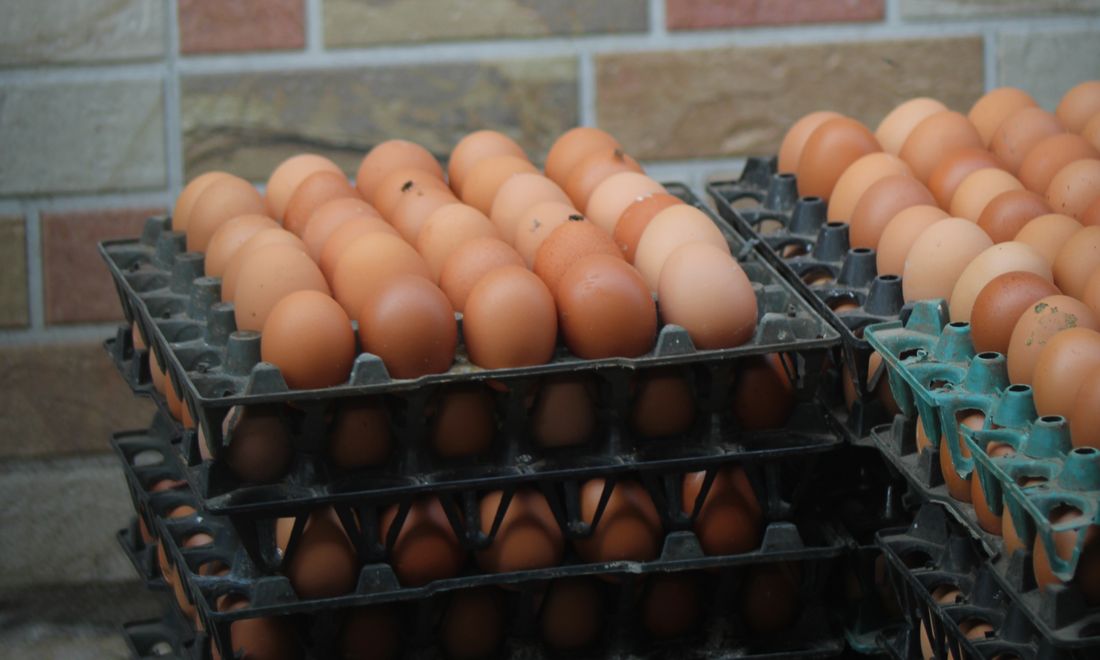
Cobb 500 and Ross 308 are both strong broiler choices, and the better one depends on the house, the feed and the buyer. Hy-Line Brown and Bovans Brown are both brown-egg layers, and the choice between them is often made on which line your neighbours have managed well and which you can source reliably. Sasso suits the farmer who wants a free-range flock with a meat and egg return, particularly on a farm with some space around the house.
| Bird | Typical role in a Dormaa house | Starting price per chick |
|---|---|---|
| Ross 308 | Fast broiler on a quick cycle | GH₵ 20 (GH₵ 1,000 a box of 50) |
| Cobb 500 | Broiler for a second house or a second buyer | GH₵ 20 (GH₵ 1,000 a box of 50) |
| Hy-Line Brown | Brown-egg layer for a steady egg income | GH₵ 23 (GH₵ 1,150 a box of 50) |
| Bovans Brown | Brown-egg layer, alternative line | GH₵ 25.50 |
| Sasso | Free-range meat and eggs | GH₵ 13 (GH₵ 650 a box of 50) |
A worked example: two houses, one cycle
Consider a Dormaa farmer with two houses of 500 birds each, one for broilers and one for layers. The broiler house takes 500 Cobb 500 at GH₵ 20, which is GH₵ 10,000 for the chicks, or ten boxes of 50. The layer house takes 500 Hy-Line Brown at GH₵ 23, which is GH₵ 11,500, or ten boxes of 50 at GH₵ 1,150 each. The chick bill for both houses comes to GH₵ 21,500 before delivery.
The figure to look at next is feed. Across the life of the broiler batch, and the first laying months of the layers, feed will cost several times the chick price. Ask your feed supplier for the full programme and write it into the plan before you place the order. A flock with a clear feed plan is far easier to sell into a competitive market.
Arrival day when the road is long and the town is busy
Seven hours of road is the longest trip we run for a standard order. We therefore dispatch early, schedule the station handover before midday and ask Dormaa customers to be waiting when the van comes in. Chicks are more likely to suffer from a long wait at the end of a trip than from the road itself, so the handover is the step to plan most carefully.

Count the birds at the station, check the boxes for dead or weak chicks, and send the count and a photo to our WhatsApp line before the van leaves town. Take the boxes straight to the brooder, open them in shade and offer water first. The free replacement for dead-on-arrival birds is settled from that same count and photo.
- Agree the station and the handover time the evening before.
- Count, photograph and message us on WhatsApp the same day.
- Brooder warm and dry, water first, then feed.
Biosecurity in a dense poultry town
When many farms sit close together, disease can travel from one to another on people, equipment, vehicles and birds. Our chicks leave the hatchery vaccinated against Marek's, Newcastle, Gumboro, infectious bronchitis and coccidiosis, and the batch record tells your vet what was given and when. The rest of the biosecurity job happens on the farm, and it protects the whole neighbourhood as much as your own flock.
Keep a clean boot-and-hand routine at the house door, limit visitors to the house, and disinfect equipment between batches. Do not share feeders or drinkers with a neighbour's flock, and do not move birds or litter between farms without a reason. Follow your vet's schedule for boosters and treatment, and report unusual deaths quickly so the vet can look at the pattern early. Our frequently asked questions cover what we advise after delivery.
Book your chicks for Dormaa
Send breed, number and town. We reply with price, hatch date and delivery cost.
Bigger orders and staggered batches
Many Dormaa farmers build up from one house to several, and that changes how they should order. Orders of 1,000 or more are quoted individually. For a multi-house farm we recommend staggering batches by a few weeks, so that sales, labour and feed deliveries do not all land at once. A staggered plan also protects you from a bad batch, because one problem does not wipe out the whole farm's income.
If you are planning a larger project, tell us the number of houses, the birds in each and the date you want them placed. We will give you a schedule and a quote in writing before any money moves. For larger projects the bulk orders page explains how we plan placements.
Festive and market calendar for Dormaa
Christmas, Easter and the Eid festivals bring the strongest demand for live birds, and a Dormaa broiler batch placed at the right time can be sold into those peaks. Plan backwards from the festival date, allowing six to eight weeks for a broiler to reach market weight. Layers placed now come into lay in the months ahead, so a layer house is a planning decision for the next season rather than a quick festive sale.
Many Dormaa farmers time their sales to the weeks before the big festivals, and some keep a steady trade in eggs running alongside. Where possible, spread the batches so you have birds to sell in more than one window. Our blog's note on Christmas broilers sets out the timing in more detail.
Mistakes that cost Dormaa farmers the most
- Placing a broiler batch without a buyer lined up for the sale weight.
- Ignoring the feed programme and then blaming the chick for slow growth.
- Sending a 400 km order without agreeing the station and the handover time.
- Stocking a layer house without the feed for the first laying months.
How to order for Dormaa
Start with a WhatsApp message to +233 24 915 1503 naming the breed, the boxes and the station, or use the order form. The price and the delivery cost arrive in writing. Mobile money, bank transfer and cash are accepted, and we do not take online payment.
See the price list for current starting prices, and read our guide to budgeting a poultry farm in Ghana before you commit to a larger house. Farm visits are by appointment, and our about page explains how the hatchery runs.
Questions farmers ask
Why is Dormaa known as a poultry hub?
Dormaa has a long tradition of broiler and layer farming, and many of the businesses that support poultry farms, including feed sellers, equipment suppliers, transporters and traders, are based in and around the town. That density of activity is why the area is widely known as a poultry hub in Ghana.
How much are chicks for a Dormaa broiler house?
Ross 308 and Cobb 500 broiler chicks start from GH₵ 20 each, or GH₵ 1,000 for a box of 50. Hy-Line Brown layers start from GH₵ 23 each. These are starting prices, confirmed at order, and the delivery cost to Dormaa is given in writing before you pay.
How long is the road to Dormaa from Kasoa?
The road distance is about 400 km, and a normal trip takes about seven hours. We dispatch early in the day so the chicks reach the station in good time, and we ask the receiving farmer to be ready for the handover.
Should I choose broilers or layers for my first house in Dormaa?
It depends on your buyer and your cash flow. Broilers turn over quickly and suit a farmer with a reliable sale lined up. Layers give a steadier income over a longer period. Tell us your plan and we will suggest a bird and a placement date.
Is feed really the biggest cost on a Dormaa farm?
For most broiler and layer farms, yes. Feed takes the largest share of running costs, and its price moves with the maize harvest and the feed mills. Plan the feed programme before the chicks arrive, and buy in a way that matches your cash and the season.
Do you sell grown birds as well as chicks?
Yes. Our list gives GH₵ 110 for a live broiler of about 2.5 kg, GH₵ 120 for a dressed broiler and GH₵ 150 for a mature cock. Ask us on WhatsApp about availability for the week you need.
What if many chicks are dead on arrival?
Count the dead birds at the station, photograph them with the count and send both to us that day. Keep the box and the batch record together so the free replacement in the next hatch is quick to confirm.
Can I visit your hatchery before I order a large batch?
Yes, visits are by appointment. For a large batch it helps to see the setters and the hatcher, then plan the staggered dates with us face to face. Message us first so we can fix a day.
Prices and details checked 18 October 2026 by the Halaal Farms hatchery team, Opeikuma, Kasoa.


