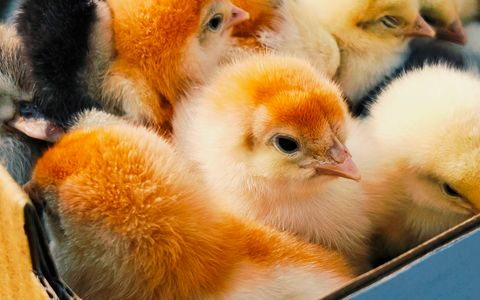
What Bovans Brown is, and where it fits a Ghanaian flock
Bovans Brown is a brown-egg commercial layer. Farmers choose it for a calm temperament, a steady laying habit and a bird that handles mixed systems well, from housed flocks on deep litter to free-range runs. A Bovans Brown chick costs from GH₵ 25.50 with us. Boxes hold 50 birds at GH₵ 1,275, and each batch leaves the hatchery already protected.
It is a layer, so its value is in the eggs and the flock life, not in the table weight of a cockerel. Bovans chicks are normally bought as pullets for a laying flock, not as a meat bird. If you want table birds from the same batch, our Sasso or dual-purpose pages are a better match. For the wider layer picture, the layer rearing guide covers the full timeline to first egg.
Because the breed is calm, it is often a good choice for a first-time layer keeper or for a family flock where children help with feeding. A calm bird is easier to handle, but it still needs a proper house, clean water and a feed plan that matches the stage it is at.
When Bovans Brown is the right pick among the brown lines
Bovans Brown sits alongside Hy-Line Brown and Lohmann Brown in our range of breeds. All three are brown-egg lines, so the choice comes down to how you keep birds, how calm you need them to be and what your buyers expect. The decision is rarely about one breed being good and the others being bad.
| If your situation is | Bovans Brown tends to suit because |
|---|---|
| Free range or extensive keeping with a mixed run | Its calm temperament makes it easy to manage outdoors |
| First layer flock, with a family doing the feeding | Handling is gentle and the birds settle well into routines |
| Housed flock on deep litter in a warm house | Performs steadily when the house is well ventilated |
| Mixed flock where you want a calm dominant hen | Lower aggression reduces feather loss in the group |
If your buyers ask for a specific egg shade, or your local vet has experience with another line, let that weigh heavily. Ask us for the comparison in writing, and ask your vet which line they have seen perform best in your area. We will not claim a line is better than it is.
Prices
 Imported
Bovans Brown
Tough Dutch layer that keeps laying through heat. A safe first choice for new egg farms.
 Imported
Hy-Line Brown
Calm brown-egg layer bred for high egg numbers and strong shells over a long cycle.
 Imported
Lohmann Brown
German brown-egg layer that adapts to deep litter and cages. Popular with commercial egg farms.
Housing and range: where a Bovans pullet does best
A Bovans pullet needs a house that keeps the air moving, a dry floor and enough perches and nest space for the flock. Free-range birds do well in a secure run, provided the night shelter is closed and the ground is kept clean. In a housed flock, make sure every bird can reach feed and water without fighting for a place at the trough.
Plan space for the flock at point of lay, not the chicks you buy. Overcrowded pullets develop feather problems, and crowding can hide an early disease problem until it has spread. Walk the house every morning, count the birds and look at droppings, feathers and posture before you do anything else.
In Ghana's rainy season, damp litter is the usual enemy. Change or turn litter before it caks, and keep drinkers from leaking onto the floor. In the dry season, watch the dust and keep feeders covered so the feed stays clean.
Brooding Bovans chicks in a warm climate
Start Bovans chicks in a clean brooder with a heat source over one corner. In the first days, look for chicks that are spread evenly and moving about. A crowd at one side means the brooder is too cold. Birds that pant and stay away from the heat mean it is too hot. Move the heat in small steps, and judge the result by how the birds sit rather than by the thermometer.
Ghana's warm nights and days mean many houses need less heat than textbook figures suggest. Keep water close and cool, change it often and clean the drinkers every day. Good early management sets the flock up for a steady laying period later, so the first three weeks matter more than most farmers expect.
For a brooder setup in more detail, see our brooder setup guide. Chicks should be fed a complete starter ration from the first day, then moved on to grower feed as the birds develop.
Rearing to point of lay: weight sets the pace, not the calendar
The safest way to raise Bovans pullets is to weigh a sample every week and compare the weights with the breeder's management guide for the line. Ask your supplier for the current guide when you order. Age on the calendar tells you little if the birds are small, overweight or uneven in the group.
Aim for an even flock. A group that varies widely in weight will lay unevenly later, so cull the very weak birds early, and check the feed to make sure every bird gets its share. Pullets that are too fat when they start to lay can have trouble with laying, so keep them lean through the growing phase without starving them.
- Weigh a sample of 20 birds at the same time each week and record the average.
- Note the spread: if the lightest and heaviest birds differ widely, adjust feeding and space.
- Keep a daily count of deaths, with the likely cause written beside each one.
- Talk to your vet early about anything that keeps repeating in the record.
Feeding the pullet, then changing to the layer ration
Bovans pullets move through starter, grower and then pre-lay feeds before they reach the layer ration. Spread each switch over several days, so nobody in the flock goes off its feed. The timing is set by the weight and the flock's development, not by one fixed day, so follow the breeder guide and your vet's advice.
Layer feed contains more calcium than grower feed. Introducing it too early can harm young birds, so do not make the switch just because the birds look large. Keep a clean supply of grit available in the pre-lay period if your feed plan calls for it. Free-range birds will find some grit and greens, but do not rely on foraging to make up for an unbalanced ration.
| Stage | Typical feed | Your check |
|---|---|---|
| Chick to about 6 weeks | Starter ration | Even growth, steady water intake |
| Growing pullet | Grower ration | Weekly weight against the guide |
| Pre-lay | Pre-lay or transition ration | Frame and weight at the planned point |
| Laying | Layer ration and grit | Egg output, shell quality, body condition |
Your feed supplier can confirm the exact products available locally. Ask them to explain the calcium content on each bag so you know what you are feeding.
Grit, shell quality and what to check each week
Brown eggs are sold on their shells, so shell quality matters to buyers. Thin, rough or soft-shelled eggs are often a sign that the ration, the grit or the flock's health needs a closer look. Check the nests every morning and collect eggs promptly, because eggs left in a hot nest crack more easily.
Each week, pick up a few eggs and look at the shell thickness, the shape and any cracks. Note the findings beside the date and the feed batch. A sudden change after a feed switch is a good reason to call your vet or feed supplier, rather than to change the ration again on your own.
Egg colour is an inherited trait of the line, so Bovans Brown hens will lay brown eggs. Colour does not tell you about quality. Good shells, good yolks and clean eggs come from management, not from the breed alone.
Replacing an ageing flock with Bovans pullets
Most farmers replace a part of the flock each year rather than the whole house at once. Staggered replacement keeps egg output steady, and it lets you learn from one group before you buy the next. Plan the replacement several months ahead, so the new pullets arrive as the older hens are running down.
Take a simple example. A farmer wants 40 replacement pullets and expects about 20 per cent of the chicks to be lost during rearing. Forty pullets at 80 per cent survival means you need 50 chicks, which is exactly one box.
| Item | Working | Amount |
|---|---|---|
| One box of Bovans Brown chicks | 50 at GH₵ 25.50 | GH₵ 1,275 |
| Expected pullets at 80 per cent survival | 50 times 0.8 | 40 pullets |
| Chick cost per pullet kept | GH₵ 1,275 divided by 40 | GH₵ 31.88 |
The 20 per cent loss rate is an assumption for planning, not a benchmark we publish. Replace it with your own record from the last batch, and add the feed, vaccine and housing costs when you work out the real cost per hen.
Book your chicks for your farm
Send breed, number and town. We reply with price, hatch date and delivery cost.
Vaccines, the batch record and the vet's calendar
Each Bovans batch leaves the hatchery protected against infectious bronchitis, Newcastle disease, Marek's disease, coccidiosis and Gumboro (IBD). You receive a batch record listing those vaccines and their dates, which your vet uses to plan boosters for your region.
Keep the record with the flock file. Record boosters and later treatments on that sheet, so your vet can read the whole story at one look. Follow your vet's schedule for timing, since the disease picture changes from one area to the next.
Our frequently asked questions cover the common vaccine queries. Bring your own questions to the vet before a problem shows up in the flock. A short visit at the start of the rearing period is cheaper than treating a disease that has already spread through the house.
How to order Bovans Brown chicks from Halaal Farms
Start by messaging +233 24 915 1503 on WhatsApp with how many chicks, your location and your date. A written reply follows with the price and delivery figure, and you approve it before paying. You can settle with mobile money, a bank transfer or cash. After that we schedule the hatch and forward the batch details ahead of dispatch.
Fifty chicks is the smallest order, and our starting figures sit on the price list. The order form is another route in. Orders from 1,000 birds onward get a quote built for that order. Our delivery page explains how boxes travel to your station, and the about page introduces the farm.
If the Bovans stock on your date is imported, we will flag it when you ask, because imports need lead time and a health certificate. Read our page on imported day-old chicks for the process, and the regional pages for how we deliver across the country.
Questions farmers ask
How much are Bovans Brown chicks in Ghana?
At Halaal Farms, Bovans Brown chicks start from GH₵ 25.50 each. One box of 50 costs GH₵ 1,275 before delivery, which is the figure to set against other lines. Approve the written figure first, then choose mobile money, a bank transfer or cash to pay.
Are Bovans Brown hens good for free range?
Bovans Brown is known for a calm temperament and it manages well in free-range and mixed systems, provided the flock has a secure night shelter and clean ground to forage. Free range still needs complete feed, so it should supplement the ration rather than replace it.
What eggs do Bovans Brown hens lay?
Bovans Brown hens lay brown-shelled eggs. Shell colour is a trait of the line. Shell quality depends on management, feed, grit and health, so check the shells each week and talk to your vet or feed supplier if they thin or roughen.
Is Bovans Brown better than Hy-Line Brown?
Neither line is better in every situation. Neither line wins everywhere. Bovans suits calm handling and mixed systems, and Hy-Line Brown often serves as a first purchase. Choose by your housing, your buyers and the advice of your vet, and ask us to set the two quotes side by side.
Are Bovans chicks vaccinated before delivery?
Yes. Protection is given at the hatchery before dispatch, covering the five diseases on our programme, and the batch record reaches you with the birds. Your vet plans boosters from it.
How many Bovans pullets should I order to replace hens?
Work out the replacement pullets you need, then allow for the birds you will lose while rearing. At about 20 per cent loss, one box gives roughly 40 pullets. Your own loss record from the last batch beats any rule of thumb.
Can you deliver Bovans Brown chicks to my town?
Our reach covers all 16 regions. Packing is ventilated boxes of 50, and a carrier takes them to the station in your town. Send us your town, and the station and delivery charge arrive in writing before payment. Pick-up at the Opeikuma farm is an option too.
Prices and details checked 18 October 2026 by the Halaal Farms hatchery team, Opeikuma, Kasoa.