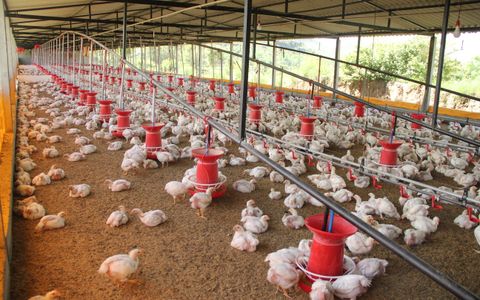
Heat does more damage than the breed on paper
Most farmers who ask which broiler is best for hot weather in Ghana are really asking which bird will get through the afternoon. That is the right worry. In a well run house, the two imported broilers most buyers compare, the Ross 308 and the Cobb 500, both reach market weight in roughly five to six weeks, and the gap between them on an ordinary day is small. What separates a good flock from a poor one in the heat is usually what happens inside the house between eleven in the morning and four in the afternoon. For a wider look at the trade, the broiler farming guide covers the whole cycle.
A broiler carries a lot of body heat for its size. Once the air around it climbs well above comfortable, it has to work harder to shed that heat, so it pants, spreads its wings and holds itself away from the others. Around thirty degrees and above, many flocks show clear signs of heat stress. In a tin-roofed house during the dry season the air under the roof can run much hotter than the reading on the thermometer outside. Heat stress is not a single event. It builds over days, and the first thing to slip is usually the eating, not the birds themselves.
Birds that are hot eat less. Their growth slows, their water intake jumps, and the litter turns wet and sticky around the drinkers. Wet litter raises ammonia, and ammonia irritates the lungs and eyes. So one hot week can leave you with slower birds, a dirtier floor and a higher chance of sudden deaths on the hottest afternoon. Breed choice does not undo any of that. Management does.
How heat quietly worsens feed conversion
Feed conversion ratio, or FCR, is the kilograms of feed a flock eats for each kilogram of live weight it puts on. A bird that converts well needs less feed to reach market weight, and in broilers feed is the largest single cost on the farm. Heat hits FCR from two directions. The bird eats less, so growth slows, but it also spends energy on cooling itself, so each kilo it does gain costs more feed. Over a long hot spell that gap can grow big enough to wipe out a good week of margin.
The size of the effect depends on how hot it gets, how long it stays that way and how well the house moves air. The table below sets out the usual sequence of effects and what you can do at each stage. These are the patterns farmers tend to report, not a fixed rule for every shed.
| What you notice | Usual cause in a hot house | What to do |
|---|---|---|
| Birds panting, wings held away from the body | Air staying high with little movement | Open curtains, run fans and cut density if needed |
| Water use rising sharply, drinkers running dry at peak hours | Birds drinking to cool down through the day | Check flow at every drinker twice a day and keep water cool |
| Feed left in troughs at midday | Lower intake during the hottest hours | Move most feeding to early morning, late afternoon and night |
| Growth slowing and FCR climbing over several days | Energy going into cooling rather than body weight | Improve airflow, check the feed and weigh a sample each week |
| Wet, caked litter around drinkers and sudden deaths | Spilt water, poor drainage and ammonia build-up | Repair leaking drinkers, turn or replace litter and ventilate well |
The practical point is to weigh a sample of birds every week, not only at the end. A rising FCR over a hot fortnight is often the first sign the house needs attention, and it shows in your figures before it shows on the floor. Our broiler profit calculator lets you enter your own feed price and see how a worse FCR changes what a batch earns.
Prices
 Imported
Ross 308
The world's most widely grown broiler. Even, fast growth and strong feed conversion.
 Imported
Cobb 500
A heavy, efficient meat bird with high breast yield that copes well on lower-cost feed.
The Ross 308 in a hot house: what to expect
The Ross 308 is a fast, efficient broiler, and farmers who buy it often value how well it turns feed into weight when the house is in good order. In a hot season that efficiency only pays if the birds keep eating. So the Ross 308 rewards a grower who watches the feeders closely at the hottest hours and keeps the drinkers full. If the house gets hot and the birds stop eating, the gain drops faster than most people expect, because a fast-growing bird is carrying a lot of meat through the heat.
Before you place an order for Ross 308 chicks in the hot months, ask yourself three things. Can you add ventilation, or run fans on the house you already have? Will you add a second feeding round in the late evening? And can you weigh a sample of birds every week, so that a poor week is caught early? If the answer to all three is yes, the Ross 308 is a sound choice in heat. If the answer is no to two or more, a careful grower will do better with any breed, and the bird will not be the reason.
A Ross 308 chick is GH₵ 20 at the starting price, and fifty of them in a box cost GH₵ 1,000. Birds leave on hatch day, so they reach your house very young, which gives you time to set the brooder properly before they land. You can read more about the breed on our Ross 308 chicks page.
The Cobb 500 in the same heat
The Cobb 500 is the other broiler most Ghanaian buyers compare, and once the house is hot it behaves much like the Ross 308. Growth, feed use and weight at six weeks sit close together for the two birds when both are well managed. Where experienced growers report a difference, it is usually breast yield and evenness across the flock rather than survival in heat. Treat those as observations, and check with your buyer before letting them settle the breed for you.
In practice the Cobb 500 needs what any broiler needs in the heat: cool water in the drinkers, fresh air moving across the floor, birds spaced so they are not piled at the feeders, and feed given when the air is coolest. A Cobb flock crowded at midday shows the same signs as a crowded Ross flock, and the same fixes work for both. The breed does not give you a free pass on ventilation, and no broiler does.
A Cobb 500 chick also starts at GH₵ 20, and the box price matches the Ross 308 at GH₵ 1,000 for fifty. Because the price is equal, the choice comes down to what your buyer wants and what feed you can get reliably. Each order gets its final price in writing, so read these numbers as the place to start. The details for ordering are on our Cobb 500 chicks page.
Water is the first line of defence
If you do only one thing well in a hot spell, make sure every bird can drink at any time of day. In warm weather broilers can drink roughly twice as much water as they do in cool conditions, and the figure rises as the house warms. Water is also how a bird sheds heat when it pants, so a drinker line that runs short at midday does more harm than a slightly late feed round.
Walk the house at least twice a day through the hot months. Check that every drinker is delivering water and that the cups or nipples sit at the right height for the size of the birds. Check the pressure in the line, especially at the far end of a long run, because the last drinkers are often the first to run dry. Look for leaks as well. A dripping drinker wets the litter and makes the whole house hotter and dirtier.
Keep the water as cool as you can. A tank standing in full sun on a Kasoa afternoon can warm enough to put birds off drinking. Shade the tank, fill it early in the day and clean the drinkers regularly so algae and dirt do not build up. If you add anything to the water during a heat spell, ask your vet first and follow the label exactly, because the wrong mix can upset birds more than the heat does.
Ventilation, the roof and the open side of the house
Most broiler houses in our part of the Central Region have a tin roof, block or mud walls and one or more open sides covered with curtains. That design is cheap to build and works well in the cooler months. A tin roof soaks up sun and passes the heat down, so the air under it can be far hotter than the air outside. The job in the hot season is to move air across the birds and let the hot air out at the top.
Start with the curtains. In the cooler part of the day, open them fully so air can move through. In the hottest hours, open the side that catches the breeze and close the side that faces the sun. Fans help most when air is already moving, and they are no substitute for fresh air. Place them so the air crosses the flock at bird height instead of blowing into one corner. Keep the blades clean, because a layer of dust cuts airflow more than most farmers expect.

Some farmers wet the outside of the roof, or hang wet sacking at the open side, during the hottest weeks. This can bring the house down by several degrees, but it also adds humidity. Watch the birds closely. If they bunch up or pant harder after you add water, back off. Good ventilation depends on the house, the weather and the flock, so judge it by how the birds behave rather than by one setting on a fan.
Stocking density in the hot months
Stocking density is the number of birds you keep per square metre of floor, and it is the decision you can change most easily before a hot spell starts. A house that holds a comfortable flock in the cool season can become a problem in March, April or October, when the heat is at its heaviest and the birds are at their biggest. Many farmers respond by keeping fewer birds per square metre in those months and accepting a smaller batch.
Here is a simple way to work it out. Suppose your house is 10 metres long and 10 metres wide. That gives 100 square metres of floor. At 10 birds per square metre you would have 1,000 birds, which is 20 boxes of 50. If you cut the density to 8 birds per square metre for the hottest weeks, the same house holds 800, which is 16 boxes. The difference is 200 birds, worth GH₵ 4,000 at the starting chick price, though you would also have less meat at the end. Make that trade-off on paper before the chicks arrive, not in the middle of a heatwave.
Write the density you choose into your records. It is the figure you will compare against your feed and weight numbers at the end of the cycle, and it tells you whether the lower stocking paid for itself. Tell us how many birds you plan to keep and we will work out the box count for you before you pay.
Feeding at the cool hours of the day
Broilers eat most when the air is cool, so the feed round is one of your strongest tools in a heatwave. Many farmers in the hot months give the bulk of the feed in the early morning and again in the late afternoon. They make sure the troughs are topped up before the house starts to heat. A bird that has eaten well before midday keeps growing more steadily than one that waits until evening and then eats in a rush.

In very hot spells, a late-evening feed round is worth adding. Some managers keep a light on at night for part of the cycle so birds can feed after dark. Others give a last top-up at dusk and a first one before dawn. Whatever you choose, do not let the troughs run empty between rounds, and do not drop a large load onto the floor at midday, when the birds will leave it alone.
Check the feed as well as the timing. Dust in the meal, damp or mouldy feed and poor pellets can all lower intake more than the heat alone does. Buy from a supplier you trust, and keep feed dry and covered. To estimate how much feed a flock will need over the cycle, and to see how a change in intake moves your costs, use our poultry feed calculator. It is a quick way to price a bad week before it arrives.
Vaccination and heat: timing the on-farm doses
Before a chick leaves us it has already had its hatchery vaccines for Marek's disease, Newcastle disease, Gumboro (IBD), infectious bronchitis and coccidiosis. The batch record that travels with your order shows exactly what went in. That protection is the starting point, not the whole programme. Some doses are repeated on the farm, and heat makes the timing of those doses matter more than usual.
A bird that is panting and short of water responds less well to a vaccine given in the drinking water, and water-based doses need steady, cool water to reach the flock. Plan any on-farm dose for the early morning, when the house is coolest and the birds drink normally. Do not vaccinate during the hottest hours, and do not leave a dose standing in warm water while you wait for the birds to come round. If the house is already running hot, move the dose by a day rather than giving it badly.
Write the schedule down before the chicks arrive so you are not guessing later. Our poultry vaccination schedule calculator helps you set out the dates from the day of hatch. Ask your vet to confirm the on-farm doses for your area, since disease pressure and local advice differ from one district to the next.
Book your chicks for your farm
Send breed, number and town. We reply with price, hatch date and delivery cost.
What a bad hot spell can cost you in cedis
Put numbers to the risk so you can decide how much to spend on fans, shade and an extra feed round. Take a flock of 1,000 birds bought at the starting price. The chicks alone come to GH₵ 20,000, which is 20 boxes at GH₵ 1,000 each. Chicks are the smallest part of the bill once feed and housing are counted, but they set the size of the loss when things go wrong.
Suppose a hot fortnight costs you 3 percent of the flock to sudden deaths and slows growth enough to add a few points to your FCR. Thirty birds lost outright is GH₵ 600 in chicks alone. Birds that die late in the cycle have already eaten most of their feed, so the real loss is far bigger than the chick price. Add the feed spent on the dead birds and the extra feed the survivors needed, and one bad fortnight can cost several times the price of a shade cloth or a set of fans. These are illustrative figures, not our data. Put your own feed price and weights into the calculator to see your real numbers.
The cheap precautions come first: repaired drinkers, clean fans, curtains that move, an early feed round and a weekly weigh-in. Spend on fans and cooling once your own records show the pattern. Our broiler profit calculator runs the same numbers with your own prices, so you can test the choice before you commit the money.
Ordering, delivery and getting chicks into a hot house
Orders go in over WhatsApp or the phone, and money moves by mobile money, bank transfer or cash. Online card payment is not something we offer. One box of 50 is the smallest order we take. Birds leave on hatch day and can manage roughly 48 hours on the road, living off the yolk they carry, so distance matters less than the hour of arrival. Delivery reaches all 16 regions, and the charge is written down before any money is sent.
The hot-weather question is timing. Your brooder or house should be warm, dry and ready before the box comes off the vehicle, and the building should be cool enough when the birds arrive. Ask us when the dispatch is likely to leave, and plan to receive the chicks in the cooler part of the day where you can. A box of day-old chicks left in a sun-baked yard for hours is a risk, however well it was packed.
Every order includes a batch record. If any chick is dead on arrival, we replace it free in the next hatch. You are welcome to visit the hatchery in Opeikuma by appointment before you commit. Full details of routes and timing are on the delivery page, and the price list shows every starting price we quote.
Choose by your house and your buyer, not the weather alone
Ghana is not one climate. The south, where Kasoa sits, is humid, and the heat there arrives with rain, damp litter and close air. The north has a dry, hot season with a wider swing between afternoon and night, and dusty air in the dry months. A flock in either place can struggle in a hot house, so the breed matters less than how the house is built and run.
If you are still choosing, compare the Ross 308 and the Cobb 500 on your own numbers. Use the starting prices, the profit calculator and the feed you can get reliably. Then choose the bird your buyer prefers. Both breeds are sound in heat when they are managed well, and neither is a reason to skip the work on water, air and feed timing. For the side-by-side comparison, read our best broiler breed comparison, and see the full list of birds on the breeds page.
If you want to buy the chicks directly, our broiler chicks for sale page lists the options for each box size.
Questions farmers ask
Which is the best broiler for hot weather in Ghana, Ross 308 or Cobb 500?
Neither breed is clearly better in heat. Both are fast-growing imported birds that do well when the house is kept cool, watered and fed at the right hours. Choose on what your buyer prefers and the feed you can reliably get, then manage the house carefully. At the starting price both cost GH₵ 20 a chick.
At what temperature do broilers start to suffer in Ghana?
Birds begin to feel the heat well before the air gets very hot. Panting and wings held away from the body are the usual first signs once a house runs into the high twenties and above. Under a tin roof the air can be warmer than the outside reading, so let the birds' behaviour guide you more than the thermometer does.
How much more water do broilers drink in hot weather?
Water intake can roughly double in very hot conditions, which is why drinkers need checking twice a day through the hot months. Make sure the far end of the line gets flow and that the water stays cool. A drinker that runs dry at midday causes more trouble than most farmers expect.
Should I feed broilers at night when the weather is very hot?
Many farmers add a late-evening round and a top-up before dawn during hot spells, since birds eat more readily when the air is cool. Keep the troughs topped up between rounds and check that the feed is dry and free of dust.
Does heat change how much feed I need for each kilo of meat?
Usually yes. A hot bird eats less and spends energy on cooling, so FCR tends to rise over a hot spell. The change is often modest if the house is well managed, but it still adds cost. Weigh a sample every week so you see the rise early.
Can I use fans in a tin-roofed broiler house?
Fans help when air is already moving through the house, and they should be placed to move air across the birds at bird height. Keep the blades clean because dust cuts airflow. Pair fans with open curtains and check the birds' behaviour after every change.
How many birds should I keep per square metre in the hot season?
Many farmers keep fewer birds per square metre in the hottest months than in the cool ones, and accept a smaller batch. The right figure depends on your house, the breed, the feed and the local weather, so there is no single number. Decide before the chicks arrive and write it down.
How fast can Halaal Farms deliver day-old chicks to a hot region?
A chick is shipped on its hatch day and carries enough yolk for roughly 48 hours of travel. Delivery covers all 16 regions, and the charge is written down before any payment changes hands. Get the receiving brooder ready ahead of time so the box is not left standing in the heat.
Prices and details checked 18 October 2026 by the Halaal Farms hatchery team, Opeikuma, Kasoa.