Start with the people who will buy your eggs
Before you look at the hen, look at the buyer. A layer farm lives or dies on who takes the eggs every week, and that person may care about colour, size, freshness or simply the price per tray. Walk your local market for a morning and ask the sellers which eggs move fastest. Visit two or three bakeries and a few provision shops. Ask school canteens and the families you know. Write down what each one says, and whether the colour matters to them at all.
In many towns the answer surprises new farmers. A good number of buyers never ask about shell colour. They want clean eggs, a consistent size and a fair price per crate. Other households will ask for brown by name and will walk past a tray of white eggs. Neither group is wrong. What matters for your decision is which group is closest to your farm, because that is who you will be selling to every week for the next year and more.
Once you know the answer, put a price on it. Find out what a tray or crate sells for in your area, and whether the price changes between brown and white. Keep that figure to hand, because it feeds straight into the calculation we describe further down. Do not rely on a figure from a friend, a forum or even from us, because the price in your own town is the only one you will actually be paid.
Shell colour comes from the breed, not the nutrition
The colour of an eggshell is set by the hen's genetics. Pigment is laid onto the shell near the end of the egg's journey through the hen, and the breed decides the colour. A brown-egg hen and a white-egg hen lay eggs with the same basic contents, and the difference in nutrition between the two is small enough that most buyers will never notice it. If a customer tells you brown eggs are richer, you can politely explain that the colour does not change the yolk in any way that matters to a family's diet.
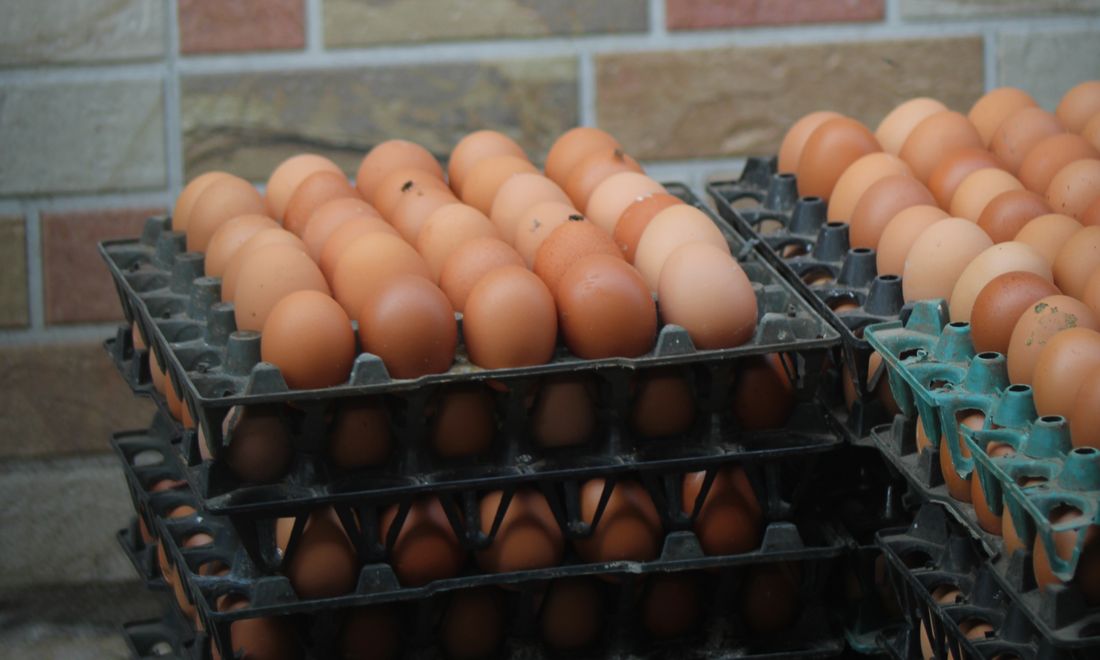
What does matter to a buyer is freshness, cleanliness, the size of the egg and how it was handled between the house and the table. A clean brown egg and a clean white egg sell on the same terms when the buyer is told the truth. The honest sales case for either colour is therefore about what your customers already believe and what they pay, not about what is inside the egg. Keep that in mind when you talk to buyers, and avoid overselling the health claims for either colour.
Prices
 Imported
Hy-Line Brown
Calm brown-egg layer bred for high egg numbers and strong shells over a long cycle.
 Imported
Hy-Line White
Light white-egg layer that eats less feed per egg. Chosen by farms selling by the crate.
Hy-Line Brown: the heavier bird with the larger body
Priced at GH₵ 23 per chick, the Hy-Line Brown is a brown-egg layer whose 50-bird box sits at GH₵ 1,150. It is the layer we most often recommend to a first-time buyer who wants one clear answer, and you can read the full chick details on our Hy-Line Brown chicks page.
Brown hens are generally heavier than white hens, and that has three consequences. A heavier hen needs more floor and more feed to keep her weight. She also gives you a heavier bird when she comes to the end of her laying life, which matters more than many people think. Spent hens are often sold for the pot, and a heavier spent hen usually brings more money per bird than a light one. The extra body is therefore not only a cost. It is part of what you get back at the end.
Brown layers are also generally described as lively, so give them room and some enrichment. A flock that is kept busy and has space to move tends to stay settled, and a settled flock lays more consistently. This is a general pattern for the breed, and it depends on the house and the management, but it is a useful thing to plan for when you design the pen.
Hy-Line White: the lighter, thriftier hen
Each Hy-Line White chick opens at GH₵ 25.50, which puts a 50-bird box at GH₵ 1,275. It costs more at the chick stage than the brown, and the question is whether the feed savings over the laying life repay that difference. You can see the details on our Hy-Line White chicks page.
White hens have a lighter body frame. A smaller bird needs less feed to keep herself going, and that is the main reason many egg farms choose white when feed is the biggest cost they face. Because she is lighter, she also takes up a little less room in the pen. Her spent-hen value is lower than a brown hen's, however, because there is less meat on her when she comes off the lay. Count both sides of that before you decide.
White layers are generally more flighty. They are quick to startle, and they can fly over a low wall or perch high in a shed. Keep them in a netted run or a house with proper side walls, and handle them calmly. A nervous hen that bangs into the mesh is a hen that bruises and stops laying, so calm handling pays for itself.
Where the feed money goes over a laying year
The honest feed argument for white is modest but real. A white hen usually eats a little less than a brown hen at peak lay, often in the range of 5 to 10 grams a day. The true gap moves with housing, feed quality and local weather. That sounds small. Over a full year, 5 grams a day comes to about 1.8 kilograms of feed per bird, and 10 grams a day comes to about 3.7 kilograms. Across a flock of 300 hens, that is roughly 550 to 1,100 kilograms of feed saved each year, depending on the gap in your own house.
Multiply that saving by the price you pay for feed per kilogram. Your own supplier's price is the only one that counts. Remember too that the white chick costs GH₵ 2.50 more than the brown, so 300 birds carry an extra GH₵ 750 at the start. The feed saving has to cover that difference before the white hen pays back more than the brown. Put your own feed price into the calculator to see how many months that takes in your case, and whether the answer changes if you run the flock for a longer or shorter lay.

Feed is also where the heavier brown hen costs you more. If you are short of feed money in a lean month, a flock of heavier birds will feel it first. A white flock may be easier to carry through a tight season, although that depends on how well the rest of the business is run. Plan the feed for the whole year and do not judge the breeds by a single bag.
Side by side at the chick stage
The table sets the two breeds next to each other on the figures you can check today. The chick and box prices are our starting figures. The body and feed rows are general patterns for each line, so use them as a guide rather than a promise for your own flock.
| Item | Hy-Line Brown | Hy-Line White |
|---|---|---|
| Starting price per chick | GH₵ 23 | GH₵ 25.50 |
| Box of 50 (minimum order) | GH₵ 1,150 | GH₵ 1,275 |
| Six boxes, 300 chicks, at starting price | GH₵ 6,900 | GH₵ 7,650 |
| Adult body size | Heavier | Lighter |
| Feed intake at peak lay | Usually a little higher | Usually a little lower |
| Egg colour | Brown | White |
| Spent-hen value | Higher, because of the body weight | Lower, because of the body weight |
| Handling and housing | Lively, needs room | Flighty, needs netting or high side walls |
Read the table as a list of trade-offs. The white line costs more at the start and pays back through feed, and the brown line costs less to buy and returns more at the end through the bird's weight. Neither is the cheaper choice on every row, which is why the buyer and the feed price have to decide it together.
Working out what your eggs will fetch
The price you can get for an egg is the number that matters most, and it is also the number most farmers guess at. Measure it. Visit the sellers in your market and note the price per tray or crate for brown and for white, and the difference between them. Ask whether buyers pay more for one colour in the rainy season, when supply is tight. A single visit is not enough, so repeat it over a few weeks before you trust the figure.
Once you have an egg price for each colour, use the layer and egg profit calculator to model the flock. Enter your chick price, the feed you expect to use and the eggs you expect to sell. The calculator then shows what each colour is worth over the laying year. If the two colours sell for the same price in your town, the calculation will usually favour whichever bird costs less to feed. If buyers pay a premium for one colour, the premium has to be large enough to outweigh the chick and feed differences.
Do not rely on a single number. Ask two or three buyers for their prices, use a range rather than an average you have invented, and test the calculation with a higher and a lower egg price. The decision is sound only if it still makes sense at the lower end. You can find more tools for this kind of planning on our poultry calculators page.
Lay rate, egg size and the first laying year
Both Hy-Line lines are bred for high lay, and both are commonly reported to produce around 300 or more eggs in the first laying year when the birds are well fed, housed and healthy. That figure is an industry range, not a guarantee, and your own results will depend on the feed, the house, disease control and the season. Keep a daily egg count from the first day of lay so that you compare your own flock with the range rather than with someone else's.
Egg size is where the two colours can differ in practice. White layers often lay slightly smaller eggs on average, while brown layers more often produce larger ones. This matters if your buyer pays by size or sells eggs in graded trays. Ask the buyer what size they want, and check the size of your own eggs in the first weeks of lay. A small difference in size can change the value of a whole tray.
Also expect a short period at the start of lay when the flock is still settling in. Most layers begin to lay at around 18 to 20 weeks of age, depending on the line and the management. Plan your cash flow for that gap, because you will be feeding birds for several weeks before the first eggs come in.
Housing and handling the two colours
The two colours ask different things of the house. The white hen's lighter frame and her flightiness mean that she needs a higher, enclosed pen. A low wall is not enough, because she can take off over it when startled. Netting over the run, a proper roof and calm handling will keep her in the house and laying. Walk in quietly, use the same route each day and avoid sudden noise near the nest boxes.

The brown hen is heavier and generally more lively, so she needs more floor space per bird than a white hen does. Crowding a brown flock into a small pen is one of the quickest ways to cut lay and create feather loss. If you run brown hens in a backyard or on a mixed yard, give them room to scratch and move. A hen that has space is less likely to peck at her neighbours.
Whichever colour you keep, the same basics apply. Clean the nest boxes, keep the litter dry, check the water every morning and keep an eye on feed intake each week. Heat changes the picture too, and the heavier brown bird will feel a hot house more than a lighter one. If you farm in a hot part of the year, plan the ventilation for the bigger bird.
Book your chicks for your farm
Send breed, number and town. We reply with price, hatch date and delivery cost.
What the hen is worth when her laying ends
Most farmers think about the chick and the eggs and forget the bird at the end. A laying hen does not stop earning when she stops laying, but her value depends on her weight and on what your buyer wants. Spent hens are often sold for stewing, and a heavier hen gives more meat for the same effort. That is why the brown hen's body is worth something at the end of the lay, even though it cost more to feed through the year.
The white hen comes off the lay lighter, so the value of the bird at the end is lower. Some farmers do not sell spent hens at all and keep them on for a while longer, while others sell them off as soon as egg numbers drop. Decide your policy before the flock is in lay, and build it into your calculation. Ask the buyers in your area what they pay for a spent hen by weight, and use that figure in the profit model.
Do not count the end-of-lay sale as a sure thing. What a buyer pays shifts with the time of year and who is buying, and a hen that has been poorly managed may not weigh what you expected. Use the spent-hen value as a bonus to the egg income, not as the reason the flock makes money.
How to choose: a plain rule for Ghanaian farms
Once the buyer and the feed price are clear, the choice is usually simpler than it looks. Use this as a working rule, then check it against your own numbers.
- Choose Hy-Line White if feed is the biggest running cost you worry about, your buyers are happy with white, and you can house and net a flighty flock properly.
- Choose Hy-Line Brown if your nearest buyers ask for brown by name, you want a heavier spent hen to sell at the end, or you have room for a livelier flock.
- Choose on the calculation if the buyers are colour-neutral and both breeds sell for the same price. In that case, the cheaper bird to run usually wins, and that is often the white.
- Do not choose on shell colour alone. The colour is a sales question. The money comes from eggs sold, feed used and birds kept healthy.
If you are in doubt, begin with the bird your buyer asks for and keep the flock to one colour. Mixed houses make feed, lighting and management harder to plan, and one colour gives you clean records to judge the flock by.
Ordering your brown or white layers
Place your order over WhatsApp or the phone. Whichever colour you pick, the smallest order is one box of 50. Money moves by mobile money, bank transfer or cash, and online card payment is not something we offer. Both Hy-Line lines are imported breeds that come from hatcheries in the Netherlands, Belgium and Germany, and they carry their hatchery vaccines against Marek's, Newcastle, Gumboro, infectious bronchitis and coccidiosis before they leave us.
Your birds go out on hatch day and can handle about 48 hours on the road, living off the yolk they still carry. Every one of Ghana's 16 regions is covered, and you see the delivery cost in writing before paying. A batch record accompanies each order, and any chick found dead on arrival is replaced at no charge in the next hatch.
If you already know which colour you want, go straight to the page for it, or browse the wider range on our layer chicks for sale page. For the current starting prices of every bird we sell, the price list is the place to check, and the imported chicks page explains where the foreign lines come from. You can also read about the birds on our breeds page, and the comparison with other layers is on our best layer breed page.
Questions farmers ask
Do brown eggs sell better than white eggs in Ghana?
It depends on the town and the buyer. Some households ask for brown by name, while many bakeries and shops care mostly about size, freshness and price. Ask the buyers nearest you what they pay and whether colour matters to them before you choose the bird.
Are brown eggs more nutritious than white eggs?
Not in any way that matters for most families. Shell colour comes from the hen's breed and the basic contents of the egg are very similar. Freshness, cleanliness and handling are the things to get right, and those affect your buyers far more than the colour does.
Which uses less feed, Hy-Line Brown or Hy-Line White?
Hy-Line White generally eats a little less because it is a lighter bird. The difference is modest, often in the range of 5 to 10 grams a day at peak lay, and it adds up over a year. Feed type, housing and temperature also change the result, so measure your own intake.
Is the higher price of a Hy-Line White chick worth paying?
At our starting prices the white chick costs GH₵ 2.50 more, so GH₵ 125 more per box of 50. Whether that pays back depends on your feed price, the length of the lay and the egg price in your town. Enter your own numbers in the layer and egg profit calculator to check.
Which hen lays more eggs, brown or white?
Both are high-producing commercial lines, and both are commonly reported to lay around 300 or more eggs in the first laying year under good conditions. Results vary with feed, housing and health, so compare your flock's own daily count with that range rather than with a single figure.
Are white layers harder to keep in a backyard?
They are generally more flighty and can fly over low fences. Keep them in a netted run or a house with proper side walls and handle them calmly. Brown hens are heavier and generally need more floor space, so plan the pen for the breed you choose.
What is the best layer if I sell eggs in my local market?
Start with the price your nearest buyers pay for each colour and the feed you can count on. Where buyers do not mind the colour, the bird that is cheaper to feed usually wins. Test the choice with the calculator before you commit to a full house.
When do layer chicks start to lay?
Most layers begin laying at around 18 to 20 weeks of age, depending on the line and the management. Plan your feed and cash flow for that gap, because you will be feeding the flock for several weeks before the first eggs come in.
Prices and details checked 18 October 2026 by the Halaal Farms hatchery team, Opeikuma, Kasoa.