Why a first-timer should not start with fast broilers
Broilers look like the quickest route to cash. They reach market weight in about six weeks, so the money comes back fast on paper. The catch is that a broiler flock has no slack. Feed, water, density and temperature all have to be right every single day, and a bad week in the house shows up at slaughter as a poor weight and a poor price.
A beginner usually has no margin for that. Lose a few birds in the first week, feed a little short during a heat spell, or let the house get too crowded, and the whole batch pays for it. Fast growth also means a broiler needs a buyer lined up before it reaches weight, because a heavy bird does not keep well in a hot yard. If you have not yet found your buyers, a broiler flock will put pressure on you at the worst moment.
Before you commit, run the numbers in the broiler profit calculator with a lower survival rate and a slower sale. If the business still looks sensible, broilers may be right for you later. For a first batch, most people do better learning on a slower, tougher bird.
What a beginner actually needs from a breed
A first breed has four jobs. It has to survive the early mistakes you will make, it has to grow without demanding perfect feed, it has to make money through meat, eggs or both, and it has to sell easily in your town. Most beginners underestimate the first job, which is why the hardy birds deserve a closer look.
Dual-purpose birds are kept for meat and eggs. They grow more slowly than a broiler, so they eat more slowly and need less exact management. Their hens lay a useful number of eggs, and the cockerels reach a size where a family or a market buyer will take them. You will not get the fastest return, but you also will not face the same sharp losses if one week goes wrong.
The full range of breeds we sell is on the breeds page. For a first-timer, two lines stand out, and the rest of this page compares them.
Prices
 Local hatch
Noiler
Bred in West Africa for West African conditions. Disease tolerant and heavier than local birds.
 Local hatch
Sasso
Coloured, slower-growing bird with firm, tasty meat. Hardy on free range and lays fairly well.
Sasso: a steady bird that rewards patience
Sasso is a French slow-growing dual-purpose line, and it is often chosen by farmers who want free-range birds that hold up on a mixed diet. At GH₵ 13 a chick, a box of 50 comes to GH₵ 650 before delivery. Our Sasso chicks are hatched locally, which keeps the price down and means they are used to Ghana's weather from their first day.
Expect Sasso to take longer to reach market size than a broiler, and plan your sales around several months rather than weeks. In return, the birds handle a bit of ground running, a bit of scratching and a bit of uneven feeding without falling apart. That is what a beginner needs most.
If you want to read about this line in more detail, the Sasso day-old chicks page covers what to check when your box arrives.

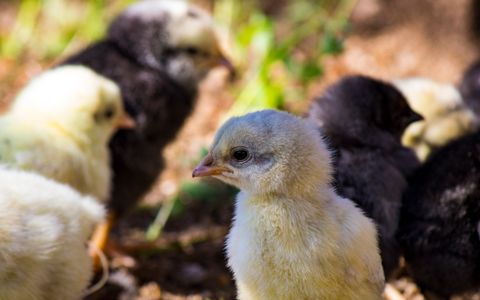
Light and dark chicks like these are the kind of bird you can start on open ground once they are feathered and past the brooder stage. Keep the first weeks warm and dry before you let them out.
Noiler: a dual-purpose bird for hot weather and a tighter budget
Noiler costs GH₵ 11 a chick, which makes a box of 50 GH₵ 550. That is the lowest price of the two lines we list for a beginner, and it is a real saving when you are paying for housing, feed and transport on top.
Noiler is a dual-purpose local line, bred to be hardy in warm conditions. Like any bird, it needs shade, clean water and a dry place to roost, but it tends to cope with a warm yard better than a fast-growing broiler, and that is the point for a first-timer.
If you want the detail on this line, read the Noiler chicks page before you order.
Sasso and Noiler compared for a first batch
The table lines up the points that matter most when you are choosing a first batch. The ranges are realistic for dual-purpose birds in a good yard, and they will move with feed, weather and how you manage the flock.
| Point | Sasso | Noiler |
|---|---|---|
| Chick price | From GH₵ 13 | From GH₵ 11 |
| Box of 50 | GH₵ 650 | GH₵ 550 |
| Growth speed | Slow to moderate | Moderate |
| Time to a sale-size bird | Usually several months | Usually several months |
| Egg laying | Brown eggs, moderate numbers | Useful numbers of eggs |
| Free-range suitability | Good | Good |
| Heat tolerance | Fair to good with shade | Good with shade and airflow |
| Best first use | Mixed meat and egg yard | Budget flock in a warm area |
On paper the two are close. The price gap is the clearest difference, and the choice between them often comes down to the shade and airflow you can give the birds.
Feeding a first batch without overspending
Start the chicks on a starter crumb designed for young birds, then move to a grower feed as they fill out. Dual-purpose birds need more protein than the scraps and grain a backyard flock picks up on its own, so a plain diet of leftovers will leave them underweight and slow to feather.
Do not buy a full season of feed before you know how fast your birds eat. Buy a few bags, weigh the feed you give each day for a week, and let that figure guide the next order. The poultry feed calculator gives you a rough monthly figure once you know your flock size and the ages of the birds.
Water is the cheapest part of the diet and the easiest to neglect. Keep fresh water in the shade at all times, change it before it gets warm, and clean the drinkers every day. A bird that cannot drink will not eat properly, however good the feed is.
The first two weeks: where beginners lose most of their birds
Brooding is the stage when a beginner loses birds fastest, and the cause is almost always heat, draughts or crowding. Chicks need a warm, dry, still corner for the first weeks. Too cold and they huddle and pile up. Too hot and they spread to the edges and pant.
Set a brooder with a lamp or heat source over one corner, a clean floor covered with dry litter, and a flat tray feeder and a shallow drinker close to the heat. Watch the chicks rather than the thermometer. If they are spread out evenly and calling softly, the warmth is right. If they are crowded under the lamp, raise it. If they are at the far edges, lower it or bring it closer.
Chicks that arrive from a long road need water first and feed second. Dip the beaks gently into the drinker so they learn where it is, and keep the room quiet for the first day.

This is what a healthy brooder group looks like at its best: close together, active and warm. If the group is always tight in one spot, something in the setup is wrong.
Vaccines, records and the first months of health care
Every chick leaves our hatchery vaccinated against Marek's, Newcastle, Gumboro (IBD), infectious bronchitis and coccidiosis, and each order comes with a batch record. Those vaccines do not replace your own schedule. Booster timing and the rest of the programme still have to be followed on your farm, and a missed booster is one of the easiest ways to lose a flock.
Write down the date each vaccine is due, the date it was given and the batch number. A simple notebook is enough. The vaccination schedule calculator turns your hatch date into a list of dates to work from.
Keep the vaccines themselves cold and out of the sun, and never mix a vaccine into water you have not measured. If something looks wrong in the flock, take a bird to a qualified vet early rather than waiting for the next scheduled day.

A realistic first budget for 50 birds
A beginner's budget has three parts. The first is the chicks. Fifty Sasso come to GH₵ 650, and fifty Noiler come to GH₵ 550, before delivery. The second is feed, which will run for months, so it is best planned as a monthly figure. The third is the house, which may need a simple roof, wire, a brooder lamp and a few feeders and drinkers.
Add a margin for losses and for the unexpected, because even a well-run first batch loses some birds. The day-old chicks cost calculator handles the chick side of the sums, and you can work through the rest with your own quotes from local suppliers.
Do not skip the delivery cost. We quote it in writing before you pay, and it depends on where the birds are going.
Book your chicks for your farm
Send breed, number and town. We reply with price, hatch date and delivery cost.
Where first-time farmers go wrong, and how to avoid it
- Buying too many birds for the first run. Start with one box of 50. You learn more from one manageable batch than from two hundred birds you cannot watch closely.
- Letting birds roam without protection. Predators and theft take more first-run birds than most beginners expect. Fence the yard or lock the birds up at night.
- No written records. Without dates, weights and treatments you cannot tell what worked. Keep a notebook from the first morning.
- Ignoring the water in hot weather. Shade and clean water will do more for your birds than an extra bag of feed.
- Selling in a rush. Get the market and the buyer sorted before the birds reach size, so the flock does not sit in the yard waiting for a price.
Our advice for your first order
Order one box of 50 and make that your learning batch. Choose Sasso if you want a bird for both meat and eggs and you have room for birds to move about. Choose Noiler if the budget is tight or the yard is hot and exposed, because the lower price and the lighter feathering give you more to work with on a warm site.
Plan your second batch before the first one leaves the yard. Most beginners who keep going have a clear idea of what they want to change, whether that is the feed, the housing, the breed or the buyer. The notes from the first batch will tell you exactly what that is.
What to do after the first batch
Once the first batch is sold or sitting comfortably in its pen, sit down and read your notebook. Note the total feed used, the birds lost and when, the price you got and the time it took. Those five lines are the most useful business plan you will ever write, because they come from your own yard rather than a brochure.
From there you can choose your next step. Some farmers stay with dual-purpose birds and build a steady flow of meat and eggs. Others move to broilers once they have buyers, or to layers once they want a regular income from eggs. The how to start poultry farming in Ghana guide covers the wider set-up, and the dual-purpose chickens page explains how these birds fit into a longer plan.
Questions farmers ask
What is the easiest chicken to raise for a beginner in Ghana?
For most first-timers, a dual-purpose bird such as Sasso or Noiler is easier than a fast broiler or a delicate layer. These birds grow more slowly, tolerate small mistakes better and give you both meat and eggs while you learn the work.
Is Sasso or Noiler better for a first flock?
Choose Sasso if you want a bird for meat and eggs in a yard with room to move. Choose Noiler if the budget is tighter or the site is hot and exposed. Sasso starts at GH₵ 13 a chick and Noiler at GH₵ 11, with boxes of 50 at GH₵ 650 and GH₵ 550.
Why not start with broilers if they make money faster?
They reach market weight in about six weeks, but a broiler flock has very little slack. Feed, water and density have to be right every day, and a beginner who misses a few days often loses the batch. Learn the routine on a slower bird first.
How much does a beginner need to start with 50 birds?
The chicks cost GH₵ 650 for Sasso or GH₵ 550 for Noiler, before delivery. On top of that you need feed for several months, a warm brooder for the first weeks and a simple, protected house. Add a margin for losses, and check the cost calculator for the chick side.
Can a beginner keep dual-purpose birds in a backyard?
Yes, as long as the yard is fenced, shaded and kept clean. Dual-purpose birds do well with space to scratch and move, and they need a dry place to roost at night. A small backyard works for a first batch if the numbers stay modest.
How long before I can sell the first birds?
Dual-purpose birds usually take several months to reach a size you can sell, longer than a broiler. Plan your cash flow around that wait, and line up buyers in advance so the birds do not sit in the yard waiting for a price.
Do the chicks come with any health cover?
Every chick is vaccinated at the hatchery against Marek's, Newcastle, Gumboro, infectious bronchitis and coccidiosis, and a batch record comes with your order. You still need to follow your own booster schedule and watch the flock closely.
Can I order fewer than 50 chicks?
No. The minimum order for chickens is one box of 50. For turkey poults the box is 10, but for the chicken lines on this page the box of 50 is the smallest we sell, which also keeps your first batch manageable for one person.
Prices and details checked 18 October 2026 by the Halaal Farms hatchery team, Opeikuma, Kasoa.