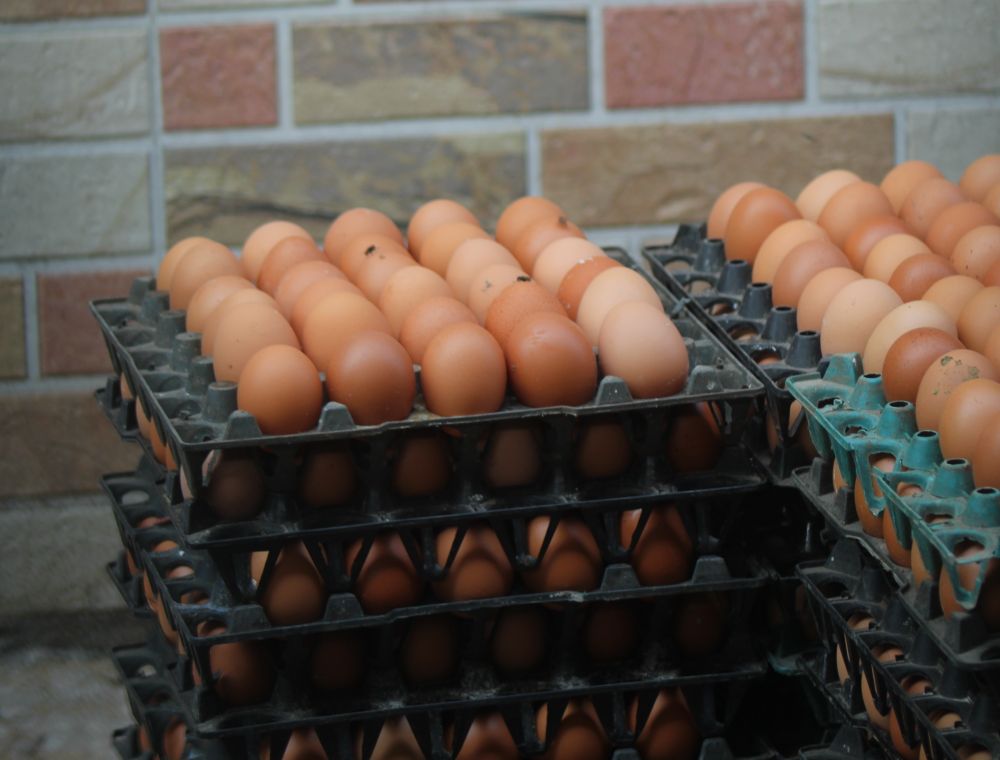
Short answer: Table eggs keep best in a cool, shaded, dry room, pointy end down, with the natural bloom left on the shell. Without a fridge in Ghana's heat, plan to sell within about one to two weeks of laying, and sooner if the store is hot or damp. Collect often, wash only when you must, and sell the oldest crate first.
Key takeaways
- Store eggs somewhere cool and shaded, never in direct sun or against a hot tin wall.
- Keep them pointy end down, in trays, and away from strong smells.
- Do not wash eggs before storing them; clean only what is soiled, and only when you must.
- Collect at least twice a day, and three times in the hot months.
- Date every crate and sell first in, first out.
Why eggs spoil faster in Ghana's heat
At our hatchery in Opeikuma, Kasoa (who we are), farmers ask us about egg storage almost as often as they ask about chicks. The question makes sense. A layer flock earns from its eggs every day, and a crate that spoils in the store is money lost twice, once in feed and again in sales.
An egg is not sealed the way many people imagine. The shell carries a thin natural coating called the bloom, and beneath it are thousands of tiny pores. Through those pores an egg slowly loses water and takes in air and odour. Heat speeds up both processes. The effect is plain when eggs sit in a warm room for a day or two: the air cell grows, the white thins, and the yolk drifts toward the shell.
In the Central Region the afternoon heat can keep an unshaded store room well above 30 °C for much of the dry season. Humidity rises in the rainy months, and damp trays encourage mould on the shell. Harmattan air is dry and dusty, which dries eggs out and coats them with fine dust. Each season asks for a slightly different routine, so start by knowing your room. If you are still choosing a flock, our breed guide explains how the main laying strains compare.
The aim is simple: slow down moisture loss, keep out smells and bacteria, and keep the yolk centred. Every step in this guide serves one of those three aims.
Temperature and shelf life by storage type
Temperature decides how long eggs keep. Cooler is always better, but a cool place does not have to be an expensive one. Use the table below as a guide. The figures assume clean, uncracked eggs that were collected soon after laying.
| Storage place | Typical conditions | Practical shelf life for table eggs | Notes |
|---|---|---|---|
| Hot room with a tin roof | Often above 30 °C in the afternoon | A few days | Avoid if you can. Heat from the roof ages eggs quickly. |
| Shaded store with cross-ventilation | Several degrees cooler than outdoors | About one week | Use a thermometer and keep trays off the floor. |
| Cool, dry room inside the house | Roughly 20–25 °C | One to two weeks | Keep the room dry, or trays will mould. |
| Domestic refrigerator | About 4–7 °C | Several weeks | Keep eggs away from the freezer compartment and do not wash them first. |
If you sell to households that keep eggs at home without a fridge, tell them the eggs were laid recently and suggest they use them within a week. Honesty about freshness protects your name far more than a longer promise would.
Position: pointy end down, always
Every egg has a blunt end and a pointed end. The blunt end holds the air cell, a small pocket between two membranes under the shell. The yolk is lighter than the white, and when an egg lies on its side for days the yolk migrates toward the shell and sticks to the membrane. Storing the egg pointy end down keeps the air cell at the top and the yolk roughly centred. The result is a firm white and a round yolk when you crack it into the pan.
This matters most when you hold eggs for a week or more. A loose pile in a basket is the worst case, because eggs roll and bump into each other. Use trays or crates, and set each egg in its slot pointy end down. If you stack several trays, make sure the top tray does not press on the eggs below. A cracked shell is also an open door for bacteria, so check each tray before you stack it.
Washing, the bloom and when to clean
Many new sellers wash every egg as they collect it. That feels hygienic, but it removes the bloom, and once the bloom is gone the shell is far more open to bacteria and moisture loss. The bloom is the egg's own protective coat, so the rule for storage is simple: do not wash eggs before you store them.
When an egg is visibly dirty, remove the dirt in the nest or at the store door, not at the sink. A dry cloth or soft brush works for droppings and feathers. Some producers use fine sandpaper on stubborn marks, but it also takes off some bloom, so keep that for eggs you are selling the same day. If you must wash, use water warmer than the egg. Cold water can draw liquid and bacteria inward, while warm water pushes the contents slightly outward. Dry the egg straight away, and sell it within a few days.
Cracked eggs need their own handling. Set them aside, use them at home first, and never put a cracked egg in a tray for sale. One leaking egg can soil the eggs around it.
Keep out smells, damp and direct sun
Eggs absorb odours through the shell. Store them away from fuel, paraffin, pesticides, onions, fish and fresh paint. A bag of smoked fish in the same room is enough to make eggs taste wrong after a few days, and a customer will notice at the first crack. Keep the egg store apart from the feed and medicine store, and do not keep eggs in plastic bags, which trap moisture and make the shells sweat.
Humidity is a balance. Eggs that lose too much water grow light and watery inside. Eggs in a wet room grow mould on the shell. Aim for a dry, shaded room where air can move. In the rainy season, raise trays on wooden racks and check each morning for condensation on the tray. In the harmattan, do the opposite: cover trays lightly so dust does not settle on the shells, and keep them out of a draught that dries them out.
A daily collection routine that protects quality
The best storage starts in the nest. Every egg left in a warm nest ages faster than one collected promptly. In our experience, flocks that give the cleanest and freshest eggs are the ones where someone visits the nests early, collects again before the hottest hours, and checks once more before dusk.
- Collect at least twice a day in the cool months, and three times a day in the hot months.
- Carry eggs in a clean basket or tray, never in a bucket that has held feed or water.
- Remove cracked, dirty and floor eggs, and keep them apart from the rest.
- Move the eggs to the store within an hour of collection.
- Write the collection date on the tray or crate.
If you are planning to replace an older flock, our point-of-lay pullets guide explains when new birds should join the laying house. Record the number of eggs collected, the number cracked and the number sold each day. A simple notebook is enough. It will also show you quickly when the laying rate dips, which is often the first sign of a feed or health problem. If the dip is accompanied by eggs that are missing rather than broken, read our note on why layers eat their eggs before you blame the store.
Rotation: first in, first out
Eggs do not improve with age, so the oldest tray should always leave first. Write the date on each crate with a marker. Put new trays at the back or underneath, and bring older trays out first. A buyer who takes eggs from the top of a stack should get eggs of the same age as the ones at the bottom.
A clear rotation rule also helps you plan. Suppose you collect 150 eggs a day and sell around 120. You will carry a surplus every day. Decide early whether the spare eggs will go to neighbours, to a buyer who collects every few days, or to a second sales point. Eggs that sit for a month become a loss, and a surplus that is not planned for quickly becomes a store full of old trays. If you are building a larger enterprise, our guide on how to start egg farming shows how to match flock size to sales.
Need chicks for your next batch?
Send breed, number and town. We reply with price, hatch date and delivery cost in writing.
Selling fresh: grading, packing and labelling
In Ghana the usual unit for table eggs is the crate of 30, and most buyers, from households to chop bars, think in crates. Our own table eggs start at 50 cedis a crate of 30, and the price is confirmed in writing before payment. Whatever price you set, a clean and consistent pack sells faster than a mixed one.
Sort eggs by size, separate brown from white if your buyers care about it, and remove any egg with a visible mark before packing. Use crates that are clean and dry. Put the date laid on the crate, not only the date of sale, because it tells the buyer exactly how fresh the eggs are. Keep crates out of the midday sun while you sell, and cover them at the stall.
| Buyer | What they usually want | How to serve them |
|---|---|---|
| Household | Small amounts and freshness | Sell by the tray of six or ten, and deliver early in the day |
| Chop bar or bakery | Consistent size and a regular supply | Agree a weekly crate count and a fixed delivery day |
| Shop or small supermarket | Clean packs and clear dates | Pack in cartons with the laying date on each |
If you farm around Kasoa, our local page explains how we supply farms in the area. Whatever your location, a regular buyer who knows your pack and your delivery day is worth more than a one-off sale at a higher price.
Common mistakes that waste eggs
- Washing everything. It removes the bloom and shortens shelf life.
- Storing trays in direct sun. A roof that is hot at noon can warm a store room by the afternoon.
- Mixing old and new. One old tray at the back becomes a complaint at the front.
- Using plastic bags. They trap moisture and make the shells sweat.
- Leaving eggs in the nest overnight. They pick up dirt, get pecked and are older than they need to be by morning.
Each of these looks minor on its own. Together they quietly shrink the number of eggs you can sell at full price, and they are the reason a simple daily routine beats an occasional deep clean.
Checklist for your egg store
Print this list, or copy it into your record book, and tick it off each morning. If you are new to layers and still deciding where your first flock will come from, our day-old chicks overview is a good starting point.
- Room temperature and humidity noted on the record board
- Store clear of feed, fuel, chemicals and fish
- Racks or pallets keep trays off the floor
- Crates and trays clean and dry before use
- Date written on every crate
- Cracked eggs separated and set aside for home use
- Rats, cockroaches and other pests checked for
- Stock count compared with the previous day's sales
Questions farmers ask
Can I store table eggs without a refrigerator in Ghana?
Yes, if you choose the coolest, driest and most shaded room you have and keep the eggs unwashed, pointy end down. Without refrigeration in Ghana's heat, plan to sell within about one to two weeks, and sooner in the rainy season when damp encourages mould. Check the room temperature each morning, and move the trays to a cooler spot if the room runs hot for several days.
Should I wash eggs before I store them?
No. Washing removes the bloom, the natural protective coating on the shell, and makes it easier for bacteria and moisture to enter. Remove dry dirt with a dry cloth or soft brush. If an egg is badly soiled and must be washed, use water warmer than the egg, dry it at once, and sell it within a few days.
Which way up should I store eggs?
Pointy end down, in trays or crates. The air cell sits at the blunt end, so this position keeps it on top and stops the yolk drifting toward the shell. Eggs stored on their sides for many days can have a yolk that sits against the shell, which shows up when they are cracked for cooking.
How long do table eggs stay fresh?
Freshness depends on storage. Clean, uncracked eggs kept in a domestic fridge can last several weeks. At room temperature in a cool, dry store, expect about one to two weeks. In a hot room, a few days is more realistic. Date each crate so that you and your buyers can see the age of every egg. For more on flock management, see our <a href="/faq/">frequently asked questions</a>.
How can I tell whether an egg is still fresh?
Place the egg in a bowl of water. A fresh egg lies flat on its side. An older egg tilts with the blunt end up as the air cell grows, and a very old egg may float. Crack a test egg onto a plate as well. A fresh egg has a firm white that holds its shape and a rounded yolk.
Can I freeze table eggs?
Not in the shell, because the contents expand and crack it. Break the eggs into a clean container, beat them lightly, and freeze them in sealed portions labelled with the date. Thaw them in the fridge and use them for baking or scrambling. Do not refreeze eggs once they have thawed.
Where can I buy layer chicks to start my own supply?
Our layer chicks are a practical place to start. Hy-Line Brown starts from 23 cedis per chick, sold in boxes of 50 at 1,150 cedis, and Hy-Line White from 25.50 cedis per chick. Prices are confirmed in writing before you pay. Read our <a href="/layer-day-old-chicks-ghana/">layer chick page</a>, place your order at <a href="/#order">the order form</a>, or WhatsApp us on +233 24 915 1503 with your numbers.


