Short answer: Hens eat their eggs when something in the flock or the nest has taught them to. The usual triggers are broken or soft eggs they can peck at, a shortage of calcium or protein, nests that are dark or crowded, eggs left within reach, and boredom or stress from heat and overcrowding. Remove the trigger, keep eggs out of reach and collect often. The habit usually fades once the cause is gone, though a habit that has taken hold can take longer to break.
Key takeaways
- Pick up broken and soft eggs at once, because one broken egg can start the habit.
- Check calcium, protein and salt in the feed, and provide grit and oyster shell where needed.
- Give hens dark, clean, private nests, roughly one for every four or five birds.
- Reduce crowding, heat and boredom, which drive pecking at eggs and at other birds.
- Collect eggs several times a day, and treat any new egg eating as a warning, not a quirk.
What egg eating looks like and why it happens
Egg eating is one of the most frustrating problems in a laying flock. You notice fewer eggs than the hens should be laying, a smear of yolk on the nest floor, empty shells near the feeders, or a hen with yolk on her beak. Sometimes the culprit is a single bird. Sometimes the whole flock picks up the habit within days.
The behaviour is learned rather than instinctive. Hens peck at the world around them, and a broken egg gives them a rich mix of protein, fat and calcium in a form that is easy to eat. Once a hen tastes it, she may come back for more, and other hens may copy her. That is why the cause and the cure both lie in management: remove the reason a hen starts, and the habit has nothing to grow from.
On our visits to farms around Kasoa, we often find the root cause in the nest or the feed, rather than in the birds themselves. A flock that eats its eggs is telling you something about its environment. The task is to listen and change what you can.
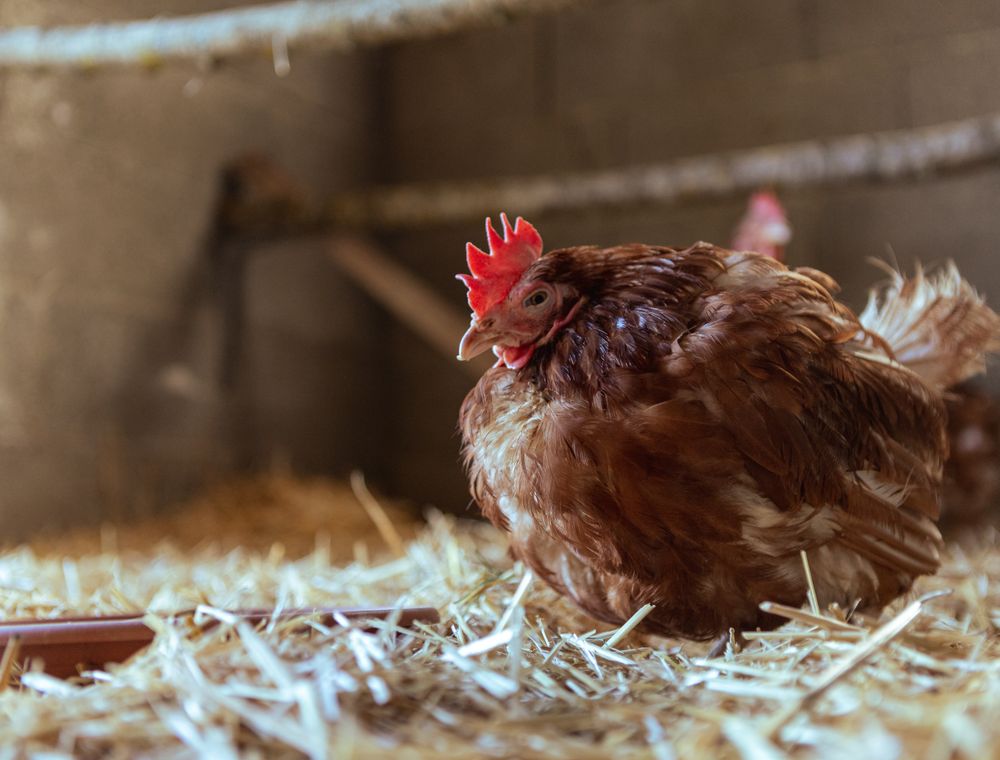
The picture below shows a hen in a typical rural setting. The habit can develop in any housing system, from deep litter to cages, so the prevention steps in this guide apply widely.

Broken and soft eggs: the most common trigger
The most common start to egg eating is a broken egg. When a shell cracks in the nest, the contents are exposed, and a hen that pecks at the mess finds a meal. Eggs that fall to the floor, get trampled, or are laid in a corner where birds walk over them break far more often, and every break is an opportunity.
Soft-shelled and thin-shelled eggs are the second trigger. These eggs break with very little force, so they crack when a hen steps on them or when she sits on them in the nest. Thin shells are often a sign of a calcium shortage or a bird that is laying too quickly for her stores. Our guide to the causes of soft-shelled eggs covers the main reasons, and it is worth reading both guides together.
The practical rule is simple. Every broken or soft egg should be removed from the house within minutes of being found, not at the end of the day. A broken egg left in the nest overnight will almost certainly be pecked by the morning. Collect, clean, and record the breakage as a number, because a rising count is an early warning.
Nutrition: calcium, protein and salt
Feed is the foundation of shell quality and of the birds' overall condition. A layer that does not get enough calcium pulls it from her own bones to make the shell, and her shells become thinner. A hen with weak shells breaks more eggs, and a hen with broken eggs in her environment is more likely to peck. The chain starts with feed.
A balanced layer feed contains calcium, protein, and the other nutrients a laying hen needs in the right proportions. Home-mixed rations often miss the mark, especially when the ingredients are not measured carefully. Protein shortage can also show up as poor feather cover and reduced egg size, which again leads to more breakage. Salt is needed in small amounts, and both too little and too much cause trouble, so do not add it by guesswork.
Provide grit and oyster shell where your feed label or your vet recommends them. Many farmers keep oyster shell available at all times, so birds can take what they need. If you mix feed yourself, ask your feed supplier or vet to check the formulation. Our guide to layer feeding and the basics of feed formulation explain what a balanced ration should contain.
Avoid adding unverified supplements. A supplement that is not needed can unbalance the diet, while one that is needed but badly dosed will not solve the problem. Follow the advice of your feed supplier and your vet.
Nest design: dark, private and clean
The nest is where the habit is most often learned, because it is where eggs are most exposed. A good nest is dark, quiet, clean and private. It should make the hen feel safe enough to lay and leave quickly, and it should make it hard for an egg to roll out and break.
- Provide roughly one nest box for every four or five hens. Too few nests means hens lay on the floor or share and crowd.
- Place nests in dim corners, away from doors, bright windows and foot traffic.
- Use a lip or a slight slope at the front of the nest, so eggs roll toward the back and away from the hen's beak.
- Keep the nest material clean, dry and deep enough to cushion the eggs.
- Replace soiled material promptly, because dirty nests encourage pecking and can carry disease.
- Check the nests at least three times a day in the lay period, not only in the morning.
If hens lay outside the nests, the cause is often a nest that is too bright, too crowded or too far from the feeders. Move the nests, add one more, or change the position of the feeders, and watch the flock for a week. Floor-laying hens are a common source of broken eggs and should be corrected quickly.
Crowding, heat and stress
A crowded flock fights more, and fighting leads to pecking. Hens that are pushed away from feed or water become restless, and restless hens peck at each other, at the feathers and, when the opportunity arises, at eggs. Crowding is often the hidden cause of a problem that looks like egg eating.
Heat is a second factor. In the Central Region, afternoons can be very hot, and birds that are too warm eat less, drink more and move about more. Eggs laid in a hot house are also more likely to be soft or dirty. Improve shade, airflow and water supply, and check that the roof is not trapping heat in the afternoon. Feed in the cool part of the day where you can.
Sudden disturbance adds stress. Predators, dogs, loud noise, frequent handling and new birds all upset a flock. Keep the house routine steady, handle birds only when you must, and introduce new birds carefully. Bright or flickering light can also increase pecking, so keep the light levels moderate. Our lighting programme guide explains how to set a steady routine for laying birds. If the house layout itself is part of the problem, the comparison of battery cage and deep litter sets out how each system handles space and nests.
Boredom and enrichment
A hen with nothing to do will peck at whatever she finds. In a bare house with bare floors, that can mean feathers, eggs and the tails of other birds. Enrichment is not a luxury. It is a simple way to give the flock an outlet for natural behaviour, and it reduces pecking across the board.
- Deep litter that the birds can scratch and dust-bathe in, kept dry and turned regularly.
- Perches at different heights, where the design allows, so birds can rest out of reach of the others.
- Something to peck at that is safe and clean, such as a hanging cabbage or a block of greens, given in small amounts.
- Feeders that spread the birds out, so the feed is not a single battleground.
- A routine that stays the same from day to day, with feed, collection and cleaning at set times.
Enrichment also helps the birds in the Ghanaian harmattan, when dust and dryness make litter less comfortable. Keep the litter dry in the rainy season, because wet litter causes its own problems with feet and eggs. A bird that is busy with the litter is less likely to be busy with the nest.
Working out the cause on your farm
Egg eating rarely has a single cause, but the pattern of damage gives useful clues. Use the table below to match what you see with a likely cause, and try one change at a time so you can see what works.
| What you see | Likely cause | First action |
|---|---|---|
| Eggs broken on the floor and yolk on the litter | Floor laying, trampling or late collection | Collect more often and check nest use |
| Thin, soft or cracked shells before eating starts | Calcium shortage or stress | Review feed and provide oyster shell |
| Eggs eaten mainly in dark or crowded corners | Nests that are poorly placed or too few | Add nests, move them and lighten the corners |
| Pecking at other birds as well as eggs | Boredom, crowding or bright light | Add litter and perches, and reduce density |
| One or two hens doing it | An individual that learned the habit | Check the bird and separate her for a short time |
| Sudden change with other signs of illness | Disease or a feed change | Call your vet before you change anything else |
Behaviour also varies by breed, so our breed guide is a useful companion when you are choosing a flock. Keep a note of what you changed and when. If you change four things in one day, you will not know which one worked, and you may repeat a mistake later.
Need chicks for your next batch?
Send breed, number and town. We reply with price, hatch date and delivery cost in writing.
A prevention checklist for every flock
Prevention is easier and cheaper than correction. Use this checklist before the first egg arrives and review it each month.
- Layer feed with a balanced calcium and protein level, confirmed with your supplier.
- Grit and oyster shell available where the feed label or your vet recommends them.
- One nest for every four or five hens, in dim, clean, private corners.
- Nest lips or slopes so that eggs roll away from the hens.
- Collection at least three times a day in the hot months and twice in the cool months.
- Broken and soft eggs removed the moment they are found.
- Stocking density checked and reduced if the house feels crowded.
- Shade, airflow and water checked every day in the hot season.
- Litter kept dry, deep and scratchable, with perches where possible.
- Records kept for breakage, missing eggs and any change in behaviour.
Stopping a habit that has already started
When the habit has taken hold, you need a firmer response. The steps below work together. Start them all on the same day, and keep them going for several weeks.
- Collect eggs every hour or two during the lay period, so no egg sits in the nest long enough to be pecked.
- Remove broken eggs and clean the soiled nest at once. Do not leave any trace of yolk behind.
- Darken the nests further and block any gaps that let light fall directly on the eggs.
- Check the feed for calcium and protein, and make sure oyster shell is always available.
- Reduce crowding by moving some birds to another space, or by removing the most aggressive bird for a short period.
- Give the flock something to peck and scratch at, so the pecking has a safer outlet.
- If you have a single bird that is clearly the instigator, separate her and reintroduce her once the habit has stopped.
Some farmers use dummy eggs in the nest for a period, so the hens peck at something that cannot break. This can help, but it does not replace the other steps. Beak trimming is sometimes used to stop pecking in commercial flocks. It is a welfare decision with its own risks, so discuss it with your vet before you consider it, and fix the underlying causes first.
A collection routine and simple records
The routine is the most effective tool you have. Set three collection times a day during the hot months, for example early morning, midday and late afternoon, and make sure every collection is recorded. Count the eggs you collect, the eggs that were broken, and the eggs that are missing when you expected more.
Missing eggs are often the first sign that a hen has started eating them. A drop in the total count without a matching rise in broken eggs can point to eating rather than to a fall in laying. Track both numbers, and compare them with your feed use and with any changes in the house.
Once the routine is steady, look at the wider picture. Store eggs carefully once they are collected, using the steps in our guide to storing table eggs. Our guide on how to increase egg production covers the other factors that drive the laying rate, and a flock that lays well is much less likely to develop an egg-eating problem in the first place.
When to call your vet
Most egg eating is a management problem, but some signs point to disease. Call your vet if the drop in laying comes with other changes: coughing, sneezing, watery droppings, swollen heads or faces, lameness, or sudden deaths. Those signs need a proper diagnosis, and they should be treated before you spend time on behaviour alone.
Your vet can also check the feed programme and advise on the vaccination schedule, which affects the flock's general health and therefore its laying. Follow your vet's advice on any treatment and on how long to keep birds separated. Do not give medicines or change doses on your own. If a difficult period leaves you needing replacement birds, WhatsApp us on +233 24 915 1503 or use the order form, and we will confirm the price in writing before you pay.
Questions farmers ask
Why are my hens eating their eggs?
Most cases come from a trigger in the flock or the nest. Broken or soft eggs give hens an easy meal, and once they taste the contents, some hens keep going. Other causes include a calcium or protein shortage, nests that are dark or crowded, eggs left in reach, and boredom or stress from heat and overcrowding. Look at the pattern of damage to find the cause.
Is egg eating caused by a lack of protein?
It can be, but it is rarely the only cause. A protein shortage can lead to poor feather cover, smaller eggs and more stress, which can all increase pecking. Calcium shortage is a more common trigger because it causes thin shells that break easily. Check the feed label and ask your supplier whether the protein and calcium levels suit your birds.
Can I stop egg eating with feed alone?
Feed matters, but it rarely solves the problem alone. A balanced diet with enough calcium helps, yet a bright, crowded or badly designed nest can keep the habit going. Combine the feed check with nest changes, frequent collection and removal of broken eggs. Change one thing at a time and record the results.
Should I use dummy eggs in the nest?
Some producers use dummy eggs in the nest for a period, so hens peck at something that cannot break and the real eggs stay safe. This can help while you fix the causes, but it does not solve the problem on its own. Remove the dummies once the habit has stopped, and keep the other steps in place.
Will one hen that eats eggs teach the rest of the flock?
It can. Hens watch each other, and a bird that eats eggs in front of others can encourage them to copy. If you can identify one or two birds doing it, separate them for a short period and then return them once the habit has stopped. Do not rely on removal alone, because the cause will still be there for the rest of the flock.
Can I stop egg eating by cutting the beaks?
Beak trimming is used in some commercial flocks to reduce pecking damage, but it is a welfare decision with its own risks. It should be done only with your vet's advice, and it does not fix the cause. The better first step is to correct the trigger, including feed, nests, crowding and boredom, and see whether the habit stops before you consider any other measure.
How quickly will the habit stop once I make changes?
It depends on how long the habit has been going and how many triggers are present. Many flocks improve within a few weeks once the nests, feed and collection routine are fixed. A habit that has been established for longer can take more time, and it may need the separation and enrichment steps as well. Keep your records so that you can see the trend clearly.
Does egg eating mean my hens are sick?
Not necessarily. Egg eating is often a management problem, especially when it starts after broken eggs or a change in the house. However, if egg eating comes with coughing, diarrhoea, swelling, lameness or deaths, it may be a sign of disease. Call your vet, and follow their advice on diagnosis and treatment.


