
Short answer: Soft-shelled and thin-shelled eggs usually come from one of four causes: too little usable calcium or phosphorus reaching the shell gland, heat that cuts feed intake and disturbs calcium use, disease that damages the shell gland, or the age of the hen. Check the feed first, then the temperature, then the flock's health, and call your vet at once if many hens are affected together. Nutrition and heat problems often improve within a week or two of the fix, but disease takes longer.
Key takeaways
- Extra calcium alone rarely fixes a shell problem, because phosphorus and vitamin D3 must work with it.
- Heat is a common cause in Ghana's hot months, because hens eat less and absorb less calcium.
- Soft shells across many hens together, with other signs, point to disease and need a vet.
- Young hens in their first weeks of lay and older hens past peak both lay thinner eggs.
- Keep coarse oyster shell in its own feeder, cool water available, and fresh, dry feed.
Reading the egg: what the shell is telling you
Not every weak egg has the same problem. A soft, rubbery egg with no hard surface has very little calcium deposited on it. A thin shell that breaks easily but still feels hard is a milder version of the same thing. A shell-less egg, which is only a membrane, is often called a wind egg, and it usually comes from a hen whose lay has just started or been disrupted. Chalky, rough or ridged shells point to a different problem, often in the timing of shell formation rather than in calcium supply.
Look at more than one egg. Collect a sample of ten eggs from the flock each day for a week, and note the shell type, the size and any cracks. A pattern across the sample tells you far more than a single odd egg.
| What you see | What it usually points to |
|---|---|
| Rubbery, soft egg with no hard surface | Calcium shortage or a sharp drop in calcium absorption |
| Thin shell that breaks easily but is still hard | Mild calcium or phosphorus shortage, heat, or early disease |
| Shell-less egg (wind egg) | A hen just starting to lay, or a sudden shock or disease |
| Rough, chalky or ridged shell | Disturbance of the shell gland, often from stress or disease |
| Thin shells in older hens | Age-related decline, often past peak lay |
How a shell is made, and why it fails
A hen makes an egg in roughly a day, and the shell is the last part laid down. In the shell gland, calcium carbonate is deposited over about 20 hours, so the calcium needed for each egg must be available in her blood throughout that window. She gets it from her feed through her gut, and when intake falls short she draws on her bones. Bone reserves run down quickly, and once they are low, shells thin and the bones themselves weaken.
This is why calcium in the feed matters every day, not only in the weeks when eggs look weak. It is also why a hen that eats little because of heat or illness can lose shell quality within a day or two, even when the bag on the shelf is correct.
Calcium, phosphorus and vitamin D3 work together
Calcium is only part of the story. The hen needs phosphorus in balance with calcium, and vitamin D3 to absorb calcium from the gut. A mash with plenty of calcium but too little vitamin D3 can still give thin shells. The premix in a complete layer feed is where these are added, so check that the bag describes a complete layer feed, rather than a calcium supplement added to something else.
The source of calcium matters too. Finely ground limestone supplies calcium through the day, while coarse oyster shell releases calcium slowly, which helps the hen when shell formation is at its fastest. Pieces of 2 to 4 millimetres are a good size. Fine dust is absorbed quickly and does little for the overnight shell. Keep the oyster shell feeder full every day, and never let it run out for a day.
Check the feed before you blame the hen
Most soft-shell problems start in the feed store or at the feeder. Go through this list before you call anyone, and mark each answer in your record.
- Are the hens on layer mash, and not on grower, broiler or starter feed?
- Does the bag show calcium at the level you expect, typically 3.8 to 4.2 per cent in lay?
- Has the brand or batch changed in the last two weeks?
- Is the mash fresh, free of mould and free of a musty smell?
- Is coarse oyster shell in the feeder every day?
- Has anyone added maize, bran or scraps that dilute the calcium in the mash?
Mould is the quiet cause. Damp mash from a poorly stored bag can carry toxins that damage the liver and reduce how well the hen uses her nutrients. If the mash smells off or has clumps, change the bag and tell your supplier. For the full set of storage and phase rules, our layer feeding guide is the reference, and the FAQ page covers the questions farmers ask most often about feed.
Heat: the most common cause in Ghana's hot months
In hot weather hens eat less, and the calcium they take in falls with their feed. Heat also changes the blood chemistry of a panting hen. When she breathes fast she loses carbon dioxide, and her blood shifts towards a more alkaline state, which disturbs how the shell gland works. The result is thin shells and soft eggs, often on the afternoon of a hot day and for a few days after it.
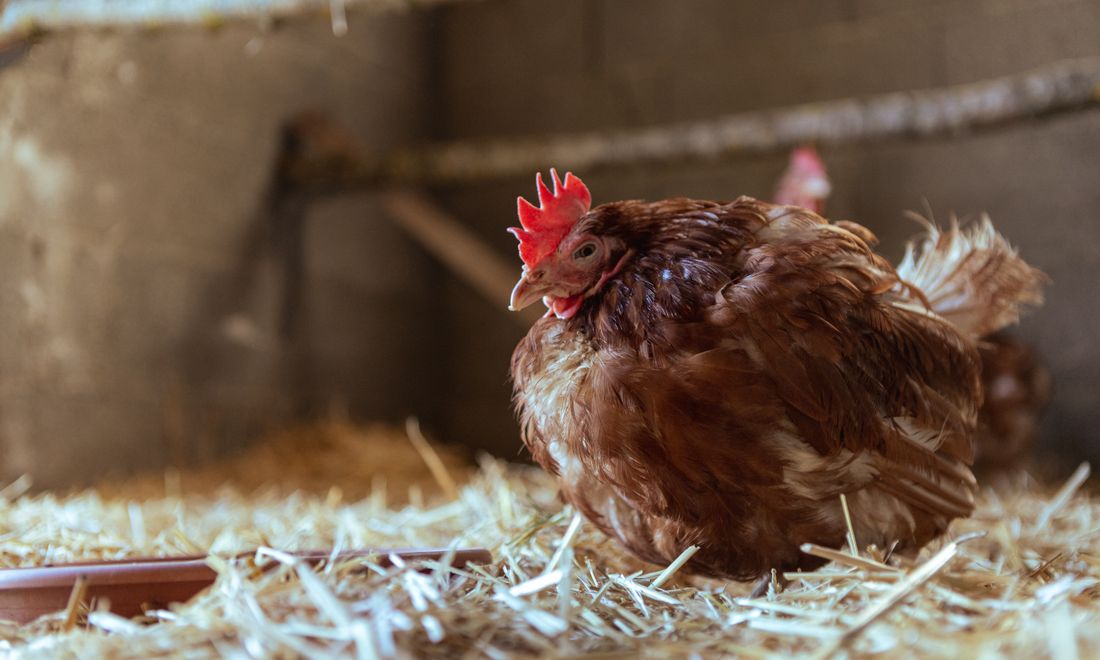
The fix is a cooler house and a flock that keeps eating. Use shade and ventilation as described in our egg production guide, move feeding to the cooler hours, keep water cold and always available, and record the house temperature at hen height. Some farms add electrolytes to the drinking water during heat spells, but ask your vet before you use any additive.
Disease: when the shell gland is affected
Some diseases damage the shell gland directly. Infectious bronchitis is the classic case: soft, thin, rough or misshapen eggs appear alongside a drop in lay, and the hen may show breathing signs or watery droppings. Egg drop syndrome and Newcastle disease can also cut shell quality. The clue is that the problem arrives with other changes across the flock, not only in the eggs.
Halaal Farms vaccinates chicks at the hatchery against Newcastle disease and infectious bronchitis, among others, and gives you a batch record. That protection is the start of a programme rather than the whole of it. Boosters and timing are a matter for your vet, and an outbreak needs a vet's examination, not a guess. If many hens lay soft eggs at once, or lay drops sharply with any other sign, call your vet the same day.
Age: the start and the end of lay
Young hens in the first weeks of lay often produce soft and shell-less eggs while the reproductive system settles. This is normal in small numbers and improves as the hen matures and her lay becomes regular. Keep feed, light and water steady during this time, and avoid moving birds or changing their routine just as they start. Our point-of-lay pullets guide covers the handover from rearing to lay.
Older hens past their peak also lay thinner shells. The shell gland becomes less efficient, and bones are less able to supply calcium when feed intake is low. Thin shells in an older flock are usually an age effect, so the response is to manage calcium and water carefully and to plan replacements, not to treat every egg as a disease.
Need chicks for your next batch?
Send breed, number and town. We reply with price, hatch date and delivery cost in writing.
Stress, water and daily management
Stress shuts down shell formation. Predators, dogs, loud noise, handling and sudden changes in light or feed all trigger a stress response that can cut shell quality for a day or two. Water is part of this: a hen short of water drinks less, eats less, and shell quality follows. Check the drinkers each morning and afternoon, and keep the house quiet and secure.
Parasites add to the stress. Mites and lice bite and irritate hens at night, and worm burdens reduce how well a bird uses her nutrients. Check the house at night with a torch and follow your vet's parasite plan.

Cause, sign and fix at a glance
| Cause | Signs | Fix |
|---|---|---|
| Calcium shortage | Soft or rubbery eggs that get worse over several days | Use a layer mash with 3.8 to 4.2 per cent calcium; keep coarse oyster shell available |
| Phosphorus or vitamin D3 imbalance | Thin shells even with a calcium-rich mash | Confirm a complete layer feed with premix; ask the supplier for the analysis |
| Heat stress | Thin shells on hot afternoons; lower feed intake | Shade and ventilate; feed in cooler hours; keep water cold and plentiful |
| Wrong feed phase | Thin shells after a feed switch, or in young hens | Match the phase to age; change over five to seven days |
| Mouldy or damp feed | Musty smell, clumps, general drop in performance | Replace the feed; store bags off the floor; use within a few weeks |
| Infectious disease | Many hens affected; breathing signs or watery droppings; drop in lay | Call your vet; follow the vaccine schedule; tighten biosecurity |
| Hen age | Thin shells in older hens; wind eggs in new layers | Manage calcium and water closely; plan replacements with your vet |
| Stress or parasites | Shell problems after a disturbance; mites or lice seen at night | Keep the house quiet and secure; check for parasites; follow the vet's plan |
A step-by-step response when shells go soft
- Record the problem today: how many eggs, what type, and how many hens are affected.
- Check water, feed and temperature for the last three days.
- Go through the feed checklist, and remove any suspect feed from the feeders.
- Make sure coarse, fresh oyster shell is in the feeder.
- Walk the house at night for mites and lice, and check droppings and breathing.
- If the problem is across the flock, or comes with other signs, call your vet the same day.
- After any fix, keep recording shell quality for at least a week to see the change.
Keeping a shell record that shows patterns
A simple record shows patterns that memory misses. Note the date, the number of soft or thin eggs, the number of shell-less eggs, the highest temperature of the day, the feed batch, and any changes you made. After a month, the record shows whether soft eggs follow hot days, feed changes or a particular group of hens. Keep it on the same clipboard as your lay rate.
When the record points to a problem you cannot fix on the farm, bring it to your vet, along with a few eggs and a note of the feed batch. Clear records make a visit faster and more useful. If you are restocking after a problem, WhatsApp us on +233 24 915 1503 to talk through the breed and timing. Our layer day-old chicks page and the breeds guide are good places to start, and you can place an order at our order form. We deliver to all 16 regions, and our hatchery page explains how chicks are prepared before they leave.
Questions farmers ask
Why are my eggs soft but my hens look healthy?
Healthy-looking hens can still have a calcium, phosphorus or heat problem that affects shells before it affects appearance. Soft eggs often come from a feed or temperature issue that a hen can carry for days without showing it. Check the feed phase, the calcium on the bag, the oyster shell feeder and the temperature record. If the problem continues for more than a week after these fixes, ask your vet to examine a few birds.
Can I fix soft shells with oyster shell alone?
Oyster shell helps a great deal, but it is not a complete fix on its own. The hen also needs enough protein, energy, phosphorus and vitamin D3, and she needs to be eating well. If the feed is the wrong phase, or mouldy, adding oyster shell will not solve the problem. Provide oyster shell in a separate feeder as a supplement to a correct layer mash, and check the mash first.
Do vitamin tonics fix soft-shelled eggs?
Sometimes, if the real cause is a vitamin D3 shortage, but a tonic is not a substitute for a complete layer feed. Most layer mashes already contain the vitamins needed for shell formation. If you think the feed is short, check the bag and talk to your supplier. Ask your vet before adding any product to the water, because the wrong dose or timing can cause problems of its own.
Are soft-shelled eggs safe to eat?
Soft-shelled eggs can be eaten if they are fresh and cooked thoroughly, but they are more fragile, spoil faster and are more exposed to contamination because the shell barrier is weaker. Use them first at home, keep them cool, and do not sell eggs with broken or very thin shells as table eggs. Grade eggs carefully and discard any that smell wrong.
Will young hens lay soft eggs?
Yes, some do in the first weeks of lay. Eggs may be small, misshapen or shell-less while the reproductive system settles. This normally improves as the hen matures and her lay becomes regular. Keep feed, water and light steady during this time, and avoid moving birds. If many young hens lay soft eggs for more than a few weeks, review the feed and vaccine records with your vet.
How long does it take shells to improve after a fix?
Nutrition and heat problems often show an improvement within a week or two of correcting the feed or temperature. Shell formation takes around 20 hours per egg, so changes can show within a few days, but a flock may need a full week to settle. Disease takes longer and needs a vet's plan, so do not judge an outbreak by the first week alone.
When should I call the vet?
Call your vet the same day if many hens lay soft eggs at once, if lay drops sharply, if you see breathing signs or watery droppings, or if birds die suddenly. Also call if soft shells continue for more than a week after you have corrected the feed, water and temperature. The vet can examine birds, advise on sampling and tell you which steps are safe for your flock.


