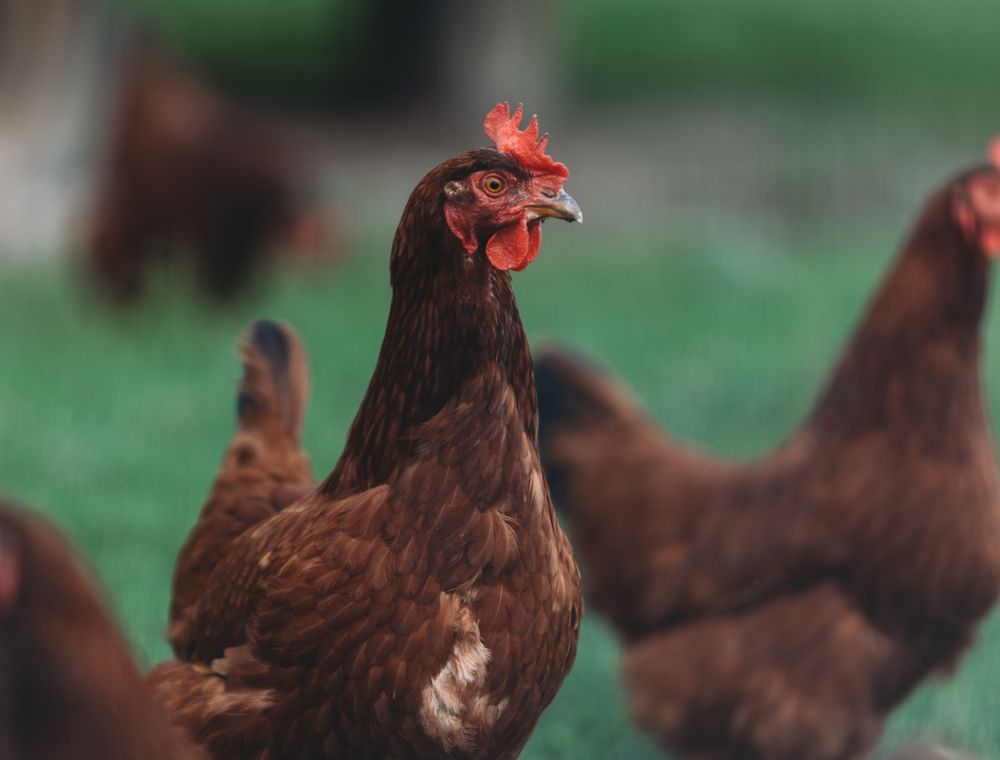
Short answer: Point-of-lay pullets, often shortened to POL birds, are young hens close to their first egg, usually reached around 17 to 19 weeks of age. Buying them saves months of feed and housing but costs more per bird and relies on trust in the seller. Rearing your own is usually cheaper per bird if growth is good. Either way, the move into the laying house and the switch to layer feed decide how well the flock starts.
Key takeaways
- Point-of-lay pullets are close to their first egg, so buying them shortens the wait for income.
- Compare the seller's price with your own rearing cost per surviving bird, not per chick.
- Check the vaccination record, the bird's condition and the weight range before you pay.
- Move the pullets a few weeks before lay, and let them settle before you change anything else.
- Change to layer feed on the flock's laying rate, and expect small eggs during the first weeks.
What point-of-lay pullets are
A pullet is a young female chicken that has not yet laid. The point of lay is the stage just before she produces her first egg. Farmers use the term to describe a flock that is about to start laying, and a point-of-lay (POL) bird is one that is typically within a few weeks of that first egg.
The exact age varies with the breed, the feed, the weight and the environment. Most commercial strains come into lay somewhere in the region of 17 to 19 weeks, but a flock that was stressed, underfed or kept in heat may take longer. That is why POL is better described by condition than by calendar. A pullet that is the right weight and has good feather cover, a bright comb and a healthy frame is ready. A pullet that is simply old is not necessarily ready.
Understanding this matters when you buy. A seller who advertises birds as point-of-lay should be able to tell you the hatch date, the vaccination history and the average weight of the batch. If they cannot, you are paying for an assumption rather than a bird.
The timeline from chick to first egg
Whether you rear your own pullets or buy them in, it helps to know what should happen at each stage. The table below is a typical timeline for a brown-egg layer. Use it to plan space, feed and labour.
| Age | Stage | Main job | Notes |
|---|---|---|---|
| Week 0 to 6 | Brooding | Heat, clean water, starter feed, vaccines as your vet advises | Growth here sets up the whole flock. Our brooder setup guide covers the first weeks. |
| Week 7 to 12 | Growing | Grower feed, more space, regular weighing | Keep the flock uniform. Uneven growth now is hard to fix later. |
| Week 13 to 16 | Developing | Check weights, prepare the laying house, plan the light programme | Reduce stress. Avoid moving the birds unless you must. |
| Week 16 to 18 | Pre-lay | Introduce pre-lay or transition feed as your supplier advises | Calcium rises gradually. Give grit and shell where the feed label requires it. |
| Week 18 to 20 | Point of lay | First eggs, switch to layer feed on the laying rate | Eggs start small and grow in size over the next few weeks. |
These ages are guides, not rules. Weigh the birds and watch their combs and feathers. Your own records will show you when your flock is ready. For more on the timing of the first egg, see when layers start laying.
Buying point-of-lay pullets or rearing your own
Both routes can work well. The right one depends on your cash, your space, your time and how much you trust the sources available to you. The table sets out the main trade-offs.
| Factor | Buy point-of-lay pullets | Rear from day-old chicks |
|---|---|---|
| Time to first egg | Shorter, often within weeks of arrival | About four months of rearing, plus the lay period |
| Cost per bird | Set by the seller, usually higher | Usually lower if growth and losses are well managed |
| Health history | Depends on the seller's records | Full control from the first day |
| Main risk | Transport stress and unknown gaps in vaccination | Losses and uneven growth during rearing |
| Space needed | Laying house ready on arrival | Brooder and grower space for months first |
| Cash flow | Large outlay up front, income sooner | Spread over months, income later |
If you are short of space or need income quickly, buying POL can make sense even at a higher price. If you have the house and the time to rear well, rearing from day-old chicks is usually the better value. Many farms do both: they rear a main flock and buy a smaller batch of POL birds to fill gaps.
A worked cost example for 200 birds
To compare the two routes, work out the cost of rearing one surviving pullet and set it against the seller's quote. The figures below are an illustration only. The chick price is the starting price for Hy-Line Brown from our list. Replace the feed, vaccine, housing and labour figures with your own local costs.
| Item | Assumption | Cost per chick (GH₵) |
|---|---|---|
| Day-old pullet | Hy-Line Brown, from 23 each | 23.00 |
| Feed to point of lay | About 7 kg at an assumed 16 per kg | 112.00 |
| Vaccines and vet visits | Allowance | 8.00 |
| Housing, litter and equipment | Allowance for the share used | 15.00 |
| Labour, water and power | Allowance | 10.00 |
| Subtotal per chick placed | 168.00 | |
| Per surviving pullet | 168 divided by 0.95, assuming 5 percent losses | 176.84 |
On this example, 200 chicks cost 33,600 cedis to rear, and about 190 pullets reach lay. If a seller offers point-of-lay birds below about 177 cedis each, buying may be cheaper in cash, but you still need to weigh the health records, the transport risk and the time you save. If the quote is well above that figure, rearing is likely to be the better value for a flock you can manage well.
Use the same method to test your own numbers. Add up every cost up to point of lay, then divide by the birds you expect to see on the day of transfer, not the number you started with. That is the figure you should compare with any quote.
What to check before you pay
A good point-of-lay bird should look like a healthy hen in the making, not a tired adult. Before you hand over money, check the batch, not just one bird. Use this checklist when you visit the seller or receive the birds.
- A written vaccination record with dates and the vaccines given, and the hatch date.
- Weigh a sample of ten birds. The weights should sit close together for the breed and age.
- Bright eyes, clean vents, no discharge from the nostrils or eyes, and no coughing or noisy breathing.
- Feathers in good condition, with no bald patches from pecking.
- Legs and feet clean and strong, with no swellings or limping.
- A comb and wattles that are full and red, not pale or shrivelled.
- Crates that were ventilated and not overcrowded for the journey.
- No sick or dead birds left in the crates or the pen you are buying from.
If anything looks wrong, ask questions before you pay. A reputable seller will expect them. If you are unsure, take your vet's advice before you move the birds into your existing flock.
Moving pullets into the laying house
The move is one of the most stressful events in a pullet's life. Transport, a new smell, new feeders and a change in the light all happen at once. You can reduce the stress by planning the move carefully and by not changing too many things on the same day.
- Prepare the laying house two to four weeks before you expect the first eggs. Check the drinkers, feeders, perches and nest boxes.
- Set the nest boxes in a dim corner, with clean litter or nesting material, so the birds learn where to lay.
- Move the birds in the cool part of the day, ideally in the evening, when they settle quickly.
- Place drinkers and feeders where the birds can find them at once. Show them the water with a gentle hand, if needed.
- Check water intake and feed intake on the first morning and each day after.
- Keep the light programme steady. Sudden changes can trigger early or late laying problems.
Give the flock a few days to settle before you handle them again. Frequent catching and weighing in the first week adds stress, so limit it to what you need. Our lighting programme guide explains how to set the light for a laying flock.
When to switch to layer feed
The feed switch is the second critical moment. Grower feed is designed for growth, and layer feed carries the extra calcium and nutrients that the shell and the laying cycle require. Switching too early wastes money and can strain young kidneys with calcium they do not need yet. Switching too late can slow the laying rate and weaken the shells.
A common approach is to change to layer feed when about 5 percent of the flock is laying, which you can see in your daily egg count. Mix the feeds gradually over five to seven days, for example 75 percent old feed and 25 percent layer feed for the first two days, then 50 and 50, then 25 and 75, and finally all layer feed. Follow your feed supplier's guidance, because some layer feeds are formulated for a specific stage.
Keep grit and oyster shell available if your feed label calls for them. Birds that cannot get calcium when they need it will often lay thin-shelled eggs first. Our layer feeding guide covers the full feeding programme once the flock is in lay.
Need chicks for your next batch?
Send breed, number and town. We reply with price, hatch date and delivery cost in writing.
The first weeks of lay
The first eggs are usually small, sometimes oddly shaped, and laid at irregular times of the day. This is normal. Egg size grows over several weeks, and the laying rate climbs toward its peak in a steady curve rather than jumping straight to a full flock. Some shells may be thin or rough in the first few weeks, which is a sign that calcium intake and the birds' own calcium stores are still catching up.
Use these weeks to watch the flock closely. Note the laying rate each day, the number of soft or misshapen eggs, and any birds that stay in the nests too long. Check the litter for dampness, which can cause problems with feet and eggs. Look at the nest boxes each morning, because eggs left in the nest attract pecking, a habit we cover in why layers eat their eggs.
Expect a dip after the first peak, and do not treat it as a crisis by itself. A dip that lasts several days, or a sudden drop, is worth investigating. Check water first, then feed, then the environment, and speak to your vet if the drop continues.
Common mistakes with point-of-lay birds
- Mixing ages. Putting younger pullets into an older flock often leads to bullying, feather pecking and a pecking order fight that costs laying.
- Buying on a photo. A good photograph says little about the batch's weight, health or vaccination.
- Moving birds on a hot afternoon. Heat and crowding in crates are a poor start for any bird.
- Switching feed on a fixed date only. Use the laying rate and the birds' condition, not just the calendar.
- Ignoring the first week. Problems that start in week one of the move are cheaper to fix than problems that show up in week five.
Rearing your own: where day-old layers fit in
If you choose to rear your own pullets, you start with day-old layer chicks. Our day-old layers are a practical place to begin. Hy-Line Brown starts from 23 cedis per chick, Hy-Line White from 25.50 cedis, and Lohmann Brown is quoted on request. Prices are confirmed in writing before payment, and you can place a request through the order form. Read the layer chick page and the breed guide to compare the options for your house and your market.
We deliver to all 16 regions, with the delivery cost confirmed before payment, and farm collection is also available. Chicks leave the hatchery on the day they hatch in ventilated boxes of 50. Whichever route you take, vaccination history and batch records are part of the handover, so you know what your flock has already received.
If you are planning the whole enterprise, not just the pullets, our budget guide for starting a poultry farm places the pullet costs alongside housing and feed.
Questions farmers ask
What is a point-of-lay pullet?
A point-of-lay pullet is a young hen that is about to lay her first egg. The term describes the stage just before lay, usually reached around 17 to 19 weeks of age for brown-egg strains. Birds at this stage are typically sold once they are the right weight and condition, and their vaccination history and hatch date should be confirmed by the seller.
How old are point-of-lay pullets?
Most commercial brown-egg pullets reach point of lay somewhere around 17 to 19 weeks. Breed, feed, weight, housing and stress all shift that date. A pullet is ready when she is the right weight and condition, not simply because she has reached a certain age, so weigh the batch and watch the comb and feathers.
Is it cheaper to buy point-of-lay birds or rear my own?
It depends on your costs and your space. Rearing your own is usually cheaper per bird if you can grow the flock well and keep losses low. Buying point-of-lay birds saves about four months of feed and housing but usually costs more per bird. Work out the cost of rearing one surviving pullet and compare it with the seller's quote.
When should I switch from grower feed to layer feed?
A common approach is to switch when about 5 percent of the flock is laying, and to mix the two feeds over five to seven days. Follow your feed supplier's guidance, because formulations differ. Switching too early wastes money and can cause problems, and switching too late can slow the laying rate and weaken the shells.
Why are my first eggs small?
Small eggs at the start of lay are normal. The hen's reproductive system is still adjusting, and egg size grows over several weeks until it reaches the expected size for the breed. Make sure the birds have layer feed and access to grit and oyster shell, and expect a gradual rise rather than an immediate full-sized egg.
Can I put point-of-lay birds in with an older flock?
It is usually better not to. Mixing birds of different ages often causes bullying, pecking and a fight for the pecking order, and the newcomers may not find feed and water easily. If you must add birds to an existing flock, introduce them gradually and watch them closely, and follow your vet's advice on the risks of mixing sources.
What should I do if pullets stop eating after moving?
Check the water first, because birds that cannot find or drink water will stop eating. Then check the feed, the temperature, the light and any signs of stress or disease. Keep the house quiet and dim, and avoid handling the birds more than necessary. If the birds do not return to normal within a short time, call your vet and follow their advice.
How do I tell whether a point-of-lay bird is healthy?
Look for bright eyes, clean vents, a full red comb, clean feathers and strong legs. Listen for coughing, sneezing or noisy breathing, and check that the batch moves and eats normally. Ask for the vaccination record and the hatch date. If the seller cannot provide these, treat the batch with caution and consider walking away.


