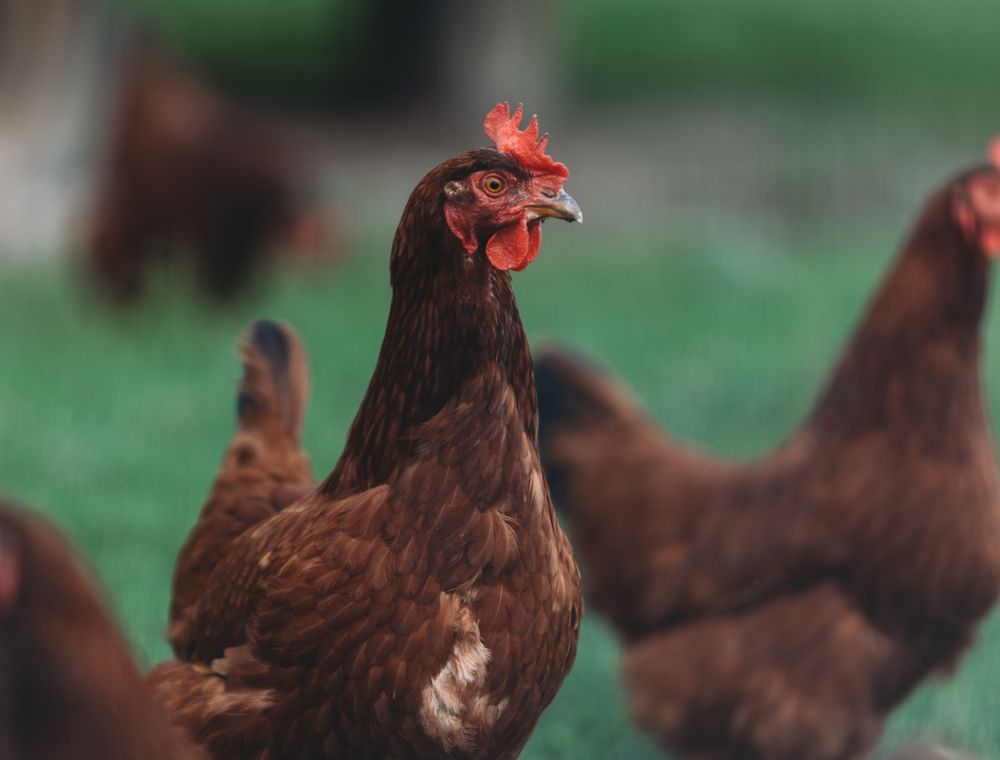
Short answer: Laying hens need a total day of about 14 to 16 hours to keep lay steady, and in Ghana the natural day is only about 11.5 to 12.5 hours across the year. Add artificial light in the morning to close the gap, step the day up gradually during rearing, and never shorten it once birds are in lay. A timer, a dim and even light level and a plan for power cuts will keep the programme on track.
Key takeaways
- Target 14 to 16 hours of total light from point of lay, and hold that figure steady.
- Ghana's natural day cannot close the gap on its own, so artificial light is needed.
- Add light at dawn so the flock keeps its normal roosting time.
- Step the day up in small increments, and never reduce it during lay.
- Plan for power cuts with backup power and a written outage log.
Why day length controls when hens lay
A hen's reproductive system responds to how long the light lasts each day. As day length increases, the hormones that drive egg production rise and the hen lays more consistently. Shorten the day and that response drops, and lay falls, sometimes sharply. Light is therefore a management tool rather than a decoration: it sets the rhythm the whole flock follows.
Intensity matters less than duration. A hen does not need bright light to respond to a long day; she needs a predictable one. A dim, steady programme of 15 hours usually does more for lay than a brilliant light that comes on and off at random because of power problems.

Ghana's natural daylight and why it is not enough
Ghana sits close to the equator, so day length changes little through the year. Across most of the country the natural day runs at roughly 11.5 to 12.5 hours. That is a good, stable day for a hen to keep her normal rhythm, but it falls short of the 14 to 16 hours most layer programmes target for lay. Relying on natural light alone usually means lower lay, and a slower climb to peak than the breed guide shows.
The gap is easy to fill with artificial light. What matters is not only how much light you add, but where in the day you add it and how you change it over time.
A rearing-to-lay light schedule
The schedule below is a typical example, not a prescription. Your breed's management guide is the final authority, and your vet or supplier should confirm the steps. The principle is that the day lengthens during the lead-up to lay and then stays constant.
| Age | Total light per day | What to do |
|---|---|---|
| Days 1 to 3 | 23 hours | Chicks find feed and water; keep a dim night light |
| Day 4 to week 6 | Step down gradually to 8 to 10 hours | Reduce by about an hour every two to three days, not all at once |
| Week 6 to week 15 | Hold steady at 8 to 10 hours | Do not increase during rearing, so pullets develop at the right pace |
| From about week 15 | Increase in small steps | Add about 30 minutes every two to three days, watching weight and behaviour |
| Around week 19 | About 14 hours | Point of lay is close; keep the step-up steady |
| Point of lay onward | 15 to 16 hours, held constant | Never reduce the day during lay |

Notice what the schedule does not do. It does not shorten the day in the middle of lay, and it does not jump from 8 hours to 16 in one night. Both of those choices cause trouble that takes weeks to recover from. For the first weeks, our brooder setup article covers warmth and light together, and pullets for a flock like this can come from our day-old chicks range or our hatchery page.
Stepping up the light without shocking the flock
Sudden changes in light cause stress, and stressed pullets can start lay late or stop eating. Step up in small amounts and let the birds settle between steps. Here is a worked example for a pullet house that is on 8 hours at 15 weeks and needs to reach 14 hours by week 19.
- Week 15: 8 hours. Move to 8.5 hours on Monday, 9 hours on Wednesday and 9.5 hours on Friday.
- Week 16: move from 9.5 hours to 11 hours across the week, in three steps of 30 minutes each.
- Week 17: move from 11 hours to 12.5 hours in the same way.
- Week 18: move from 12.5 hours to 14 hours, then hold at 14.
Keep feed steady through the step-up as well, because a change in light and a change in feed at the same time makes it hard to see what caused a problem. Our layer feeding guide sets out the feed phases that run alongside this schedule. Weigh the flock each week during the step-up. If weights stall or birds begin pecking one another, slow down and hold the current hours for an extra few days rather than rushing. Make each change in the morning, so the flock's evening routine stays the same.
Morning or evening: where to add the hours
Add light at the start of the day, so the lights come on earlier, rather than leaving them on later in the evening. Morning light extends the feeding window before the heat builds, and the birds roost at their normal time, when the house is quiet. Evening light pushes roosting later, which can crowd birds onto perches in the dark and keep hens active when they should be settling.
Some farms split the light between a short dawn period and a short dusk period. That can work, but keep the total hours fixed and the timing consistent. Pick one pattern and keep it, rather than moving the lights around with the seasons or the state of the power supply.
Light intensity, bulbs and placement
A typical target for layer houses is around 10 to 20 lux at bird level. That is dim enough for hens to rest and bright enough for them to find feed and water. A phone light meter app gives a rough reading, and a proper lux meter is better. Measure at hen height in several places, not only under the first bulb.
- Use LED bulbs, which use less power and run cooler than older bulbs.
- Space bulbs evenly along the house so there are no dark corners where birds crowd.
- Keep bulbs clean, because dust and cobwebs can cut the light level noticeably.
- Replace bulbs that flicker, because flicker can stress hens.
- Fit a timer that you can see and check every day.
Lighting is one part of a wider set of inputs. If you are still building a flock, our layer day-old chicks page and the breeds guide will help you match the strain to your house before you install the lights. Current chick prices are on our prices page. Whether your birds are hatched locally or imported from the Netherlands, Belgium or Germany, the same timer discipline applies, so the imported chicks page is worth a read too.
Planning for power cuts in Ghana
Power cuts, known locally as dumsor, are the biggest threat to a lighting programme in Ghana. A house that goes dark for an evening can lose lay for days, and a long outage during the step-up can set a pullet flock back. You cannot control the grid, but you can plan for it.
A generator or an inverter with batteries, sized for the lighting load, keeps the programme on time. Test the backup every month, keep fuel or charge topped up, and set a simple rule: if the grid is off during the light period, switch to backup within an hour. Never run a petrol or diesel generator inside a closed house, because the exhaust can poison the flock and the people who work there.
- Check the timer and the backup switch-over at the start of each week.
- Log every outage with the date, the time and the hours lost.
- After an outage, watch feed intake and lay for several days and compare them with the log.
Need chicks for your next batch?
Send breed, number and town. We reply with price, hatch date and delivery cost in writing.
Protecting the dark period
Hens need a proper dark period to rest, usually 8 to 10 hours. Light leaking into the house from a security lamp, a torch or a gap in the curtains can disturb that rest and cut lay. Check the house after dark. Close gaps, shield outside lights and keep the house quiet at night. Dogs and people moving around in the dark disturb the flock too, so keep the house secure. More answers to everyday questions are on our FAQ page.
Seasons, moult and changing the programme
Day length in Ghana changes little with the seasons, so the lighting programme should not change with the harmattan or the rains. Cloudy rainy-season days reduce natural light a little, but the timer does the job anyway, and the artificial programme should stay the same. Changing hours in response to the weather adds stress without any benefit to the hens.
Moult, the periodic replacement of feathers, can also lower lay. Some producers reduce light to bring about a rest, but this is a specialist step that needs the breeder's guidance and your vet's involvement. Do not change the programme to force a moult without advice, because a sudden fall in day length can cause a serious and long-lasting drop in lay.
Daily and weekly lighting checklist
- Daily: check that the timer is on and that lights switch on and off at the set times.
- Daily: confirm the house is dark at night, and note the hours of light and any outage on the lay record.
- Weekly: measure the light level at hen height in three places.
- Weekly: clean bulbs and fittings, and check for flicker or failed bulbs.
- Weekly: test the backup power and check the fuel or battery charge.
- Monthly: review the step-up plan against weight and lay-rate records.
Keep the programme in your records next to the lay rate, so the two can be read together. For the wider picture on output, see our egg production guide. Before any change, WhatsApp us on +233 24 915 1503 if you want to talk through a new flock, or place an order at our order form. We deliver to all 16 regions, so see the delivery page for how birds reach you.
Questions farmers ask
How many hours of light do layers need?
Once birds are in lay, most programmes aim for 14 to 16 hours of total light a day, held steady. Rearing pullets follow a shorter, carefully stepped programme until about point of lay. Ghana's natural day is roughly 11.5 to 12.5 hours, so you will usually need artificial light to reach the target. Confirm the exact figure in your breed's management guide, and keep it constant once lay begins.
Can I use the same lights for brooding and for layers?
The brooder lamp is a heat source for chicks and is not the same as a layer lighting programme. In the first days, chicks need light to find feed and water, and warmth from the brooder. Later, house lighting is about total hours and level, and a timer controls it. Some setups can share fittings, but plan the two separately, because the hours, level and heat requirements are different.
Should I use a timer or switch the lights by hand?
Use a timer. Hand switching depends on someone being there at the right minute every day, and lights often come on late or stay on late when people are busy. A timer keeps the programme exact, including weekends and holidays. Check it weekly, keep a spare, and use a backup supply if the grid is unreliable, because a timer cannot run without power.
Does the colour of the light matter?
Some producers use specific colours, but most of the gains come from hours and steady levels rather than colour. Cool white and warm white LEDs can both work if the level is right. Avoid very dim or flickering bulbs, which can stress hens. Measure the light at hen height and choose the bulb that gives the level you want, rather than choosing by colour alone.
What happens if the lights go off for a night?
A single night without light is a setback rather than a disaster, if the flock is in lay and the rest of the programme is sound. Expect a short dip in lay and feed intake for a few days. Do not make up the lost hours by adding light later in the day, because a sudden jump in day length can disrupt a flock that has lost its rhythm. Log the outage and watch the record.
Is it better to add light in the morning or the evening?
In most cases, the morning. Adding light at dawn lets birds feed earlier and keeps their roosting time normal. Evening light extends activity into the dark and can push birds to roost late and crowd together. If you split the light, keep the total hours fixed and the pattern constant. Whichever you choose, do not move it around from day to day.
Can I reduce light to stop my hens laying?
Reducing light to stop laying is a specialist step, not a casual fix. Sharp reductions can cause long-lasting drops in lay and weaken the flock. They should only be used with breeder guidance and vet support in planned situations such as a moult. If your goal is to cut egg numbers for a short time, ask a vet or the breeder first. Do not cut the day length on a whim, or to save power during a shortage.


