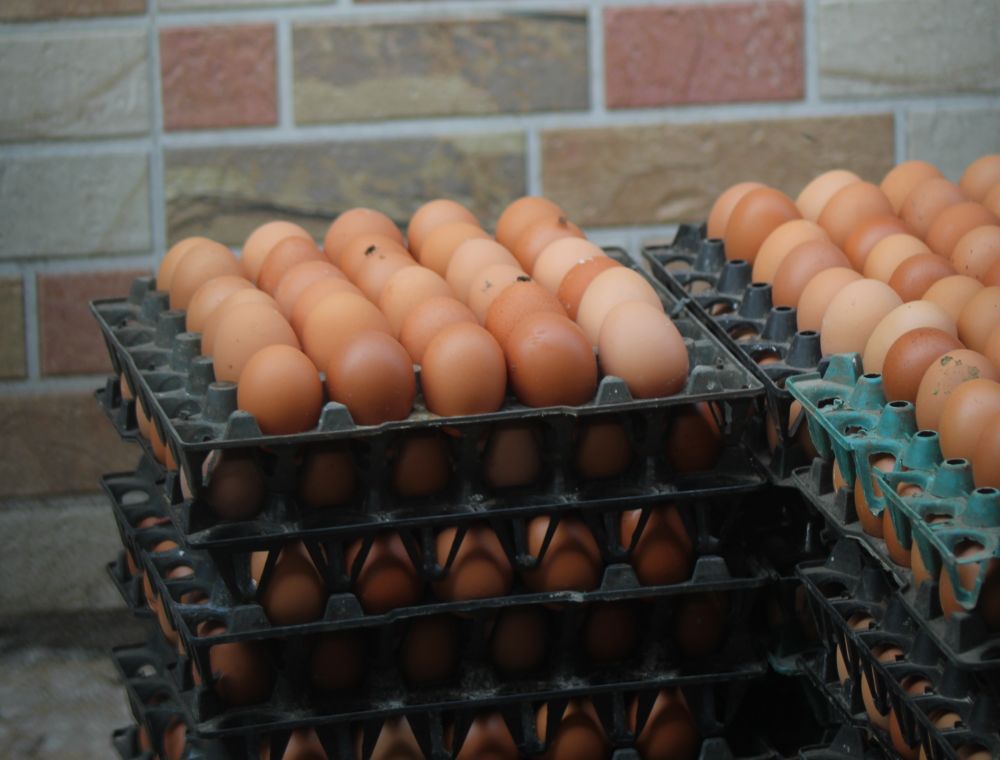
Short answer: Egg output rises when five things line up: well-reared pullets that reach lay on time, a layer mash with enough calcium, clean water in unlimited supply, steady light of 14 to 16 hours a day, and a house that stays cool in the hot months. In Ghana, heat and irregular power are often the biggest brakes on lay, so start there. Track your lay rate every day so you can see which change actually worked.
Key takeaways
- Lay rate is eggs collected divided by hens housed, times 100. Track it every day.
- Peak lay is decided during rearing, so pullets must be uniform and on weight at point of lay.
- Hens drink far more in hot weather, so water is the first thing to check when lay drops.
- Steady light of 14 to 16 hours matters more than bright light, and the day should never shorten during lay.
- Heat above about 30 degrees inside the house cuts feed intake and egg size, and can drop lay within days.
- Vaccines and biosecurity protect lay, and your vet should set the schedule for your flock.
Measure your lay rate before you change anything
Most farmers who ask how to get more eggs already have a feeling about what is wrong. A hen that looks fine but lays less is usually a sign that something has changed, even if nobody wrote it down. The first step is to put a number on your flock every day, so you know what normal looks like on your own farm.
Lay rate is the number of eggs collected in a day divided by the number of hens housed, multiplied by 100. A flock of 400 hens that gives 300 eggs in a day is at 75 per cent. A healthy flock at peak commonly lays at or above 90 per cent for good commercial strains, so a 75 per cent flock has room to improve. Count at the same time every day, and check the hen count at the start of each week so that deaths do not muddy the figure.
The table below uses example figures to show how a short run of records tells a story. The numbers are for illustration only and are not a benchmark from our own flocks.
| Week | Hens housed | Average eggs per day | Lay rate | What happened |
|---|---|---|---|---|
| 1 | 400 | 312 | 78% | Normal week, mild weather |
| 2 | 400 | 284 | 71% | Hot afternoons, hens panting at the back wall |
| 3 | 400 | 296 | 74% | Water tank ran dry for half a day on Tuesday |
Week 2 looks like a feed or disease problem until you read the notes. Hens that pant and crowd at the back wall are telling you about heat, and the empty tank explains the partial recovery in week 3. The notes column is the cheapest diagnostic tool on the farm.

Money matters too. At GH₵50 a crate of 30, which is the price we quote for table eggs, 300 eggs a day is worth about GH₵500 a day. Every extra 10 eggs a day is worth roughly GH₵17, so small gains add up across a month.
Start with well-reared pullets that reach lay on time
Peak production is decided long before the first egg. A pullet that is underweight at 16 weeks, or that comes into lay with uneven size, will struggle to reach peak and often drops out early. The aim in rearing is a flock that is uniform in weight and growth, and that arrives at point of lay (usually around 18 to 20 weeks, depending on the strain) at the weight the breed guide gives.
Weigh a sample of birds every week. If the flock is ten per cent behind target by 12 weeks, fix the rearing feed, space and light before you blame the layer mash later. Our point-of-lay pullets guide goes deeper into the timing.
Breed matters as well. Hy-Line Brown chicks start from GH₵23 each, and the strain is selected for a high egg count, but it still needs the same basics as any layer. Our layer day-old chicks page lists the current options, and the breeds page explains how they differ. Current prices are on our day-old chick prices page.
Feed the lay phase properly, not just more of it
Hens do not lay more because you give them more feed. They lay more when the feed carries the right balance of protein, energy, calcium and phosphorus, and when the feed changes at the right time. A laying hen eating about 110 grams a day needs enough protein for egg white, enough energy to stay in lay, and enough calcium for a strong shell.
In practice this means a layer mash of around 16 to 17 per cent crude protein during lay, with calcium at about 3.8 to 4.2 per cent. Place crushed oyster shell in a separate feeder so hens can take extra calcium when their shells need it. The phase-by-phase plan is in our layer feeding guide.
Feed changes are where many farms lose lay. Switching from grower to layer mash in one day, or changing brand without warning, can knock a flock back for a week. Change over five to seven days, mixing an increasing share of the new feed each day.
- Days 1 and 2: 75 per cent old feed, 25 per cent new.
- Days 3 and 4: half and half.
- Days 5 to 7: 25 per cent old feed, 75 per cent new, then full new feed.
- Watch droppings, feed intake and egg size throughout the change.
Water: the cheapest lever on the farm
Water is the nutrient farmers forget. A laying hen drinks roughly twice her feed weight in water in mild weather, and two to three times that in heat. A flock that runs short for even a few hours will often drop egg production the next day, and the drop can last longer than the shortage did.
Check that every bird can reach a drinker. As a rough guide, one nipple drinker serves around 8 to 10 birds, and bell drinkers need cleaning and topping up at least twice a day. Test the flow at the far end of the house, because the drinkers nearest the tank always look fine. Scale, algae and slime block nipples quickly, so flush the lines and clean the drinkers on the same day each week.
Power cuts are the main threat in Ghana. If your water depends on an electric pump, keep an overhead storage tank with enough water for a full day, and fill it before the afternoon heat. A tank that is full at 6 pm carries the flock through an evening outage far better than a pump that stops at 7 pm and restarts at midnight.
Keep light steady at 14 to 16 hours
Laying hens respond to day length. Longer days cue the hen to keep laying, and shorter days or sudden cuts reduce lay. In Ghana the natural day sits at roughly 11.5 to 12.5 hours across the year, so most layer houses need artificial light to reach 14 to 16 hours in total. The hours matter more than the brightness, and a dim, steady programme beats a bright, erratic one.
Once birds are in lay, never reduce day length. Add light in the morning rather than at night, so the flock keeps its normal roosting time. Our lighting programme guide gives the step-up schedule and the trade-offs between morning and evening light.
Beat the heat with shade, airflow and timing
Heat is the most common reason a good flock stops performing in Ghana. Hens that are too hot eat less, and when intake drops, so does the protein, energy and calcium that eggs need. Egg size falls, shells thin, and lay can drop within days. Above roughly 30 degrees inside the house, many farms see a clear fall in output, and the effect grows with humidity.
Start with the house. Open side curtains in the morning and close them only when a hot afternoon is coming. Keep roofs and walls shaded where you can, and clear vegetation that blocks air. Fans help if you have power, but a fan blowing hot air over hens is no cure. Feed in the cooler hours, early morning and late afternoon, and shade the water tanks and pipes so the water stays cool.
The harmattan runs from roughly December to February. Mornings can be cool, and the air is dry and dusty. Close curtains on cold nights, keep dust down by sweeping litter rather than blowing it, and watch for breathing signs. Hens can be chilled at night and hot by midday in the same week, so the house has to work for both.
- Check the thermometer at hen height, not at the roof.
- Record the highest reading each afternoon alongside the lay rate.
- Shade or wet the roof before the hottest weeks start.
Health and biosecurity that protect egg output
A sick flock does not lay. Several common diseases cut egg numbers and shell quality, and some do it before the birds look ill. The hatchery vaccinates chicks against Marek's disease, Newcastle disease, Gumboro, infectious bronchitis and coccidiosis, and we provide a batch record. That record is the starting point for your vet, not the end of the plan.
Work with your vet to build a schedule for your own flock. Typical examples include a Newcastle and infectious bronchitis booster before point of lay, with further boosters at intervals your vet sets. Follow your vet's advice on timing and products. Keep parasites under control too: mites and lice hide in cracks and under perches, and can cut lay without obvious disease. Check the house at night with a torch once a week.
Biosecurity is what keeps the flock stable between treatments. Keep visitors and vehicles away from the house, use a foot bath at the entrance, keep wild birds and rodents out of the feed store, and never move birds or equipment between flocks without cleaning first.
Need chicks for your next batch?
Send breed, number and town. We reply with price, hatch date and delivery cost in writing.
Nests, collection and handling
Hens want a quiet, dark place to lay. A nest box shared by four or five hens works well, and a private nest encourages hens to lay in it rather than on the floor. Floor eggs are more than a nuisance: they get dirty, crack more easily and are often pecked by other birds. Our table egg storage notes cover what to do with them after collection.

Collect eggs at least twice a day, and three times in hot weather, because eggs left in the nest warm up and hens that sit on them all day often turn broody. A broody hen stops laying, so move her to a separate pen with food and water for a few days.
Handling matters. Predators, dogs, rats and loud noise send birds into a stress response that can stop lay for a day or more. Walk the house slowly, keep dogs out, and use a rodent plan that does not put poison where the birds can reach it.
- In the hottest weeks, collect eggs at 9 am, 1 pm and 4 pm.
- Remove any broody hen after each collection.
- Set cracked and dirty eggs aside and use them first.
Expect the peak, then plan for the decline
A layer flock does not stay at its peak forever. Most strains reach peak around 25 to 30 weeks of age and then ease down slowly as the birds age. The decline should be gradual. A sudden drop is almost always a management or health event rather than age, so look for that first.
Egg size tends to rise as hens age, which helps the value per crate even as the count falls. Keep records of the peak and the slope so you can judge the next flock by the same numbers. Decide on culling and replacement from the flock's economics and your vet's advice, not from a single bad week.
A 30-day plan to lift output
When lay is below where it should be, a short plan stops you changing five things at once. Make one change at a time, write it down, and give it at least seven days before you judge the result.
- Week 1: record lay rate, water use, feed intake and house temperature every day.
- Week 1: check every drinker and tank, and fix blocked lines or low pressure.
- Week 2: check the feed bag for calcium, look for mould, and confirm you are on layer mash.
- Week 2: confirm light hours with a timer and check the light level at bird height.
- Week 3: review heat and shade, and move feeding to cooler hours if needed.
- Week 3: ask your vet to examine a few birds and review the vaccine schedule.
- Week 4: compare four weeks of records and decide the next change.
Restocking or planning a new flock? WhatsApp us on +233 24 915 1503, or place your order at our order form. We deliver to all 16 regions, and the delivery cost is confirmed before you pay. See delivery for how chicks travel.
Mistakes that cost the most eggs
- Feeding grower or broiler feed to layers, which lacks the calcium a shell needs.
- Reducing light in the middle of lay to save power, then wondering why the flock slumped.
- Letting the water tank run low before the afternoon, when the hot hours start.
- Stretching the mash with extra maize or cheap additives, which can dilute protein and calcium.
- Judging a change after two days instead of seven.
Questions farmers ask
How long does it take a layer flock to reach peak lay?
Most flocks reach peak somewhere around 25 to 30 weeks of age, depending on the strain and how well the pullets were reared. The climb after point of lay is usually steady for several weeks. If your flock is still well below the breed guide after six weeks in lay, look at feed, water, light and health before you wait longer. Keep the lay-rate record so you compare each week against the same flock's earlier results, not against a number from another farm.
Why did my egg production drop suddenly?
A sudden drop usually has a short list of causes: a water shortage, a sudden feed change, a heat spell, a power cut that stopped the light or the pump, a dog or predator in the house, or the start of a disease. Walk the house and check the water first, then the feed bag, then the temperature log for the previous three days. If the drop is across the whole flock and comes with changes in droppings, breathing or eggs, call your vet the same day.
Can I increase egg production just by giving more feed?
Not on its own. Extra feed that lacks the right protein, calcium and energy balance can make hens fatter without adding eggs, and it adds to your costs. Lay improves when feed, water, light and temperature all work together. Check that your layer mash is the right phase and shows calcium on the label, and that water and light are steady, before you think about adding more feed.
How many eggs should 100 hens lay each day?
At 90 per cent lay, 100 hens should give about 90 eggs a day, and at 75 per cent about 75. The figure depends on the strain, the age of the flock and the season, so use your own records as the main benchmark. Early in lay and during the hottest weeks, a lower figure is normal. A flock that stays well below its own earlier peak for more than a week needs a check, not a wait.
Does the rainy season reduce egg production in Ghana?
It can. Humid, damp weather makes litter wet and feed more likely to go mouldy, and mouldy maize can carry toxins that cut lay and weaken shells. Keep feed bags off the floor, use them within a few weeks, and keep the house dry and ventilated. Cool, wet days are usually easier on hens than heat, but the feed store is where most rainy-season problems start.
Do my layers need extra light if we have plenty of daylight?
Usually yes. Ghana's natural day is about 12 hours through the year, which is shorter than the 14 to 16 hours most layer programmes aim for once birds are in lay. Artificial light, added in the morning, fills the gap. Keep the total day steady, and never cut it once the flock is laying. A timer makes this easy, and a plan for power cuts keeps it reliable.
What should I do if my hens stop laying completely?
A complete stop is serious and needs a vet quickly. Check whether birds are still eating and drinking, look at droppings and breathing, and inspect for mites or lice. If water is fine, the feed is correct and the house is cool, the cause is often disease or stress. Do not wait a week. Call your vet, send a few birds for examination if they advise it, and keep records of what you saw.


