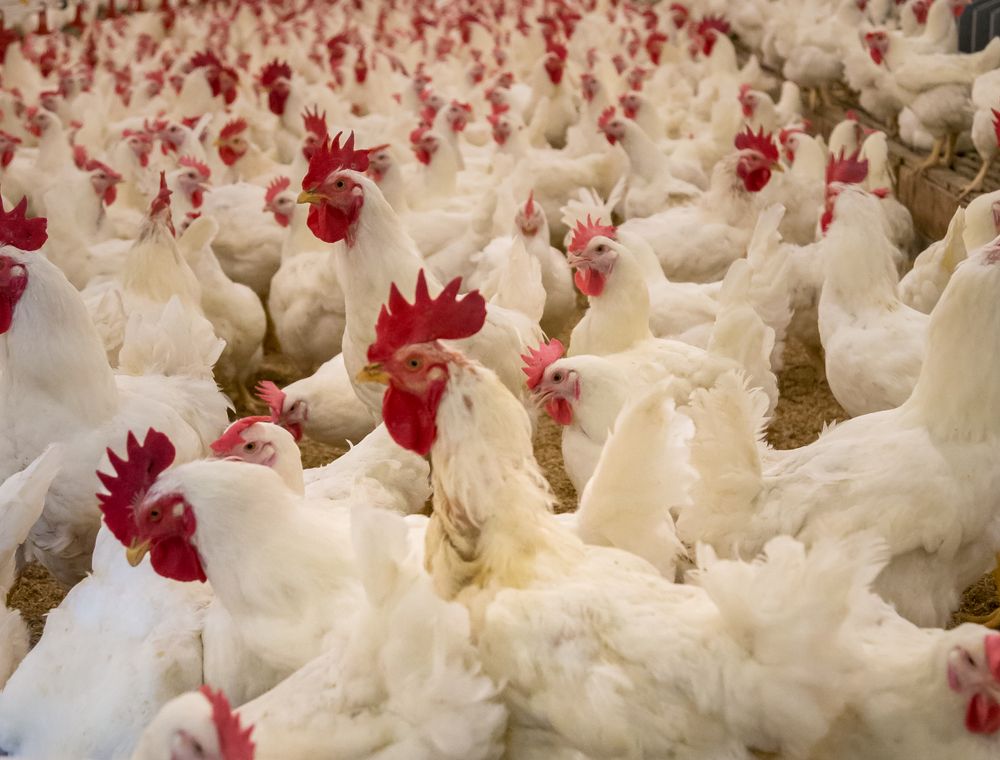
Short answer: Cool a poultry house in Ghana in this order: shade the roof and walls first, then move air through the house with inlets and exhaust fans, then add misting only when the air is dry enough to take up water. Shift feeding to the cool hours and double the drinking water in the afternoon. Measure the temperature at bird height at 3 pm, because the roof reading tells you nothing about the birds.
Key takeaways
- Shade the roof and the open sides before buying any equipment, because shade costs least and works every hour.
- Moving air helps birds only while the air is cooler than their body; above that it mostly just stirs the heat.
- Foggers and evaporative pads depend on dry air, so in humid coastal weather they can wet the litter without cooling the house.
- Feed in the cool hours, and make sure the drinkers run fast and cool in the afternoon.
- Thermometer at bird height, read at 3 pm, is the number to trust.
What heat does to birds before anyone sees a dead one
Heat rarely kills a flock in one afternoon. It takes feed off the birds for a few days, slows the weight gain for a week and then leaves you asking why the weights came in low at the market. Our piece on heat stress in broilers goes into the signs in more detail. By the time the mortality is visible, the damage has been building for a while.
Watch for birds spreading out, with wings held away from the body and beaks open. Panting is the bird trying to lose heat by breathing faster, and in a hot house it works less well than you would like. Birds that sit with their backs to the wind and stop moving around the drinkers are in trouble. Check the drinkers after a hot spell, because heavy drinking is a sign the birds are struggling, and a line that runs dry during the peak is the fastest way to turn a hot day into a bad week.
Layers show heat differently. Egg size drops, shells get thin and the number of eggs falls, often within a day or two of a heat spike. Those losses often come back once the house cools, but the hens take longer to recover than the thermometer does. Our guide to increasing egg production covers the feed and light side of the same problem. Nest space matters in heat too, since a hot, exposed nest is one more reason a hen lays on the floor, so see our nest box guide.
Three tools: shade, moving air and evaporation
Every cooling method is one of three things. Shade stops the sun from heating the roof and walls, so the house never gets as hot as the air outside. Moving air carries heat away from the birds' bodies and out of the house. Evaporation takes heat out of the air by turning water into vapour, which is the principle behind misting and cooling pads.
Moving air has a limit that catches out many farms. The birds are at about their own body temperature, and while the air is cooler than that, a breeze pulls heat off them. Once the air is hotter than the birds, moving it no longer carries their heat away, and a fan blowing over them mostly moves warm air around. That is why a fan is a real help on a 30 degree afternoon and a weaker one on a day when the house is above body temperature.
Evaporation is the tool that works in the hottest hours, but it depends on the air being dry enough to take up water. We come back to that below, because it is the detail that decides whether a misting system helps or harms.
Shade first: the cheapest cooling you will buy
Start with the roof. An unlined tin roof in full sun can make the air just beneath it much hotter than the air outside, and that hot layer sits right over the birds. The fixes run from cheap to costly, and most farms should do the cheap ones before they touch the fans.
- Light-coloured paint on the roof. A pale, reflective coat sends back more of the sun than rusty or dark sheeting does. It needs repainting, but the job is a weekend and the materials are not expensive.
- A second roof or a ceiling with an air gap. A layer of shade or a ceiling set below the sheeting, with air between them, keeps the heat out of the bird space. A gap that can vent to the outside works best.
- Shade cloth on the open sides. A woven cloth on the outside of the walls cuts the sun before it reaches the litter, and it still lets the air through.
- Trees and overhangs. Trees that give shade without blocking the breeze are worth keeping, and a wide roof overhang does most of the work on its own.
- Wet the roof in the afternoon. A hose or a dripping line on the roof gives some evaporative cooling. It works, but only where the roof is sound and the water runs off, because a soaked roof can rot the timbers and leak onto the litter.
The order matters. Every degree that shade takes off the roof is a degree the fans do not have to fight. A farm that buys fans before fixing the roof is paying to move hot air.
Airflow: inlets, exhaust fans and the air you need to move
A fan is only as good as the air that can reach it. A powerful exhaust fan blowing into a house with small inlets pulls the air out of the wall next to it, and the rest of the house barely moves. For the fans to work, air must come in through inlets as fast as it leaves through the fans, and it must pass across the birds on the way. The inlets should be spread along the house, and not all bunched at one end.
Work out the air you need before you buy. Multiply the house volume, which is the floor area by the average height, by the number of air changes you want per hour. Your fan supplier should give you a design figure for hot weather, and you can use it to check the sums. A house of 10 by 6 metres with an average height of 2.5 metres holds 150 cubic metres. Twenty air changes an hour means moving about 3,000 cubic metres of air each hour.
Fans are rated with the air moving freely, not against the resistance of a closed house, so a fan rated for 4,000 cubic metres an hour in open air will move less once it is fitted into a building. Check the figure against the inlet area and the shape of the house. If the inlets are too small, enlarge them before you add a second fan.
Position matters as well. Put the exhaust fans on the wall opposite the main inlets, so the air crosses the whole house from one side to the other, and keep the fans clear of dust and cobwebs. A dirty fan loses output quickly, and it is the cheapest thing to fix in the whole house.
Foggers and cooling pads: when they help and when they harm
High-pressure fog nozzles and evaporative cooling pads both use water to pull heat out of the air. Done well, they can drop the temperature in a house by a useful margin during the hottest hour. Done badly, they wet the birds, soak the litter and raise the humidity until the house feels worse than before.
The air has to be dry enough to take up the water. On a dry afternoon with low humidity, a fog cloud evaporates as it falls and the cooling is real. On a muggy evening, or on a morning when the air near the sea is close to saturation, the fog hangs in the house and wets everything it touches. Coastal Kasoa has long stretches like that, especially in the rainy months and the early mornings, so a fogger that works well in the dry harmattan may do nothing useful in June.
A cheap hygrometer in the house tells you when to fog. Run the fogger only when the humidity is low enough that the fog evaporates before it reaches the litter. If the litter is already damp, stop, because the water is adding to a problem that will show up as coccidiosis and footpad burns in a few weeks. Our article on poultry house ventilation covers how humidity builds up in a house, and why the fix is usually more air rather than more water.
Pads work on the same principle, with a wet pad on one wall and a fan pulling air through it. They cool better than fog in dry air, but they need regular cleaning, the pad needs to be kept wet, and the water needs to be clean enough not to leave scale on the pad. Pads are a bigger investment and suit a farm with a settled plan for the hot months.
Feed, water and the clock: the cheap changes
The cheapest cooling is changing when the birds eat and drink. A bird that carries a full crop into the hottest part of the day has to work harder to digest it, and digestion itself adds heat. Feed in the cool hours, early in the morning and again in the late afternoon, and avoid filling the feeders at midday when the house is at its peak. Lighting that lets the birds feed through the cooler hours helps, and our article on the broiler feeding schedule shows how the feeding times fit the growth curve.

Water is the other half. In hot weather, a bird can drink a great deal more than in the cool season, and a drinker line that is fine in March can fall behind by April. Add drinkers in the hot spell rather than waiting for a problem. Our comparison of nipple and bell drinkers explains which kind keeps the water cooler and the lines clean in the heat. Keep the tank shaded so the water stays cool, because warm water tastes flat and birds drink less of it. Flush the lines, and check the far end of each line in the afternoon, when the demand is greatest.
Do not add anything to the water without asking your vet first. Some additives sold for heat can upset the flock or change the taste, and the birds will refuse water that tastes wrong. Keep the water simple and cool, and check the intake yourself.
Stocking density and target weight in the hot months
Two decisions lower the heat load before you touch the house. The first is how many birds you put in it. Use the lower end of the density range in the hot months, as set out in our house size guide, and do not squeeze in the extra birds because the chicks were cheap that week.
The second is the market date. A flock that is pushed for the heaviest bird in the hottest weeks carries the most heat in its final days, and the weight gain is the first thing the heat takes. Many farms in Ghana do better to sell a little earlier in a severe spell than to keep the birds in a hot house for the last few hundred grams. Talk to your buyer about this before the heat arrives, not when the birds are already panting.
Measure at bird height, not at the roof
A thermometer hung high in the roof reads the hot air that the birds never reach. It makes the house look worse than it is in the morning and better than it is in the afternoon, and that is why so many farms are caught out. Hang the thermometer at bird height, in the middle of the house, away from the doors and from the fan outlets. Read it at 7 am, 1 pm and 3 pm, because the afternoon reading is the one that counts.
Write each reading in your record book with the birds' behaviour next to it. A reading of 33 degrees with birds resting calmly is a different situation from the same reading with birds spread out and panting. Over a hot spell the pattern tells you which fix to make next, and it stops you from buying a fan for a problem that the shade would have solved.
For the power side of fans and pumps, see our guide to lighting and electricity on a poultry farm. A cheap hygrometer belongs on the same hook as the thermometer. The combination of heat and humidity decides how hard the birds have to work, and a house that is cool but damp can be worse for the birds than a house that is hot but dry.
Need chicks for your next batch?
Send breed, number and town. We reply with price, hatch date and delivery cost in writing.
Worked example: a 600-bird house in April
Take 600 broilers in a house sized for the hot months. At 9 birds per square metre, 600 birds need about 67 square metres of bird floor. Add the 20% for walkways and the feed line and you have about 80 square metres, which is a house of 10 by 8 metres. Average height is 2.5 metres, so the house holds 200 cubic metres. For a hot April, plan for about 20 air changes an hour, which means moving roughly 4,000 cubic metres of air every hour.
Now work out what the house can do. Two exhaust fans, each rated for 2,000 cubic metres an hour in open air, give 4,000 cubic metres on paper. That only just matches the need, and once they are fitted and the inlets are checked, the real flow will be lower. Either widen the inlets or add a third fan, and do not assume the rated figure is what you will get.
Here is how a hot day runs in that house.
- 6 am: open the sides and the inlets, and check the temperature and humidity at bird height.
- 10 am: start the fans and close the curtains on the sun side. Shade cloth and the roof do the early work.
- 1 pm: check the drinkers, top up the tank and flush the far end of the line.
- 2 to 3 pm: the peak. Read the thermometer at bird height, watch the birds and run the fogger only if the humidity is low.
- 5 pm: put the feed in, and let the birds eat in the cool hours.
- Night: open the house to the night air if the outside is cooler, and close it if the outside is hotter and humid.
That is not a complicated day, but it is a disciplined one. The thing that breaks most hot-weather plans is missing the 1 pm check, when the drinkers are running low before anyone has thought to look.
Cooling options compared
The table sets out the usual methods, roughly in the order we would consider them. Costs are relative, because they vary with local materials and the size of the house. If you are starting from chicks, our broiler day-old chick page is the place to start.
| Method | Relative cost | Works best when | Works poorly when | Upkeep |
|---|---|---|---|---|
| Roof paint and shade | Low | Every hot day, from the first hot spell | The roof leaks or the paint is not reflective | Repaint and clean every year |
| Shade cloth on sides | Low to medium | Sun hits the walls for most of the afternoon | Wind is strong and the cloth is not secured | Check the fixings after storms |
| Inlets and curtains | Low to medium | Fans need air to pull through the house | Inlets are too small or sealed by dust | Clean and check each week |
| Exhaust fans | Medium | Air is cooler than the birds and power is steady | The house is above bird temperature or the power fails | Clean blades, check belts and bearings |
| Fogging | Medium | The air is dry and the house is not already wet | Humidity is high or the litter is damp | Clean nozzles and check the water filter |
| Evaporative pads | High | Dry air, a good fan and a settled plan for the heat | Humid weather or hard water that scales the pad | Clean and replace pads regularly |
For most farms the first three rows do most of the work. The fans and the fogging come next, and the pads are a decision for farms that expect long, dry, hot spells every year. If heat is already hurting a flock on your farm, message us on WhatsApp at +233 24 915 1503 with your house size and the time of day it struggles, and place your next order through our order form once the house is ready.
Mistakes we see in hot weather
- Reading the wrong thermometer. A reading from the roof or the door is not the temperature the birds feel.
- Fogging a wet house. Adding water to damp litter raises the humidity and the disease risk together.
- Fans with no inlets. A fan pulling against a closed wall moves very little air through the birds.
- Feeding at midday. A full crop in the peak hours adds heat when the birds can least afford it.
- Waiting for the first dead bird. The heat has been working for days before the mortality shows.
- Buying equipment before fixing the roof. Shade is the cheapest cooling there is, and the fans work harder when the roof is cooler.
Hot-season checklist
- Roof painted in a light, reflective colour and checked for leaks
- Shade cloth fixed on the outside of the sun-facing walls
- Inlets clear, spread along the house and sized to the fans
- Exhaust fans cleaned, belts checked and wired to a backup supply
- Hygrometer and thermometer hung at bird height in the middle of the house
- Fogger tested, and run only when the humidity is low
- Feeding moved to the cool hours, with the midday feeders kept light
- Extra drinkers ready for the hot spell, and the tank shaded and covered
- Far end of each drinker line checked every afternoon
- Temperature, humidity and bird behaviour recorded at 7 am, 1 pm and 3 pm
Questions farmers ask
What is the best way to cool a poultry house in Ghana?
Start with the roof and the walls, because shade is the cheapest and most reliable cooling. Then move the air with inlets and exhaust fans, so the fans have fresh air to pull through the house. Add fogging or pads only when the humidity is low enough for the water to evaporate. Feed in the cool hours, and keep the drinkers running in the afternoon.
Do fans help birds in very hot weather?
They help while the air is cooler than the birds' body temperature, because the moving air pulls heat away from them. Once the air is hotter than the birds, a fan mostly moves warm air around, and it can add stress. In that situation shade, a lower stocking density and evaporative cooling do more, and the fans still help the air move across the flock.
Is misting a good idea in humid Kasoa weather?
Often not. Misting depends on dry air to evaporate the water quickly. In humid conditions, the fog hangs in the house, wets the birds and litter, and raises the humidity further. Use a hygrometer to check the air before you run the fogger, and stop if the litter is already damp.
How hot is too hot for broilers?
There is no single number that fits every flock, because the age and weight of the birds, the humidity and the airflow all matter. The better guide is what the birds do. If they are spread out, panting hard and crowding the drinkers, the house is past its comfort range. Read the thermometer at bird height at the hottest time of day, and treat the birds' behaviour as the final check.
Should I reduce the number of birds during the hot season?
Yes, where the house is already at its limit. Using the lower end of the density range in the hot months gives the birds more room to shed heat and reduces the ammonia that builds up in warm litter. If the flock is already in the house, talk to your buyer about a slightly earlier market date rather than pushing the birds in a hot house for the last few hundred grams.
Where should I put the thermometer in a poultry house?
At bird height, in the middle of the house, and away from the doors and the fan outlets. A thermometer hung in the roof reads the hot air above the birds, and one by the door reads the outside air. Read it at 7 am, 1 pm and 3 pm, and write the reading down with a note of how the birds look at the time.
Can I cool the house with wet sacks or a hosed roof?
Yes, with care. A wet roof gives some evaporative cooling in the afternoon, and wet sacks hung over the sun side can help. But a soaked roof can rot the timbers, and water left running on the roof can drip into the litter. Use these as a short-term fix only where the roof is sound and the water runs off cleanly.


