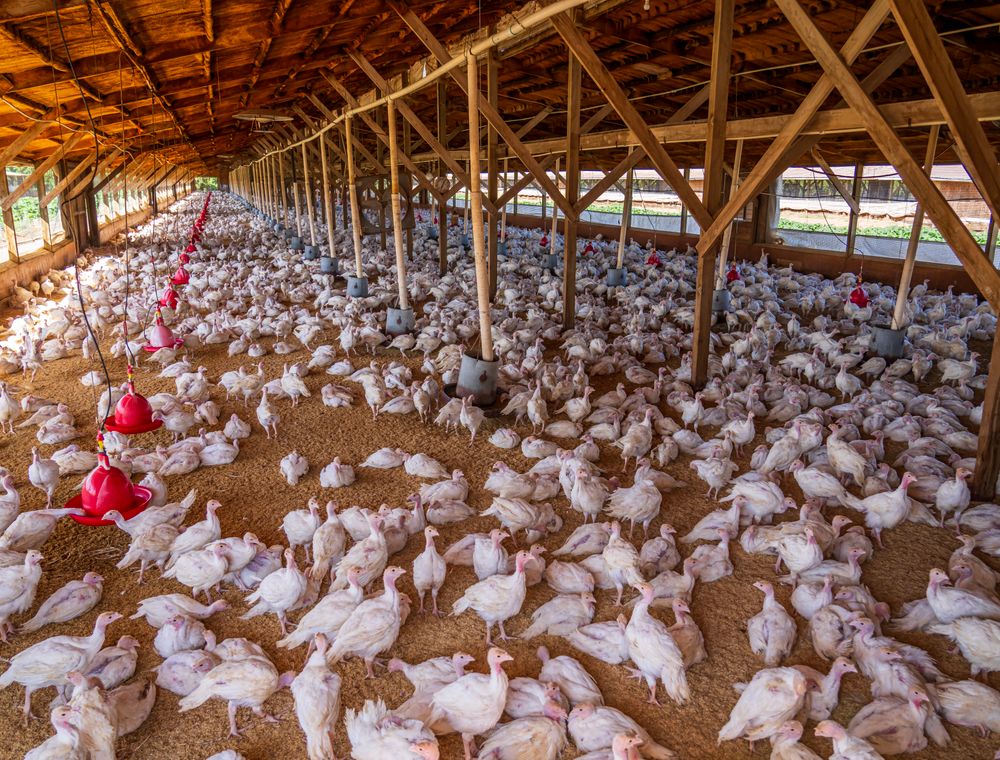
Short answer: Ventilation in a Ghanaian poultry house moves wet, warm air out at roof level and brings fresh air in at bird height without creating draughts on the flock. Open-sided houses need curtains you adjust by season: open by day in the dry months, partly closed at night in the harmattan, and shut against driving rain in the rains. If you can smell ammonia at bird height or see birds panting at midday, the air is not reaching them.
Key takeaways
- The main job of ventilation is removing moisture and ammonia at bird height
- Judge the house with a tissue strip at bird height, not by the feel at the door
- Set curtains by season and by wind, and never close every opening at once
- A ridge gap under an overhang lets heat out and keeps rain out
- Heat stress peaks in the early afternoon, so act before the birds show it
- Fans need a power backup plan in Ghana
Ventilation is mostly about getting water out
A flock puts a surprising amount of moisture into the house every day. Birds breathe it out, and their droppings give off more as they break down. Air holds that moisture until it has somewhere to go. If the house cannot move it out, the litter stays wet, the walls sweat and the air turns heavy and warm.
Farmers often think of ventilation as a way to cool birds. That matters, but the bigger daily job is moving wet, stale air away from bird level and replacing it with fresh air. Heat is the thing you feel. Moisture and ammonia are the things that make birds sick.
So judge a house by its air at bird height, not by how the air feels when you stand in the doorway.
Open-sided does not mean no plan
Most houses here are open-sided, with walls that are partly open and covered by curtains or mesh. That is a sound design for Ghana's climate, but only if the openings are set up to move air across the birds. Air should come in low on the windward side, pass over the flock and leave high on the leeward side or through a ridge gap.
The problem we see most is a house with plenty of open wall that still has dead air in the middle. The openings sit on the wrong side, the eaves are too low to let air in, or a store, a shed or a tree blocks the breeze. A house can be fully open and still stuffy if the air has no path through it.
Before you build or rebuild, look at the whole site. Our housing design guide covers orientation and materials in more depth. This article is about how the air behaves once the walls are up. For the fit-out side, see our broiler house setup notes.
Reading the wind on your own plot
Ghana's winds change with the season. In the rains, the southwest monsoon brings moist air and gusts that can drive rain straight through open walls. In the dry months, the northeast trade winds bring the harmattan, which is dry and carries dust. Your house will behave differently in each.
Spend a week on the plot before you lock the design. Tie a light strip of cloth to a pole at roof height and another at bird height. Note the direction every morning at eight, at noon and at four. Look for trees, walls and neighbouring buildings that block or swirl the breeze. A house shaded on its windward side by a big tree may stay stuffy all day.
Once you know the prevailing direction, set the long side of the house across it where the site allows. That gives you the widest contact with the breeze. If the site won't allow it, you will work harder with curtains and the ridge.
The tissue test at bird height
You do not need a meter to start. Take a strip of tissue or a light cloth, hold it at the height of a bird's back and walk the house. In a healthy house the strip leans gently and moves steadily. If it hangs dead, the air is not crossing the flock. If it flaps hard or whips about, you have a draught that will chill the birds, especially chicks.
Repeat the walk at noon and again in the evening, because the wind changes with the sun. Note the spots where the strip stays still, and check those for wet litter and for birds crowding nearby. A dead corner is nearly always a damp corner.
Chicks need gentle air, so keep the brooder area sheltered while the flock is small. By the third or fourth week the air can move more freely through the house, and the birds can take more of it.
Heat stress: how to spot it before the birds collapse
Chickens cannot sweat, so they cool themselves by panting, holding their wings away from the body, drinking more and eating less. Watch for those signs. Heat stress often peaks between about one and four in the afternoon during the dry months, when the roof is at its hottest and the air outside has no wind.
Birds close to market weight suffer more, because they carry more body heat and have less room to move away from it. Crowding into one corner makes things worse, and so does a full feed bin that keeps adding heat to the house. If you see birds gasping with open beaks and wings out, act at once. Open the far side, cut the feed back for a few hours in the afternoon, and make sure every drinker is working.
Heat deaths can look like disease, so write down what you did and when. Your vet will ask.
Heavy birds feel the heat most, and our guide to getting heavy broilers shows how feed timing and cool water fit into the same plan. If you are still choosing a flock, the breed guide for Ghana's climate explains which birds cope best with the afternoon heat.
Where ammonia comes from and how air clears it
Ammonia builds up in wet litter, and poor airflow lets it hang at bird height. Ventilation cannot fix a wet bed, but it can clear what the bed produces. In a house with good air, the smell is faint at the door and gone within a few steps. In a stuffy house you smell it before you see the birds.
Clearing ammonia is therefore a two-part job. Dry the litter using the methods in our deep litter guide, and keep air moving across the bed. Fans and extra openings won't rescue a house with wet corners. We have seen farms add a fan and keep the same damp bed, and the smell never left.
Curtains by season: what to open and when
Curtains are the cheapest control you have, and most farms use them badly. They are not simply on or off. You adjust them through the day and through the year. The table is the setting we would start from in southern Ghana. Adjust it for your site, your flock's age and what the birds show you.
| Season and time | Windward side | Leeward side | Watch for |
|---|---|---|---|
| Dry season, day | Fully open | Fully open | Heat building under the roof at noon |
| Dry season, night | Half open | Open | Chicks chilling in a draught near the wall |
| Harmattan, day | Half open | Open | Dust settling on feed and drinkers |
| Harmattan, night | Half open, out of the cold wind | Half open | Damp air trapped at floor level |
| Rains, day | Closed where rain drives in | Open | Wet walls and litter near the openings |
| Rains, night | Closed to the rain line | Half open | Litter wetter after a storm than before it |
The rule we hold firm to is this: never close every opening at once. A house with all its openings shut holds the moisture and ammonia the birds make right in with them. That is usually a bigger risk than a cool night. Layer houses need the same discipline, and our egg production guide explains how afternoon heat shows up in lay figures before it shows up anywhere else.
Need chicks for your next batch?
Send breed, number and town. We reply with price, hatch date and delivery cost in writing.
Ridge gaps, eaves and a roof that does not cook the flock
Warm air rises, so the roof is where the house gets rid of its heat. A ridge gap along the top lets hot air escape without a draught hitting the birds. Keep the gap covered from rain with a roof overhang or a simple hood, because a ridge that lets water in will soak the bed underneath.
Roof colour and insulation matter in Ghana's sun. A light-coloured roof reflects more heat than a dark one. A ceiling or a layer of insulation under the sheets cuts the heat that radiates down onto the birds. On a tin roof with no ceiling, expect the house to be noticeably hotter at noon. A shade tree on the west side helps in the afternoon, provided its branches do not block the openings.
Fans and power cuts: plan for the day the power fails
Open-sided houses handle most of Ghana's warm days without fans, provided the layout is right. Fans earn their keep in heavier flocks during hot spells, and in houses where the walls alone cannot move enough air. A fan pulls air across the birds, which cools them, but it needs electricity to do it.

Power cuts are a fact of life in Kasoa and elsewhere, and they tend to arrive at the worst moment, in the middle of a hot afternoon. If you rely on fans, plan a backup. That can be a generator you test every month or a battery system sized to run the fans for a few hours. Decide in advance what you will do when the power goes: open all the curtains, cut feed for the afternoon and check the birds every hour.
Symptoms, causes and first actions
When something looks wrong, start with what the birds and the air are telling you. The table pairs what you see with the usual cause and the first thing to do. It is a starting point, not a diagnosis, and a sick bird still needs a vet.
| What you see | Likely cause | First action |
|---|---|---|
| Wet litter and a sharp smell at bird height | Dead air or a leaking drinker | Find the wet spot, fix the drinker, then turn and dry the bed |
| Birds panting at midday, wings held out | Heat with no airflow across the flock | Open the far side, check drinkers, cut afternoon feed |
| Chicks crowding in one corner | Draught or cold corner | Close the gap and move the brooder out of the wind |
| Condensation dripping from the roof | Warm moist air hitting cold sheets | Open the ridge and eaves, and check any ceiling |
| Dust hanging over the birds in the harmattan | Dry air, dry litter and dry sweeping | Dampen the walkway, turn gently, sweep up spilt feed |
| Watery eyes and coughing | Ammonia or dust at bird height | Clear the bed, improve airflow, and call your vet if it persists |
The ventilation checklist for the morning round
- Walk the house at bird height with the tissue strip before the feed goes out
- Set the curtains for the season and the wind you can feel today, not last month's habit
- Check the far corners and the doors for dead air
- Check the ridge gap and the eaves after any storm
- Make sure no curtain is flapping loose
- Write down the midday and night temperatures, and the time you checked them
If you are planning the next house, our broiler day-old chicks page lists what we hatch and when. Message us on WhatsApp at +233 24 915 1503 with your house size, or go straight to the order form. We confirm the price in writing before you pay.
Questions farmers ask
How much ventilation does a poultry house need in Ghana?
No single figure works on every farm, and a number on paper tells you less than the birds and the litter. What the house needs is a steady flow of air across the birds at bird height. That clears moisture and ammonia without a draught on the chicks. Make the openings large on both long walls, add a ridge gap and adjust the curtains by season. Judge the result with the tissue test, the smell test and how the birds behave at midday.
Should I keep the sidewalls closed at night?
In the harmattan, close the curtains partly at night so cold dry air does not chill the flock, but never shut everything. Trapped moisture and ammonia cause respiratory trouble quickly. In the rains, close the side the rain drives through and leave the other side open. Check the house before dusk and again at about ten at night with a torch, because a curtain that blew open at midnight can undo a day of good work.
Why do my chicks crowd into one corner?
Crowding usually means a draught, a cold spot or too much heat in one place. Check the brooder height and the temperature under the lamp, and see whether a curtain is flapping over one side. Chicks that pile up can smother each other, which is a real loss. Move the brooder out of the wind, close the gap in that corner and watch them at night. They should spread out under the heat, not press against the far wall.
Do I need fans in an open-sided house?
Not always. A well-planned open-sided house handles most warm days without fans. Fans help during hot spells in heavier flocks, and in houses where the walls alone cannot move enough air. Remember the power cuts and plan a backup before you rely on them. A fan that stops when the power goes is just a metal frame on the wall.
What does heat stress look like in chickens?
Birds pant with their beaks open, hold their wings away from their bodies, crowd into shade, drink more and eat less. It often shows in the early afternoon. Give cool drinking water, open the far side, cut feed for a few hours and keep stocking density in check. If birds collapse or die in numbers, call your vet at once, because heat deaths can look like disease and need checking.
Can poor ventilation cause disease?
Yes. Damp, ammonia-laden air irritates the airways and makes birds more open to respiratory infection. Poor air also keeps the litter wet, which feeds problems such as coccidiosis. Ventilation does not replace vaccination or biosecurity, but it makes those efforts work better. Read our <a href="/blog/coccidiosis-in-chickens-ghana/">coccidiosis guide</a> and our <a href="/blog/biosecurity-poultry-farm-ghana/">biosecurity guide</a> alongside this one, because wet, stale air undoes a lot of good work done elsewhere.
Where should the openings go?
Along the long sides, as high under the eaves as you can while keeping rain out, and low enough to reach bird height. Add a ridge gap under a roof overhang to let hot air out. Keep feeders and drinkers out of the main draught where you can. Avoid lining openings up across a single narrow corridor, because the air will rush through it and miss the birds.


