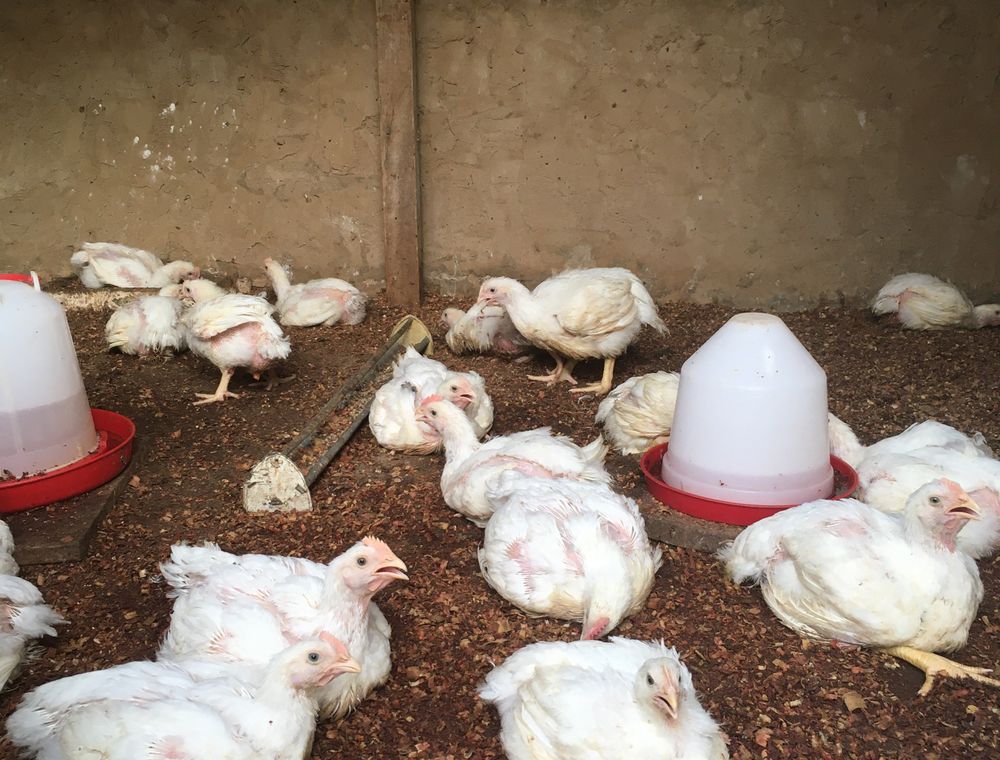
Short answer: Bell drinkers are cheap to buy and easy to learn, but birds stand in them, foul them and spill them, so they need cleaning and refilling at least twice a day. Nipple drinkers keep water cleaner and the litter drier, but they cost more to install, need steady pressure and clog quickly with iron and scale from many Ghanaian boreholes. For most commercial broiler and layer houses we recommend nipples, with a few bells kept for the first days when chicks are learning.
Key takeaways
- Bell drinkers are cheap to buy but need cleaning and topping up at least twice a day in a big house.
- Nipple drinkers keep the water cleaner and the litter drier, but they clog quickly with iron, scale and algae.
- Start chicks on flat trays or bells for the first days, then move them onto nipples at chick height.
- Plan roughly 10 broilers or 8 to 10 layers per nipple, and about one bell per 70 to 100 birds.
- Fit a filter, a tap at the end of each line and a covered tank before you fit a single nipple.
How each drinker works, and what the birds do with it
When a flock drinks poorly or the litter goes wet, most farmers look at the water supply first. Is the tank empty? Is the borehole pump working? Those checks matter, but the bigger problem is often the drinker itself. Water that splashes out of a bell, runs down a leaking nipple or pools under a pan ends up in the litter, and wet litter is where coccidiosis, ammonia and footpad burns start.
So the choice between a bell and a nipple is not really about the water. It is about how much of the water reaches the birds and how much reaches the floor. The two systems answer that question in very different ways.
A bell drinker is a shallow pan with a rim, usually hung from a chain or set on a stand. Water fills the pan and the birds drink from the edge, sometimes standing in the water and often stepping into it. Bells come in sizes for chicks through to adult birds, and the simplest ones need no pipework at all, just a bucket and a bit of patience.
A nipple drinker is a small pin valve fitted to a water line. The bird pecks the pin, a drop of water comes out, and the bird drinks it. The water stays inside the pipe until a bird asks for it. The birds learn quickly once they have been shown, but a few never take to it, and the weak birds in a crowded house are the ones most likely to miss out.
The difference shows up at the feeding line. A bell sits in the middle of the floor and attracts birds, droppings and litter. A nipple line sits above or beside the floor, on a pipe, and the birds that use it are standing on dry litter.
Side by side: the table we use when we are choosing
Here is how the two compare on the points that matter most on a working farm. The ratings are relative, and they assume the drinkers are set up and maintained properly.
| Point | Bell drinkers | Nipple drinkers |
|---|---|---|
| Cost to buy | Low per unit, cheap to replace | Higher, plus pipe, fittings and a tank |
| Set-up time | Minutes | A day or more, with flushing and pressure checks |
| Daily labour | High: refill and wipe at least twice a day | Low once set, mainly checks and flushing |
| Water cleanliness | Poor: droppings, feed and dirt fall in | Good, as long as lines are kept clean |
| Wet litter | Common around every pan | Low, unless a nipple leaks or pressure is too high |
| Chick start | Easy, the chicks find it quickly | Needs training with trays or bells first |
| Water pressure | Not needed | Needs a steady head from a raised tank |
| Clogging | Algae and slime, cleaned by hand | Iron, scale and biofilm block the pin |
| Heat | Water warms quickly in open pans | Pipes warm in the sun, so shade them |
| Best use | Chicks, backyard and small flocks | Broilers, layers and large flocks |
How many of each you need
These are starting figures. The supplier's guide for your exact drinker, and the flow rate in your own pipes, will always beat a rule of thumb, so treat the numbers below as a way to check an order, not to finalise it.
For nipples, plan roughly one nipple for every 10 broilers, or one for every 8 to 10 layers and pullets. A 1,000-bird broiler house therefore needs about 100 nipples. Spread them across several lines rather than one long run, so the birds at the far end get the same flow as the birds near the tank.
For bells, plan one bell for every 70 to 100 birds, and move the bell up or down to match the birds' backs as they grow. A 1,000-bird house would need around 10 to 14 bells. That sounds fewer than 100 nipples, but every bell is a place where birds crowd, and every bell needs emptying and wiping each day.
Birds also drink a lot. In normal weather a bird drinks roughly twice its own feed weight in water, and in heat that climbs quickly. A drinker system sized for a cool month will fall behind by the middle of an April afternoon, which is one reason we keep the drinkers in our broiler house setup guide close to the feed.
Chicks: the first week decides how easily they learn
A chick that has never seen water in a drinker does not know what the little silver pin is for. A chick that has been shown the water once or twice learns in minutes. The problem is the gap between those two situations, and it is where most nipple lines go wrong in the first week.

For the first two or three days, we suggest flat trays or small bell drinkers with clean water, set where the chicks can reach them easily from the brooder. Dip each chick's beak into the water on arrival, and keep the water shallow enough that a chick cannot drown in it. Once the chicks are drinking freely and moving about, bring in the nipples at chick height. Some farmers run a few nipples and a few bells together for a week, which lets the slow learners find the water while the others get on with it.
The nipple height is a common mistake. Set too high, the chicks cannot reach the pin, so they stop drinking. Set too low, they peck at it and spill the water. Raise the lines as the birds grow, and check the height every week, as set out in our broiler feeding schedule, where the water intake is tied to the feeding plan.
Water cleanliness and disease
A bell drinker is a shared dish in a dirty room. Birds walk through their own droppings to reach it, scratch litter into it and dip their feet in it. Coccidiosis oocysts, the cause of one of the most common losses in Ghanaian broiler houses, travel easily in that kind of water. Our piece on coccidiosis in chickens explains the life cycle, and the simple lesson is that a wet, dirty drinker feeds the disease.
Nipples are cleaner by design, because the water is kept inside a closed line and the bird drinks only the drop it needs. But they are not clean for ever. Inside the pipe, a slime called biofilm builds up over weeks, and it is the thing that makes the water taste and smell wrong and keeps the pin from sealing. The answer is regular flushing and a periodic disinfection of the whole line, using a product your vet or supplier recommends, followed by a full flush before the birds drink again.
Flush the far end of every line first, because that is where the water sits longest, and then the near end. A tap at the end of each line lets you do this in a minute instead of unscrewing fittings.
Spillage, wet litter and the cost of a leak
Wet litter costs more than most farmers expect. It raises ammonia, which burns the eyes and lungs of the birds and of the people who work in the house. It makes the footpads sore. It gives coccidiosis a place to thrive. And it lowers the feed intake of birds that cannot stand comfortably on it.
Bells cause wet litter almost by default. Every time a bird jumps into the pan or knocks it over, a splash lands on the floor, and the wet ring that grows around the bell is the first sign of a bad setup. A bell that sits too low, or on uneven ground, or under a leaking roof, is wet all the time.
Nipples spill when the pressure is too high, or when a pin is worn or stuck open. A single leaking nipple does not look like much, but a line of a hundred nipples that each drip a little adds up to a wet floor by the end of the day. Walk every line each morning, look at the litter under each nipple, and fix any drip before the litter around it goes sticky. We cover the litter side in more depth in our guide to deep litter management.
Ghana's water and why nipples clog
Most farms in Ghana run on a borehole, a well, a mains connection or water stored in a tank filled from one of those. Each source behaves differently in a nipple line, and the nipple is the first place the difference shows.
Borehole water is often clean to look at and rich in iron, which turns to a rusty deposit in the pipe and on the pin. Hard water leaves scale. Water stored in an open tank grows algae, and algae and slime block nipples faster than anything else. Mains water is usually cleaner but may be chlorinated and can vary with the supply. A filter, a covered tank and a test of the water before you fit the lines will save you a lot of unblocking later. Our article on water quality for poultry in Ghana goes through the tests and the filter types.
Keep the tank covered and out of the sun where you can. A tank in full sun heats the water, and warm water grows algae and tastes flat to the birds. Dark, shaded tanks and insulated lids are a cheap way to keep the water cooler and the pins open.
Heat: pipes, tanks and the water temperature
In the dry months from late February into April, the air outside can sit well above the comfortable range for birds, and the black pipes on a nipple line soak up that heat. The water inside them warms through the day. Birds that drink warm water in the afternoon often drink less, and intake down means growth down and a harder time for the house.
The fix is simple and cheap. Run pipes under a roof overhang or a shade cloth where you can. Keep the tank shaded. Where the nipple line runs out in the open, lag it or use a lighter colour. Bells lose the battle in heat in a different way, because the water in an open pan warms and the birds will not drink it. Refill the bells in the morning and again in the afternoon, and keep the water topped so the birds find it cool when they come looking. Our article on cooling a poultry house in hot weather covers the wider picture.
Need chicks for your next batch?
Send breed, number and town. We reply with price, hatch date and delivery cost in writing.
What it costs over the life of a 1,000-bird house
The purchase price is the smallest part of this decision. Work out the cost over one crop, which for broilers is about six or seven weeks, and then repeat it for every crop in the year.
Take a 1,000-bird broiler house with bells. You buy about 12 bells, and you fill and wipe them twice a day for the whole crop. Twice a day across a six-week crop is about 84 rounds of refilling and wiping, and six crops a year makes roughly 500. Add the extra litter you buy to replace the wet patches, and the disease risk from a dirtier water source, and the bell house starts to look expensive.
Now take the same house with nipples. You buy about 100 nipples, a pipe network, fittings, a filter, a raised tank and a tap at each line. The outlay is larger, and it is worth doing the sum with your own supplier's prices, which change. After set-up, though, the daily labour falls to a walk along the lines, a flush and a check each week, and the litter stays drier. Over several crops the gap narrows, and for many farms the nipple house ends up the cheaper one to run.
That is a rough picture, not a quote. Ask your equipment supplier for the parts list for your own house, and add up the labour for your own hours.
Which to choose for which bird
The right drinker depends on the bird as much as the house.
- Broilers in a commercial house: nipples, fed from a covered tank, with a few bells or trays for the first days. Our broiler day-old chick page covers the birds themselves. Nipple lines are the usual choice because the flock grows fast, and the litter is the thing that will decide how the crop ends.
- Layers and pullets: nipples for most of the flock. Pullets learn the nipples slowly, so some farmers keep a few bells in the rearing house for longer. Hens that lay in a wet corner give you dirty eggs, which is one more reason to keep the drinkers dry. Our layer chick page and our guide to increasing egg production both touch on the same drinker routine.
- Chicks in the brooder: trays or small bells to start, then nipples or bells as the house requires. The first days are about learning, not about system. If you are still choosing your first chicks, our day-old chicks in Ghana page shows how we pack and send them.
- Small backyard flocks: bells or simple gravity drinkers, placed on a platform and cleaned daily. Nipples are rarely worth the pipe for a dozen birds.
If you are ordering broilers for a nipple house, message us on WhatsApp at +233 24 915 1503 with your house size, or place your order through our order form, and we will tell you how many chicks the drinker line can carry.
A weekly routine for nipple lines
Nipples only stay clean and open if somebody looks after them on a fixed day. Put the routine in your diary and write the result in your record book.
- Every morning: walk each line and look for drips, wet litter under the pins and birds struggling to drink.
- Every morning: check the pressure at the far end of the longest line, not just at the tank.
- Twice a week: open the tap at the end of each line and let it run until the water is clear.
- Once a week: flush the whole system with the disinfectant your vet or supplier recommends, then rinse it out before the birds drink.
- Once a week: clean or replace the filter, and check the tank lid and the shade over the pipes.
- Every fortnight: raise the lines as the birds grow, and check that the nipple height suits the smallest bird in the flock.
Mistakes we see in drinker systems
- Fitting nipples without testing the water. The farmer who skips the test finds out in week two, when the pins start to block.
- Too little head in the tank. A tank too low gives weak flow, so the birds at the far end drink less than the birds at the near end.
- One long line. A single long run loses pressure. Split the house into lines, each with its own tap.
- Bells left full overnight. Water left in a bell at night is the water the birds drink in the morning, with the day's droppings in it.
- Ignoring the far end. The drinkers near the tank always look fine. Check the ones at the end of the house, where the birds gather to rest.
Drinker checklist before the first chicks arrive
- Water tested and the results written down before any nipple goes in
- Tank covered, shaded and fitted with a float or level sensor
- Filter in the line, with a spare cartridge on the shelf
- Lines split into runs the pressure can carry, each with a tap at the far end
- Bells or flat trays ready for the first three days
- Nipple height set for chick size and marked up for the weeks ahead
- Drip trays under any bell and under any joint that could leak
- Weekly flush and disinfection written into the record book
Questions farmers ask
Are nipple drinkers better than bell drinkers for broilers?
For most commercial broiler houses, yes. Nipples keep the water cleaner and the litter drier, and they need less daily labour once the system is working. Bells are easier to start with and are still useful for the first few days. The deciding factors are the quality of your water, the pressure you can supply and whether you have someone to look after the lines every week.
How many nipple drinkers do I need for 500 broilers?
As a starting point, plan about one nipple for every 10 broilers, which gives about 50 nipples for 500 birds. Spread them across several lines so the birds at the far end of the house get the same flow as those near the tank. Check the flow rate and pressure with your supplier before you buy, because both change the figure.
Why do my nipple drinkers keep blocking?
The usual causes in Ghana are iron and scale from the water source, algae in an open or sunlit tank, and biofilm building up in the pipe over several weeks. Test the water, cover the tank, fit a filter and flush the lines on a fixed day each week. A nipple that blocks once in a while is normal. One that blocks every day points to the water or the tank.
Can chicks use nipple drinkers from the first day?
They can, but most farmers do better starting them on flat trays or small bell drinkers for the first two or three days. Dip each chick's beak into the water on arrival, keep the water shallow and set the nipples at chick height once the birds are drinking freely. Check the height every few days as the chicks grow.
Do bell drinkers make the litter wet?
Yes, almost always, because the birds splash the water out and step through it. A wet ring around each bell is the most common sign of a bell that is too low, too full or standing on uneven ground. Raise the bell to the level of the birds' backs, keep it on a drip tray or a raised platform, and empty and wipe it twice a day.
How much pressure do nipple lines need?
Nipple lines run on gravity, so the pressure comes from the height of the tank above the birds. Ask your nipple supplier for the head height their pin needs at the flow you have, then build the tank stand to give that height. Too little pressure leads to weak flow at the far end. Too much makes the pins leak, so test the flow at the far end once the system is running.
Is it worth buying bell drinkers for a small backyard flock?
Usually yes. A dozen or two birds drink from a simple bell or gravity drinker without any pipework, and the daily cleaning is quick. Nipples are rarely worth the pipe and the tank for a small flock. Put the drinker on a platform so it stays off the wet ground, and clean it every day in the hot months.


