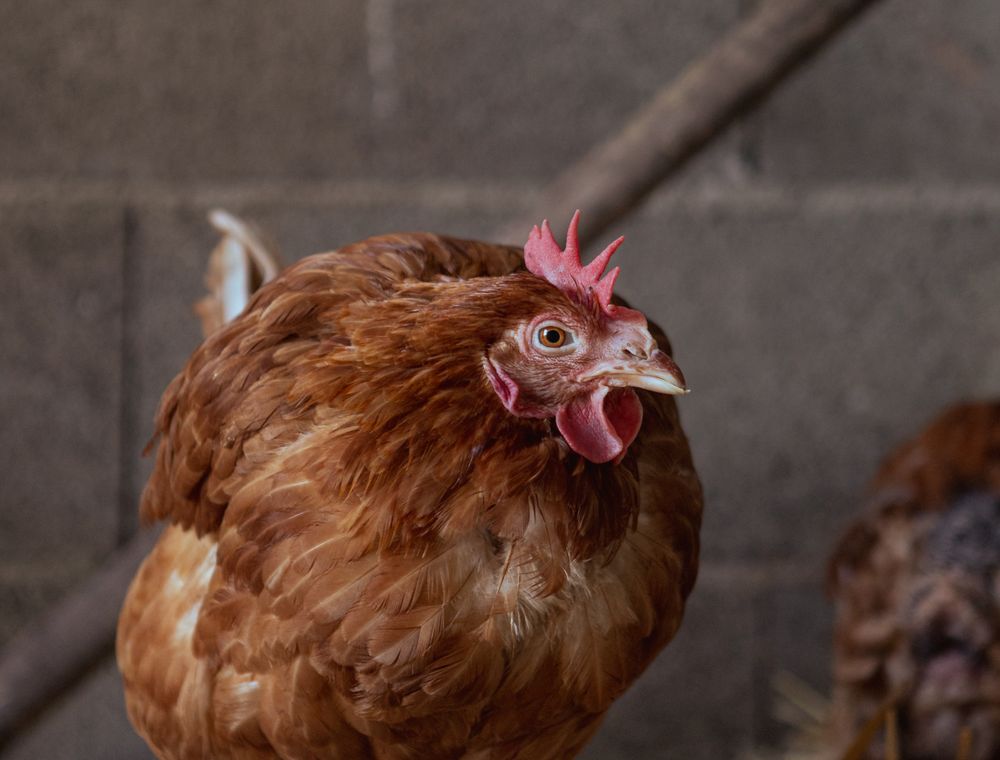
Short answer: A molting hen drops feathers and lays fewer eggs while she grows new ones, often over eight to twelve weeks. In Ghana, stress from heat, disease, a feed change or pecking usually starts a molt, because day length barely changes through the year. Bald skin that bleeds, or a drop in lay with lethargy and watery droppings, is not a normal molt and needs your vet the same day.
Key takeaways
- A molt is normal, but a drop in eggs and feathers is a signal to check, not ignore.
- Keep layer feed steady during a molt, because new feathers are built from protein.
- Bald patches with pink or bleeding skin mean pecking or mites until your vet says otherwise.
- Starving hens to force a molt is stressful, and we do not recommend it for small flocks.
- Any lay drop with lethargy, watery droppings or breathing trouble goes to the vet that day.
Feathers on the floor and fewer eggs in the tray: is it a molt?
Are your hens shedding feathers and laying nothing? Before you reach for any product, look at the pattern. A molt is a planned replacement of feathers, and it follows a fairly predictable path. Feathers come off the neck and back first, then the breast and tail. The hen keeps eating and moving about, and if you part the feathers you will see new pin feathers pushing through.
What worries farmers most is the egg count. A molting hen stops laying, or lays far fewer eggs, while she puts her energy into new feathers. That drop is normal. The real question is how far the count falls and how quickly the flock climbs back.
How a molt runs from start to finish
No two molts look exactly alike. A hen may shed a few feathers at a time, or drop large patches in a few days. The process usually moves through the same stages:

- The first feathers loosen on the neck and back, and the hen looks scruffy.
- Body feathers come out in larger numbers, and the lay rate falls sharply.
- Wing and tail feathers go, and the flock looks at its worst.
- New feathers push through as pin feathers, and the birds start to look sleek again.
- The hen returns to lay, usually at a lower peak than before the molt.
A natural molt commonly runs eight to twelve weeks from the first lost feather to a full return to lay, though some flocks take longer. Count from the day you first notice feathers on the floor, not from the day the eggs stopped. Write the date down. You will want it when you compare this year's flock with the last one.
Why hens in Ghana molt when they do
Farmers in colder countries learn to expect a molt in autumn, when the days shorten. Ghana does not work that way. Day length stays close to twelve hours through the year, so the daylight signal that starts many molts elsewhere is weak here. Our lighting program notes explain how to keep day length steady instead. In our experience, molts in Ghanaian flocks follow stress much more closely than they follow the calendar.
The usual triggers are a hot spell that cuts feed and water intake, a disease that knocks the flock off lay, a sudden change of feed, a rough move between houses, or crowding and pecking that wears feathers away. One trigger is often enough. Several together, such as a hot spell straight after a feed change, can start a molt in birds that were laying well a month earlier.
Older hens molt on a more irregular timetable, and a mixed-age flock rarely molts all at once. That is one reason a single flock can look like it is molting in patches for weeks.
Telling a molt from pecking, mites and disease
Feather loss has several causes, and each needs a different response. The table covers the signs farmers ask us about most. If a bird is bleeding, dull or off her feed, skip the table and call your vet.
| What you see | Most likely cause | What to do first |
|---|---|---|
| Feathers gone from neck and back, bird active and eating | Normal molt | Keep feed and water steady, and record the start date |
| Bare patches with pink or bleeding skin, hens picking at each other | Feather pecking | Check density, light intensity and feeder space, and separate the worst pickers |
| Scabs or bald skin around the vent and under the wings, hens restless at night | External parasites such as mites | Check birds after dark and ask your vet which treatment fits your flock |
| Egg drop with lethargy, watery droppings or noisy breathing | Possible disease | Call your vet the same day and check your vaccine record |
| Egg drop with bright eyes and good appetite, after a hot spell | Heat-related lay dip | Read our hot-season notes and improve water and shade |
How far the egg count falls, and how long it takes to recover
Expect the lay rate to fall sharply during the feather drop, sometimes close to zero for a spell, and then to climb back slowly. A healthy flock returns to lay at a lower peak than it reached before the molt. That is normal, and it is a cost to plan for. A flock that stays flat for months, or never climbs back, has a second problem that needs a closer look.
Track it with the egg record. Count eggs every day, work out the lay rate as a percentage of the hens in the house, and draw the line on a chart. A molt usually looks like a rounded dip with a slow recovery. Disease tends to look like a cliff with no bounce. Read the shape of the line, not one figure, when you decide what to do. Our egg production guide covers what to do once the flock is back in lay.
Feed during a molt: keep the intake up
Feathers are mostly protein, and the building blocks of feather are sulphur-containing amino acids. A molting hen needs a feed with enough protein and those amino acids to grow new feathers, which is why her feed should not be cut back just because she has stopped laying. Keep the layer feed steady, check that the mash has not gone stale or damp in storage, and make sure every bird can reach the feeder. Our layer feeding guide covers what the ration should contain.
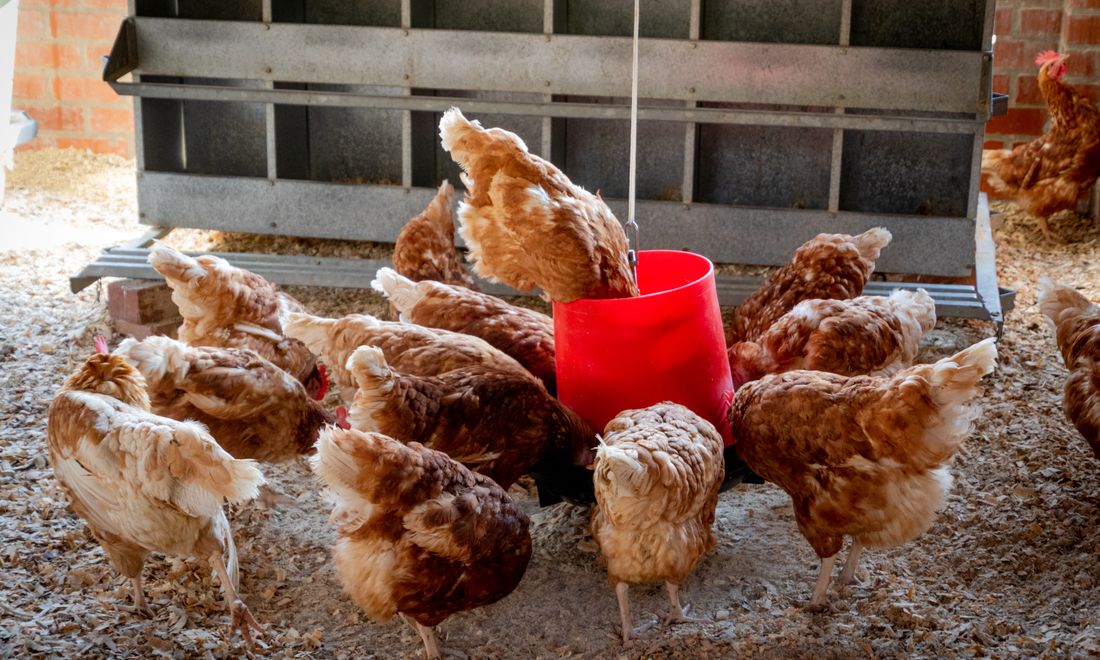
Some farmers cut feed to force a molt and speed up the next laying cycle. Large commercial units in some countries use feed withdrawal for this. It is stressful, and it is hard to do well without good records, a vet and a clear plan for bird welfare. We do not recommend it for small or medium flocks in Ghana. If you are considering it, talk to your vet first, and do not starve birds without guidance.
Check the water as closely as the feed. A molting hen still drinks, and a dry drinker line does more damage than a missed feed.
Keeping the house calm and the birds spread out
A molting hen with bare skin is a tender target. Pecking usually starts with one bird that looks different, and it spreads fast through a crowded flock. Watch the birds closer during a molt than at any other time. Remove any hen with an open wound, because the rest of the flock will peck at it. Put her in a pen of her own with food and water until she heals, then bring her back if the flock accepts her. Our housing designs article covers pen layouts that make separation easier.
Density matters more now. A flock packed tight in a hot house picks more. Check that each bird has feeder and drinker space, and that the house is not trapping heat. If your lights have a dimmer, lower the intensity rather than the day length. Avoid moving birds, adding new birds or running a round of vaccinations in the same week, if you can help it.
Need chicks for your next batch?
Send breed, number and town. We reply with price, hatch date and delivery cost in writing.
When it is not a molt, and you should call the vet
A molt does not explain a sick flock. If birds sit hunched, stop eating, breathe with a rattle, or pass green or watery droppings, you are dealing with disease until your vet says otherwise. Newcastle disease in particular can drop lay sharply and make birds look unwell, so check your vaccination record against your vet's schedule. Our Newcastle prevention notes set out the signs to look for.
Do not treat a sick flock from the shop shelf. Get a diagnosis first, because the same signs can come from several causes, and the wrong product wastes days while the problem spreads. Keep sick birds apart, and wash your hands and boots between pens.
A worked example for 120 hens
Say you have 120 hens laying at 85 percent before a molt. That is about 102 eggs a day. During the molt the lay rate falls to 40 percent, which is 48 eggs a day. The gap is 54 eggs a day, or 378 eggs in a week. At our list price of GH₵50 for 30 eggs, that is roughly GH₵630 of lost egg value each week, before feed and labour.
Those numbers show two things. The molt is costly enough to be worth managing well. And a drop much deeper than 40 percent, or one that never recovers, is worth a vet visit before you accept it as a molt. Run the same sum with your own flock size and your own price, and you will know quickly which situation you are in.
Checklist during a molt
- The date of the first feather loss is written in the flock record.
- The daily egg count and lay percentage are recorded every day.
- Layer feed is kept steady, and not cut to force a molt.
- Drinkers are checked twice a day for flow and cleanliness.
- Feeder space is checked against the number of hens.
- Bald or bleeding birds are separated and seen by the vet.
- The vaccination record is checked against your vet's schedule.
- Pecking and mites are checked after dark, when the birds have settled.
After the molt: what to expect and what to change
Once the new feathers are in and the lay rate climbs, use the molt to review the house. Look at the feeder, the nests, the ventilation and the density, because whatever started this molt will start the next one. Change one thing at a time and read the egg record two weeks later. Then decide whether the hen is still worth her feed, which is the same question covered in our piece on when to cull layers.
If the flock is young and healthy, a molt is a poor reason to cull. If the flock is old and the lay rate never comes back, plan the replacement. Pullets bought for the next cycle need about four months before they lay, so every decision here is really a timing decision. If you are restocking, our layer chicks start with Hy-Line Brown at GH₵23 each, and you can place the order through the order form or WhatsApp us on +233 24 915 1503.
Questions farmers ask
How long does a molt last in layers?
A natural molt commonly lasts eight to twelve weeks from the first feather loss to a full return to lay, though some flocks take longer. Count from the first day you notice feathers coming out, and keep the dates in your flock record. A flock that is still bald and not laying after four months needs a vet's look.
Why are my hens losing feathers but still eating?
That is the usual pattern of a molt. Molting hens keep their appetite and keep moving, and you can see pin feathers coming through bare skin. If the hens are also picking at each other, or the bare skin is pink and bleeding, the cause is more likely pecking or mites. Look at the birds after dark and check the house for density problems.
Should I stop feeding my hens to make them molt faster?
We do not recommend it for small or medium flocks in Ghana. Starving birds is stressful, and it can leave them weak and more open to disease. Keep layer feed steady, and talk to your vet before you consider any change to feed for the sake of a molt.
Will my hens lay as many eggs after a molt?
Usually not at the same peak. A flock coming back from a molt typically lays at a lower rate than before, and recovery can take several weeks. If lay stays flat for months, the flock has another problem, such as disease, poor nutrition or heat stress, and it is time for a vet visit.
Can heat start a molt?
It can. A hot spell that cuts feed and water intake is one of the stresses that often starts a molt in Ghana, particularly in houses with poor airflow. Improve shade, water and ventilation during hot weather, and watch the egg count closely for the following four to six weeks.
Do I need to vaccinate my hens again if they molt?
A molt does not cancel the vaccine programme. Follow your vet's schedule and check the dates against your batch record. If you see signs of disease during the molt, your vet may recommend testing before any extra vaccine is given.
Are eggs from molting hens safe to eat?
Eggs from healthy hens are fine to eat during a molt. If your hens are on any medicine, follow the withdrawal period your vet gives before you sell or eat their eggs. A drop in lay on its own is not a food safety problem, but a sick hen is, so keep that distinction clear in your records.


