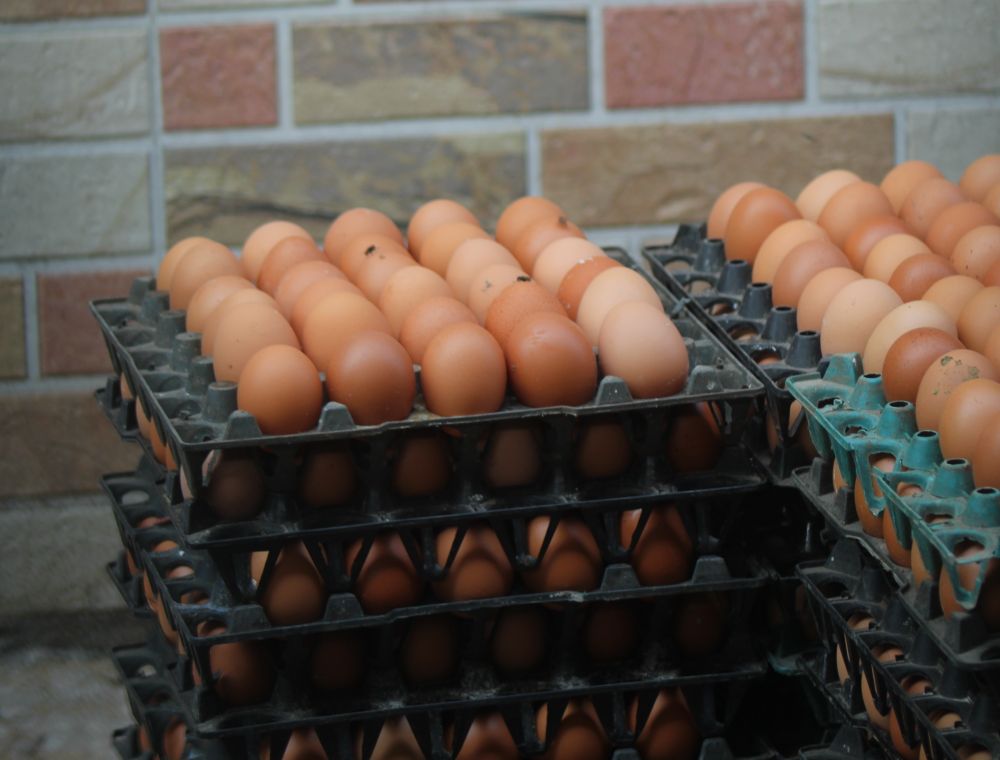
Short answer: Eggs hold their quality longest in a store where the afternoon heat stays low and the air never swings between hot and damp. In Ghana an ordinary room that reaches 32 to 34 °C in the afternoon can cost you days of saleable eggs, while a pot-in-pot cooler or a fridge that holds steady through the power cuts buys you real time. Store eggs unwashed, pointy end down, dated, and sell the oldest crate first.
Key takeaways
- Read the afternoon temperature at tray height, not the morning one.
- Harmattan dries eggs out and the rains grow mould, so manage the store for both.
- A pot-in-pot cooler is cheap and works well in dry air, and poorly in humid weeks.
- Keep eggs unwashed, pointy end down, dated, and sell the oldest crate first.
- Let cold eggs warm up before they go into a humid room, or the shells sweat.
The clock starts in the nest box
A hen lays an egg at close to her own body temperature, and the egg starts to change the moment it cools. Water slowly leaves through the shell, the air pocket at the blunt end grows, and the white thins as carbon dioxide escapes. None of this is dangerous. It is simply the slow way an egg stops being the egg a buyer paid for.
What matters for you is speed. Heat and dry air push that process along. An egg that goes from a cool nest into a cool store ages slowly. An egg that sits three hours in a tin-roofed room in March has already lost ground, and you will not see the loss until someone cracks it into a pan.
So the job of a store is not to freeze anything. It is to slow the clock and stop it running in bursts. Most farmers who complain that eggs go off are really complaining about the afternoon.
Heat is the thief, and dry air is the accomplice
Two things work against a stored egg in Ghana, and they often pull in opposite directions across the year. In the hot months the problem is temperature. Above about 25 °C the egg ages quickly, and the white loses its grip on the yolk. Above 30 °C it ages fast enough that you should count the days, not the weeks.
In harmattan the problem is the air itself. Dusty, dry air blowing down from the north can pull enough moisture through the shell to make an uncovered tray feel light by the end of the week. A cool room in December can still dry eggs out, especially if they sit on a shelf near a window.
In the rains the problem flips. Damp air, wet floors and dirty trays grow mould, and a cracked or dirty shell lets bacteria in. The store that is perfect in harmattan can turn into a mould room in July, so it needs managing through the whole year, not just building once. Hens feel the same weather, and our note on heat and egg drop covers what that does to the lay rate.
Read the room before you trust it
A thermometer on the wall above the trays tells you about the wall. Hang it at tray height, away from the door and out of direct sun, and read it three times a day: first thing in the morning, around noon and in the late afternoon. The afternoon reading is the one that decides how long your eggs keep.
Write the three numbers on the collection sheet beside the egg count. After a week the pattern shows itself. Most farm stores run hottest between two and five in the afternoon, which is when the roof has soaked up the sun and the door has been open for the evening feed.
A hygrometer, which reads humidity, is cheap and worth having. In the rains, aim for air damp enough that the trays do not feel dry to the touch, and dry enough that the floor is never wet. Eggs do well at roughly 70 to 80 per cent relative humidity. You will struggle to hit that in harmattan, so in the dry months cover the trays with a clean cloth and keep the air moving instead of chasing a number.
Cooling a store without power
The cheapest cooler in most Ghanaian homes is the pot-in-pot, often called a zeer pot. Stand a smaller unglazed clay pot inside a larger one, fill the gap with wet sand, and lay a damp cloth over the mouth of the inner pot. Water seeps through the clay and evaporates from the outside, and that evaporation takes heat out of the inside.
The catch is that evaporation only works when the air can take up the moisture. That makes the pot a dry-season machine. In harmattan it will pull the inside well below the outside air. In a wet week in July it does much less, and a closed, humid room can make it worse. Put it in the open-sided part of the house where air moves, not in a closed box.

A shaded room with a second door or window on the opposite wall is the next option. Cross-ventilation carries the warm air out, and wet sacking hung on the shaded wall gives a small extra cooling effect. It costs almost nothing and asks only for a little daily attention, which is why we suggest it before anything more expensive.
A fridge, and what dumsor does to it
A domestic refrigerator is the best store most small farms can own, and also the easiest to abuse. Keep it between roughly 4 and 7 °C, away from the freezer section. Never let eggs touch the cooling plate, because frozen eggs crack, and a crack you cannot see is the worst kind of loss.
Power cuts are the weak point. When the fridge goes off for an afternoon, the eggs inside warm slowly, and that is not the worst of it. The worst is the swing. A cold egg taken into a warm, humid room grows a film of water on its shell, and that film carries dirt and bacteria straight through the pores. Let cold eggs come up to room temperature before they go out to a humid room, and keep them covered while they do.
Our rule during a cut is simple. Keep the door shut, count the hours on a piece of card on the door, and do not open the fridge to check. If the cut runs long, sell the eggs that have been warm for several hours first, and do not put them back in the fridge as if nothing happened. Some farms keep a battery-backed light or small inverter for the fridge, which is worth more than most of the extras people buy. See our note on electricity on a poultry farm for the backup sums.
Which option fits your farm
No single option wins everywhere. The table compares the four setups we discuss most often with farmers. The effort column is a rough word, because prices move and fittings vary by town, so check locally before you buy anything.
| Option | Rough effort to set up | Works best when | Weak point |
|---|---|---|---|
| Shaded room with cross-ventilation | Low: time and a bit of rearranging | Harmattan and dry spells | Afternoon heat in a closed, tin-roofed room |
| Pot-in-pot cooler with wet sand | Low: two clay pots, sand and a cloth | Dry air, with water topped up every day | Stalls in humid weeks, and forgotten water ends it |
| Domestic refrigerator | Medium: a fridge and a socket you can trust | Steady power and small to medium volumes | Power cuts, and crowding that blocks the air |
| Insulated cool room with a fan | High: build, insulation, fan and running power | Several hundred eggs a week sold within a week or two | Costly to run, and it fails with the power |
For most small and medium flocks, a shaded room plus a pot cooler covers the dry months, and a fridge covers the rest if you can keep it powered. The insulated room only earns its place when the volume is high and the running cost is a line you can carry every month.
What a hot store costs you: a worked example
Take a flock that gives you 15 crates a day, which is 450 eggs. Suppose your afternoon store sits near 33 °C, and about one crate in twenty is turned down by the buyer because the eggs have aged or the shells have gone dull and dirty from sweating. These are our assumptions for the sum, not a measured result, so put your own figures in when you run yours.
One crate in twenty is 0.75 of a crate a day. At an assumed price of GH₵45 a crate, that is about GH₵34 a day, or roughly GH₵1,000 over a 30-day month. The loss is not one bad day. It is a leak that runs every month the store stays hot.
Set against that, a clay pot cooler and a sack for the wall cost very little, and opening a window on the opposite side costs nothing at all. The sum does not need to be exact to tell you which way to go. If a fix costs less than a week of the leak, do it this week and check the thermometer next week to see whether it worked.
Rules of thumb for how long to hold them
Farmers always ask for a number of days, so here are our working rules. They apply to clean, uncracked, unwashed eggs collected the same day, in a store run the way this article describes.
- In a room that runs above 30 °C in the afternoon, sell within two to three days and move the oldest crate first.
- In a shaded, ventilated store with a working pot cooler, plan for about a week, and aim to sell within ten days.
- In a refrigerator held at a steady cool temperature, eggs keep for weeks, but the white thins over time, so sell the earlier-laid crates before the later ones.
- Any egg with a visible crack goes to the front of the queue for home use, or out of the sale altogether.
What you will not find is one figure that holds for every farm. A small farm that collects twice a day into a cool room will beat a big farm that collects once a day into a hot one, every time. For a shorter companion piece, see how to store table eggs, and if a buyer wants eggs held longer than a week, read our guide to what buyers check first, because a held egg has to pass the same inspection as a fresh one.
Need chicks for your next batch?
Send breed, number and town. We reply with price, hatch date and delivery cost in writing.
Mistakes we see most often
The first is washing eggs before storing them. Washing strips the thin bloom that protects the shell, and a wet egg in a warm store is the fastest route to a dirty, spoiled crate. Leave the dirt on, clean only what you must, and do it close to the sale. Our washing guide covers the do's and don'ts if you have to wash.
The second is storing eggs next to things that smell. Shells are porous, and eggs take up odours. Keep them away from fuel, paraffin, fertiliser, onions and feed bags that have started to go musty. A store that smells of the feed shed gives you eggs that taste of it.
The third is mixing ages. A tray from this morning and a tray from last Tuesday look the same until someone holds them to a light. Date each crate and sell the oldest first, even when a regular customer asks for the freshest.
The fourth is trays on the bare floor. Concrete in a farm store can be damp for weeks in the rains, and the bottom tray soaks up whatever rises through it. Lift the trays on a clean pallet or a wooden rack, and keep the rack a hand's width off the wall so air can move behind it.
A daily store routine that takes ten minutes
A store that works is usually a store with a routine. The list below fits before the morning feed, and it catches most problems before they cost you a sale.
- Read the thermometer and write the morning number on the collection sheet.
- Check the cooler or the fridge: water topped up, sand damp, door shut, fridge humming.
- Pull out any cracked or dirty eggs into a separate tray for home use or disposal.
- Put new eggs at the back and move the older crates to the front.
- Note any smell, mould or wet patch on the floor or walls, and deal with it the same day.
- Read the afternoon thermometer, and move crates to the coolest corner if the room has gone over 30 °C.
Ten minutes a day is cheaper than a week of downgraded crates. Keep the list on the store door so whoever opens the store in the morning can do it, even when you are not there. When the crates leave the farm, the checks in our packing and transport guide take over.
When the problem starts before the store
Most storage problems are management problems, and you can fix them yourself. But if you find cracked eggs every morning, or eggs that go off within a day even in a cool room, the cause may come before the store. Check the nest, the feed and the hens. Soft shells, for instance, usually point to calcium or heat, and our guide to soft-shelled eggs walks through what to check in the flock.
If the hens are off their lay, or birds are sick, have the vet look at them and follow your vet's advice on any treatment. A good store cannot make up for a sick flock, and a sick flock will ruin a good store's numbers.
If you are starting a new flock and want birds that lay well from the first egg, our layer day-old chicks are the place to begin, and our breeds page explains the differences between the layer lines we handle. Tell us your flock size and your selling plan on WhatsApp, at +233 24 915 1503, and we will say honestly what fits.
Getting the birds and the boxes in the right order
Farmers who plan the store and the flock together waste less. Brown layers usually start laying at 18 to 19 weeks, so the first crates are months away from the day the chicks arrive. If the cool room will not be finished until then, there is no reason to rush its build, but there is every reason to have the thermometer and the pot cooler in place before the first crate comes off the nest.
When you order, ask for the price in writing before you pay. We confirm prices at order, and we do not take online payment, so keep the message as your record. Our delivery page explains how we reach all 16 regions, and you can also collect from the farm in Opeikuma if that suits you better. Our day-old chicks page lists what we hatch and import. Place your order through our order form when you are ready, and we will confirm the details by WhatsApp.
Questions farmers ask
Do I need a fridge to hold eggs on a small farm?
No, but it changes the plan. A shaded room with a pot-in-pot cooler holds eggs well for about a week in dry weather, and for less in the rains. A fridge buys more time, provided the power is steady or you have a backup for it. Either way, collect twice a day and sell the oldest crate first.
What is the best temperature for storing eggs?
For table eggs, cool and steady beats any single number. A refrigerator held between about 4 and 7 °C keeps them longest. In an ordinary room, aim for an afternoon reading near 20 to 25 °C, and treat anything above 30 °C as a signal to count the days in hours and move the crates to the coolest space you have.
Does washing before storage help?
Not as a rule. A dry clean with a soft brush removes most dirt and leaves the bloom intact. Wash only eggs that are visibly soiled, and only close to the sale. Washed eggs in a warm store spoil faster than unwashed ones, so a wash that is done too early costs you more than the dirt did.
How do I know a stored egg has gone off?
Start with the shell: a dull, sticky or mouldy surface is a warning. Then crack the egg onto a plate. A sour or sulphurous smell means it is spoiled, and a white that runs flat and watery means it is past its best. A float test shows the size of the air cell, not whether bacteria are present, so never rely on it alone.
Does a pot-in-pot cooler work in harmattan?
It works very well in harmattan, because the dry air lets water evaporate quickly and pulls the inside of the store down. In the rains the same cooler does much less, because the air is already full of moisture. Keep the sand damp, refill the water every day, and place the cooler where air can move around it.
Can I keep eggs in the same fridge as my food?
It is better not to. Eggs take up smells, and a fridge full of raw meat or fish is a poor neighbour. Give the eggs a shelf of their own, keep them in their tray, and keep the door shut between uses. Avoid the door shelves, where the temperature swings most each time someone opens it.
Can I store eggs for a big festive order?
You can, but only for a short hold. Collect for the order over the three or four days before it is due, keep the crates in the coolest room you have, and do not build a stock that sits for weeks in the heat. Festive buyers look for the best eggs, and an old crate is the first thing they notice.


