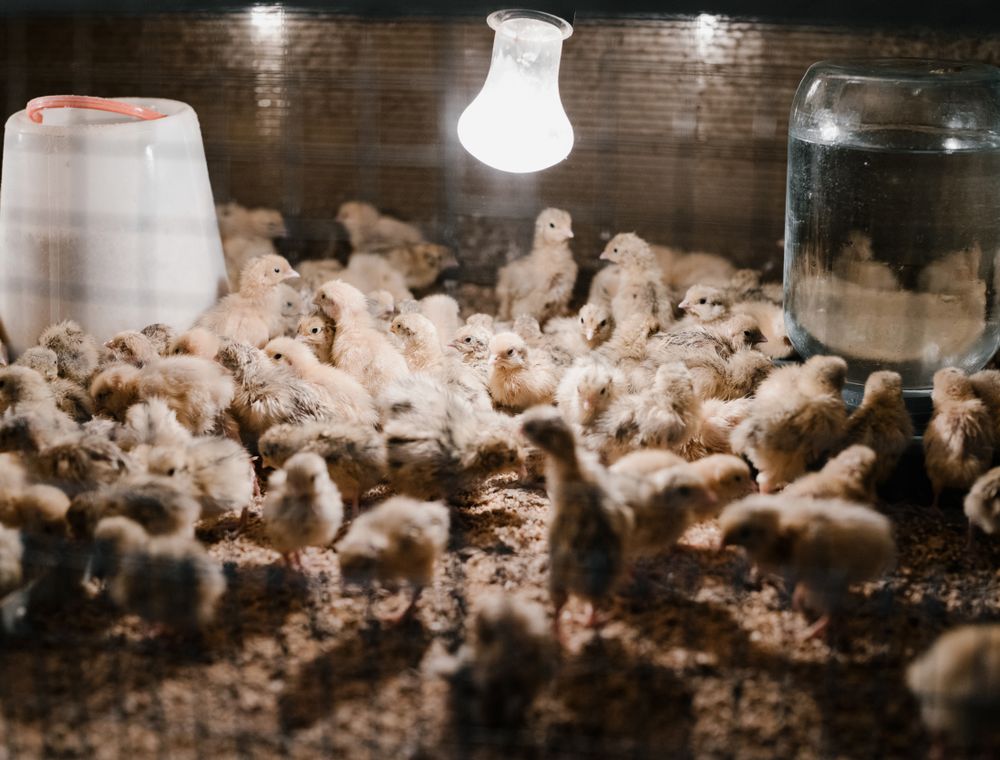
Short answer: An isolation sick-bay is a separate, warm and dry pen placed downwind of the main flock, used only for birds that show signs of illness so they can rest and be watched without spreading anything. Give it its own entrance, a cleanable floor, shade, a safe heat source and its own feeder, drinker and tools. Clean and rest the pen between patients, and write down every bird that goes in and comes out.
Key takeaways
- A sick-bay is for birds already showing signs; quarantine is for birds new to the farm.
- Site it downwind of the house, with its own entrance and no shared tools.
- Start with one or two pens sized for the flock you keep now, and add more as the flock grows.
- Give every bird warmth she can move away from, shade, and water within easy reach.
- Clean and rest the pen between patients, and keep a card for every bird that enters.
A sick-bay is not the same as quarantine
A sick-bay built next to the feed store is not a sick-bay. It is a second feed store with sick birds in it, and the healthy flock walks past it twice a day. Most of the trouble we hear about starts with a pen put in the wrong place, not with a bad bird.
Farmers often mix up the sick-bay and quarantine, and the mix-up causes problems. Quarantine is for birds that are new to your farm or coming back from elsewhere. They may look healthy, but they are unproven. A sick-bay is for birds already on your farm that have shown signs of illness. The two can share a building, but they need separate pens, separate tools and separate rules. Our article on quarantining new birds covers the new-bird side in full.
The practical difference is the question you ask. For quarantine, you ask whether this bird could bring something in. For a sick-bay, you ask whether this bird is spreading something right now, and how to stop her from making the others worse while she recovers or is culled.
Where to put it on the farm
Put the sick-bay downwind of the main house. Airborne dust, droplets and the smell of a sick flock travel with the wind, and a pen upwind of the house puts every healthy bird in the path of whatever comes out of it. The harmattan wind blows dry and dusty from the north-east between December and February, and it reaches the coast too, although less strongly than the north. Check the direction against the season, not just the compass.
Give the pen its own entrance, and make sure you never have to walk through a healthy pen to reach it. If the only way in runs through the house, the sick-bay has failed before you have filled it. Keep it on higher, well-drained ground, away from where rainwater pools, and several steps from the feed store and the water tank. Our article on biosecurity on a poultry farm explains how to map the zones on your site.
If you keep the sick-bay inside a larger building, put a solid partition between it and the flock, with a door that closes and its own footwear rack at the entrance.
How big it should be for the flock you actually keep
Start from the flock you have now, plus room for one or two birds at a time. Too small, and you will end up with two sick birds in one space and spread the illness between them. Too big, and you will have an empty pen full of litter that nobody can clean properly. Build for next month, and plan the next pen for the month after.
Give each bird room to stand, turn around and lie down without touching a wall. A pen that only just fits a bird's shape is too small. Leave an open corner where a bird can get out of the draught and out of the sun, and keep the floor dry.
| Flock on the farm | Sick-bay pens to start with | Practical note |
|---|---|---|
| Up to about 50 birds | One pen, split with a board so two birds never share a space | Make the pen movable so it can be cleaned in one go |
| About 50 to 200 birds | Two pens, plus a spare box for an unexpected case | Leave one pen empty between patients where you can |
| Over 200 birds | Three or more pens, one kept only for birds with suspected infectious disease | Log every entry and exit by pen number |
Treat these as starting points rather than a standard. Ask your vet to look at the plan before you build, because the right layout depends on your breed, your house and the diseases in your area.
Build the floor, walls and roof for a sick bird
A solid floor is far easier to clean than bare earth. Concrete or a well-sealed wooden floor, raised a few centimetres above the ground, lets you scrub it and let it dry. Bare earth soaks up whatever spills into it, and you will never be sure it is clean. If you must use earth, lay a raised wooden platform for the bird to rest on, and remove the litter after every patient.
Use wire mesh or open slats along the sides so air can move, with a roof that gives shade. In the rainy season, add a roof overhang or a sheet that keeps the rain out without closing off the air. Air should move past the bird at her height without blowing straight onto her back. A pen that is airtight in the morning can turn into a sweatbox by the afternoon.
Make the pen easy to clean. Rounded corners, a simple latch and a removable tray or board make the difference between a pen that gets cleaned between birds and one that does not.
Keep a sick bird warm without cooking her
Sick birds lose body heat faster and may not reach food or water as easily. A brooder lamp or other heat source placed over one corner gives her a warm spot to move into and out of. The key word is choice. She should be able to walk away from the heat, not be stuck underneath it.
Read the temperature at bird height, not at the roof, and check both the warm and the cool corners. Place the heat source where the wiring is protected from wet floors and from birds that peck at cables. Never use an open flame that a bird could knock over. The night temperature in the harmattan can drop a long way, so plan for the coldest hour, not the warmest one.
Our articles on brooder ring setup and brooding without electricity cover the heat options in detail. The same principles apply to a sick adult, but she needs less heat than a chick and much more room to move.
What goes inside, and what never leaves it
Give the sick-bay its own feeder, drinker, scoop, bucket, torch and cloths. Mark them in one bright colour, and never use them anywhere else. A tool that goes from the sick-bay to the house carries the infection you were trying to contain, and it does so in the most ordinary way possible.
Keep a box of basic supplies inside the building, so you do not have to walk back to the house for a dressing or a thermometer. Keep your vet's number on the wall and the medicines they have prescribed in a labelled box, out of reach of children and pets. Our poultry first aid kit guide lists the wound supplies to keep on the shelf.
- A dedicated feeder and drinker, cleaned after every patient.
- A thermometer that reads at bird height, and a torch for night checks.
- Gloves, a dedicated pair of boots or overshoes, and soap by a hand basin.
- A clean bucket, scoop and brush used only in this pen.
- Dressings and wound supplies stored dry and away from the sun.
- A record card for each pen, with a pencil that stays on a hook.
The order you walk in and out in the morning
The sick-bay is the last place you visit each morning, not the first. Feed and check the healthy pens first, collect the eggs, and then turn to the sick-bay with clean hands and clean boots. If you have to go from the sick-bay back to the house, change your footwear and wash your hands first. Never carry the sick-bay's tools, litter or dead birds across the farm.
- Start the day with the healthy flock, and count the birds you can see.
- Wash your hands and change into the sick-bay boots at the door.
- Check each bird in the sick-bay, then feed and water them.
- Write what you saw on the record card before you leave the pen.
- Leave the sick-bay boots and tools at the door, and wash your hands before going back to the house.
Cleaning and resting the pen between patients
Clean in the right order, or the effort is wasted. Remove the litter and any droppings first, and bag them for disposal. Then wash the floor, walls and equipment with hot water and detergent, scrubbing the corners and joints where dirt collects. Only when the surfaces are clean and dry should you apply a disinfectant, using the strength and contact time on the label. Disinfectant on a dirty surface does very little.
Give the pen time to rest. After a serious infection, a few days empty with the door open to air and sun is a good habit. Where you have only one pen, plan the gap into your calendar, and keep a spare box ready for the next bird.
Dead birds must not be left in the sick-bay. Remove them promptly, and dispose of them as your vet and local rules advise. Our article on dead bird disposal sets out the options for a small farm.
When the pen and the house have both rested, you can restock. Plan the number of chicks against the space you have, and place the order through the order form, or message us on WhatsApp at +233 24 915 1503 if you would like help choosing the breed. Our day-old chicks page lists the options we supply.
Need chicks for your next batch?
Send breed, number and town. We reply with price, hatch date and delivery cost in writing.
A record that shows whether the sick-bay is working
Keep a card for every bird that enters. Write the date in, the pen number, the signs you saw, what your vet advised, what you did, the date out, and the outcome: recovered, culled or died. At the end of each month, read the cards together. The numbers will tell you whether the sick-bay is doing its job, or whether birds are going in and never coming out.
A simple monthly review asks four questions: how many birds came in, how many went back to the flock, how many were culled, and how many died. If the answers do not improve over time, the problem is usually in the set-up or the routine, not in the birds. Our guide to poultry record keeping shows how to keep the cards alongside the rest of your flock records.
Deciding when a bird goes back, and when she does not
A bird goes back to the flock only when she is eating and drinking normally, standing and moving well, free of discharge, and when your vet agrees. Keep her in the sick-bay for a short time after she looks well, because some illnesses look better before they are finished.
A bird that does not respond to the treatment your vet has advised, or that is suffering, should be culled by an accepted humane method. Do not let her stay in the pen for weeks in the hope she recovers, because she is then using a pen that another bird needs. Our article on humane culling of sick birds covers how to make that decision and what to do afterwards.
If you are not sure what a sick bird has, our article on what to do with a sick chicken in the first 24 hours shows the questions to answer before you call the vet.
The mistakes we see most often with sick-bays
These come up again and again, usually on farms that built the sick-bay in a hurry after the first loss. Each one is cheap to fix before the next bird goes down.
- Building it next to the feed store, so the healthy birds pass it every day.
- Sharing the feeder, drinker or scoop with the main house.
- Putting two sick birds together because the pen has room for them.
- Leaving a dead bird in the pen overnight.
- Keeping a bird in the pen for months because nobody made a decision.
- Skipping the record card, and then trying to remember which bird had what.
A set-up checklist before the first bird goes in
Work through this list with a pencil. Tick each line only when you have walked the site and checked it yourself.
- Pen site chosen downwind of the house, on drained ground, with its own entrance.
- Solid floor or a raised platform, and side walls that let air through.
- Shade and rain cover in place, with a corner the bird can use to get out of the draught.
- Heat source wired safely, with a thermometer reading at bird height.
- Dedicated feeder, drinker, scoop, bucket and brush, marked and kept inside the pen.
- Vet's number on the wall, and a record card for every pen.
- Cleaning routine written down, with the disinfectant and its contact time noted.
Questions farmers ask
How many sick birds should I keep in the sick-bay at one time?
Keep only as many as you can watch properly. In practice that means one or two birds per pen, with each pen divided by a board or wire so birds cannot touch. If several birds are sick at once, the problem is in the flock rather than in the individual birds, and you should call your vet before you fill the sick-bay.
Can I use the same pen for sick birds and new birds?
Keep them separate. A sick-bay holds birds with signs of illness, and a quarantine pen holds new birds that have not yet shown anything. If space forces you to use one building for both, use different pens inside it with separate tools, and clean and rest the whole building fully before you switch from one use to the other.
Do I need electricity for a sick-bay?
No, but a warm, dry corner matters more than where the heat comes from. Brooding without electricity is possible with a well-managed heat source, as long as you can control the temperature and keep it safe. Check the temperature at bird height, and make sure the bird can move away from the heat. Our brooding article covers the low-power options.
How do I know when the sick-bay is clean enough to use again?
The pen should be empty, scrubbed and disinfected using the contact time on the label, with no litter, droppings or dust left in the corners. A quick look is not enough. Let the pen dry and air before a new bird goes in, and write the date you cleaned it on the record card.
Should a sick bird get medicine straight away?
Not without your vet. Many signs look alike, and the wrong medicine can waste time and hide the real problem. Call your vet, describe what you see, and follow the plan they give you. If a bird is clearly in distress, isolate her, keep her warm and call the vet straight away.
What do I do with the sick-bay after an outbreak?
Remove all birds, then dispose of the litter and any equipment that cannot be cleaned. Clean and disinfect the whole building, and leave it empty for the period your vet advises. Then review how the outbreak started: the entrance, the feed, visitors, or wild birds. Write it down before you rebuild anything.
Can a sick-bay replace vaccination?
No. Vaccination protects healthy birds before they meet a disease, while a sick-bay only limits what a sick bird can do to the others. Keep your vaccination schedule on track, and use the sick-bay as the place where you act on the signs you see. Our guide on <a href="/blog/how-to-vaccinate-chickens-ghana/">how to vaccinate chickens in Ghana</a> sets out the common programme.


