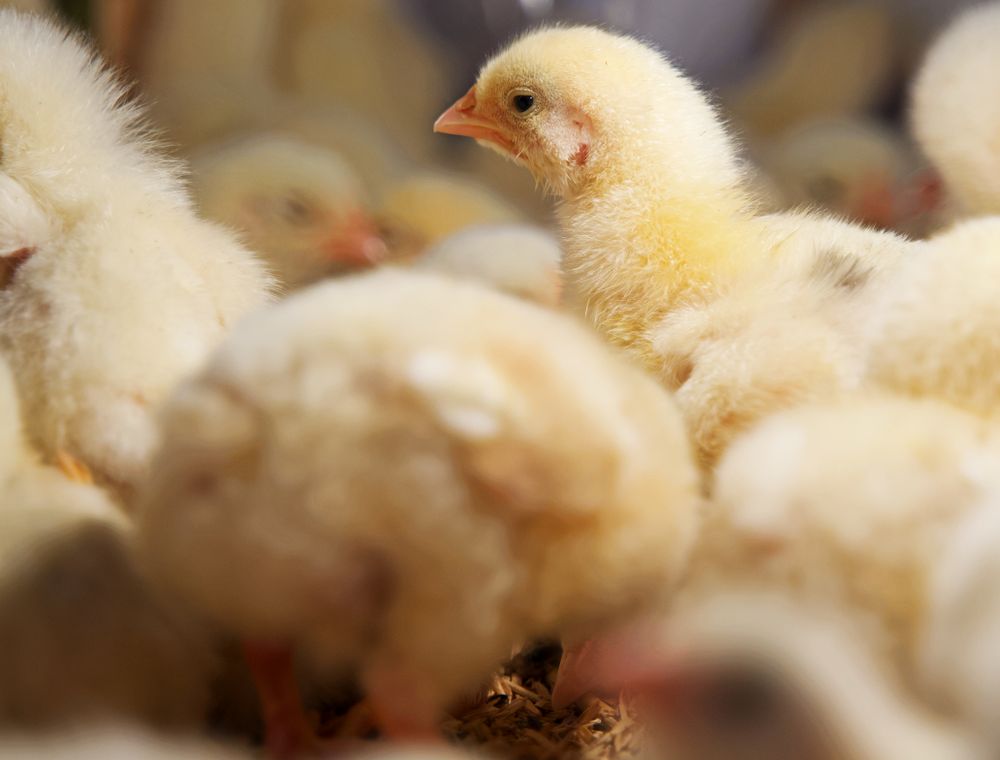
Short answer: Day-old chicks need a steady heat source for their first few weeks, and a farm without mains power can supply it with a solar-charged 12-volt heater, an LPG brooder or, for short gaps, bottles of hot water. Insulate the brooder first, because a warm box needs far less heat than an open one. Size any solar system for the coldest night of the batch, with a battery that holds a full night's heat, not for a sunny afternoon.
Key takeaways
- Insulate the brooder before you buy heat, because a well-lined box needs far less energy than an open one.
- Size a solar battery for a full night. Lead-acid batteries give you only about half their rated capacity.
- For a 60-watt heater running 12 hours, three 100-watt panels is a sensible planning figure. Check it with your own meter and your own sun.
- Hot-water bottles cover a gap of an hour or two. They are not a plan for a whole cold night.
- Read the chicks as well as the thermometer: spread out means too hot, piled in a corner means too cold.
Power cuts are not the only way to lose a brood, but they are the fastest
Cold kills day-old chicks quietly. A brood that looks fine at dusk can be a heap in the corner by two in the morning, with the strongest birds underneath and the weakest pressed against the wall. The usual cause is heat that stopped without anyone noticing, and a power cut is the most obvious way for that to happen.
Chicks cannot hold their own temperature in the first weeks. Their down is thin, their bodies are small, and they burn energy staying warm when they should be eating and drinking. The brooder has to supply that heat until they can cope, and it makes no difference whether the heat comes from the grid, a gas burner, a battery or a bottle.
Off-grid brooding is therefore not a different job. It is the same job with a different supply. The sections below cover what to use, how big it must be, and how to tell it is failing before the chicks do the telling for you.
Reading the chicks when there is no thermometer
Most keepers hang a thermometer in the brooder, and most of the time it is the right tool. At night, when the battery is low or the bottle has gone cold, the chicks are the only instrument still working. Learn to read them.
- Spread across the floor and resting quietly: the heat is about right.
- Crowding into one corner or piling on each other: too cold, and the bottom of the pile is at risk of smothering.
- Panting, wings held away from the body, drinking hard and moving to the far edge: too hot.
- Sharp, high, continuous peeping: the brood is chilled or upset, and you should investigate now rather than at dawn.
Check the brood at dusk, around midnight and again before first light. The pre-dawn check is the one that catches a battery that ran down in the small hours. A brood that sounds calm at ten o'clock tells you very little about four.
Four heat options that work without the grid
Each option below runs without mains power, but they behave differently. Choose by how long you need the heat, how far you are from the grid, and how carefully you are willing to check them.

| Option | Needs mains? | How long it runs | Main risk | Best used for |
|---|---|---|---|---|
| 12-volt DC heater on a solar panel and battery | No | As long as the battery holds, which you size for the whole night | Undersized battery, shaded panels | Permanent off-grid brooding |
| LPG brooder | No | Depends on cylinder size and burner setting | Leaks, and fumes in a closed room | Remote sheds with good airflow |
| Warm-water bottles | No | An hour or two per fill | Burns, leaks, forgetting to refill | Short gaps and emergencies |
| Insulated brooder with no added heat | No | Always on, but it only keeps heat the chicks already make | Chicks chill on cold nights with nothing added | Warm weeks, and as the base for every option above |
None of these is a plan for a whole cold night on its own, unless you have sized it that way. Our heat source comparison sets bulbs, gas and charcoal side by side. This article stays with the options that do not depend on the grid at all.
Sizing a solar heater for one night of brooding
Start with the load, not the panel. Measure what the heater actually draws with a plug-in power meter or a clamp meter, because the label can be optimistic. For this worked example, suppose the heater draws 60 watts and runs for 12 hours a night. That is 720 watt-hours. Everything that follows is built from that figure.
The battery must hold the whole night. Lead-acid batteries should only give up about half their rated capacity if you want them to last. A 100 Ah, 12-volt lead-acid battery stores 1,200 watt-hours on the label, so it gives you about 600 usable. That is not enough. You need about 1,440 watt-hours of rated capacity, which is 120 Ah at 12 volts, and a 150 Ah battery gives you a margin for losses. A lithium iron phosphate battery can be drawn much deeper, so a smaller unit with the same usable capacity will do the job.
The panels must refill the battery. Allow about 20 per cent for losses in the charge controller and the battery, so 720 watt-hours of night use needs roughly 900 watt-hours captured in the day. A 100-watt panel in Ghana gives somewhere near 350 watt-hours a day after losses, if you have around five good hours of sun. Divide 900 by 350 and you get about 2.6, so three 100-watt panels is the sensible starting point. Treat the five hours as a planning figure. Harmattan haze and rainy days cut it sharply, and a panel shaded at noon gives a fraction of its rating.
If you run a mains-voltage heater from an inverter, add the inverter's own losses. Small inverters waste a noticeable share of their power when they are lightly loaded, so either size the battery for that or use a DC heater from the start. Our guide to solar power for a poultry farm explains the wider sizing logic if you plan to run more than one brooder.
Battery choice: what you buy is not what you can use
The rated capacity is the number on the label. The usable capacity is the part you can draw without damaging the battery. For lead-acid, that is usually about half. Draw it lower and the battery lasts longer. Let it sit flat for a few nights and it can be ruined within a season. That kind of loss makes a solar brooder look like a bad investment when the real fault was the battery.
Keep the battery off the bare floor, out of the litter and away from the brooder. Lead-acid batteries give off gas when they charge, so the space needs airflow. Check the terminals for corrosion each week. Put a fuse on the battery side and a proper charge controller between the panels and the battery, because a bare connection can overcharge a battery on a clear day. Ask the supplier for the charge settings to match the battery type you have bought.
Insulate the brooder before you add any heat
Every watt that escapes through a thin wall is a watt you have to make again. A brooder built from a bare cardboard box on a concrete floor loses heat faster than one lined with a second layer of cardboard or foam. A sheet of polystyrene under the litter loses less still. A cloth curtain across the front, lifted on the warm side for checks, keeps the heat in without blocking your view.
Insulation is not the same as sealing the box. Chicks breathe, and the litter gives off ammonia and moisture. Keep the vents high on the walls, out of the chicks' reach, and let fresh air in without a draught across the floor. Smell the house at each check. A sharp ammonia smell or damp litter means the air is not moving well enough, however warm the box feels to your hand.
Our brooder ring guide covers the ring itself and its size. The point here is simpler. A ring with insulated walls holds its heat well enough to shrink the heat source you need.
Hot-water bottles for a gap, and their limits
Warm-water bottles are a traditional backup, and they earn their place on the night a battery runs low. Fill a sound plastic bottle with hot tap water, not boiling, and close the cap firmly. Wrap it in cloth or a folded towel, and lay it under the litter at one side of the brooder. A litre-and-a-half bottle holds useful warmth for an hour or two, depending on the room and the wrapping. Test the bottle on the back of your hand before it goes in, and never let chicks sit directly on hot plastic.
Bottles have hard limits. You must refill them through the night, and a bottle that cools quietly at three in the morning is the one that leaves a pile of chicks behind. Check every bottle for leaks, because water on the litter wets the chicks and chills them quickly. Use bottles for short outages and emergencies. A brood cannot rely on them for a full night, and planning as if it can is how a farmer loses a box of otherwise healthy chicks.
Need chicks for your next batch?
Send breed, number and town. We reply with price, hatch date and delivery cost in writing.
LPG without the grid: airflow and a leak check first
Gas brooders run without mains power, which is why they suit remote sheds. Their safety rules are strict. Keep the cylinder outside the house, use a regulator in good condition, and test every joint with soapy water before you light anything. Bubbles mean a leak, and a leak in a closed room is dangerous. Give the brooder enough airflow for the burner to run cleanly, and never let the flame sit near litter or a loose curtain.
Our heat source guide covers burner types and running costs in more depth. If you already run a gas brooder inside an insulated house, the solar sums above matter less to you than the safety checks do.
A night routine for a house with no power
A written routine beats a good memory. Pin this list where you will see it, and fill in the log every time you do the round.
- Before dusk, check that every battery is charged, every bottle is filled and the spare fuel is in place.
- At dusk, read the chicks and set the heat for the coldest part of the night, not the warmest.
- Around midnight, check the chicks' behaviour, the litter and the heat source together.
- Before first light, check again. Top up the bottles, or switch to the reserve if the battery is low.
- Write the readings and any change in the log, so the next night starts from what you learned.
- In the morning, confirm the battery is recharging and clear any spill before the chicks start moving about.
Our first 48 hours guide covers what the chicks should be doing once the night is over. The delivery page explains how chicks travel to you, which matters if your first brood arrives in the evening.
Harmattan nights and rainy-season damp, with no mains
The harmattan brings cold nights and dusty dry air, and it cuts solar output at the same time. The brooder that needs heat most may get the least sun. Size the battery for a harmattan run rather than a clear April afternoon, and charge it fully early in the day, when the haze is thinnest.
In the rains the problem is damp. Wet nights chill chicks faster than dry ones, and damp litter gives off more ammonia. Raise the litter a little, keep the drinkers off the floor and check the panels for splashed mud. Cleaning the panels on a rainy afternoon can be worth an hour of heat on the coldest night, and it costs you nothing but a bucket of water.
What one cold night costs against the price of a backup
Put a figure on the losses before you buy anything. Take Sasso day-old chicks as an example. Our current starting price is GH₵ 13 each, or GH₵ 650 for a box of 50. If one cold night takes five chicks from a box, that is GH₵ 65 gone before you count the feed and the hours you spent nursing the rest. Use your own numbers, because your breed, your prices and your losses will differ.
Then compare that with the backup. If the solar system costs a sum X, divide X by the cost of one lost night. The result is the number of bad nights the system must prevent before it has paid for itself. A brood that loses one night in a whole season and a brood that loses a night a fortnight need very different plans.
If the sums say a full backup is not worth it for your flock size, keep the bottles and the insulation, and brood fewer chicks at once. For the spending side, our starting-budget guide sets out how much infrastructure to buy at each stage. Check our current chick prices before you plan the batch, and when the sums work for you, begin on the order page. If you want a second pair of eyes on your set-up, send a photo to our WhatsApp line, +233 24 915 1503.
Questions farmers ask
Can I brood chicks with solar power in Ghana?
Yes, provided the sums are right. A 12-volt heater, a battery sized for the whole night and enough panels to refill it will do the job. Measure what your heater draws, and allow for losses in the controller and the battery. The worked example in this guide uses three 100-watt panels for a 60-watt heater running 12 hours a night.
What battery should I use for a solar brooder?
A battery you can draw deeply is the better choice, usually lithium iron phosphate. If you use lead-acid, plan to use only about half its rated capacity, and size it that way from the start. Keep it out of the brooder, charge it through a proper controller, and check the terminals every week.
Are hot-water bottles safe for chicks?
They are safe if you use hot tap water rather than boiling water, wrap the bottle in cloth and keep the chicks from sitting directly on the plastic. Check each bottle for leaks every time. Bottles are a backup for short outages, and they do not replace a heat source that can run all night.
How do I work out how many watts a brooder needs without electricity?
It depends on the box, the number of chicks, the room and the season. The clearest method is to measure. Find the heat source that keeps the brood spread out at the coldest hour of the night, then size the power to that. Insulation lowers the figure. Our brooder temperature chart gives the target temperature for each week.
Is gas safe in a brooder house?
A gas brooder is safe when the cylinder stands outside, the regulator and hoses are sound, every joint passes a soapy-water test and the house has enough airflow for the burner. Never run a gas brooder in a closed room, and never let the flame sit near litter or curtains.
How do I know if the chicks are too cold at night?
Look at them. Chicks that are too cold crowd into one corner, pile on each other or cheep sharply and without a break. Chicks that are too hot spread to the far edges, pant and drink heavily. Check at dusk, around midnight and before dawn, because the pre-dawn check catches a battery that ran low in the small hours.
Does an insulated brooder need any heat at all?
Day-old chicks need external heat, so insulation alone is not enough for a new brood. An insulated box lowers the energy you need and keeps the heat steady, which makes any heat source more efficient. In warmer weeks, insulation may be all the warmth older chicks need on most nights.

