Short answer: A small poultry farm can run its lights, fans and water pump on solar, but only if the system is sized from a written list of loads. In Ghana, about five peak sun hours a day is a fair planning figure, and dust and cloudy rainy days cut the output. Solar is a poor match for heavy brooding heat, which is better kept on gas or a properly sized heater.
Key takeaways
- Write down every load, its wattage and its hours before you price a panel.
- Plan for five peak sun hours a day in Ghana, and less in the rains and the harmattan.
- Clean the panels every week in the harmattan, or the output quietly drops.
- Size the battery for at least one cloudy day, and keep it cool and locked.
- Solar runs lights, fans and pumps well and struggles with brooding heat.
Start with the loads, not the panels
Most solar conversations start with the panel and its price. We would start with a notebook. Write down every electrical thing on the farm, how many watts it draws and how many hours it runs. That list decides the system, and it is the only honest way to compare two quotes.
The usual mistake is to size from the bulb or fan on the box and forget the rest. The pump's starting surge, the charger for the phones, the security light on the gate and the radio in the store all draw power. Small loads that run all night matter more than people expect, because the battery feels them even when the panel does not. Put the pump's surge on the list too. The inverter has to handle the moment a motor starts, and that moment can draw several times the motor's running power.
Keep the list honest about the seasons. Lights run longer in the rains. Fans run harder in the harmattan heat than most people guess. Write each row with the hours you actually use, not the hours you would like to use. Our piece on lighting and electricity on a poultry farm lists the loads that most farms forget to count.
A worked load list for a small layer house
Here is a sample for a house of 300 layers with lights, two fans, a water pump and a couple of sockets. The numbers show the method. Replace them with the ratings on your own equipment and your own hours.
| Load | Power (W) | Hours per day | Energy per day (Wh) |
|---|---|---|---|
| LED lights, 12 units at 9 W, on the layer lighting programme | 108 | 14 | 1,512 |
| Two ceiling fans at 60 W | 120 | 6 | 720 |
| Water pump, 0.75 kW, fills the tank once a day | 750 | 1 | 750 |
| Sockets for phone charger and radio | 100 | 2 | 200 |
| Total | 3,182 |
Add it up and you have about 3.2 kWh a day. Now turn that into panels. At five peak sun hours and an overall efficiency of about 75 percent, once the losses in the wiring, charger and inverter are counted, you need roughly 3,182 divided by (5 times 0.75), which is about 850 watts of panel. A 1 kW array is the safe starting point, and the rainy months will show you why the margin matters.
Next, the battery. For one day of autonomy, which is the least we would accept, the battery must hold 3.2 kWh of usable energy. Lead-acid batteries should not be drained below about half, so you need roughly 6.4 kWh of nameplate capacity. Lithium batteries tolerate deeper cycling, so the nameplate can be closer to 3.5 to 4 kWh for the same usable energy.
What the sun actually gives you in Ghana
Solar output is usually planned in peak sun hours: the number of hours of full-strength sun that would deliver the day's energy. Much of Ghana sits at a useful level, and five hours is a fair planning figure for the south in a normal month. The monthly average hides the seasons, though. The harmattan brings dust that settles on the glass and a haze that cuts the light. The rains bring long cloudy days, when a panel may produce a third of its rated output for a day or two at a stretch.
Plan for the bad months, not the good ones. A system that only works in February is not a system. Size the array for the average day, then look at the worst run of cloudy days you can expect in a rainy month, and make sure the battery can hold the house through it.
Tilt matters less than people think this close to the equator. A shallow tilt of around 10 degrees, facing due south, is a sensible start, and many installers mount the panels nearly flat on a low roof. Dust costs far more. A panel that goes a week without cleaning in the harmattan can lose a visible share of its output, and the loss is hard to see until the battery runs flat at night.
Why brooding heat is where solar struggles
This is the blunt part. A brooder for day-old chicks needs heat, and heat is expensive to make from a battery. Ten infrared bulbs at 250 W each draw 2.5 kW. Run them for 16 hours and that is 40 kWh a day, more than twelve times the whole load in the table above. A solar system big enough for that would cover a large shed roof and cost far more than the first weeks of a flock are worth.
Use the right tool for the heat. Gas brooders, charcoal and a properly sized electric heater each have trade-offs, and our guide on heat sources for brooding in Ghana compares them side by side. Solar can run the lights, the fan, the pump and the alarm in the brooder, and that is a real help during a cut. Let the heat come from a source sized for heat.
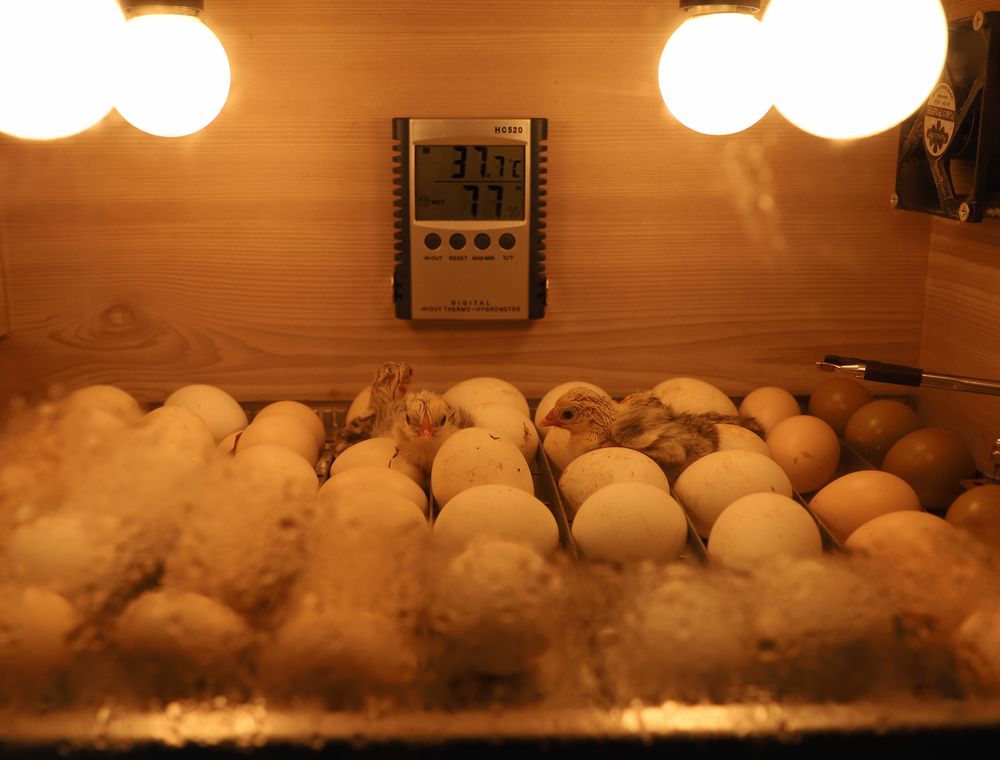
The same logic applies to incubators. A small incubator on a battery can ride through a short cut, but a long outage will spoil a setting. Our piece on incubating through power cuts works through that case with the numbers.

The parts that decide whether it works
A quote is only as good as the parts it names. The table lists what to ask for and the mistake we see most often with each part.
| Part | What to ask for | Common mistake |
|---|---|---|
| Panels | Rated watts, an output warranty, a frame built for wind loading | Mounting them where the roof ridge throws shade after 10 am |
| Battery | Usable capacity in kWh, cycle life, a cabinet that keeps out heat and dust | Buying on the nameplate figure and forgetting the depth of discharge |
| Charge controller | MPPT type for a larger array, matched to the panel voltage and current | Choosing the cheapest unit without checking it against the array |
| Inverter | Continuous rating above the total running load, and a surge rating for the pump | Sizing for the lights, then the pump trips the moment it starts |
| Cable | Thick enough for the run length, with a fuse at each end | Long thin cables that lose voltage and run hot |
Ask every installer for the same written specification, so you can compare quotes on one basis. Ask for the usable battery capacity in kWh, the inverter's continuous and surge ratings, and the expected output in the rainy month. A quote that leaves those figures out is a quote you cannot check.
Put the battery in a cool, dry, ventilated cabinet off the floor, and keep it away from the litter. Ammonia from the houses corrodes terminals and electronics. Lock the cabinet too. Batteries are a favourite target for theft on farms.
Running a pump and fans without flattening the battery
The pump is the biggest single load most small farms will have. Run it in the sunny hours and fill the tank in one go, rather than topping it up a little at a time. A motor that starts and stops often draws more energy and wears out sooner. A float switch on the tank stops the pump at the top level and saves the battery from running a pump that has nothing to do.
Fans are a different case. In a hot house the fans are the cooling, and you cannot switch them off in the afternoon to save battery. Work out the cooling need on the hottest day, then decide whether solar can carry it or whether the fans should run on the grid when the grid is on. Our piece on cooling a poultry house in hot weather covers the choices in detail.
- Set the pump to fill the tank during the sunniest hours of the day.
- Fit a float switch, so the pump stops at a set level.
- Run fans on a temperature control, not on a timer that ignores the weather.
- Use LED lights only, on a timer that matches the lighting plan in our layer lighting guide.
Dust in the harmattan, cloud in the rains
Cleaning is the cheapest performance you will ever buy. In the harmattan, wipe the panels every week with a soft brush and clean water, early in the morning or late in the afternoon, when the glass is cool. Skip the harsh scrubbers. Scratched glass holds more dust next time round.
In the rains, the panels clean themselves a little, but cloud does most of the damage. Check the battery state of charge each morning during a wet week. If it has not recovered by midday, cut the non-essential loads. The extra sockets and the fans can wait, and the lights and the pump come first. Write down which loads you will shed before it happens, so the decision is already made when the battery is low.
Shade is the third enemy. A mango tree, a neighbour's wall or a new store can shade one corner of the array, and a partly shaded panel can pull down the output of the whole string it is wired into. Walk the site at 9 am, at noon and at 3 pm before you commit to a layout.
Need chicks for your next batch?
Send breed, number and town. We reply with price, hatch date and delivery cost in writing.
Worked numbers: what 1 kW of panel does in a month
Take the array we sized: about 1 kW of panels, five good sun hours and a system efficiency of 75 percent. That is roughly 3.75 kWh of usable energy on a good day, or about 110 kWh over a 30-day month. On a poor rainy day the same array might give a third of that. The sample farm uses about 3.2 kWh a day, so a good month leaves room to spare, and a run of cloudy days is where the battery earns its keep.
Now compare it with the grid. Multiply the monthly kWh the array supplies by the rate you pay now, and you have the value of the energy you no longer buy. Set that against the cost of the system spread over its working life, and include the battery replacement. Battery replacement is the figure most farmers forget. Lead-acid batteries that sit half empty in a hot cabinet do not reach the cycle count on the brochure.
Use these numbers as a method, and put in your own tariff, your own hours and the quotes you actually receive. The method is what stops a salesman from deciding the answer for you.
A solar checklist before you sign
Go through this list with the installer present, and do not sign until each line has a written answer.
- A written load list with watts, hours and the seasonal changes.
- An array sized for the worst rainy month, not the best one.
- Battery usable capacity in kWh, with the depth of discharge stated.
- An inverter whose continuous rating covers the total running load, with the pump surge included.
- The battery in a cool, ventilated, locked cabinet off the floor.
- Panels mounted high and bolted down, with cable locks and a plan for dust.
- Written warranties on the panels and the battery, and a named person to call.
- A written plan for which loads to shed when the battery falls below half.
Where solar fits on a farm that buys its chicks from us
Solar is a good second job on a poultry farm. Heat and water come first, and the lights and pump come after them. A chill in the first days sets a chick back for longer than a dark night does, which is why we tell farmers to get the brooder warm and dry before the box arrives. Our brooder setup guide covers the order of jobs in the days before the chicks come.
If the house and the power are sorted and you want birds next, send us a WhatsApp on +233 24 915 1503 with the breed and how many you need. Price first, then the order form on the homepage. The day-old chicks page lists what each breed needs from the house.
If you are still deciding where the house goes, read our guide to choosing a poultry farm site before you lay out the cabling. A solar array placed on the wrong side of the plot is a cable run you will pay for every year.
Questions farmers ask
How much solar do I need to run a small poultry farm?
It depends on your loads. Write down each appliance with its wattage and hours, then add them up. For a small layer house with 12 LED lights, two fans, a pump and a few sockets, the daily total is about 3.2 kWh, which points to roughly 1 kW of panels in Ghana. Use your own list, not this example.
Can solar power a brooder for day-old chicks?
Solar can power the lights, fans, alarms and pumps in a brooder. The heat is the problem. Ten 250 W infrared bulbs running for 16 hours use about 40 kWh a day, which needs a very large array and battery. Use gas, charcoal or a properly sized heater for the heat, and let solar carry the rest.
Do I need lithium or lead-acid batteries?
Lithium batteries handle deeper discharge and last longer per kWh, but they cost more up front. Lead-acid is cheaper to buy and should not be drained below about half. Compare the cost per usable kWh over the life of each, including replacements, and ask the installer for those figures in writing.
How often should I clean the panels?
Once a week in the harmattan, and whenever you see a visible film of dust. In the rains, the water does much of the work, but check after a dry spell. Clean early or late in the day with a soft brush and clean water, not a harsh scrub.
Will a solar pump be enough for the flock?
It can be, if the tank is large enough and the pump fills it in the sunny hours. Use a float switch so it stops at the top, and make sure the inverter's surge rating covers the pump start. Keep at least a day of stored water, so a cloudy afternoon does not dry the lines.
How long does a solar battery last on a farm?
That depends on how deep and how often it cycles, and on the temperature. A battery kept cool, ventilated and not drained flat every night lasts much longer than one left hot and half flat. Ask for the cycle life and the warranty in writing, and budget for a replacement.
Should I buy solar or stay on the grid?
Most farms need both. Keep the grid for the big loads when it is reliable, and use solar as backup for lights, pumps and fans during cuts. Solar on its own is hard to justify for a whole farm unless the grid is absent or very weak in your area.


