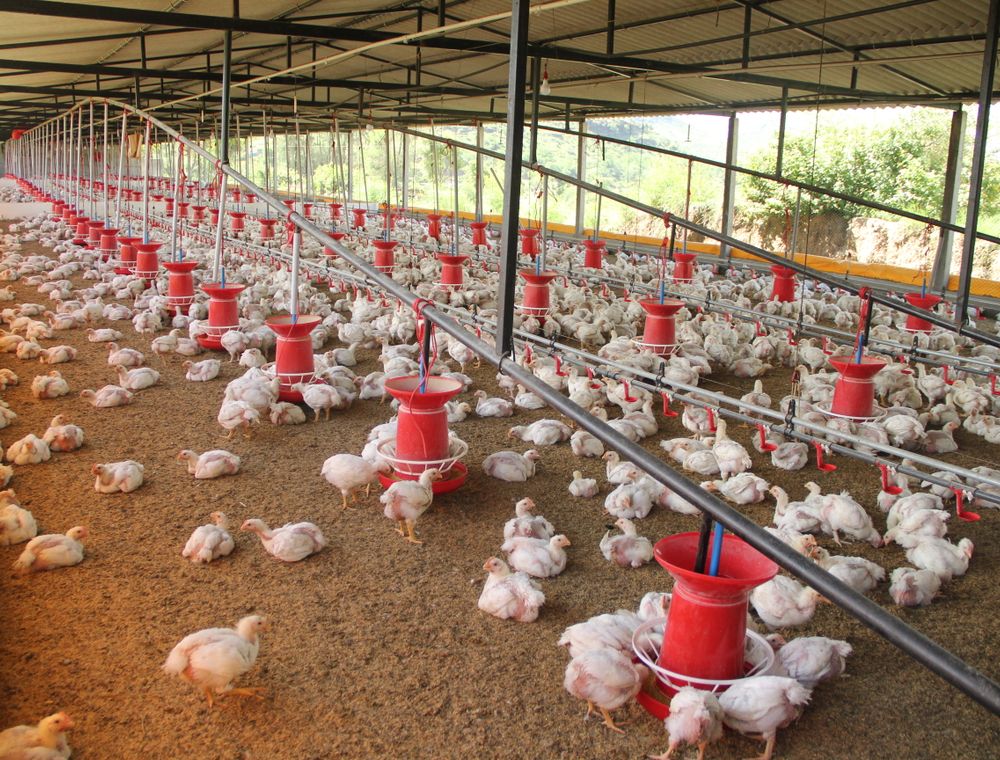
Short answer: A good poultry farm site is one you can reach in the rainy season, that drains after a downpour, has reliable water and power, and sits well away from other birds. Check those four things on paper and on foot before you pay for land. A bad site costs more to fix later than any saving you make on the purchase price.
Key takeaways
- Test the access road in the rains, not in the dry season.
- Water and power decide whether the farm works in a bad month.
- Keep the house well away from other poultry, markets and dumps, and upwind of them where you can.
- Low ground that floods is the first site to rule out.
- Get the land papers checked before any deposit changes hands.
Start with the road, because the trucks will use it
Most people buy the land first and find out about the road afterwards. Do it the other way round. A poultry farm is a steady line of trucks, motorbikes and people coming in and going out every week, and the road decides whether the farm runs smoothly or limps along.
Think about what has to reach the gate. Feed comes in 50 kg bags on a truck that will not turn back for a bad track. Chicks leave the hatchery in ventilated boxes on the day they hatch, and they should not sit in a van at the bottom of a gully. The vet, the man who clears the litter and the buyer who collects eggs all use the same road.

In the dry season almost every track in Central Region looks fine. Then the rains arrive, the murram turns to grease and the bike that got you there in February spins its wheels in April. If you can, walk the route from the tarmac to the plot after a heavy night's rain. If you cannot, ask a driver who uses that road now, and ask him how he would handle it in June.
Distance counts for less than the last few hundred metres. We would rather run a farm 12 km down a good tarmac road than one 2 km along a gully that the feed truck avoids. The first costs a little more in fuel. The second costs you feed delays, dead time and a driver who refuses to come.
Check whether a delivery van can turn around at the house. A tight gate with no turning space means reversing every time, and a reversing truck is a hazard to people, birds and the fence. Our own deliveries go to all 16 regions, and the farms that take them smoothly are the ones with a clear space at the gate. More on how we handle the road is on our delivery page.
Low ground floods, and wet litter kills birds
Southern Ghana has two rainy seasons. The main one runs roughly from April to July, and a shorter one arrives from about September to November. In a single storm, a low corner of a plot can collect the water from the whole slope above it. The story we hear most often goes like this: the farm looked dry in January, and by June the floor of the house was a pond.
Wet litter is the reason low ground hurts birds. Litter that stays damp for days goes sour, the ammonia climbs, and the eyes and airways of the birds take the hit. Damp floors also suit coccidia, which thrive where droppings stay moist. Our notes on keeping broiler litter dry explain the cost in more detail, but the cheapest fix is to avoid the water in the first place.
Here is how to read a plot after the rains. Look for a line of leaves, grass or plastic caught on the fence, roughly knee high. That is where the water stood. Look at the colour of the soil at the lowest point too. Dark, clayey ground that holds water for a long time makes a poor floor, however good the view.
What you want is ground that falls gently away from where the house will sit, so rain runs off instead of standing. A drop of a few centimetres for every metre is enough. Too steep causes its own trouble, because the uphill side of the house gets washed out and the earth round the pillars erodes.
If the only good ground is slightly low, you can raise it with compacted murram or laterite. That works, but the fill costs money and it has to be laid and compacted in layers, or it settles and cracks. Get a quote for the fill before you fall for the plot. A plot that needs two lorry loads of fill before it is usable is not the bargain it looked like.
Water and power decide whether the farm works in a bad month
A poultry house needs water every minute of the day, and the flock notices within an hour when the lines run dry. Before you pay for land, find out where the water will come from and how reliable it is.
Pipe-borne water from the Ghana Water Company is convenient where the pipe actually runs. Ask the neighbours how many days a month the supply stops, and for how long. A borehole gives you control, but it needs a test for hardness, iron and contamination, and a pump that keeps running through a power cut. A hand-dug well is cheap and easy to contaminate. Our notes on testing and sanitising water set out what to check.
Power is the second question. Ask how far the nearest ECG line runs, and whether the plot can be connected without a long, costly extension through someone else's land. Do not assume the connection will be quick. Some farmers wait months, and during that time they run a generator whose fuel bill eats the margin.
Plan for dumsor even if you have a clean connection today. A house with fans and a pump needs a backup that keeps water moving and air circulating through an afternoon cut. We have written about the power side in lighting and electricity on a poultry farm, and the water side of the plan is in our water supply and storage guide.
Keep the house away from other birds, dumps and slaughter areas
Disease does not respect property lines. A backyard flock three gates away, a live bird market in the next village, a slaughter slab that throws feathers and blood into a ditch, or a rubbish dump full of rats: each one can bring trouble to your house. You cannot choose the neighbours, but you can choose how close your birds sit to them.
Walk the land and write down every flock, market, dump and slaughter point you can see or hear from the plot. Then stand where the house would go and look at the prevailing wind. Our notes on biosecurity on a poultry farm go into the practical side, but the site comes first. A bad location makes every later rule harder to keep.
Wind matters more than most people think. In the harmattan, dust rides in from the north and east for weeks at a stretch. A house set so that its open side faces a bare field will fill with dust, and so will the feed. A house downwind of a dump brings the smell and the flies into the yard. Put the birds upwind of the bad things where you can, and keep the waste area on the far side.
If you must sit close to another flock, ask the owner what they vaccinate and how often they clean out. We have seen farms lose birds to an outbreak that started in a backyard they never visited. That is the sort of risk you cannot test for on the day you buy the land.
Neighbours, smell and the complaints that close farms
A farm rarely closes because of one outbreak. More often it closes because the neighbours stop speaking to the owner. Smell, flies, a cockerel that crows at four in the morning, dogs that chase the birds and litter dumped by the road are the usual complaints. Each one is small. Together they make a farm unwelcome.
Talk to the neighbours before you build. Explain what you plan to keep, how many birds and where the manure will go. A neighbour who knows the plan is far more likely to call you than to call the District Assembly. Speak to the family head or the chief whose land lies nearby as well, because they often hear the complaints first.
Keep the manure store and the dead-bird pit well back from the fence line. If you keep cockerels, understand that they crow from first light. Many farms keep only hens or layers so the mornings stay quiet. The smell from a heap left open to the weather is the complaint you can prevent most cheaply, and our piece on using and selling poultry manure covers how to turn that heap into a dried product instead.
Check the land papers before you pay a deposit
Land in Ghana is not always simple. A plot may be family land, stool land or leased land, and the rights to each can be disputed in ways a buyer does not see on a sunny Saturday visit. Before any deposit changes hands, find out who owns the land and who has the right to lease or sell it.
- Ask for the title or lease documents, and check the boundaries against the ground.
- Search the title at the Lands Commission, and ask whether any dispute or charge is registered against the plot.
- For family land, get the written consent of the family head and everyone who must sign with them.
- Ask the District Assembly what building permit you need and whether any zoning applies before you put up a single pillar.
- If the plot is large or the operation will be big, ask about an environmental permit from the Environmental Protection Agency.
Pay a lawyer for this stage. A house on land you do not own is a loss that dwarfs the fee. We are not lawyers, so treat the list above as something to hand to a qualified person, not as legal advice.
Scoring plots side by side on the same list
Hold the plots next to each other and score them on the same list. The plot with the nicest gate is often the worst in the rains, and you only see that when you compare them on paper. This table is the list we would use.
| Factor | What good looks like | Red flag |
|---|---|---|
| Road access | All-weather road to the gate, with room for a truck to turn | A gully, soft murram, or a gate you have to reverse into |
| Drainage | Gentle fall away from the house, no pooling after rain | A debris line on the fence, dark clay at the low point |
| Water | A tested source with known supply hours, or a good borehole | No source yet, or a shallow well beside a latrine |
| Power | A nearby ECG line and a realistic connection date | A long extension across other people's land |
| Distance from birds | Few flocks within walking distance, upwind of markets | Backyard flocks at the fence, a dump or slaughter slab close by |
| Feed and buyers | Feed depot and buyers within a reasonable drive | Every feed run needs a special trip off the tarmac |
| Vet access | A vet who will come out the same day in a crisis | The nearest vet is an hour away on a bad road |
| Land papers | Clear title or written lease, boundaries confirmed | Family disputes, or the seller will not show the papers |
| Room to grow | Space for a second house and a waste area | The plot fits one house and nothing else |
Need chicks for your next batch?
Send breed, number and town. We reply with price, hatch date and delivery cost in writing.
A worked comparison of two plots
Say you are choosing between two plots. Plot A is 12 km from the main road, reached by a murram track a feed truck can use in the dry season only. Plot B is 400 m from the tarmac but sits in a dip beside a seasonal stream. Plot A has an ECG line close by and a family head who has agreed in writing. Plot B has no line within reach, and the seller wants cash before anyone checks the papers.
On price, Plot B looks like the bargain. On the list it fails on drainage, power and land papers, and it passes on road. Plot A fails on road and passes the rest. We would pick Plot A, provided the family papers are clean and you can fix the track or pay for a route the trucks can use all year. A track can be fixed with gravel and patience. A dip that floods cannot be fixed cheaply, and a deposit paid on land you cannot prove is yours is hard to get back.
Now put numbers on the road. Say the feed supplier adds GH₵100 to each delivery for a farm off the tarmac, and you take feed twice a month. That is GH₵200 a month, or GH₵2,400 a year, before you count delayed feed or a driver who refuses to come. These are made-up figures to show the method. Do the same sum with your own supplier's real charges before you decide the road is someone else's problem.
Leave room to grow and to do the dirty jobs
Most new farmers plan for the first house and nothing else. Within two years they want a second house, a bigger feed store and somewhere to put the litter. If the plot has no room, every expansion turns into a messy move.
Our rule of thumb is simple. Set aside at least twice the footprint of the house you plan to build, for the yard, the store, the water tank and the waste area. Put the dead-bird pit and the litter heap at the far edge, downwind of the houses and well away from the water source. Keep a clear lane for the truck and a turning space at the gate, and do not park anything in that lane that you will want to move later.
- Space for a second house, aligned the same way as the first.
- A feed store that stays dry, raised off the ground and well away from the litter.
- A waste pit or incinerator on the downwind side, away from the houses.
- A litter heap with room to turn it. Our guide to composting litter safely explains the method.
- A water tank and pump house, with a clean path to reach them.
Clear the plot of old trees that drop heavy branches on the roof, but keep one or two for shade if the land is open and hot. A tree on the south side of the yard helps the birds in the afternoon. A branch that falls on a tin roof in a storm can break several sheets, and the repair always takes longer than the cutting would have.
The site checklist to take to the plot
Print this, or copy it into your phone, and go through it standing on the land. It takes an afternoon. It saves you from a mistake that takes years to undo.
- Drive the route from the tarmac to the plot, after rain if you can.
- Stand at the lowest point of the plot and look for debris lines and standing water.
- Ask the neighbours how many days the water and the power stopped last year.
- List every flock, market, dump and slaughter point within a walk of the plot.
- Check the prevailing wind and the harmattan path across the land.
- Confirm the title or lease at the Lands Commission before paying a deposit.
- Ask the District Assembly which permits you need, and get the answer in writing.
- Get written quotes for the power connection and the water supply.
- Measure room for two more houses, a store and a waste area.
- Find the nearest vet who will come out the same day, and save the number.
Our advice before you order chicks
Do not order chicks until the house is built, the brooder is ready and the plot has passed the checklist. A box of 50 Ross 308 at GH₵20 each is GH₵1,000 of birds that need warmth, water and feed the day they arrive. Chicks that wait in a damp, half-finished shed start behind, and the early weeks never quite catch up.
When you have a date and a site, message us on WhatsApp at +233 24 915 1503 and tell us the breed and the number. We will work out the batch and the delivery with you. If you are ready to order now, the order form is on the homepage, and the price is confirmed in writing before you pay. If you are still costing the whole project, our starting budget guide lays out the numbers, and the broiler chicks page has the details of the birds we hatch if broilers are your plan.
A site that passes the checklist saves you money on every batch after the first. A site that fails it costs you money on every batch, and the land itself does not get any better with time.
Questions farmers ask
What matters most when choosing a poultry farm site in Ghana?
Road access that works in the rains, ground that drains, a reliable water source and a power connection you can actually get. After those, check the distance to other birds and the land papers. A plot that fails on any of these usually costs more to fix than the saving on the purchase price.
How far should a poultry house be from neighbours?
There is no single distance we would quote as a rule, because local requirements differ and your District Assembly sets the building conditions. In practice, the farther from other birds the better, and avoid backyard flocks within walking distance. Talk to the neighbours before you build, so the first complaint does not become the farm's reputation.
Can I start a poultry farm on family land?
Often yes, but get the written consent of the family head and the people who must sign with them before you put money into the plot. Family land disputes are common enough that the agreement should be in writing and checked. A lawyer or the Lands Commission can confirm who has the right to lease the land.
Is a plot that floods ever worth buying?
Only if the fix is cheap and you can see it working. Raising the ground with compacted fill can help, but get a quote first and a drainage plan in writing. If the only fix is an expensive fill the seller has not mentioned, walk away and look at the next plot.
Do I need a permit to start a poultry farm in Ghana?
Ask your District Assembly first about a building permit, and ask whether any zoning rules apply to livestock in your area. Larger operations may need an environmental permit from the Environmental Protection Agency. The rules vary by place and by size, so get the answer in writing before you build.
How much land does a small poultry farm need?
Plan for more than the house. Our rule of thumb is at least twice the footprint of the house, for the yard, the store, the tank and the waste area, and more if you expect a second house. A plot that only fits one house leaves you stuck the first time you want to grow.
Should I buy chicks before the house is ready?
No. Chicks leave the hatchery on the day they hatch, so the house, the brooder and the water need to be ready before the order date. If the house is not finished, move the order back rather than putting birds into a damp or unfinished shed. Message us on WhatsApp at +233 24 915 1503 to set a date that works.


