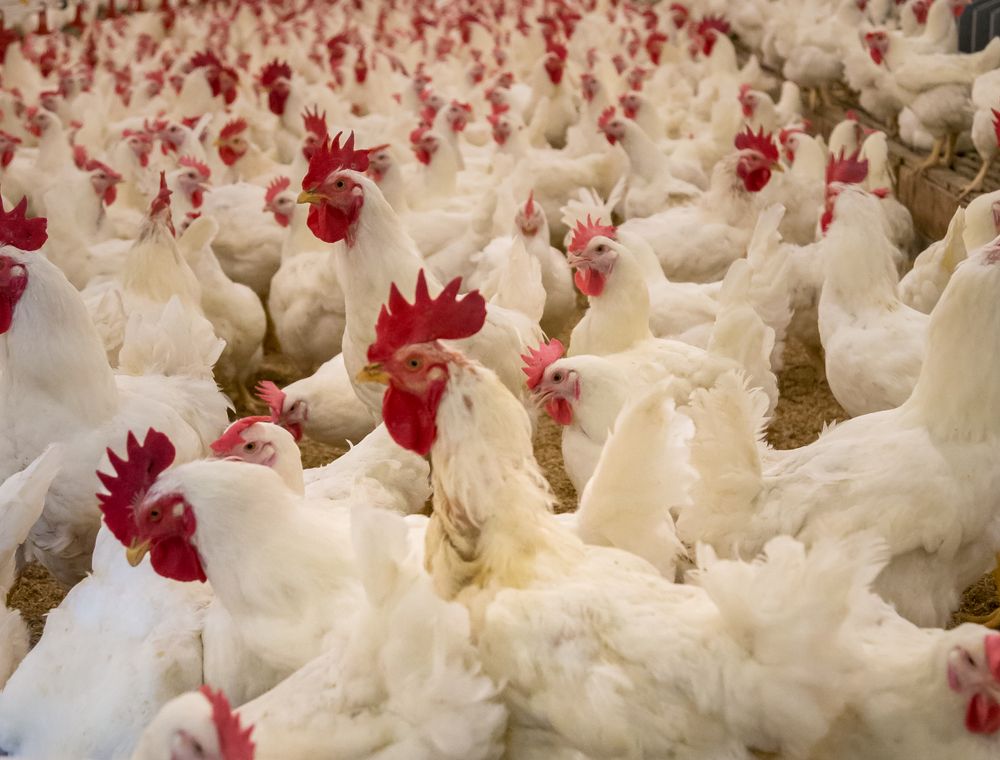
Short answer: Litter is the floor your birds sleep on, and in a Ghanaian house it is the first thing to fail when a drinker leaks or the rains blow in through the sides. Aim for bedding that falls apart when you squeeze a handful, starts at about 5 to 8 centimetres, and never smells of ammonia at bird height. Turn the caked patches early, remove what cannot be saved, and fix whatever is making it wet, because litter rarely goes bad on its own.
Key takeaways
- Start with 5 to 8 centimetres of dry bedding, and check the thin patches by the feeders and walls.
- Judge the litter with a handful: if it stays in a cold ball, it is too wet.
- Ammonia you can smell at bird height is already costing growth, so fix the wet floor first.
- Turn the top layer weekly from about week two, and do it on a fixed day.
- Remove all litter between batches rather than reusing it, especially after any disease history.
The floor tells you about the flock before the birds do
Walk into a broiler house at five weeks and the first thing to notice is the smell, and the second is the floor. If the air stings your eyes at bird height, or if you can see dark, caked patches under the drinkers, the flock is already paying for it in feed and in health, even if every bird looks fine from the aisle.
Litter does three things for a flock. It absorbs and holds droppings, it keeps the birds' feet and breasts clean, and it gives them somewhere dry to lie down. Good litter does those jobs quietly. Bad litter does them badly, and then it starts giving problems back: ammonia in the air, sore hocks, breast blisters and a warm, wet home for coccidia.
This article is about the bedding and the floor. The water side, which is the drinker most often wetting the floor, is in our water management guide, and the floor build itself is covered in our housing designs article. For the first-week bedding and brooder set-up, see the broiler house setup guide.
What to use as bedding, and what to keep out
The best bedding is whatever is dry, clean, absorbent and available in quantity at a steady price. In Ghana that usually means wood shavings, rice husk, groundnut shells or chopped dry maize stalks, with sawdust used more carefully. Each has a different feel, a different way of getting wet and a different risk, so choose with the house in mind, not just the price per bag.
| Material | Strengths | What to watch for |
|---|---|---|
| Wood shavings (clean, untreated) | Absorbent, soft on feet, easy to turn | Dust in harmattan; price rises in the dry season |
| Rice husk | Light, drains well, widely available near rice-growing areas | Mould if stored damp; sharp husk can irritate eyes in dusty air |
| Groundnut shells | Cheap and dry when stored well | Holds moisture; check for mould and any damp, musty material |
| Chopped dry maize stalks | Cheap if you grow your own maize | Packs down quickly; needs regular turning to stay loose |
| Sawdust | Fine, cheap, easy to spread | Packs when wet and makes dust; never use it from treated timber |
Keep out shavings from treated timber, from walnut, and anything that already smells musty or shows white or green mould. Mouldy bedding brings respiratory trouble, and some stored materials carry a toxin risk that no amount of litter care can fix. If a bag smells off when you open it, do not spread it.
Depth, spreading and the first days
Spread the bedding evenly before the chicks arrive, at about 5 to 8 centimetres deep, and make sure it is dry all the way through. Patchy depth gives you wet patches in the thin spots and dust in the thick ones. The thin layer at the walls and under the feeders is the first place damp builds, so give those areas a little extra.
Work out the volume before you order. For a house of 12 metres by 10 metres, which is 120 square metres, a 6-centimetre layer is about 7 cubic metres of loose bedding. That looks like far less than it is once it is spread, so order the bedding and have it under cover before the chicks come, not during the first week when you are busy with the brooder.
For the first few days, many farms lay paper or a clean sheet over the litter, so the chicks do not eat shavings while they learn to feed. Remove the paper once the chicks are feeding and drinking well. Do not leave wet paper down, because it does the opposite of what you want.
Judging the litter with your hand
You do not need a meter to know what the litter is doing. Take a handful from the middle of the house and another from under a drinker, and squeeze each one. Then open your hand and look. What you see tells you whether the floor is healthy, and how quickly it is changing.
| Condition | What the handful does | What it means | What to do |
|---|---|---|---|
| Dry and crumbly | Falls apart when you open your hand | Healthy floor | Keep the routine, top up thin areas |
| Slightly damp | Clumps, then breaks up with a poke | Early warning | Turn the top layer, check the drinkers that day |
| Wet and clumped | Stays in a ball and feels cold | Problem forming | Remove the wet patch, fix the leak, add dry bedding |
| Caked or crusted | A hard crust over soft, wet material | Serious problem | Remove the caked layer, check ventilation and drinkers, call your vet if birds are sick |
Walk the house at bird height as well. If you can smell ammonia when you bend down to the birds, the air is already too strong for them, even if the floor looks acceptable from standing height. That smell is the one reading you cannot misjudge, because the birds breathe it all day.
Turning and topping up through the grow-out
Start turning from about the second week, once the chicks are using the whole floor. Use a fork or a rake to turn the top 5 centimetres, working around the drinkers and along the walls where litter packs and damp gathers. Turn gently. Digging deep brings wet litter up into the dry layer and throws dust into the air, which is the last thing you want in harmattan.
Top up thin areas as the flock grows. A bird that has spent its time on bare floor is more likely to end up with sore feet, so keep the patch in front of the feeders filled before it becomes a problem. Keep a small stock of bedding on hand for topping up, and do not wait until the house is half empty before you order more.
Tie the turning to a day of the week. Pick a day, turn the whole house, and write it down. A routine that happens every Thursday is worth more than a perfect one that happens when you remember.
Ammonia: the smell that costs weight
Ammonia comes from the breakdown of droppings by bacteria in warm, wet litter. It does not stay on the floor. It rises into the air the birds breathe, irritates their eyes and airways, and makes them more open to respiratory disease. A flock in strong ammonia may eat normally and still grow more slowly, because its eyes and lungs are working against it all day.
Fix the cause, not just the smell. Remove the wet patches, fix the leaking drinkers, and make sure fresh air moves at bird height. A fan does not fix a wet floor, and spraying air freshener over caked litter just adds a second smell to the first. If the smell returns within days of a clean-up, the source is still wet, and you need to find it.
Ventilation is part of the answer, but it is the second step. Open sides, sensible curtains and air moving across the floor do more when the litter is dry. A dry floor in a modest house beats a wet floor in a well-equipped one.
Harmattan dust and rainy-season damp
The harmattan, roughly December to February, brings dry dusty air, and the litter follows it. Dust is a respiratory problem for birds and for the people working in the house. A light spray in the early morning can knock the dust down, but only if the litter stays crumbly afterwards. A soaking makes the floor worse. Turn gently, keep dust low, and wear a mask when you turn the litter yourself.
The rains bring the opposite trouble. Wind drives rain through open sides, old roofs leak, and muddy walkways carry water to the door. Keep curtains down in the wet spells, check the roof before the rains start, and lay a footbath and a dry walkway at the entrance. Our biosecurity article covers the boots, footbaths and visitor habits that keep wet mud out of the house.
Need chicks for your next batch?
Send breed, number and town. We reply with price, hatch date and delivery cost in writing.
Clearing the house between batches
Between flocks you have two choices. You can remove all the litter and start fresh, or you can top up the old litter and reuse it. Reuse saves money, but it carries coccidia, bacteria and viruses from the last flock straight into the next. For a farm with any disease history, full removal is the safer choice. We would not reuse litter from a house that had birds with diarrhoea or respiratory signs.
Used litter still has value, and our record keeping guide shows how to log each clean-out alongside the flock numbers. Once it is removed, compost it in a heap away from the house and let it heat and rest before it goes onto vegetable beds or into the field. Do not spread fresh droppings on a crop you plan to harvest within days. The full routine for the house, from removal to disinfection, is in our all-in all-out guide.
- Remove all the litter and carry it out of the house, not through the next pen.
- Sweep the floor and walls, and take out feathers and cobwebs.
- Wash with water and a poultry-approved cleaner, and let the house dry fully.
- Disinfect the surfaces to the label instructions and let them dry again.
- Lay fresh, dry bedding only once the floor and walls are dry.
The weekly litter checklist
- Squeeze-test litter from at least five spots, including under two drinkers and along one wall.
- Turn the top layer around the drinkers and the feeders.
- Check each drinker for drips, and fix the height if birds are spilling water.
- Top up any thin patch in front of the feeders.
- Smell the air at bird height, and note any ammonia in the record book.
- Check the roof, the curtains and the sides before the next rain or dusty day.
- Look for birds with sore feet or hock burns, and tell your vet if you see them. Coccidia signs are covered in our coccidiosis article.
The mistakes that keep the floor wet
The most common mistake is treating the floor as the problem when it is only the symptom. Farmers add more bedding over a wet patch, which buries the damp rather than fixing it, and the caking underneath gets worse. Find the drip first, then add the bedding.
The second is starting the house too thin. Thin litter at placement looks economical in week one and costs you in week five, when the floor is wet from one end to the other. Losses that follow a wet floor are discussed in our mortality guide. The third is shutting the house up against dust without thinking about moisture, because closed houses trap the damp from the birds' breath and droppings. The fourth is leaving the drinkers to wet the floor while you are busy elsewhere. Check them every day, and if one leaks, mark it on the record and fix it the same day.
Keep your bedding dry, your drinkers tight and the air moving, and the floor will mostly look after itself. Heavier birds need the same discipline, and our heavy broilers guide shows how the floor fits into the wider weight plan. If you are planning a new house and want to talk through litter before the chicks arrive, call us on +233 24 915 1503. You can place the order on the order form, and our broiler chicks page lists the breeds we supply.
Questions farmers ask
What depth of litter should I use for broilers in Ghana?
Spread about 5 to 8 centimetres of dry bedding before the chicks arrive, and keep it at a steady depth through the grow-out. Thin patches under the feeders and near the walls get wet first, so top them up before they become problems. For a 120 square metre house, a 6-centimetre layer is roughly 7 cubic metres, so plan the supply before you need it.
What is the best bedding for broilers in Ghana?
Clean, untreated wood shavings and dry rice husk are the most dependable in most houses, because they absorb well and turn easily. Groundnut shells and chopped maize stalks can work when they are stored dry. Avoid shavings from treated timber or walnut, and avoid any bedding with mould or a musty smell.
How do I know if my broiler litter is too wet?
Take a handful and squeeze it. Dry litter falls apart when you open your hand. Litter that stays in a cold, sticky ball is too wet, and a caked crust over soft material needs removing. Check at least five spots, including the drinkers and the walls, because the wet areas are rarely in the middle of the house.
How do I reduce ammonia in a broiler house?
Remove the wet litter, fix leaking drinkers, and keep fresh air moving at bird height. A fan does not fix a wet floor, so start with the litter itself. If the smell returns within days of cleaning, the source is still damp and you need to find it, rather than masking it with a spray.
Should I reuse litter between broiler batches?
We would not, particularly if the last flock had diarrhoea, respiratory signs or a disease history. Reuse carries coccidia, bacteria and viruses into the next flock. Remove the litter fully, clean and disinfect the house, let it dry, and then lay fresh bedding. Used litter can be composted and used as manure once it has rested.
Is it normal for litter to be dusty in harmattan?
Yes. Dry harmattan air dries the surface quickly, and dust rises whenever the birds move. Turn the litter gently, keep it slightly moist rather than wet in the early morning, and keep dusty material away from the birds' breathing zone. Wear a mask when you handle litter, and watch the flock for coughing or eye irritation.
What causes sore feet and hock burns in broilers?
Wet, caked litter is the main cause, and it is almost always a drinker, drainage or ventilation problem first. Birds that spend long periods on wet ground develop burns on the hocks and sore pads, and the damage gets worse as the birds grow heavier. Fix the wet patch, then treat the birds' feet on your vet's advice.


