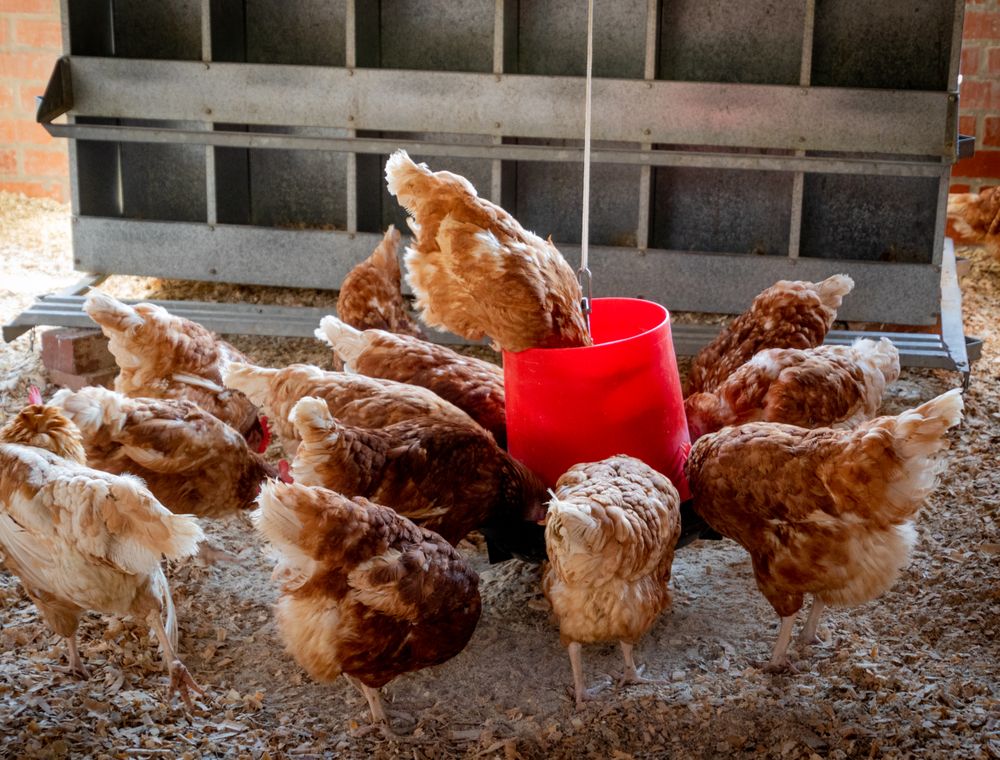
Short answer: A poultry farm needs water at the house every minute of the day, so the supply has to survive a pump failure, a dry week and a power cut. Work out the flock's daily need, then store at least one to two days of it above the house, fed by a source you have tested. Roof rainwater can carry a farm through the rains, but it dries up in the dry months, so it cannot be the only supply.
Key takeaways
- Size storage from the flock's daily need, not from the tank you can afford.
- Store at least one day of water above the house, and two if the supply is unreliable.
- Every litre of rain on a square metre of roof gives about one litre in the tank.
- Cover tanks, screen the inlet and clean on a fixed schedule.
- Plan a second source for the months when the main one fails.
What happens to the flock when the pump stops at six
The pump usually fails in the evening. The power has been off for two hours, the tank is half full, and nobody thought to check the level before dark. The birds keep drinking through the night. By morning the lines are dry and the flock is standing round the drinkers with open beaks.
That scene is why storage matters more than most farmers plan for. A flock can go a few hours without water and recover. A full day without water in warm weather hurts the birds, drops feed intake and sets back growth for days. A second dry day is the kind of event that kills birds. Our water notes on broiler water management explain how birds respond when the lines run dry, but this piece is about the supply behind the drinkers.
Start from the flock, not from the tank you can afford. Count the birds, note their age, and use a daily figure to work out what the house needs on a hot day. Then decide how many days the farm must cover without a pump. The money question comes second, and it is easier to answer once the need is written down.
Working out how much water one day needs
Water need changes with age and temperature, and it climbs on hot days. Treat the figures below as a planning start. Replace them with your own readings from the first week, because your feed, your drinkers and your weather will shift the numbers. Each figure is rounded and includes drinking plus a little for cleaning.

| Broiler age | Cool day, per bird (litres) | Hot day, per bird (litres) |
|---|---|---|
| Week 1 | 0.05 | 0.08 |
| Week 2 | 0.10 | 0.15 |
| Weeks 3 and 4 | 0.20 | 0.30 |
| Weeks 5 and 6 | 0.30 | 0.45 |
| Week 7 and over | 0.35 | 0.50 |
Work the example for a house of 1,000 broilers in week six on a hot day. That is 1,000 multiplied by 0.45, which gives 450 litres a day. Add a margin of 20 to 30 percent for cleaning, spills and the occasional leak, and you are at 540 to 585 litres. A layer house runs on a similar pattern. A flock of 500 hens on a hot day can drink around 250 litres, and the figure falls back quickly when the afternoon cools.
Write the daily figure on the wall of the store, next to the tank level. Once you know it, every decision about storage is a sum you can check, rather than a guess you hope about. If you are still choosing the drinkers that will sit on those lines, our comparison of nipple and bell drinkers shows which ones suit a gravity-fed system.
Choosing a main source and a backup
Most farms need two sources: a main one that they use every day, and a backup that keeps the birds alive when the main one fails. The table sets out the usual options in Ghana and where each one fits.
| Source | Strengths | Weak points | Best use on a farm |
|---|---|---|---|
| Pipe-borne (GWCL) | Easy to connect, nothing to maintain on your side | Supply can stop without warning, pressure drops in the evening | Main source where the pipe runs every day |
| Borehole | Independent and steady once it is drilled | Needs a test, a pump and power, and the level can drop in a dry spell | Main source for a larger or remote farm |
| Hand-dug well | Cheap to start | Easy to contaminate, can dry up in the dry season | Only with regular testing and a sealed cover |
| Roof rainwater | Free once the gutters and tank are in place | Seasonal, dirty at the start of each storm | Backup and top-up in the rainy months |
| Bottled or sachet water | Clean and easy to get | Expensive for a flock, and the packaging is rubbish | Emergency only, or the first days with chicks |
Pipe-borne water is attractive because someone else maintains it. The catch is that supply often drops in the early evening, when many houses draw at once. If the pipe is your main source, the tank has to bridge those hours, and you should check the pressure at the house at the time you need the water most.
A borehole is the most independent option, but it is not a single purchase. You pay for the drilling, the pump, the power to run it and a test that shows the water is safe. Ask the driller for the yield in litres per hour, not just the depth. A deep hole with a poor yield will not keep a house topped up through a hot afternoon.
How big the tank should be, and where to put it
Store at least one day of water, and two if your supply or power is unreliable. For the 1,000-bird house above, that means a tank holding at least 585 litres, which is why a 1,000-litre tank is the usual starting point for a house of that size. Two tanks, one for the house and one reserved for cleaning and the store, mean that a single leak does not empty everything.
Gravity does the work when the tank sits higher than the house. Water flows through the lines with no power needed, and a raised tank keeps the pressure steady at the far end of the house. A stand at about head height above the drinkers works well for a small farm. Get the stand built by someone who respects the weight. A 1,000-litre tank weighs about a tonne when full, and a flimsy stand will fail in the first strong windstorm.
Put the tank in shade and cover it. Water in a black tank heats quickly, and warm water tastes flat to birds and feeds algae and bacteria. Keep the tank well away from latrines, the manure store and any path the flock uses. The site decision matters here too, and our guide to choosing a poultry farm site explains why the water source and the waste area should never be neighbours.
Convenience is the usual reason a tank ends up in the wrong place. A tank 30 metres away is a longer pipe run, and that is a small cost. A tank next to the latrine is a much bigger one.
Roof rainwater: the sum that surprises people
The sum for rainwater is simple. One millimetre of rain falling on one square metre gives one litre. A roof of 80 square metres therefore gives about 80 litres for every millimetre of rain. A 20 millimetre downpour, which is a heavy storm in the rainy season, gives roughly 1,600 litres off that roof.
That makes roofs very useful, but only if the roof is clean and the gutters are the right size and well fixed. Bird droppings, dust and leaves wash off with the first rain, so send the first few minutes of each storm away from the tank. A simple first-flush pipe, or a removable elbow you swap over after the first rain, does the job. Fit mesh over the tank inlet so leaves and insects stay out, and clear the gutters before the rains start, not after the first storm has dropped the leaves into them.
Rainwater is seasonal. In the dry months a roof does nothing, and a tank that filled in June can be low by February. Use a borehole, a pipe or stored water as the main supply, and treat rainwater as the top-up for the wet season. Test a tank of rainwater before the birds drink it, using the methods in our notes on water quality for poultry.
Cleaning the tank without emptying it every week
A tank that is never cleaned grows slime on the walls and the floor, and the birds drink that along with the water. Clean the tank on a fixed schedule. A closed tank in shade might need a clean a few times a year. A tank in the sun, a tank that catches dust in the harmattan or a tank fed from a dirty roof needs cleaning far more often.
- Drain the tank and let the lines empty, starting from the far end of the house.
- Scrub the walls and floor with a stiff brush and clean water.
- Rinse until the water runs clear, and clear any sludge from the outlet.
- Refill, and dose with a poultry-safe sanitiser at the strength on the label or the one your vet advises.
- Flush the lines and drinkers until the smell and the taste are clean.
- Write the date in the record book, so you know when the next clean is due.
Do not put bleach or soap into the tank without rinsing it thoroughly, because residue harms the birds and coats the drinkers. Keep sanitiser stored away from the feed. Keep the lid on the tank, and fix any gap where a lizard or a bird can get in.
The harmattan, the dry spell and the rainy months
Each season hits the water in a different way. In the harmattan, fine dust settles on the roof and drops into open tanks, and the dry air makes birds drink more while they breathe more. Keep the lids shut and wipe the lid and the inlet each week. In the hot dry spells the tank heats and the borehole level can drop, so check the yield once a month and note the figure. In the rains, the first storms bring dirt from the roof and leaves into the gutters, so run the first flush and clear the screens before you open the inlet.
The cheapest mistake is forgetting the season. A farm that checks its tank in the rains and never again until the harmattan will find the algae, the dust and a dead lizard all at once. Put the checks on the calendar, and tie them to the seasons rather than to the week.
Need chicks for your next batch?
Send breed, number and town. We reply with price, hatch date and delivery cost in writing.
A worked example for a 1,000-bird house
Say you run a 1,000-bird broiler house with a borehole as the main source, a 1,000-litre tank on a stand, and roof rainwater from a 60 square metre roof as the top-up in the rains. The numbers here are invented, purely to show the working. In week six, on a hot day, the flock needs about 450 litres a day. The tank holds roughly two days at that rate once you allow a margin for cleaning, so a single bad afternoon at the borehole does not stop the lines.
The roof gives 60 litres for every millimetre of rain. A 15 millimetre storm fills roughly 900 litres, which is plenty to top up the tank once the first flush has gone through. In the dry months the borehole carries the whole load, and the tank keeps the pump from running through the hottest hours of the day.
Now the cost side. Compare the price of the tank, the stand and the pipe against the cost of one bad day with dry lines: birds that stop eating, a week of slow growth, and the vet bill if the stress opens the door to disease. A tank rarely becomes the regret. Running out of water on a hot afternoon usually is.
A water supply checklist before the chicks arrive
Go through this list a week before the first batch. If any line is blank, the chicks wait until it is filled.
- A written daily water need, calculated for a hot week.
- A main source that has been tested, with its yield or pressure recorded.
- A backup source named, with a plan for the months it will be used.
- A tank sized for at least one day, and two if the supply is unreliable.
- The tank raised, shaded, covered and clear of latrines and the manure store.
- Gutters cleaned, a first-flush diverter fitted and mesh on the inlet.
- Cleaning dates written into the record book for the year.
- One named person who checks the lines every morning and again at dusk.
Where water meets power, and the first days with chicks
If you plan a solar pump, the pump's run time and the tank size go together. Our guide to solar power for a poultry farm works through the load of a pump and the battery it needs, and the answer depends on how much water you store.
Water matters from the first minute a chick touches the floor. We dispatch on the day of hatch, so the drinkers need to be full, clean and at the right height before the box lands. Our brooder setup guide walks through the order of jobs, and the first water check comes before any feed is poured.
WhatsApp is the quickest route to us, on +233 24 915 1503. Tell us the breed and the number, and we will put the price in writing before any money moves. Farms in Kasoa can read the local details on our day-old chicks in Kasoa page, and the order form is on the homepage when you are set.
Questions farmers ask
How much water does a poultry farm need each day?
It depends on the birds' age and the weather. As a planning figure, a broiler in week six drinks about 0.3 litres on a cool day and up to 0.45 litres on a hot one. Multiply by the number of birds, then add a margin of 20 to 30 percent for cleaning and spills. Replace these numbers with your own readings after the first week.
How big a water tank does a small farm need?
Start from the daily need and store at least one day, and two if your supply is unreliable. For 1,000 broilers in a hot week, the need is roughly 450 litres a day before any margin, so a 1,000-litre tank gives a comfortable buffer. If you can afford two tanks, keep one for cleaning and the store.
Can I rely on rainwater alone?
Not in Ghana's dry months. Rainwater is an excellent top-up in the rains, but a roof does nothing in a dry spell. Use a borehole, a pipe or stored water as the main source, and treat rainwater as the extra for the wet season. Test stored water before the birds drink it.
How much water comes off my roof in a storm?
One millimetre of rain on one square metre gives one litre. A roof of 60 square metres therefore gives about 60 litres for every millimetre. A 15 millimetre storm gives roughly 900 litres, less whatever is lost to the first flush and any leaks in the gutters.
Should the water tank be close to the house?
Close enough to keep the pipe runs short, but not so close that a leak, a spill or a latrine can reach it. Shade the tank, raise it on a stand, and keep the manure store and latrine well away from it. A tank beside the house is a convenience you will regret the first time it leaks into the feed store.
How often should I clean the water tank?
For a closed tank in shade, a few times a year is often enough. Clean sooner if the tank sits in the sun, if dust builds up in the harmattan, or if the water smells or looks green. Write the date in the record book every time you clean it.
What should I do if the pump fails in the evening?
Check the tank level first, then walk the house and top up the drinkers at the far end by hand if the lines are dry. Fix the pump the next morning, and add a backup power plan so the same failure does not repeat on a Friday night.


