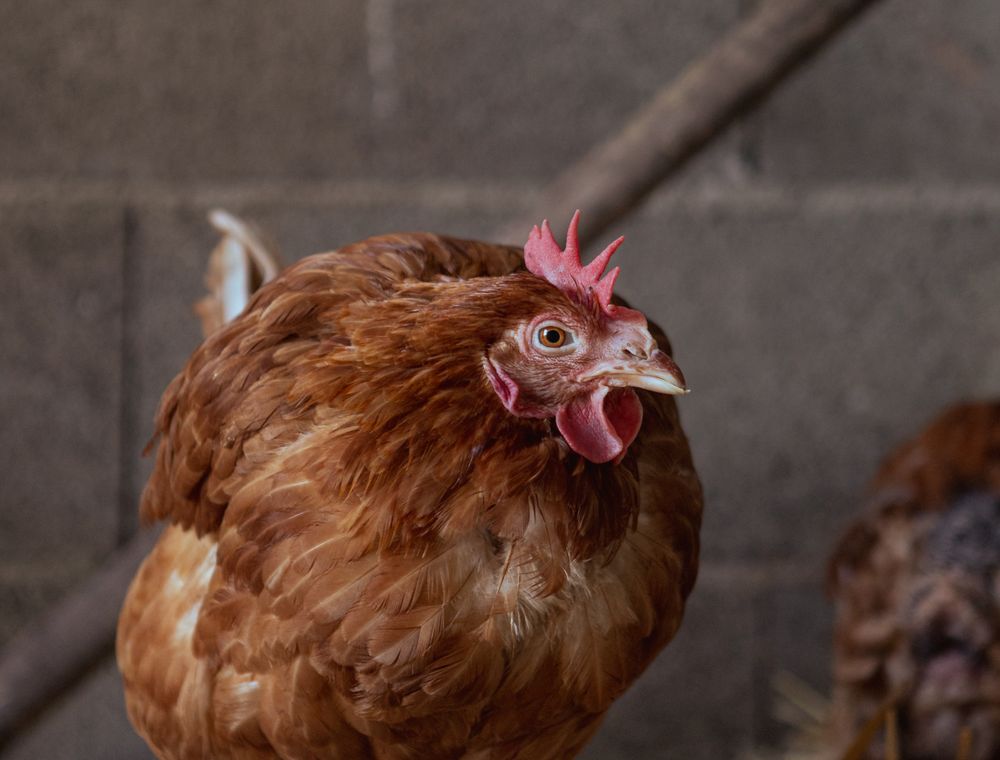
Short answer: The Hy-Line Brown is a brown-egg commercial layer that many Ghanaian farmers choose for steady production and well-documented management. Hens usually start laying around 18 to 19 weeks, and the breeder's published targets put peak production in the low-to-mid nineties as a percentage of hens laying on a given day. Getting there depends on three things: a feed programme that moves from growth to calcium at the right time, housing that keeps heat and dust under control, and weekly weighing so you spot problems early. Day-old Hy-Line Brown chicks from our Kasoa hatchery start from GH₵23 each, with the price confirmed in writing before you pay.
Key takeaways
- Plan feed, housing and labour for first eggs at 18 to 19 weeks, not for the day the chicks arrive.
- Phase the feed: starter, grower, pre-lay, then layer. Add calcium only from the pre-lay stage onward.
- Heat and dust cut egg size and shell strength before they cut egg numbers, so watch both.
- Weigh a sample of pullets every week and act on the trend, not on one bird.
- Budget for feed and housing across the whole laying period, not just the chick price.
What the Hy-Line Brown is and why farmers choose it
The Hy-Line Brown is a commercial brown-egg hybrid, bred for one job: laying a large number of good-sized brown eggs over a long production cycle. It is one of the most widely kept brown layers in the world, and that matters for a farmer in Ghana for a practical reason. There is a large body of published management guidance on breeding, feeding and housing, so you can check your own flock against a written standard instead of relying only on a neighbour's experience.
At our hatchery in Opeikuma, Kasoa, we supply Hy-Line Brown day-old chicks alongside white layers and dual-purpose birds. Our local hatching uses European parent stock, and we also import from the Netherlands, Belgium and Germany. Our imported chicks page has more on that. Availability can change from one hatch to the next, so the quickest way to check what is in the next batch is to message us on WhatsApp at +233 24 915 1503.
Farmers usually choose the Hy-Line Brown for three reasons. The eggs are brown, which many buyers in Ghana ask for by name. The routine is straightforward once feed and housing are set up properly, which suits keepers who are still learning. And the bird converts feed into eggs efficiently when the ration is right, which keeps the cost per egg under control. None of these points works on its own. A good breed in a hot, dusty or poorly fed house will disappoint, which is why most of this guide is about management.
If you are comparing it with other brown and white lines, our best layer breeds comparison sets them side by side.
Egg numbers: what to realistically expect
Egg numbers are the question we hear most, and the honest answer depends on how you count. Breeders publish two kinds of figure. Hen-day production is the percentage of hens laying on a given day. Hen-housed production is the total number of eggs per hen housed, counted from the first egg to a set age, usually 80 weeks. Use the hen-housed figure when you compare breeds or plan income, because it includes the slow start and the slow finish.
The published targets for the Hy-Line Brown put peak production in the low-to-mid nineties as a percentage of hens laying each day. Hen-housed output is usually quoted in the region of 320 to 335 eggs by 80 weeks. Check the current Hy-Line Brown management guide from the breeder, because the figures are revised over time. Treat these numbers as the ceiling for a well-run house, not a promise for yours.
| Stage | Approximate age | What good looks like |
|---|---|---|
| Rearing | 0 to 17 weeks | Steady weight gain that follows the breeder's chart |
| Start of lay | 18 to 19 weeks | First eggs, small and irregular, rising quickly |
| Peak | 25 to 35 weeks | Production in the low-to-mid nineties per cent |
| Mid-lay | 40 to 60 weeks | Gradual decline, with eggs getting larger |
| Late lay | 60 to 80 weeks | Slow, steady fall; keep the flock fed and healthy |
In Ghana, most flocks sit below the published curve. The usual causes are afternoon heat, dust in the harmattan, and gaps in water supply or vaccination. Each one costs eggs in a different way. Heat cuts feed intake, so hens lay less. Dust and ammonia irritate the airways, which lowers the laying rate and can keep birds off lay for several days. A blocked water line can cost more eggs in one afternoon than most farmers expect. The aim is not to hit the chart to the egg. It is to notice when your flock drops away from its own trend and find the cause quickly.
Age at lay and what the first eggs look like
Most Hy-Line Brown pullets lay their first egg between 18 and 19 weeks. In the breeder's targets, the flock reaches roughly half production around 20 weeks. The first eggs are small, sometimes soft or misshapen, and they arrive irregularly. This is normal. Egg size climbs over the following four to six weeks as the reproductive tract matures and the bird's calcium and protein intake catches up with her needs.
The most common mistake is changing feed too late or too early. If pullets are still on grower feed at 19 weeks, the body has not built up the calcium reserve the shell needs, and the first eggs come out thin. If they are switched to high-calcium layer feed at 10 weeks, the extra calcium does nothing useful for the shell and can strain young kidneys. The right approach is a planned switch, which the feeding section below explains.
A simple rule helps. Many breeders suggest moving to layer feed when about 5 per cent of the flock is laying, and the pre-lay ration should already be in the house before that point. Keep a daily egg count from the first egg onward, even if it is only a tally on a board by the door. Those numbers tell you more about the flock's health than anything you can see by eye.
Feeding Hy-Line Brown from chick to peak
The Hy-Line Brown moves through four feeds, and each one has a job. A layer ration fed too early wastes money and can harm young birds. A grower ration kept too long leaves the hen short of the nutrients she needs at lay. Brands differ, so read the protein and calcium figures on each bag. The table below gives typical ranges to guide your choice, not a formula to follow to the decimal.
| Phase | Age | Typical crude protein | What it is for |
|---|---|---|---|
| Starter | 0 to 6 weeks | Around 18 to 20 per cent | Fast early growth and feathering |
| Grower | 7 to 16 weeks | Around 15 to 16 per cent | Frame and skeleton, controlled body weight |
| Pre-lay | 17 weeks to first egg | Around 16 to 17 per cent, calcium near 2 per cent | Build the reproductive tract and reserves |
| Layer | From first egg onward | Around 16 to 17 per cent, calcium 3.5 to 4 per cent | Eggs and strong shells |
Feed intake rises as birds grow and come into lay. At peak, a hen commonly eats somewhere around 100 to 120 grams a day, though the figure moves with temperature, egg weight and the protein level of the ration. In hot weather intake can fall even when feed is freely available, so a sudden drop in eating is often an early warning of heat stress, not a feed problem.
Feeding checklist
- Weigh a sample of pullets every week from week six and compare the result with the breeder's weight chart.
- Start pre-lay feed when the flock reaches the age and weight the breeder specifies, not on a calendar date alone.
- Offer oyster shell or coarse limestone in a separate feeder, free choice, from the start of lay.
- Switch to layer feed when about 5 per cent of the flock is laying, mixing the two rations over three to five days.
- Keep feed dry. Damp or mouldy feed reduces intake and can cause health problems.
Shell quality: keeping eggs strong through the seasons
Shell quality is where the Hy-Line Brown shows whether your management is working. A healthy flock lays eggs with a firm, even shell that survives the trip from the nest box to the buyer. Cracked, thin or rough shells are a signal, and the cause is usually one of five things: age, heat, calcium and phosphorus balance, vitamin D, or disease and stress.
Age is the simplest cause. Shell strength tends to fall as the hen gets older, so late-lay eggs need more care at collection and storage, not less. Heat is the cause Ghanaian farmers meet most often. In the hottest weeks of the year, which in much of southern Ghana come just before the main rains, hens eat less and pant more. They then produce more thin-shelled and soft-shelled eggs, and the eggs that come through are often smaller. Feeding a little more of the ration in the cool hours, and keeping water cold and always available, helps.
Calcium works best when it is available at night, because most shell formation happens while the hen is resting. That is why oyster shell in a separate feeder is better than hand-mixed limestone in the mash. A formulated layer ration already sets the calcium level, and uneven hand-mixing means some birds eat too much and others too little.
Keep a shell tally. Each day, count cracked and soft-shelled eggs and calculate them as a share of the day's total. A rise of a few points over several days is worth acting on before it becomes a crisis. Check water first, then the calcium source, then ventilation. If the problem continues, ask your vet to look at the flock.
Housing Hy-Line Brown in Ghana's climate
The Hy-Line Brown does well in a clean, well-ventilated house with dry litter, a comfortable temperature and enough room to move. Most housing problems we hear about come from too many birds in too little air, wet litter that releases ammonia, and too few nest boxes that are also too dark.
| Item | Common guideline for deep litter | Why it matters |
|---|---|---|
| Floor space | About 1 square foot (around 0.1 m²) per hen | Crowding raises heat and pecking |
| Nest boxes | One nest for every four or five hens | Fewer floor eggs, fewer cracks |
| Perch length | About 15 cm per hen | Roosting space keeps birds calm at night |
| Feeder space | About 10 cm per hen on a trough | Every hen can feed at the same time |
| Drinkers | One nipple drinker for every 10 to 12 hens | Water is the first thing to fail in heat |
These are common starting points, not legal standards. Check the breeder's housing advice and any local requirements, then adjust for your roof, your site and your labour.
Ventilation matters more than most new farmers expect. In the hot season, open sides, ridge vents and fans where you have power keep air moving. In the rains, the job shifts to keeping litter dry, since damp litter produces ammonia that irritates eyes and lungs. During the harmattan, dust is the enemy. Cover feeders where you can, sweep dust from the house rather than letting it settle on feathers, and keep the house closed enough in the cold early morning that birds are not chilled.
Turn litter every few days and top it up with dry material when it starts to cake. Remove wet patches promptly. A small damp area left for a week can become a large problem.
The daily routine that protects production
A layer flock rewards consistency. The birds respond to a predictable day: lights on at the same time, feed out before the hens are most active, water checked twice a day and nest boxes collected at least twice. The questions we hear most at the hatchery come back to the same basics, and the routine below covers them.
- Walk the house before anything else. Listen for unusual noise, look for birds standing apart, and note any deaths.
- Count the eggs and record cracked or soft-shelled eggs separately.
- Check water lines and drinkers, and clean them if they are slimy or green.
- Top up feed and check the trough is not blocked or spilling.
- Collect eggs at least twice a day in hot weather, so they do not sit in the heat.
- Write the day's numbers down while they are fresh.
Lighting should follow a steady pattern. Most layer programmes keep day length fixed during lay and avoid sudden changes, because a sudden change in light can trigger a dip in production. Ask your supplier or vet for the programme that suits your house.
Need chicks for your next batch?
Send breed, number and town. We reply with price, hatch date and delivery cost in writing.
Common mistakes with Hy-Line Brown flocks
- Calcium too early. Layer feed given to pullets before the pre-lay stage wastes money and can strain the kidneys.
- Weights not checked. A flock that falls behind the chart at 12 to 16 weeks often starts late and lays small eggs for longer.
- Heat ignored. Farmers who wait until birds are panting have already lost feed intake and egg size.
- Wet litter and dusty air. Both lower the laying rate and raise the risk of respiratory disease.
- Too few nests. Hens lay on the floor, eggs get dirty and cracked, and collection takes longer.
- No records. Without a tally of eggs, feed and deaths, you cannot tell a new problem from the normal shape of the curve.
Worked example: budgeting a 500-bird start
The chick price is the most visible cost, but it is only one line in the budget. Here is a worked example at our current starting price of GH₵23 per Hy-Line Brown chick. Prices are confirmed in writing before you pay, so treat the figures as a planning guide rather than a quote. Our price guide lists the current starting prices for every breed we supply.
| Item | Basis | Amount (GH₵) |
|---|---|---|
| Day-old chicks | 500 chicks at 23 each, which is 10 boxes of 50 at 1,150 per box | 11,500 |
| Brooder and equipment | Depends on your set-up | Get your own quote |
| Feed to point of lay | Several bags, priced locally | Get current bag prices |
| Vaccines and vet visits | Follow your vet's schedule | Get your vet's quote |
| Delivery | Confirmed with us before payment | Confirmed before payment |
The chick line comes to 11,500 cedis for 500 birds. The rest of the budget is where many new farms get caught out, because feed and housing run for the whole life of the flock. A sensible habit is to set aside the chick cost, then add feed for the full rearing period and at least three months of lay before you judge the enterprise.
Buying Hy-Line Brown chicks through Halaal Farms
We sell Hy-Line Brown day-old chicks in boxes of 50, which is the minimum order. Orders of 1,000 or more are quoted individually. Chicks leave the hatchery on the day they hatch, in ventilated boxes, and we deliver to all 16 regions. You can also collect at the farm in Opeikuma, Kasoa. The delivery cost is confirmed before you pay, so there are no surprises on the day the chicks arrive.
Payment is by mobile money, bank transfer or cash. We do not take online payment, and you will receive the price in writing before you pay. Our hatchery vaccinates against Marek's, Newcastle, Gumboro, infectious bronchitis and coccidiosis, and each batch comes with a batch record you can share with your vet.
If any chicks are dead when the box is opened, count them on the spot and send a photo on WhatsApp the same day. Dead-on-arrival chicks are replaced free in the next hatch. Have your brooder ready before the chicks arrive. Our brooder set-up guide walks through the steps.
To order, use the order form on our homepage or message +233 24 915 1503 on WhatsApp. Full details on how we deliver are on our delivery page, and our layer chicks page lists the other brown and white lines we supply. If you are in Kasoa, our Kasoa page has details for local buyers.
Hy-Line Brown or another brown layer?
The Hy-Line Brown is not the only brown-egg option, and the right choice depends on your housing, your budget and your buyers. Our Lohmann Brown guide and Bovans Brown guide explain how those lines behave under similar management, so you can compare them on the same footing.
If you are still deciding, start with a question for your own market: which egg colour do the buyers near you ask for, and what do they pay for it? That answer matters as much as any breeder's chart, and it is worth getting before you place an order.
Questions farmers ask
How many eggs does a Hy-Line Brown lay?
Breeder targets put hen-housed production in the region of 320 to 335 eggs by 80 weeks, counting from first lay at around 18 weeks. Farm results in Ghana are often lower because of heat, dust and gaps in feed or water. Check the current breeder guide for exact figures, and keep your own daily count from the first egg, since your numbers are the ones that matter for planning income.
At what age does the Hy-Line Brown start laying?
Most Hy-Line Brown pullets lay their first egg between 18 and 19 weeks. In the breeder's targets the flock reaches about half production around 20 weeks. The first eggs are small and irregular, and size improves over the following weeks. Plan the move from grower to pre-lay and then layer feed around the flock's weight and age, not only the calendar.
Is the Hy-Line Brown suitable for Ghana's heat?
It can be kept successfully in Ghana with the right housing. Heat reduces feed intake first, then egg size and shell strength, and only later the number of eggs. Good ventilation, cool drinking water, feed that is always available, and feeding in the cooler hours all help. Watch for panting and birds crowding near the drinkers as early signs that the house is too warm.
What feed should Hy-Line Brown layers get?
Use a starter to about six weeks, a grower ration to around 16 weeks, a pre-lay feed up to the first egg, and then a layer ration with higher calcium. Protein and calcium levels vary by brand, so read the bag. Offer oyster shell in a separate feeder from the start of lay. Never give high-calcium layer feed to growing birds, and do not hand-mix extra limestone into layer mash.
Why are my Hy-Line Brown eggs small or soft?
Small eggs in the first weeks of lay are normal. Soft or thin shells usually point to heat, calcium or phosphorus imbalance, age, or disease. Check water and feed intake first, then your calcium source and feeding time, then ventilation. If shell problems continue for several days, or you also see coughing or a drop in appetite, ask your vet to examine the flock.
How much does a Hy-Line Brown chick cost from Halaal Farms?
Our current starting price for Hy-Line Brown day-old chicks is GH₵23 per chick, which comes to GH₵1,150 for a box of 50, the minimum order. Orders of 1,000 or more are quoted individually. The price is confirmed in writing before payment, and delivery cost is confirmed before you pay. Prices can change, so check on WhatsApp at +233 24 915 1503 before you finalise your budget.
What if some chicks arrive dead?
Count dead-on-arrival chicks as soon as the box is opened, and send a photo to our WhatsApp the same day. Dead-on-arrival chicks are replaced free in the next hatch. Keep the batch record and your own count, since both help if you need to discuss the batch with your vet.


