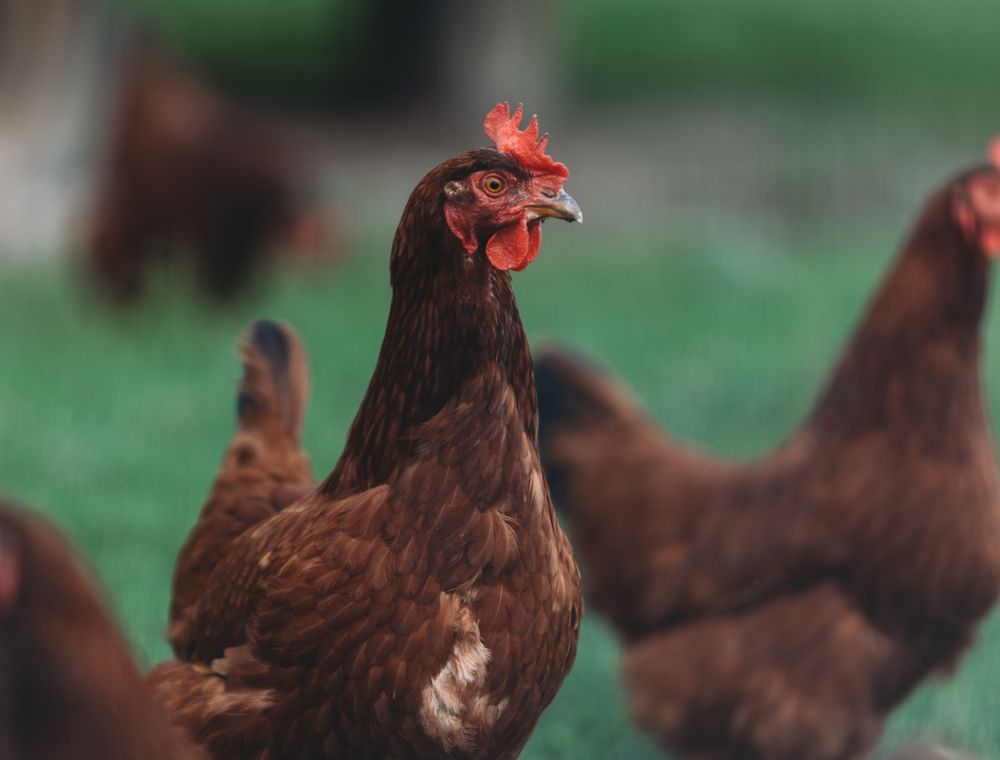
Short answer: The Lohmann Brown is a brown-egg layer that its breeder describes as strong on persistency, meaning it keeps laying well in the later part of the cycle rather than falling away early. That suits farmers who plan to keep a flock for the full laying period and want steady output after peak. Making the most of persistency depends on feed that changes with the bird's age, a stable daily routine, and close attention to body weight and shell quality in the second year of lay. At our hatchery the Lohmann Brown is quoted on request, so message us on WhatsApp at +233 24 915 1503 for current availability and price.
Key takeaways
- Persistency is output in the late cycle, so plan feed, housing and cash flow for the whole laying period.
- Late-lay hens need feed adjusted for body condition and shell quality, not only for their age.
- Stability matters most: sudden changes in light, feed or water cut output in any line, persistent or not.
- Compare breeds on cost per egg over the full cycle, not on the price of the chick alone.
- Lohmann Brown is quoted on request, so ask for the current price before you finalise a budget.
What persistency means and why it matters
Persistency describes how well a flock holds its production after peak. Two flocks can both peak in the mid-nineties, yet one falls away steeply after 50 weeks while the other declines slowly. The second flock lays more eggs over the same housing and feed cost, and that gap is what breeders mean when they talk about persistency. It is a measure the breeder reports from controlled trials, so treat it as a strong indicator rather than a guarantee for your own house. Our breeds overview lists the lines we supply and how to choose among them.
Persistency matters for income because the late cycle is where a flock earns back its feed. A hen housed for an extra 20 weeks keeps eating every day, so each extra egg has to pay for that feed. A simple illustration: if 500 hens average one extra egg a week through weeks 60 to 80, that is 10,000 extra eggs over the period. Whether those eggs are worth the feed depends on your buyers and your feed price, so run the sums before you decide to keep a flock to the end.
Persistency also changes how you should manage the flock. A persistent line gives you a long productive life, so the small things, such as shell care, body weight and house hygiene, need to stay right for longer. Farmers who plan for a short cycle often let standards slip in the second year, and that is where a persistent flock gives back the least.
Watch points by age in the Lohmann Brown cycle
Each stage of the cycle has a main risk, and it helps to know which one you are managing at any given time. The table below lists the focus at each age, so you can plan checks and orders in advance.
| Age | Main focus | Main risk if missed |
|---|---|---|
| 0 to 8 weeks | Brooding, starter feed, vaccination on schedule | Uneven flock that never catches up |
| 9 to 16 weeks | Weekly weights, grower feed, parasite control as your vet advises | Overweight or underweight pullets |
| 17 to 20 weeks | Pre-lay feed, calcium introduction, nest training | Late or irregular start, soft first eggs |
| 25 to 50 weeks | Peak output, shell tally, stable light and water | Peak lost to heat, dust or stress |
| 50 to 80 weeks | Body condition, late-lay feed review, shell strength | Fast decline, thin shells, fatty or thin hens |
The late-cycle row is where persistency pays off, but it is also where a flock is most often neglected. Set a fixed fortnightly review from week 50 and keep it, even when production looks fine. Problems in the later cycle tend to build slowly, and a regular check catches them early. Our record-keeping guide sets out a simple set of records to start with.
Feeding for persistency
The feed programme for a persistent line follows the same phases as any layer flock, but the late-lay stage needs closer attention. Hens that have been laying for a year or more often need more calcium for shell formation, while their energy needs may change as body weight shifts. Adjust the ration with your feed supplier and your vet, and do not change protein sharply in one step, because a sudden change in diet can knock production.
Feed intake should stay steady. A fall in intake in the late cycle is a warning, and the usual causes are heat, a damp or mouldy trough, a blocked feeder, or a health problem. Check those before you change the ration. If intake is steady and production is falling, the ration may need adjustment; if intake falls first, look for a cause in the house.
Late-lay feeding checklist
- Compare feed intake per hen against the previous fortnight, using the same scoop and the same trough.
- Keep oyster shell available at all times, separately from the layer mash.
- Review the calcium level of the layer ration with your supplier when shell tallies start to rise.
- Do not add extra limestone to the mash by hand. Uneven mixing causes problems of its own.
- Keep fresh feed in the trough each morning, and remove stale feed rather than topping it up.
Body condition: the number that predicts late lay
Body condition is the simplest sign of whether a hen can keep laying. A hen that is too thin has little reserve for shell formation and will stop early. A hen that is too heavy tends to lay fewer eggs and is more prone to health problems. The aim is to keep each hen close to the breeder's weight chart through the whole cycle, not only at point of lay.
Weigh a sample of about 20 hens every two weeks from week 50. Record the average and the spread. A wide spread is often a sign of bullying or uneven feeding, so look at the feeder layout and the number of feeders as well as the birds themselves. Handle a few hens by hand and feel the breastbone and the muscle either side of it. A bird with a sharp keel and little muscle is losing condition, while one with a heavy layer of fat around the vent is overfed.
Act on the trend, not the single reading. If the average drops below the chart for two weighings in a row, check feed intake and health first. Adjusting the ration is the second step, not the first.
Protecting shell quality over a long cycle
Shell strength is one of the first things to change as a flock ages. Older hens need the same calcium as younger ones, but they absorb it less efficiently, and the eggs show it. The practical response is to make calcium available at all times, collect eggs quickly and handle them gently, and keep the nest boxes clean so eggs are not stained or cracked before they are collected.
Heat is still the main seasonal cause in Ghana. In the hottest weeks, cut the afternoon disturbance to the flock, keep drinkers cool and full, and make sure feed is available in the cooler parts of the day. If shell quality dips in one month and recovers the next, look at the weather before you look at the ration.
Egg handling matters too. Eggs left in the nest box through a hot afternoon can deteriorate faster than eggs collected promptly. Collect at least twice a day, store eggs in a cool, dry place, and sort cracked eggs out early so the rest of the tray stays clean. Our guide to storing table eggs covers this in more detail.
Routines that keep a long-cycle flock on track
A persistent line rewards routine. The flock needs the same lighting, the same feeding times and the same people doing the same jobs in the same order. Changes are sometimes unavoidable, but each one should be planned and recorded. A new feed, a new worker or a sudden change in light can each cost a few days of production, and over a long cycle those days add up.
- Light: keep the day length steady, and avoid switching it on and off at irregular times.
- Stock: keep the house quiet, and reduce the number of people who handle the birds.
- Health: follow your vet's vaccination and parasite-control schedule, and call the vet early when production drops without a clear cause.
- Litter and air: keep litter dry and ventilation working, since damp litter and ammonia wear down a long-cycle flock faster than a short one.
- Records: keep a daily egg count, weekly weights and a record of feed delivered, so you can see the trend.
Replacing litter and cleaning drinkers at planned points, rather than waiting until they look bad, is one of the simplest ways to protect a long production run.
Housing the Lohmann Brown in Ghana's conditions
Lohmann Brown hens do best in a clean, airy house with dry litter, enough nest boxes and steady temperatures. Because the flock will be in the house for a long time, small faults in housing become big costs. Check the house layout before the chicks arrive, and fix problems while the house is empty.
In the rains, keep the roof and gutters clear so water does not run into the house, and check that the floor drains. In the harmattan, dust is the main concern. Sweep and damp down the floor, cover feeders where possible, and avoid stirring litter in the early morning when the air is still and dusty. Open sides and ridge ventilation work well in the hot months, but they need to be closed partly in the coldest early hours so that birds do not chill.
Keep the nests in good order for the whole cycle. Replace worn nest material, check for broken floors, and clean nests when the litter underneath becomes soiled. Clean nests lead to clean eggs, and clean eggs lead to fewer losses at the market.
Need chicks for your next batch?
Send breed, number and town. We reply with price, hatch date and delivery cost in writing.
When to keep the flock and when to move it on
A persistent line makes it tempting to keep hens for as long as possible. Whether that pays depends on the sums, not on the breed. The rule of thumb is simple: keep a hen while the value of the eggs she lays covers her feed, her share of the housing and her health costs. Once the eggs no longer cover those costs, the hen is costing you money.
To work it out, start with the feed a hen eats each day, in grams, from your own records. Multiply by the price per kilogram of your layer ration, using your local price, and add the other daily costs you carry. Compare that with the value of the eggs she lays each day, based on your average lay rate and the price your buyers pay. The difference is the margin per hen per day, and it tells you whether a hen is still worth keeping.
Keep the decision separate from health. A hen that is sick, injured or losing condition quickly should be looked at by your vet, because the flock may be carrying a problem. Replacement planning should start well before the old flock falls too far, so that you are not left with an empty house during the busy season.
Comparing Lohmann Brown with other brown layers
When you compare any two brown layers, compare them on the same footing. Use the same house, the same feed supplier, the same vaccination programme and the same records. Otherwise the comparison measures your management, not the breed. The breeder's guide for each line is the right starting point, and the questions below will show you whether a line suits your farm.
| Question to ask | Why it matters |
|---|---|
| What is the hen-housed figure to 80 weeks? | It counts the slow start and the late cycle, which is where lines differ most |
| How does production fall after peak? | A slower fall means more eggs from the same feed and house |
| What body weight does the breeder target? | Weight drives both the start of lay and the late-cycle decline |
| What is the shell quality profile? | Shell losses are a direct cost at the market |
| What is the current price and availability? | Cost per chick should be compared with the full cycle, not on its own |
Our advice is not to pick a winner from a table. Pick the line whose figures match your housing, your feed supply and your buyers. If you run a long-cycle flock with careful records, a persistent line may give you the best return. If you prefer to rotate flocks every year, a line that peaks early and holds steady may suit you better. For the Hy-Line side of the comparison, read our Hy-Line Brown guide, and for an overview of all the layers, see best layer breeds for Ghana.
Buying Lohmann Brown chicks in Ghana
Lohmann Brown chicks are quoted on request, which means we confirm the price and availability when you ask. Message us on WhatsApp at +233 24 915 1503 or use the order form on our homepage, and tell us the number of chicks you need and where they are going. Orders start at one box of 50, and anything from 1,000 chicks upward is quoted individually.
Chicks are dispatched on the day they hatch in ventilated boxes. We deliver to all 16 regions, and you can collect at our farm in Opeikuma, Kasoa. Delivery cost is confirmed before payment. For a comparison of ordering routes, see our where to buy guide. Payment is by mobile money, bank transfer or cash, and the price is confirmed in writing before you pay.
Every batch is vaccinated at the hatchery against Marek's, Newcastle, Gumboro, infectious bronchitis and coccidiosis, and comes with a batch record. Count dead-on-arrival chicks when the box is opened and send a photo the same day. A dead-on-arrival chick is replaced free in the next hatch, so the count matters. Read more about our delivery arrangements and our layer chicks range before you place your order. For bulk quantities, see our bulk page, and our FAQ answers common questions about payment and delivery.
Questions farmers ask
Is Lohmann Brown a good layer for a long production cycle?
Its breeder describes the line as strong on persistency, which means it keeps laying well in the later part of the cycle. That makes it a good fit for farmers who plan to keep a flock to around 80 weeks. Results still depend on feed, housing, body weight and disease control, so check the breeder's current guide and track your own flock from the first egg.
How is Lohmann Brown different from Hy-Line Brown?
Both are brown-egg commercial layers, and the differences are mostly in the detail: the shape of the production curve, body weight targets and the late-cycle profile. The fairest way to compare them is on the same house, feed and records, using hen-housed figures to 80 weeks and the cost per egg. Our comparison guide lists the questions to ask each breeder.
How much do Lohmann Brown chicks cost?
Lohmann Brown is quoted on request at Halaal Farms, so there is no fixed starting price on our list. Message us on WhatsApp at +233 24 915 1503 with the number of chicks you need and your location. We will confirm the price, availability and delivery cost in writing before you pay.
Does Lohmann Brown suit a small farm?
It can, provided the farm has the housing, feed supply and records to manage a long cycle. A small flock is more sensitive to a single bad week, so keep a daily egg count and weekly weights from the start. Many small farms do better with a flock that they can manage closely than with a larger one they cannot check often.
When should I stop keeping late-lay hens?
Stop when the value of the eggs a hen lays no longer covers her feed and her share of housing and health costs. Work this out from your own records, using your local feed price and your buyers' prices. Separately, a hen that is sick or losing condition quickly should be checked by your vet, because she may be carrying a problem for the rest of the flock.
Does persistency mean hens lay the same amount all year?
No. Persistency describes how slowly output falls after peak, not a flat line. Production still varies with heat, dust, day length, feed and health, and a persistent line can still lose output in a hot spell or after a disease challenge. Persistency means the decline is slower, so the flock recovers more of its output once the problem has passed.


