
Short answer: Price your poultry from what each bird costs you to raise and sell, then check today's market before you name a figure. When feed and chicks have risen sharply, pass the change on in steps, in writing, and tell regular buyers before the new sheet goes out. Do not drop your price on the day feed falls; hold it until your costs have settled.
Key takeaways
- Work out the cost of one bird, live and dressed, before you look at the market price.
- Set three numbers: a floor, a target and a ceiling, and move only inside that band on purpose.
- When feed rises sharply, move the price in two or three dated steps and tell regulars first.
- When feed falls, hold the price for a few weeks, then step down in writing.
- Keep a floor for the weeks the market will not pay, and decide in advance who you will hold on to.
A price is a decision you make, even when the market seems to make it
Feed goes up on a Tuesday, and the buyer still wants last month's price on Wednesday. Most losses that look like bad luck on a poultry farm are really pricing decisions made in the first week after a cost change, when nobody wrote anything down.
Many farmers treat the market price as weather: it is there, you take it, and you have no say. In practice you decide every time you name a figure, whether you check the market or not. If you copy the price the loudest seller shouts into a group chat, you have quietly decided that their costs are yours, and their feed bill, their mortality and their weight are the numbers you are pricing against.
The better question is what a bird must earn for you to stay in business next cycle. Then ask what the market will bear this week. Those are two different numbers. Keep both on paper, and you will stop being surprised by every movement.
Work out the cost of one bird before you look at the price
Start with the cost per bird, not the cost per bag. Add the chicks, the feed, the vaccines and any medicine your vet has prescribed, the litter, power, water, transport, packaging for dressed birds, labour, and the birds you lose along the way. Divide the total by the birds you sell. The number will be higher than you hoped and lower than you fear, and it will move every time one line moves.
Here is a worked example using only our current starting prices. You buy 100 day-old Ross 308 chicks at 20 GH₵ each, so the chicks cost 2,000 GH₵. You sell 95 live birds of about 2.5 kg at our live broiler starting price of 110 GH₵, which brings in 10,450 GH₵. The gap before feed, medicine, power, labour, transport and litter is 8,450 GH₵. Everything you spend between placing the chicks and selling them has to come out of that gap, and feed is usually the biggest slice. When feed rises sharply, the gap shrinks, and the only question is by how much.
Write each cost line in its own row, with a source for every number. Chick prices change, so check the current price on our chick prices page when you order.
| Cost line | What to record | Where the number comes from |
|---|---|---|
| Chicks | Count times price at order | Price in writing from the hatchery, on the order date |
| Feed | Bags times price per bag, by week | Your receipts, not your memory |
| Vaccines and medicine | Per batch, with the dates given | Your vet's schedule and the receipts |
| Litter, power and water | Per batch | Bills and your own estimate of the rest |
| Transport and packaging | Per sale | Fuel receipts and crate costs |
| Labour | Hours times your rate | Your own diary |
| Mortality | Birds lost times cost per bird so far | Your daily count |
Three price points, not one
Give yourself three numbers before you sell. The first is your floor: the price below which the birds lose money once every cost is in. The second is your target: the price that pays a fair return for the risk and the work. The third is your ceiling, the most a buyer will pay when everyone wants birds at once, such as the week before a festival.
When the market moves, you move inside that band, not outside it. A price below the floor is a decision to lose money on purpose. Sometimes it is the right call, to protect a long relationship or to clear birds that are getting too heavy for the buyer, but make that call knowingly, with the number on paper and a reason you can explain later.
Revisit the three numbers every time feed, chicks or medicine changes. A floor set in March is not a floor in October. Our break-even analysis shows how the floor is worked out for a full batch, step by step.
When feed rises sharply, move in steps, not in one jump
Feed prices have risen sharply in recent periods, and many farms have had to re-price more than once. The mistake we see most often is waiting too long, then charging the whole increase on a single day. The buyer feels cheated, and the regular who has ordered from you for three years quietly starts ordering from someone else.
A better pattern is to decide the new floor first, then bring the price up in two or three steps spaced over a few weeks, each with its own date. Tell the regulars before the new sheet goes out. A phone call costs nothing and protects the relationship. Check the current market before each step, and keep each step small enough that the buyer can see why it happened.
| When | Action | Who hears first |
|---|---|---|
| Week one | Count feed on hand and recalculate the floor | Your own records |
| Week two | Tell regular buyers the reason and the date of the first step | Regular buyers, by phone or WhatsApp |
| Week three | Issue the new price sheet with the first step | All buyers, in writing |
| Week five | Review the market and your cost, then decide on the second step | Your records first, then buyers if you move |
Feed bought before the increase is cheaper than feed bought after it, so spread your purchases if you can. A farm holding three weeks of feed at the old price has a few weeks to move its price gently.
If feed is the problem across the whole farm, our piece on surviving the feed-price crisis covers what to cut and what to protect while you re-price.
When feed falls, do not drop the price the same day
The other side of a swing is just as easy to get wrong. When feed falls, buyers expect the price to fall too, and some will push you on the first day. Hold for a few weeks. The feed in your store was bought at the higher price, and the chicks in your house are already on the higher cost. Your costs settle slowly, and your price should settle with them.
If you do lower the price, do it in writing, on a date, and say the reason is that costs have come down. Then the buyer knows the price is tied to something real, and will not expect another drop on the next visit. A price that moves both ways with a stated reason is easier to live with than one that only ever goes up.
Watch the buyers during the hold period. If orders stop without a word, you may be above what the market pays this week, and the right response is to check, not to panic-cut.
Live, dressed and eggs: three prices from one flock
The same bird can earn different prices depending on how you sell it. Live birds sell by the bird or by weight, and the buyer carries the slaughter cost. Dressed birds sell by the kilo or by the piece, and you carry the slaughter, cleaning and chilling. Eggs run on a separate price cycle, and a flock that is laying sells by the crate, not by the bird.
When you move from live to dressed, the extra price per kilo must cover the time, the water, the packaging and the waste. Weigh a sample of live birds, dress them, then weigh the carcass and the giblets separately, and record the difference. Measure your own yield. A rule of thumb from someone else's yard will not match your birds, your feed or your knife. Our dressed chicken guide has the step-by-step for the processing side, and if you are still choosing the bird, our broiler chick page explains which line suits a live or dressed sale.
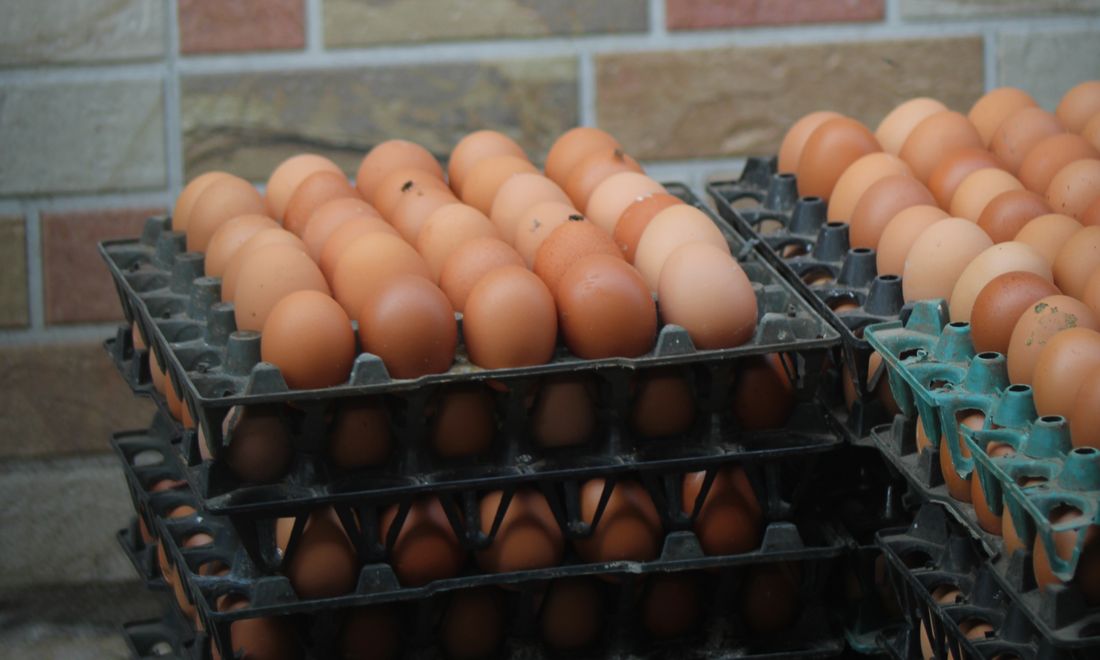
For reference, our current starting prices are 110 GH₵ for a live broiler of about 2.5 kg, 120 GH₵ for a dressed broiler, and 50 GH₵ for a crate of 30 table eggs. Those are starting points for our own orders. They are not a verdict on your local market, and you should check what your own buyers pay before you copy them.
Planning for the December and Easter rush without a price shock
Christmas is about ten weeks away, and it will push demand for live and dressed birds up across the region. Work backwards from the sale date. For a bird that has to be at a certain weight on the day, the feed you commit to in October decides what you can charge in December. If you have not ordered the feed yet, you are buying into the rush at the top of the market.
Set the festive price before the demand arrives, and publish it. Buyers who see the sheet in October can plan their budgets. Buyers who learn the price on the day will argue with you over it. Set a simple rule for the day itself: orders placed by a fixed date get the sheet price, and walk-ins pay the day rate. Apply the rule the same way to everyone, including your friends.
Easter and Sallah follow the same logic on a smaller scale. Plan the sale age so your birds are ready in the week people actually shop, not the week after. Our piece on festive demand planning works through the calendar in more detail. If you need chicks timed for the rush, place the order early through the order form so the sale date is not decided by the hatch.
Need chicks for your next batch?
Send breed, number and town. We reply with price, hatch date and delivery cost in writing.
A price sheet with a date on it saves most arguments
A price sheet is one page with the product, the unit, the price, the date it starts and the date it ends or is reviewed. Print it, photograph it and send it to every buyer on the same day. Add a line at the bottom saying prices are confirmed at order and may change with notice. That line protects you without sounding like a threat.
Avoid prices agreed by voice note. Voice notes are easy to misremember, and a buyer who heard around 110 may remember 100. Confirm each order by text with the weight range and the total before the birds leave the farm. If delivery is involved, add it as a separate line, because our delivery terms are confirmed before payment and should not be buried in the bird price. It takes two minutes and saves an argument that could cost you a buyer.
Keep a floor for the weeks the market will not pay
Some weeks the market will pay less than your cost, usually because too many farms have birds ready at the same time. That is when a floor matters most. Decide in advance which buyers you will hold at your floor, such as a standing order or a caterer with a written agreement, and which buyers you will let go when the price drops below it. Our selling guide explains how to map those buyer groups before the birds are ready.
Clearing birds at a small loss is sometimes better than holding them for another week of feed at full cost. Work it out on paper first. Compare the feed you will spend in the extra days, and the weight you will lose or gain, with the price you can get now. Do not let that decision be made in a panic on a Friday evening, when the birds are already getting heavy and the buyer has gone quiet.
A twenty-minute Monday pricing check
Pick one time each week and keep it. Monday works for most farms because the weekend sales are in and the new feed delivery is due. The check does not need a spreadsheet, only a pen, your receipts and the price sheet.
- Write down the feed, chick and medicine costs from the last week, and recalculate your cost per bird.
- Check the current market for live and dressed birds in your town and in two neighbouring towns.
- Compare both numbers with your floor and your target.
- Decide whether to hold, step up or step down, and by how much.
- Message the regular buyers before anyone else hears about a change.
- Update the price sheet, and file the old one with its date. Keep the answers with your poultry records, so next month's check starts from numbers rather than memory.
The pricing mistakes we see most often
These are the errors that come back again and again across farms of every size. Most are easy to fix once you can see them on paper.
- Pricing from what the neighbour says rather than from your own cost.
- Raising the price on the day without telling anyone first.
- Cutting the price at the first drop and never raising it back.
- Giving a discount with nothing committed in return.
- Forgetting the cost of dressing, chilling and transport on dressed sales.
- Letting a price be agreed by voice note and then arguing about it.
Questions farmers ask
What price should I charge for live broilers when the market is unstable?
Start from your cost per bird, add the margin you need to cover risk and labour, and then check today's market locally. Do not set a price from last month's figure or from a price you saw online. If your number is above the market, test a small move with one buyer group before you change the whole list.
Should I quote a price for a month ahead?
Yes, if you give it a date and a review point. Say the price holds until a set date and may be reviewed with notice. Avoid promising a fixed price for a whole season when feed is moving sharply, because that is the situation where a promise will cost you the most.
How do I explain a price increase to a regular buyer?
Tell them the reason in plain words: feed, chicks or medicine. Show them the cost change in one line they can read. Give them the date and enough notice to plan. Offer a commitment in return, such as a fixed weekly order, and keep the increase in steps so that no single move feels like a shock.
Is it better to sell live or dressed when prices fall?
Compare the net amount you keep per bird on each route, after the processing, packaging and transport costs. Dressed sales take labour and a cold chain. If the premium for dressed birds is smaller than your processing cost, selling live is the safer route. Work it out per kilo with your own measured yield, not with a rule of thumb.
Should I drop my price to beat a competitor?
Only if your cost is lower, or the buyer is worth the cut because of volume and reliability. A cut you cannot sustain pushes the whole town's price down, and it is hard to raise again. Compete on weight, timing and reliability, which buyers value more than a small difference in the number. Our <a href="/faq/">frequently asked questions</a> cover more of the questions buyers ask about weights and orders.
How do I know if my price is too high?
Watch the buyer behaviour. If orders stop without complaint, you may be above what the market pays. Ask a few buyers directly what would make them order more, check your sell-through over two weeks, and compare with two nearby sellers. Test a small move with one group before you change the whole sheet.
What if feed falls just after I raised my price?
Hold for a few weeks so your costs settle, then step down in writing. Buyers who accepted the rise will accept a fair fall that comes with a date and a reason. A price that moves both ways with a clear reason builds more trust than one that only ever goes up.


