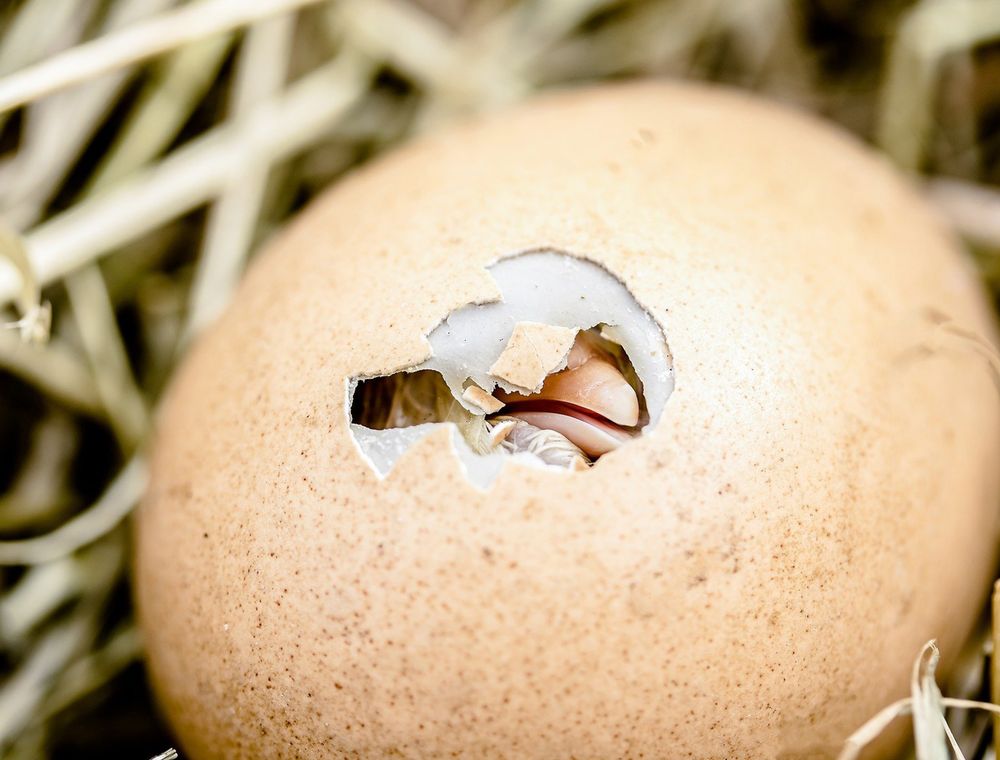
Short answer: A hatch rate means very little on its own. Record the eggs set, the clears at candling, the dead at each stage, the pipped chicks that did not come out and the chicks you counted. Divide each loss by the fertile eggs, not the eggs set, and you can see whether the trouble came early, in the middle or at the end of the set. A worked 200-egg set shows how one sheet points to a cause.
Key takeaways
- Write the eggs set, the clears, the deaths at each stage and the chicks counted, every set, without exception.
- Use two hatch rates: hatch of set, and hatch of fertile. They answer different questions.
- Split the losses into early, middle and late deaths, plus pipped-but-not-hatched, and read each one on its own.
- Tag every set with the season, the room temperature and any power cut, so the record explains itself later.
- A rising loss in one stage points to a cause in one part of the routine. Check that part first.
A hatch percentage with no story behind it
A hatch figure written on the side of a cabinet, with nothing around it, is a number that sounds like an answer and is not one. "Seventy-five percent" tells you that a quarter of the eggs did not produce a chick. It does not tell you whether the eggs were infertile, the machine ran cold on day 4 or the humidity dropped during the hatch. Each of those has a different fix, and a single figure cannot point to any of them.
That is the blunt case for keeping a proper hatch record. A good record turns one number into a set of numbers, each of which points to one stage of the set. Read them together and you can usually say where the set was lost. Read the total alone and you can only guess.
This article sets out the counts to take, the two hatch rates to calculate, a copy-ready sheet and a worked 200-egg example. It is the hatch-side companion to our general poultry record guide, which covers the daily flock records. If you are still deciding what software to use, our review of record-keeping tools sets out the options.
The counts every set needs
You need five counts for each set. They take a few minutes to write down, and they answer almost every question a poor hatch will raise later. Take them at the same stage every time, so that one set can be compared with the next.
- Eggs set: the number of eggs you put in the setter on day 0.
- Clear eggs at the first candle: the eggs with no sign of development, usually taken on day 7.
- Dead embryos at the second candle and at lockdown: eggs with a ring of blood or a still embryo, counted at each stage.
- Pipped but not hatched: chicks that broke the shell and then died, or stopped before they came out.
- Chicks counted out: live chicks removed from the hatcher and counted once they were dry.
Two more fields make the record useful for years. The first is the date of each stage. The second is the note field, where you write anything unusual: a power cut, a hot afternoon, a cracked egg, a new batch of eggs from a different flock. The note is often the single line that explains the whole result.
Two hatch rates, and why they differ
Most farmers quote one hatch rate and mean something different by it. Pick one name for each figure and use it consistently, because the two rates answer different questions.
- Hatch of set is chicks counted out divided by eggs set. It is the figure a buyer or a customer thinks of when they hear "hatch rate", and it includes the infertile eggs, so it measures your flock and your egg handling together.
- Hatch of fertile is chicks counted out divided by fertile eggs. Fertile eggs are the eggs still alive after the first candle. This figure measures the incubation itself, without the fertility problem mixed in.
If the hatch of set is low but the hatch of fertile is good, the trouble is in the flock or in the egg handling before the set. If the hatch of fertile is low, the trouble is in the machine, the routine or the eggs once they were fertile. The two numbers tell you which half of the operation to look at.
Keep the fertile count honest. An egg that was fertile at day 7 but cracked during a power cut is still a fertile egg, and it belongs in the denominator for the hatch of fertile. Our guide to testing egg fertility explains how to read the first candle when the answer is not clear.
Splitting the losses: early, middle and late
Once you have the fertile eggs, split the embryo losses into three windows. The windows are not a law of nature, and different keepers draw them slightly differently. What matters is that you draw them the same way every time, so the numbers from one set match the numbers from the next.
| Loss window | Days from set, about | What it usually suggests |
|---|---|---|
| Early dead | Day 1 to 7 | Eggs that were stored too long or handled badly, a cold start, or a bad first fortnight of temperature |
| Middle dead | Day 8 to 18 | Temperature swings, a turner that stopped, or humidity that ran too wet or too dry through the middle of the set |
| Late dead | Day 19 to 21 | Humidity too low at lockdown, poor ventilation, or heat building in the cabinet as the embryo grows |
| Pipped, not hatched | Day 19 to 21 and after | Membranes that dried out, a chick that could not turn, or an opening during the hatch that cooled the cabinet |
Early deaths often trace back to the eggs before they reached the machine, and the storage note on the card is the first place to look. Middle deaths point to the cabinet, because they are what temperature and humidity swings look like on day 12. Late deaths and pipped chicks are the hatch problem, and the lockdown humidity is the first thing to check.
Count each loss once. An embryo that dies on day 9 and is still in the egg on day 19 belongs to the middle window, not to both. Write the day of death on the card, and you will not have to argue about it at the hatch.
The record sheet you can copy
A paper sheet works as well as a spreadsheet, provided it is filled in on the day and kept with the set. The layout below is the one we would use on a small farm. Copy it, tape it to the cabinet and keep one page per set.
| Field | What to write | Used in the calculation |
|---|---|---|
| Set date and machine | Day 0, which cabinet, which trays | Sets the calendar |
| Source of eggs | Flock or supplier, collection dates, days stored | Helps explain early losses |
| Eggs set | Total on day 0 | Base for hatch of set |
| Clears at day 7 | Count removed at first candle | Gives fertile eggs |
| Fertile eggs | Eggs set minus clears | Base for hatch of fertile and the loss split |
| Early, middle, late dead | Counts at each candle or check | Loss split |
| Pipped, not hatched | Count after the hatch window closes | Loss split |
| Chicks counted out | Dry, live chicks only | Both hatch rates |
| Notes | Power cuts, hot days, humidity changes, any problem | Explains the result |
The formulas are short. Fertile eggs is eggs set minus clears. Hatch of fertile is chicks counted out divided by fertile eggs. Hatch of set is chicks counted out divided by eggs set. Each loss percentage is the count for that window divided by fertile eggs. Round to one decimal place, and keep the same rounding for every set.
A worked example: 200 eggs from one set
Take a set of 200 eggs from a flock of mixed-age hens. Day 0 is the set date. The records show the following.
- Eggs set: 200
- Clears at the day 7 candle: 24, so fertile eggs are 176
- Early dead, days 1 to 7: 9
- Middle dead, days 8 to 18: 7
- Late dead, days 19 to 21: 6
- Pipped, not hatched: 4
- Chicks counted out: 150
The check first: 176 fertile, minus 9, 7, 6 and 4 losses, leaves 150 chicks. The numbers balance, so the record is consistent. A record that does not balance has a counting error somewhere, and it is better to find it on the day than in the next month's report.
| Figure | Calculation | Result |
|---|---|---|
| Fertility | 176 of 200 | 88.0 percent |
| Hatch of set | 150 of 200 | 75.0 percent |
| Hatch of fertile | 150 of 176 | 85.2 percent |
| Early dead, share of fertile | 9 of 176 | 5.1 percent |
| Middle dead, share of fertile | 7 of 176 | 4.0 percent |
| Late dead, share of fertile | 6 of 176 | 3.4 percent |
| Pipped, not hatched, share of fertile | 4 of 176 | 2.3 percent |
Read the result. Fertility is good, so the flock is not the first suspect. The hatch of fertile at 85.2 percent is a sensible figure to judge the next set against, and the losses are spread across the set rather than piled into one window. The early loss is the largest of the four, at 5.1 percent. That points first to the eggs before they were set, and then to the first week of the cabinet. The next set should check the storage days and the first-week temperature before anything else changes.
Reading the pattern: what each loss points to
A single set tells you a little. Three or four sets, read side by side, tell you a great deal. The table below sets out the patterns we see most often, the cause they usually point to and the first check to make. None of these is a diagnosis on its own, but each one tells you where to look first.
| Pattern across sets | Likely area | First check |
|---|---|---|
| Fertility falls below your usual level | Flock, cockerel ratio, feed, age of hens | Cockerel count and age, recent feed change |
| Early losses rise after a storage change | Eggs before the set | Days stored, storage temperature, turning in store |
| Middle losses cluster on hot afternoons | Cabinet heat or a turner that stalls | Thermometer at egg level, turner check |
| Late losses and sticking membranes | Humidity too low at lockdown | Hygrometer check against salt, pan level |
| Chicks wet and weak, membranes swollen | Humidity too high late in the set | Vent position, pan size, the room's humidity |
| Pipped chicks that stop short | Opening the lid during the hatch, or a cold cabinet | Lid discipline, room temperature during the hatch |
Change one thing at a time. If you change the humidity, the cooling and the storage all in one set, you will never know which one helped. Write the change on the card before the next set, then judge the result against the card.
For the cabinet side in more detail, our guide to fixing humidity problems and our guide to calibrating the thermometer set out the checks that most records point to.
Need chicks for your next batch?
Send breed, number and town. We reply with price, hatch date and delivery cost in writing.
Ghana seasons written into the record
In Ghana the weather is part of the incubation. The harmattan dries the air and fills the room with dust, the rains bring humidity and cool nights, and a hot spell can push a cabinet well above its set point in the afternoon. A set that runs through one of these seasons will look different from a set that does not, and the record should say so.
Add three fields to every set. The first is the season, written as harmattan, rains, hot spell or a normal month. The second is the room temperature at the morning and evening readings. The third is any power cut, with the start time and the length. These three fields cost nothing to write, and when a hatch goes wrong in February you will want them.
A power cut is the field most often missing. An hour off the grid on day 14 may do little. Three hours on day 20 may change the hatch entirely. Our guide to incubating through power cuts explains the backup routine, and the power log is the record that tells you whether the backup worked.
The chick count and the batch record that follows the chicks
The chick count is the last number on the hatch sheet, and it is the one that gets written most carefully. Count live chicks once they are dry and fluffy, and count dead-in-shell eggs and dead chicks separately. A chick that dies in the first hour is a hatch loss, not a brooding loss, and it belongs on the hatch sheet.
When chicks leave a hatchery they should carry a batch record. The batch record that comes with day-old chicks from us records the vaccines given at the hatchery, so the buyer knows what the chicks have already had. Keep your own hatch record next to it, so the two match. If a buyer or a vet asks what happened to a batch, the paperwork should answer the question without a search through the shed.
If you are buying chicks rather than setting your own, the counting rule works in your favour too. Count the chicks on arrival, note the number that are dead or weak, and send a photo on WhatsApp the same day. Our delivery page explains how boxed chicks travel, and the counting rule is the same whether the chicks came from your own machine or from our hatchery.
Record-keeping mistakes that hide the problem
These are the habits that make hatch records useless, and they are easy to slip into when the hatch is busy.
- Writing only the hatch percentage on the cabinet, with no counts behind it.
- Counting clears on a different day each set, so the day-7 figure drifts.
- Combining early and middle losses into one number, which hides which window went wrong.
- Taking the chick count before the chicks are dry, then recounting later and getting a different number.
- Leaving out the power cuts and the hot days, because they felt too small to write.
- Changing the definitions of a clear or a dead embryo partway through the year.
- Keeping the record in a notebook that stays in the house and never reaches the shed.
The fix for most of these is a card that is filled in at the time, not a memory filled in later. If the card is on the cabinet and the pen is on the card, the record survives a busy hatch.
A monthly review, and a checklist for every set
Once a month, sit down with the sheets for every set that finished in the month. Work out the hatch of set and hatch of fertile for each, then compare the loss windows across the sets. Look for patterns rather than single results. One bad set is an event. Three bad sets in a row are a trend, and the trend is what you act on.
- Every set has a card with the eggs set, the clears, the dead at each stage and the chicks counted.
- Fertile eggs are worked out as eggs set minus clears, and the same rule is used every time.
- Both hatch rates are written down, with the calculation beside them.
- Losses are split into early, middle, late and pipped windows, and each window is read on its own.
- Season, room temperature and any power cut are written on the card.
- Any change to the routine is written on the card before the next set.
- The monthly review has been done, and the next action is written down.
If you want help reading your sheets, or you are planning a set with a supplier that keeps its own hatch notes, our egg hatching service page explains what we can do, and our frequently asked questions answer the common questions about the hatch. You can also reach us on WhatsApp at +233 24 915 1503 with the sheet and we will tell you where to look first.
Questions farmers ask
What is a good hatch rate?
There is no single good figure, because it depends on the species, the flock, the machine and the season. Compare each set with your own earlier sets, and read the loss windows, not only the total. A steady hatch of fertile eggs with a clear loss pattern is more useful than one high number with no record behind it.
What is the difference between hatch of set and hatch of fertile?
Hatch of set uses all the eggs you put in, so it includes the infertile eggs. Hatch of fertile uses only the eggs that were still alive after the first candle, so it shows how well the incubation itself worked. Keep both, because a poor hatch of set with a good hatch of fertile points to the flock, not the machine.
When should I count clear eggs?
At the first candle, which is usually on day 7 for chicken eggs. Remove the clears, count them and write the number on the card. Do the candling in a dark room with a good torch, and use the same rule for every set so the counts are comparable.
Are dead-in-shell eggs the same as pipped chicks that did not hatch?
No. A dead-in-shell egg is an embryo that died during the set and never pipped. A pipped chick is one that broke the shell and then stopped before it came out. Count them separately, because they point to different causes, and the pipped count is often a sign of the lockdown humidity or the hatch routine.
How do I tell whether the problem is the machine or the eggs?
Start with the fertility and the early losses. High clears and high early losses point to the eggs or the flock. Middle and late losses, with a steady fertile count, point to the machine: temperature, humidity and turning. Check the cabinet readings against the card before you change the eggs.
How long should I keep hatch records?
Keep them for as long as you keep the flock, and at least for a full year so you can compare the same season across two years. A record from a harmattan set is far more useful when you can set it next to the harmattan set from last year.
Does Halaal Farms quote a hatch rate for the chicks we sell?
This guide does not quote a hatch rate for our hatchery, because the figure depends on the flock, the season and the machine. If chicks arrive dead on arrival, the rule is that we replace them free in the next hatch. Count the chicks on arrival and send a photo on WhatsApp at +233 24 915 1503 the same day.


