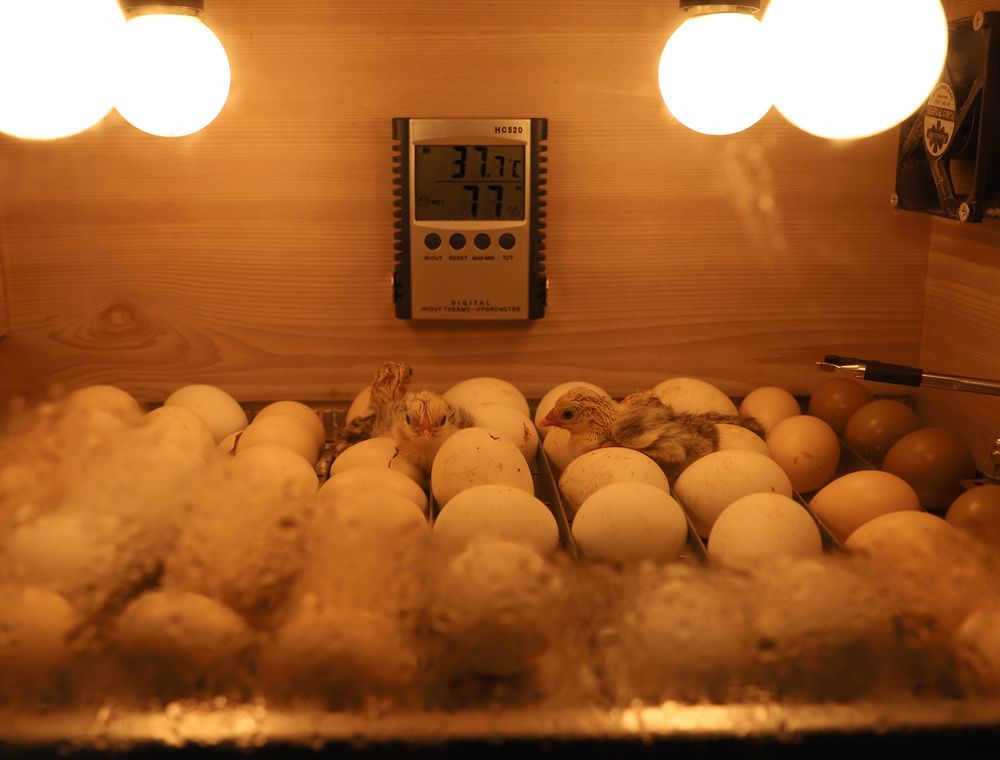
Short answer: You cannot read fertility from the outside of an egg, so a test set is the only honest way to know before you commit a machine. Set a test tray of about 24 eggs from a new batch, candle it on day 7, and count fertile eggs as a share of the set. If the result is well below what the flock has shown before, hold the rest of the batch back and agree a remedy with the seller in writing before you pay.
Key takeaways
- Weight and shape choose eggs that look right. A test set answers whether anything inside is alive.
- Use a test set of about 24 eggs for each new flock or new supplier, not for every batch.
- Candle the test set on day 7 and work out fertility as fertile eggs divided by eggs set.
- Read clear eggs and early deaths separately, because each points at a different cause.
- Agree the remedy in writing before you pay, and keep a record of every test.
A tray can look perfect and still be empty
Walk along any tray of hatching eggs and the good ones look just like the bad ones. Same colour, same weight, same clean shell. Fertility is the one thing you cannot judge by holding an egg up to the light in a farm store, and it is the one thing that decides whether the machine has any work to do at all.
That is why a test is worth the bother, even though it costs machine space and a week of waiting. It answers a different question from the sorting we describe in our guide on selecting hatching eggs by weight. Weight and shape pick eggs that look right. A test shows whether life started inside them.
You do not need to test every batch. Test when you are new to a flock, a supplier, or a season that has been hard on the birds, and when a buyer asks for proof rather than promises. Once you know a supplier's normal, you can test less often without losing your grip on the result. Once a test has passed and you want the eggs, the order form is the quickest route.
What a fresh, unset egg can and cannot tell you
Some growers crack an unset egg onto a plate and look at the yolk. A fertile egg carries a small pale spot on the surface of the yolk, the germinal disc, and in a good fertile egg it is round, neat and clearly edged. An infertile egg usually shows a smaller, less defined spot. On a plate, in good light, the difference can be real.
It is also easy to misread. The yolk moves, the light in most farm rooms is poor, brown and speckled shells hide what is underneath, and an old fertile egg can look much like a young infertile one. Use the crack-open as a teaching exercise and a way to train your eye. Do not use it as a pass or fail on a batch you have paid for.
Breaking an egg also costs you the egg, so you cannot repeat the test on the same one. A test set does the job properly because the eggs are left alive to show you what they are.
Building a test set that tells you something
A test set is a sample from one batch, set in the machine under the same conditions as the eggs you plan to set. Twenty-four eggs is a practical size for most growers. It is enough to give a rough reading, and small enough that you are not giving up the whole machine for a guess. Be clear with yourself that 24 eggs gives a reading, not a precise percentage. Ten fertile eggs out of 24 is about 42 percent, and a single egg either way moves the figure by about four points.
Choose the 24 eggs from across the batch rather than picking the nicest ones from the top of the tray. Weigh them, mark them with a pencil code, and load them into their own tray in the setter. Keep the rest of the batch in storage, cool and pointed end down, until the result is in, as long as those eggs are still inside their storage window.
Here is the catch. A test set has to go in on the day the batch is ready, and the result arrives a week later. Eggs held back for that week are getting older. If the batch is already several days old when it reaches you, you may not have a week to spare. Then the honest choice is either a smaller sample with more risk, or accepting that the batch will be set regardless and the test is only a record for next time.

The day seven read, without repeating the candling method
Candling is the method, and our egg candling guide walks through the steps and the light. Here we care about the count. On day seven, go through the test set in a dark room, one egg at a time, and sort them into three groups: fertile and developing, clear, and early dead. Write the numbers on the tray map before you do anything else.
Fertility for the test is the number of fertile eggs divided by the number of eggs set, multiplied by 100. Early dead eggs count as fertile for this figure, because they were fertile at the start and then stopped. You record them separately as a hatch problem, which is a different question from fertility.
Do not panic at one bad egg, and do not feel pleased with one good one. Look at the pattern across the tray, and note where the clear eggs sit. A cluster of clears on one side of the tray can point to uneven heat in the machine rather than a problem with the flock.
Clear eggs and early deaths point at different causes
Clear eggs at day seven are the most misread result in incubation. A clear egg may never have been fertile, or the embryo may have died so early that nothing is left to see. The two look the same on the day, and they call for different fixes. An early dead egg is usually more useful, because a ring of blood vessels that stops growing often tells you roughly when the embryo died.
| What you see on day seven | Most likely meaning | First thing to check |
|---|---|---|
| Clear, no blood vessels, uniform yolk | Probably never fertile, or died very early | The cockerel ratio and age, and how the eggs were handled |
| Blood ring with a dark centre that has stopped growing | Died in the first or second day | Storage heat, and the machine heating early in the set |
| Clear with a faint, uneven ring | A weak start, often from storage or heat | The storage record and the time from collection to setting |
| Developing embryo with clear vessels | Fertile and alive | Carry on with the normal schedule |
Treat this table as a first pass, not a diagnosis. Two mixed signs in the same tray can mean two causes at once, and one tray is a small sample. Look for the pattern across several batches before you blame a single cause.
What usually pulls fertility down, in the order we look
When a test comes back low, our first move is to check the ordinary things. Most fertility problems start with the flock, and the flock problems we see most are not exotic. They are the everyday failures of management that show up when birds are stressed or underfed.
- Too many hens for the cockerels, or cockerels that are too old, too heavy or lame.
- Parent birds on a poor ration, especially short of vitamins or minerals.
- Heat stress during a hot spell, which lowers laying and reduces sperm quality in males.
- Eggs laid in dirty nests, which are more likely to be contaminated and stored badly.
- Disease in the flock, including respiratory infections, that drops laying and breeding performance.
- Storage problems before the test, such as heat or long holds, which cut hatchability even when fertility is sound.
Storage deserves its own mention, because it can make a fertile egg look like a bad one on day seven. Check the storage record for the batch before you blame the flock. Our notes on why eggs do not hatch set out the usual causes in more detail.
The cockerel question nobody enjoys answering
Ask a seller how many cockerels run with the hens, and you will often get a quick answer that does not quite match the pen. Ratios vary by breed, age and season, and the breeder's guide gives a starting point for each strain. The rule that holds across most flocks is simple: too many hens per cockerel, or a cockerel past his best, lowers fertility quietly. The eggs look normal, and the test is the first thing that tells you.
Ask for the ratio, the age of the cockerels, and when they were last changed. Ask whether they are sound on their feet and whether any has been separated for a reason. A cockerel that has been limping for a month will not cover his hens properly, and one sharp question at the start can save you a bad test later. Our breed profiles show which strains tend to run at which ratios.
If you run the flock yourself, watch the cockerels in the pen each morning. Count the mating attempts, and note any bird that is being pushed away from the feed by the others.
Need chicks for your next batch?
Send breed, number and town. We reply with price, hatch date and delivery cost in writing.
What a supplier's fertility record should show you
A seller who keeps a fertility record should be glad to show it to you, and one who does not should explain why. You are looking for a record that links a flock to its results over several weeks, not a single good figure with no context. Ask to see the figures for the same flock you are buying from, and ask how they were measured.
| Item to ask for | What a useful answer looks like |
|---|---|
| Flock age and strain | Named strain, date of birth of the flock, age in weeks |
| Fertility figures by week | A run of weekly or batch figures, not one number |
| How fertility was measured | The candling day and the number of eggs in the sample |
| Cockerel management | Ratio, age, and any changes in the last month |
| Storage and collection | How often eggs are collected and how long they are held |
If a seller gives you a percentage and nothing else, treat it as a sales line. Ask for the sample size and the day the check was made.
Deciding what to do with the batch after the test
A test is only worth the bother if it changes what you do next. Decide the rules before the result arrives, so that a disappointing tray does not push you into a rushed choice.
The rules we work to are simple. If the test fertility is in line with what the flock has shown before, set the batch as planned. If it sits a little low, and the clear eggs look like an early storage or heat problem, set the batch, expect a weaker hatch, and fix the storage before the next one. If the test is clearly low, do not set the rest of the batch. Go back to the seller, show them the day seven count, and agree a remedy in writing before you pay the balance. A verbal promise is hard to hold anyone to.
Count the cost of the test too. It uses machine space and a week of your time. If it shows the batch is sound, that cost comes back in a full, even hatch. If it shows a problem, the test has saved you a machine full of clears. If you are looking for fertile eggs to test, start with our fertile eggs page, and read about how we run the hatchery before you ask us about flock records.
Keeping a record that makes the next test cheaper
The first test costs the most, because you have no baseline. Every test after that is quicker to read and easier to decide, but only if the record is clear. Keep one line per test set: the batch, the flock, the date set, the count of fertile, clear and early dead eggs, the storage age, and the hatch when it comes.
- Label the test tray with batch code, flock and set date.
- Record the day seven count, split into fertile, clear and early dead.
- Work out fertility as a percentage, and write the sample size beside it.
- Note the storage age and any heat event in the store that week.
- Decide, in writing, whether the rest of the batch is set, held or rejected.
- Record the final hatch and compare it with the test.
After three or four tests from the same supplier you will know their normal, and a result outside that normal stops being a guess.
Questions farmers ask
What fertility should I expect from hatching eggs?
It depends on the strain, the age of the flock, the cockerel ratio and the season. Ask your supplier for recent figures and the sample sizes behind them, then judge against that history. A single number tells you little, and a test of 24 eggs will move by several points from one tray to the next.
Can I test fertility before I set the eggs?
Not reliably by looking at them. Cracking an unset egg can show a fertile germinal disc to a trained eye, but it is poor for batch decisions. The practical test is a test set, candled at around day seven, and our <a href="/faq/">common questions page</a> covers the basics of setting up one.
Is the crack-open test reliable?
It is useful for learning what fertile and infertile yolks look like, and for spotting very obvious problems. It is not reliable enough to decide on a batch, because the difference is small and the light is often poor.
How many eggs should a test set have?
About 24 is a practical size for most growers, drawn from across the batch. It gives a rough reading. Larger sets give a steadier number, but they tie up more machine space and delay the decision on the rest of the batch.
Why are my eggs clear at day seven?
Clear eggs can mean they were never fertile, or that the embryo died so early that nothing is left to see. Check the cockerel ratio, the age of the flock and the storage record first. If you need to see more, look at a few eggs again around day 10 to 12.
Do I need to test every batch?
No. Test when you start with a new flock, a new supplier, or after a season that has hurt the birds. Once you know a supplier's normal, test less often, but keep the record going so that you notice a change. Our <a href="/egg-hatching-service-ghana/">egg hatching service</a> can also handle the setting for you while you build that record.
Should fertility change the price I pay?
It can. If a supplier's figures are consistently below what the strain should give, the eggs are worth less to you, and the price should reflect that. Agree the price before you pay, and do not accept a discount that is not written down.

