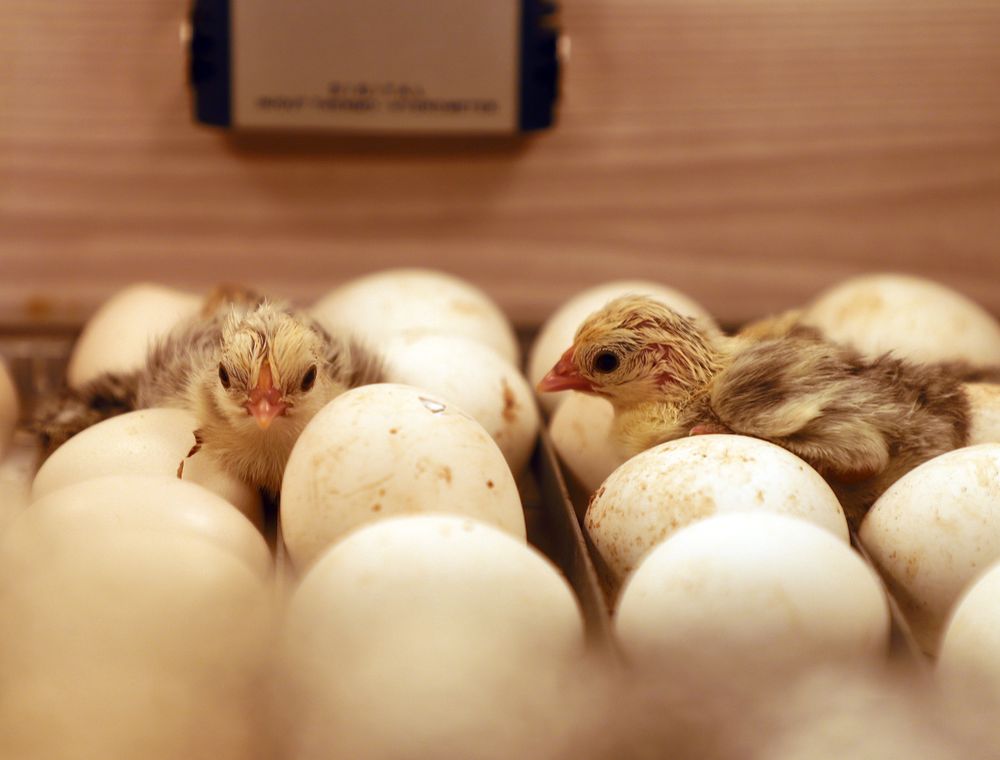
Short answer: Incubator humidity is set mostly by how much water surface you expose and how much air the vents exchange. Too dry and the membranes dry out and bind the chick, too wet and the chick hatches soft, swollen and slow. Test your hygrometer against salt, read a wet-bulb check where you can, change the water surface before the vents, and change one thing at a time.
Key takeaways
- Test your hygrometer with a salt solution before you trust any humidity number.
- Use a wet-bulb reading when you can. It is more honest than a cheap display that drifts.
- Change the water surface first. Vents are the second tool, and a blunt one.
- Change one thing, then wait a full day before you change anything else.
- Read the chicks and the membranes at hatch as well as the display. They tell you what humidity did.
What humidity does to the chick
Humidity is not there to keep the eggs comfortable. It controls how fast water leaves the egg through the shell, and the chick needs to lose just the right amount of that water over three weeks. Lose too little and the chick is large and wet at the end. Lose too much and the membranes around the chick dry and tighten.
Dry membranes are the problem most growers see first. A chick that has to fight through a leathery membrane to pip tires early and sometimes gives up with its head still under the wing. Wet conditions do their damage more quietly. The chick hatches large and soft, takes longer to dry, and often comes out weak even when every other part of the setting was fine.
The target band is narrow enough that a few points on the hygrometer matter. That is why the humidity needs as much attention as the temperature, even though it moves more slowly. Our temperature and humidity guide gives the bands for each stage of the 21 days, and this article is about what to do when the machine drifts away from them.
Test the hygrometer with salt before you trust it
Many cheap hygrometers read two or three points off when they arrive, and they drift from there. If your display says 60 percent while the air is really 68, every decision you make from it will be wrong, and you will not know why the hatch failed.
The salt test is simple. Put a little water in a small jar, add enough table salt that some stays undissolved on the bottom, and let the mixture settle. Place the hygrometer inside the jar above the salt, not touching it, close the lid and leave the jar at room temperature for about eight hours, or overnight. A saturated salt solution holds the air above it at roughly 75 percent relative humidity at room temperature, so a healthy hygrometer should read close to that.
If it reads 70 or 80, you have two choices. You can keep it and write the correction on the machine, so every reading you take is adjusted by the same amount. Or you can replace it. We would replace it. A humidity number you have to correct in your head is a number you will eventually forget to correct. If you are still choosing a machine, our beginner's guide to buying an incubator lists the features that make humidity easier to hold.
The wet-bulb check at setter temperature
A wet-bulb reading gives you humidity from two thermometers. One sits dry and reads the air. The other has its bulb wrapped in a clean cotton wick that is kept wet with clean water at room temperature. As the water evaporates from the wick it cools the thermometer, and the size of that cooling tells you how dry the air is. Drier air cools the wick more.
To read it, wrap the wick snugly around the bulb, dip it in water, and place both thermometers at egg height in the middle of the load. The air must move past the wick for the reading to mean anything, so this check suits a forced-air machine best. In a still-air machine, let the reading settle for several minutes and treat it as a guide rather than a precise figure. Read the wet bulb once it has stopped falling.
The table turns the two readings into relative humidity. These values are approximate, from standard psychrometric figures at sea-level pressure, which is close enough for Kasoa. Check the numbers against a printed table if you want a second reference.
| Wet-bulb reading (°C) | Relative humidity at 37.5 °C dry bulb | Relative humidity at 37.0 °C dry bulb |
|---|---|---|
| 29 | About 53 percent | About 55 percent |
| 30 | About 58 percent | About 60 percent |
| 31 | About 63 percent | About 65 percent |
| 32 | About 68 percent | About 70 percent |
For a setter running around 37.5 °C, a wet bulb near 29 to 30 °C is where most growers want to be. For a hatcher near 37.0 °C, a wet bulb of about 31 to 32 °C matches the higher band. If the reading does not match the display, believe the wet bulb while you find out which instrument is wrong, and then fix the instrument.
Change the water surface before you touch the vents
Water evaporating from the trays is the main source of moisture in the machine, so it is the first thing to change. More exposed water surface gives more humidity. A wider tray, a sponge soaked and laid flat, or a second tray all increase the surface without changing the air exchange, and the change settles over a few hours.
Warm water evaporates faster, so keep the water at room temperature and avoid filling the trays with water straight from a cold tap or a fridge. Top up the water in small amounts. A dry tray that is refilled with a full jug on a hot afternoon will swing the humidity far more than the same water added a cup at a time.
Our explainer on how an incubator works shows how the water tray and the vents share the job. Vents come second. Opening a vent drops humidity fast, and it also changes the oxygen and the carbon dioxide that the embryo is breathing, so use it when the water has done all it can. Make vent changes in small steps, and check the wet bulb or the corrected hygrometer the next morning before you go further.
When the machine runs too dry
A dry setter shows up as thin, papery membranes and chicks that stick to them. The air cell may grow too large early, and at hatch you will see chicks that look dried down and pip with little room to turn. The fix is to add water surface, and only then close a vent slightly.
The harmattan is the season to watch. From December to February, the air coming in from outside can be very dry and dusty, and a vent that is open for ventilation pulls that dry air straight into the machine. A setter that holds 55 percent in October can drop into the 40s on a dry harmattan morning if nobody watches it. Plan for it before the season turns. Add more water surface in November, check the wet bulb each morning and keep the vents as small as the carbon dioxide allows.
Do not solve dryness by raising the temperature. Heat makes the air drier. A machine that is dry and hot is worse than one that is dry and right.
When the machine runs too wet
Too much humidity is the quieter problem. You may not notice it until the hatch, when the chicks are large, slow to dry and tired. The membranes look fresh and moist, and that is the clue. A chick that hatches with plenty of fluid still in its body often struggles to stand and feed in the first day.
The fix is the reverse of the dry fix. Take out a sponge or a tray, or let the water level drop before you top it up again. Open the vents a little if carbon dioxide is not a concern, but in most setters it is better to reduce the water first and keep the vents steady.
The rainy season is the other side of the year to plan for. From April to July, and to a lesser extent in September and October, the air outside holds much more moisture. Vents that bring in that air will push a setter up, and the water in the trays evaporates more slowly, so the machine does not always show it straight away. Check the wet bulb through the wet months, and expect to take water out rather than add it.
Read the membranes and the chick at hatch
A display can lie, but a hatch does not. Once the chicks are out, look at the membranes and the chicks themselves. Membranes that tear cleanly and the chick that dries quickly suggest humidity was about right. Membranes that stick to the chick, and chicks that look dry and tight, point to a setter that ran low. Chicks that stay soft, swollen and wet for a long time point to a setter that ran high.
Read the air cell at candling too. Our egg candling guide explains how to judge the air cell at day 18 and what its size tells you. An air cell that looks too small or too large on the day you transfer eggs is a clue that the humidity ran off target earlier in the hatch.
Keep the chicks you open, or at least photograph a few, and put the photos in your log beside the readings for that day. A pattern across a whole batch is more useful than a single bad egg. A dead egg with a dried, tight membrane fits the pattern described in our guide to why eggs don't hatch, which shows how to read the other causes side by side.
Need chicks for your next batch?
Send breed, number and town. We reply with price, hatch date and delivery cost in writing.
A worked example from a dry harmattan morning
Here is how we would work through a typical case. On a December morning, the hygrometer reads 45 percent in a setter that should run 50 to 60. The wet bulb reads 28 °C with the dry bulb at 37.5. The table says that is about 49 percent, so the air is just under the band rather than far off it.
Because the gap is small, we would not touch the vents. We would add a second sponge to the water trays and top up the water with room-temperature water, one cup at a time. Then we would leave the machine alone until the next morning, when the wet bulb should read 29 and the hygrometer should sit near 53.
If the wet bulb has not moved after a full day, the wick may be dry, the sponge may be too small, or the water may be too cold. Fix one of those and wait another day. Only when the water has done all it can would we close a vent a little, and we would still check the readings in the morning and evening afterwards.
Change one thing a day, and write it down
Most humidity fixes fail because the grower changes three things at once. A sponge goes in, a vent closes, and the water is topped up in the same hour. When the humidity settles, nobody knows which change did it, and the next setting goes wrong for the same unknown reason.
- Write the reading, the time and the instrument you used before you change anything.
- Make one change only, and note the time you made it.
- Wait a full day, reading morning and evening, before the next change.
- If the reading moves the wrong way, undo the change before you try another.
- Record the final setting that held, so you can repeat it next time.
A machine that needs constant adjustment is usually a machine with a leaking seal, a bad vent gasket or a tray that sits on the wrong shelf. Check those before you start adjusting the water. The first week of any setting is the easiest time to learn this routine, so our setting-day guide is worth reading before the eggs go in. A slimy tray is a cleaning job rather than a humidity one, and our cleaning and disinfecting guide covers the routine.
Humidity cannot fix a bad egg
Humidity will not rescue eggs that were poorly stored or badly chosen. Eggs held too long, or in a damp store, carry problems that no setter setting can undo. If the humidity is right and the hatch is still poor, look at the eggs and their storage first. Our guide on storing fertile eggs covers the conditions the egg should have had before it reached you.
Humidity and power are linked too. Every power cut brings the door open and the machine down, and the humidity moves with it. If your setter loses power often, plan the backup before the humidity problem becomes a habit. Our guide on incubating through power cuts explains the options.
Questions farmers ask
What humidity should my setter run at?
For chicken eggs, most growers aim for roughly 50 to 60 percent in the setter and 65 to 70 percent in the hatcher. Those are guides, not laws. The point is to keep the reading steady inside the band rather than chasing a single number. Test your hygrometer first, because a faulty display will send you in the wrong direction.
Can I trust the hygrometer that came with the machine?
Not until you have tested it. Put it in a sealed jar with a saturated salt solution and leave it for eight hours or overnight. A healthy instrument should read close to 75 percent at room temperature. If it reads well off that, correct every reading or replace the instrument.
How do I make a wet bulb with what I already have?
Take a clean thermometer, wrap the bulb in a strip of clean cotton, such as a torn piece of an old sock, and dip the cotton in room-temperature water. Place it beside a dry thermometer at egg height. Wait until the wet reading stops falling, then use the table to convert the two readings into relative humidity.
Should I open the vents to lower the humidity?
Only after the water surface has been adjusted and the readings still run high. Opening a vent drops humidity quickly, but it also changes the oxygen and carbon dioxide balance. Open it a little, check the readings the next morning, and do not open it wide to fix a small problem.
Why are my chicks sticking to the shell at hatch?
Dry membranes are the usual cause. A setter that ran low on humidity leaves the membrane papery and tight, and the chick cannot easily move away from it. Check the water surface and the wet bulb over the whole setting, not just on the day you saw the sticking, and watch the harmattan months closely. If the humidity looks right and the problem persists, you can also send us a photo of the chicks on WhatsApp at +233 24 915 1503.
Is the harmattan a real problem for incubation in Ghana?
Yes. From December to February the air coming in can be very dry and dusty, and vents draw that air straight into the machine. Plan for it in November by adding water surface and checking the readings each morning. Keep the fan clean as well, because dust on the blades changes the temperature and the humidity together.
How much should I change the humidity in one step?
Small steps, and one at a time. Add a sponge, or move the water by a cup, and then wait a full day before the next change. A big change in one go usually overshoots, and the chicks pay for it in the last three days, when they are least able to recover.


