
Short answer: Egg drop syndrome is a viral disease of laying hens that causes a sudden fall in egg numbers, often between 5 and 50 per cent of the flock, along with soft, rough or shell-less eggs and pale shells. The birds usually look well and deaths are rare, which makes it easy to miss until the trays look light. It spreads mainly through eggs and dirty egg trays, and the main prevention is an inactivated vaccine given before lay, with your vet setting the timing.
Key takeaways
- The first sign is usually fewer eggs and poorer shells, not sick birds. Watch the trays, not only the birds.
- The virus travels through eggs and dirty trays as much as through the air around the house.
- Ducks and geese can carry it without showing disease, so keep mixed farms in mind.
- Vaccination before lay is the main protection. Ask your vet when your pullets should be done.
- Call your vet early, because soft eggs can also come from Newcastle disease, bronchitis or a feed problem.
The week the trays went light
Picture a house of 500 hens that has been laying steadily for weeks. On Monday the count is what you expected. By Thursday it is down by a third, and the eggs in the trays are a mix of normal ones, thin-shelled ones and a few with no shell at all. The birds are eating and drinking. None of them looks sick. That is the scene that sends farmers to the phone, and it is the one egg drop syndrome often creates.
Nobody likes a drop like that. The good news is that the birds usually do not die in numbers. The bad news is that the eggs you were counting on are not coming, and the drop can run for weeks.
What the virus is and who it hits
Egg drop syndrome, often written EDS 76, is caused by an adenovirus. It was first isolated in 1976, and it has since been found in many poultry-producing countries. It mainly affects laying hens around the time they reach sexual maturity, so trouble often shows up when a flock is just starting to lay or at its peak.
The disease is mainly about the reproductive tract and the egg. Hens usually do not show the wider illness that a more serious disease would bring. You may see a few dull birds, but the flock is not normally losing birds in numbers. That is part of why it gets missed. A dead bird makes people pick up the phone. A quiet fall in eggs can wait a week before anyone asks why.
What it does to the eggs
The egg is where you see it first. The most common changes are these:
- A fall in egg numbers, often between 5 and 50 per cent of the flock's usual lay, lasting around three to four weeks.
- Soft, rough or thin-shelled eggs, and some with no shell at all, only a membrane.
- Loss of shell colour in brown-egg layers, so the eggs look pale or chalky.
- Poor internal quality in some eggs, which shows when you crack them open.
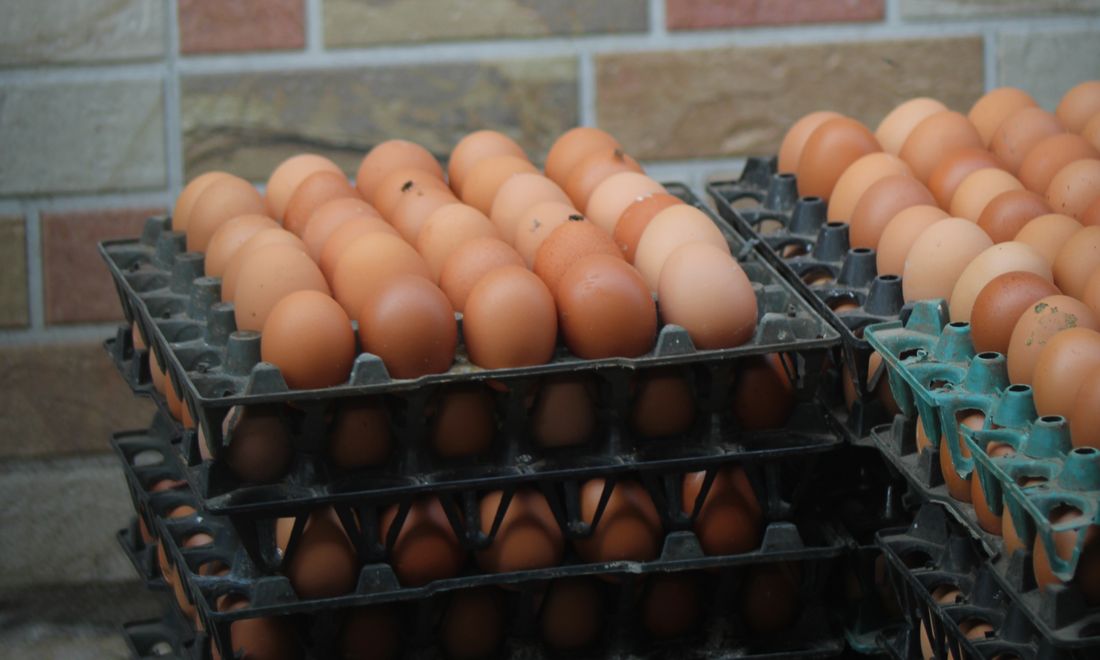
Do not treat every thin-shelled egg as EDS. Feed, calcium, heat and stress all cause soft shells. The clue with EDS is that the problem arrives across the flock together, with a clear drop in numbers and shell changes that appear at the same time.
How it gets into a flock
Passing the virus through the egg is the main route. A hen carrying the virus can pass it into the eggs she lays, which means a pullet can start life already carrying it. That is one reason biosecurity around the breeder flock and the hatchery matters so much, and one reason to ask about the health history of the birds you buy.
Once the virus is in a house, it can move between birds and through egg trays that were not cleaned after a contaminated batch. Wild birds, rodents and biting insects can carry it between farms too. Netting between pens slows spread from one house to the next, but it does not stop a dirty egg tray. Ducks and geese often carry the virus with no sign of disease, which matters on mixed farms. If you keep ducks or geese with your layers, treat them as a possible source until your vet says otherwise.
Sorting EDS from other egg problems
Several diseases and management problems cut egg numbers or spoil shells. Use this table to narrow the list before you call the vet.
| Problem | Typical signs | What points to it |
|---|---|---|
| Egg drop syndrome | Falling lay, soft or shell-less eggs, pale shells | Birds mostly well, few deaths, shell changes across the flock |
| Infectious bronchitis | Breathing signs, rattling, some drop, rough eggs | Respiratory signs running through the flock |
| Newcastle disease | Sudden deaths, nervous signs, breathing trouble, drop in lay | Sick and dying birds, can be serious; call your vet at once |
| Feed or calcium shortfall | Gradual drop, thin shells in some birds | Changes that follow a new bag or a short spell without oyster shell |
| Heat stress | Drop during hot spells, panting, drinking more | Recovers when the house cools and water is fresh |
| Moult | Gradual fall in lay, feathers coming loose | Feather change over weeks, usually in older hens |
Newcastle is the one to rule out first. Our Newcastle prevention guide sets out the signs and what to do. Soft eggs from a heat spell or a feed change are covered in our guide to soft-shelled eggs. Respiratory signs point towards infectious bronchitis, which needs its own plan with your vet. Heat-related drops have their own pattern and are covered in our guide to heat and egg drop, and moult is covered in our moulting guide.
The first day on the farm
- Count the eggs each day and write the numbers down. Look back over the last two weeks so you can see when the drop began.
- Check the feed, water and house for anything that changed in the same week.
- Collect a few typical eggs and some soft or shell-less ones, and keep them in a clean box for your vet to see.
- Look at the birds closely for breathing trouble, nervous signs or deaths.
- Call your vet the same day. Describe the drop, the shells, and whether the flock otherwise looks healthy.
- Follow your vet's advice on sampling, testing and keeping eggs and trays apart.
Your vet may send samples to a laboratory to confirm the cause. Until you know, treat the house as if the problem is infectious. Keep visitors out, keep the egg room clean, and do not move trays from one house to another.
Vaccine timing before lay
For EDS, the main prevention is an inactivated vaccine given before the hens start laying. In many programmes the vaccine goes into pullets a few weeks before they come into lay, for example at around 16 weeks old. That is an illustration of the principle, not a schedule for your birds. Your vet sets the exact week, the route and the product for your flock.
Before they leave us, our chicks are vaccinated against coccidiosis, Gumboro, Marek's, Newcastle and infectious bronchitis, and a batch record goes with each box. EDS is not on that list, so do not assume your chicks are covered against it. Ask your vet whether an EDS vaccine should be given to your pullets before lay, and if you are buying point-of-lay birds, ask the seller the same question. Our layer chicks page lists what we supply and at what starting prices, and you can order through the order form, or WhatsApp +233 24 915 1503 with your vet's questions.
Need chicks for your next batch?
Send breed, number and town. We reply with price, hatch date and delivery cost in writing.
Biosecurity around the egg room
- Clean and disinfect egg trays before they go back into service, and never reuse trays from a house with a problem.
- Keep the egg room away from the pens, and wash your hands before you handle eggs.
- Keep wild birds, rodents and insects out of the house with netting and mesh.
- Keep ducks and geese apart from the layers, with separate feed, water and pens.
- Do not bring trays or crates from other farms into your house without cleaning them first.
- Keep a footbath or a clean pair of boots at the house door, and use them every time.
The routine is covered in more detail in our guide to disinfectants and footbaths, and it applies to the egg room as much as to the pens.
Records that give you an early warning
The daily lay chart is the best early-warning system you have. A flock that dips by a few per cent and stays down is worth a phone call that same day. Write down the egg count, the broken and soft eggs, the mortality and the feed used. Note any change in water, litter or visitors. When the drop comes, you can point to the day it started, which makes the vet's job much easier.
Keep the vaccine record for the pullets with the lay chart. If the drop starts a few weeks after lay, the record tells you whether the birds were covered at the right time. The kinds of records we mean are set out in our poultry record keeping guide, and the timing of routine vaccines is in our vaccination schedule guide.
Counting a three-week drop in crates
Say your house of 500 hens normally lays about 0.8 eggs a day each, which is 400 eggs a day. A drop of 30 per cent takes 120 eggs off every day. Over three weeks that is 2,520 eggs, or 84 crates of 30. At GH₵50 a crate that is GH₵4,200 in lost sales, and the flock may not return to its old rate for some time.
Eggs sell best around Christmas and Easter, when demand climbs, so a drop that lands in those weeks costs more than the same drop in a quiet month. The birds are usually still alive and eating, which is exactly why the loss is easy to underestimate. The cheapest protection is the one you plan before the pullets come into lay.
Questions farmers ask
Does egg drop syndrome kill birds?
Usually not in large numbers. The main damage is to egg production and shell quality, and death rates are typically low. That makes the egg drop the warning sign, so you should not wait for deaths. If unexplained deaths appear alongside an egg drop, have your vet check at once, because other diseases can cause both.
Can I sell eggs from a flock with EDS?
Do not sell soft, cracked or shell-less eggs. For the rest, ask your vet before you sell, and follow their advice on handling and keeping eggs from a flock that is under investigation. Keep the eggs clean and cool, and do not sell any you are unsure about until you have that advice.
Is there a cure?
There is no routine treatment that brings a flock back to full lay quickly. Care is supportive: keep the birds calm and well fed, keep water fresh, reduce stress and stop the spread to other houses. Vaccination before lay is the real protection, so the lasting answer is to plan it for the next batch of pullets with your vet.
How long does the drop last?
Often three to four weeks, with the flock recovering gradually after the low point. Shell quality can take longer to return to normal in some birds. Keep records so you can see the recovery curve, and ask your vet when to expect lay to climb back to its usual level.
Can my ducks give it to my hens?
They can carry it without showing any disease, so they can be a source. If you keep ducks or geese with your layers, keep their feed, water and pens separate, and talk to your vet about the risk before mixing birds or moving them between houses.
How is EDS different from Newcastle disease?
Newcastle disease is a more serious viral disease that makes birds sick, causes nervous signs and breathing problems, kills birds and also cuts egg production. EDS usually leaves birds looking healthy but damages the eggs. Because the two can look alike at the start, call your vet early and do not assume EDS until the vet has confirmed it. Our <a href="/blog/newcastle-disease-ghana-prevention/">Newcastle guide</a> explains the signs.
My pullets are already laying. Is it too late?
The main protection is vaccination before lay, so for birds already in lay the immediate job is to limit spread and get your vet's advice on the flock. Plan the timing for the next batch with your vet before the chicks or pullets arrive, and keep the lay chart going so any future drop is caught on the first day.


