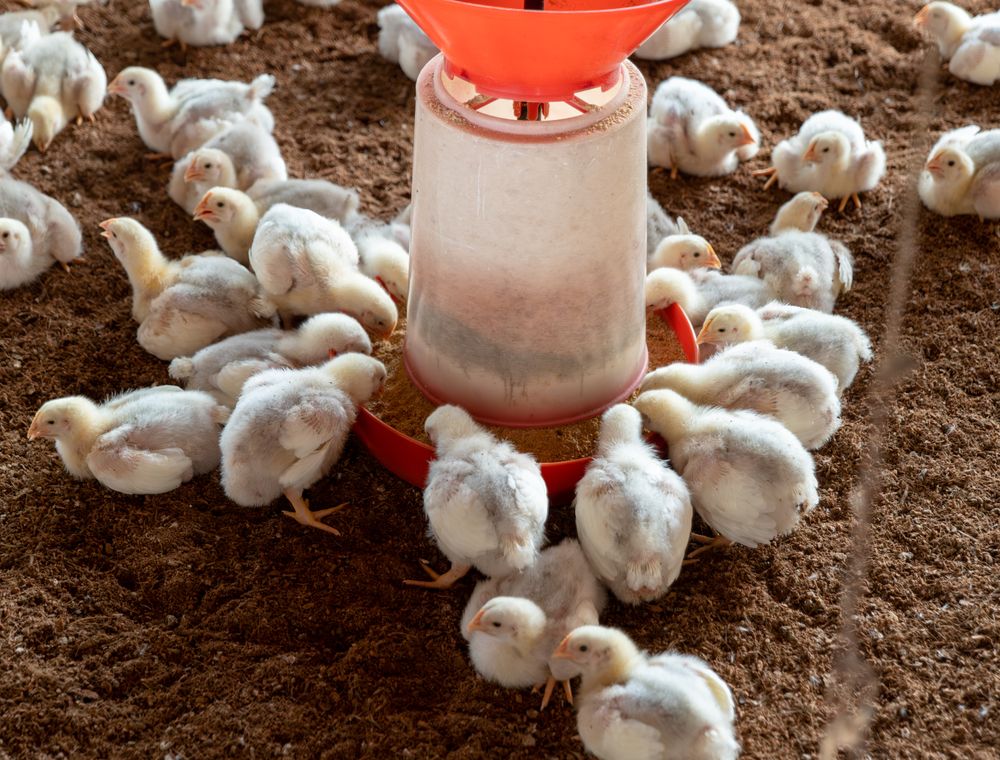
Short answer: To catch and load broilers for market in Ghana without losing weight or birds, withdraw feed the evening before, keep water on, and catch in the cool hours with a small team that knows its job. Hold each bird by both legs with the body supported, fill crates so every bird can stand and air can pass, and load in the planned order with the crates shaded. Agree the count and the weighing method with the buyer before the day, and stop the sale if you see sick or suddenly dying birds.
Key takeaways
- Withdraw feed the evening before and keep water on, and agree the timing with your buyer.
- Weigh a sample of ten birds on the day before, and use the total to plan crates and the vehicle.
- Catch in the cool hours by both legs above the hocks, one bird per hand near market weight.
- Fill crates so every bird can stand with its head up, and load in the planned order, shaded.
- Stop the sale and call your vet if birds are dying suddenly or look unwell on catch day.
The car arrives at nine and the birds are not ready
The buyer's vehicle pulls up at nine. The crates are still stacked by the gate, the birds are still in the house with feed in their crops, and the helper you promised for seven has not come. It is a story we have heard from farmers more than once, and each version ends the same way: birds that are heavier on the buyer's scale in the morning than they should be, stressed in the crates, and a lower price per kilo than the flock deserved.
Catch day is not the morning of the sale. It starts the evening before, with the feed, the crates, the count and the team. The catch itself takes an hour or two if the work before it has been done properly.
Pull the feed the evening before and keep the water on
The usual practice is to take the feed away the evening before the catch and leave the water on until the birds are in the crates. An empty gut is lighter to carry and easier to handle, and it is cleaner in the crate. How long you withdraw feed depends on your buyer's rules, the heat and the bird, so agree the time with the buyer and check it with your vet if the buyer asks for a longer withdrawal.
Two rules do not change. Never leave a flock without water, and never withdraw feed in the middle of the day in the heat. A bird with no feed and no water in a hot house loses condition fast, and a bird that has lost condition on the farm is a bird you will be explaining at the buyer's scale.
Lift the feeders out at dusk and put them somewhere clean, so the birds do not gather round an empty pan and fight over the last crumbs. Keep the drinkers full, check that every one is running, and leave the lights on the normal programme so the birds settle rather than panic.
Weigh a sample and plan the crates before you catch
Before the catch, weigh ten birds at random, using a hanging scale or a bucket on a set of scales you trust. Write down the average and the lightest and heaviest bird. Multiply the average by the number of birds to get the total live weight for the sale. That total is the number you will quote to the buyer, and the number they will check at their end.
Work out the crate count from the total weight and the crate you have, not from the number of birds alone. A crate of birds around 2.5 kg is a different load from a crate of birds at 1.8 kg, and the heavier crate needs more room for air and a lower stack. If you do not own enough crates, arrange them before the sale and test one crate with a few birds the day before, so you know what it holds.
Write the plan on the wall, next to the buyer's name and the vehicle time, so the helpers can see how many crates go out, in what order, and where each one sits in the vehicle.
Catching in the cool hours with a small team
Catch in the cool hours. For most farms in Ghana that means before the sun is strong, or in the last light of the evening once the birds have settled. Do not start at noon in the dry season because it is convenient for the buyer's driver. A hot, chased bird loses weight, panics in the crate and can die before it reaches the market.
For 50 to 100 birds, a team of two or three is enough, provided everyone knows their job. One person works the door and keeps the flock moving toward the far corner where the catch is easiest. Another person catches and passes birds to the crate person. The third person counts and writes the number in the book. Nobody shouts, nobody runs, and nobody chases a single bird round the house.
Approach from the back of the flock and move slowly. Birds that can see a person coming will crowd to the far wall, and birds crowded into one corner pile on each other, which is how you get suffocation and bruising. Keep the flock spread, and let the birds come to the catcher where they are easiest to hold.

Holding a heavy bird: legs, body and two hands
The right hold is both legs in one hand, with the bird's body supported by the other hand under the breast. Catch the legs above the hocks, not at the feet, and keep the bird's body close against your own. A bird held this way is calm, its wings stay folded and it does not thrash.
Never catch a bird by one wing, the neck or the tail. A wing pulled out of its joint is a bird you cannot sell, and a bird held by the neck is in pain. Do not swing a bird or carry it at arm's length. Walk slowly, keep the bird level, and put it into the crate head first, gently, with its body supported until the legs are free.
How many birds can you carry? One bird in each hand is the safe limit for a bird near market weight, and two in one hand is the most we would ever carry for a short distance. The heavier the bird, the fewer you should carry. If your hands are tired, put the birds down on the litter and rest. A tired catcher drops birds. For more on calm catching at any stage of the flock, see our guide to catching and handling chickens.
- Catch by both legs above the hocks, with the body supported under the breast
- Keep wings folded against the body, never pulled or held out
- Carry one bird per hand near market weight, and rest before you tire
- Put birds into the crate gently and check each one has room to settle
Crate counts: the bird has to stand and turn
How many birds go in a crate is the decision that most affects the bird's weight on arrival. Too few birds in a crate and the vehicle carries air. Too many and the birds pile up, sweat, bruise and lose weight in the heat. The test we use is simple. In a full crate, every bird should be able to stand upright with its head up, without its neck bent against the lid, and there should be room for air to pass between the birds.
Check the crate before every trip. Look for cracks, sharp edges, bent wire and a lid that does not shut properly. Clean the crate with water and a suitable disinfectant, and dry it before the birds go in. A dirty crate brings disease to the next flock and dirt to the buyer's floor.
| Crate check | Good sign | Stop and fix if |
|---|---|---|
| Birds standing | Every bird can stand with its head up | Heads pressed against the lid or birds on top of each other |
| Air | Sides and lid let air through freely | Solid sides with no gap, or the lid is shut tight in heat |
| Floor and edges | Smooth floor, no sharp wire or splinters | Bent wire, cracked base, sharp corners |
| Cleanliness | Washed and dry before the day | Old droppings, wet litter, dried-on dirt |
| Weight per crate | Can be lifted by the crate handler without strain | Crate is so full that handling is unsafe |
The catch-day timeline
Here is the timeline we would recommend to any farmer selling a flock. Adjust the times to your buyer and the heat, but keep the order. The order is what stops the morning from turning into a scramble.
| Time | Job | Who |
|---|---|---|
| Evening before | Feed withdrawn, feeders lifted out, drinkers checked | Owner |
| Early morning, 05:00 to 06:00 | Walk round, count the flock, check for sick or dead birds | Owner |
| Before first light | Crates placed, washed and checked, team briefed on the job | Whole team |
| First light to mid-morning | Catch in the cool hours, pass to crate, count into crates | Catcher, crate person, counter |
| Loading time | Crates into the vehicle in the planned order, secured and shaded | Team and driver |
| Departure | Count and weight sheet signed, buyer copy taken | Owner |
If the buyer's vehicle is late, do not leave the birds in crates in the sun while you wait. Move the crates into shade, keep them covered, and ring the buyer. A two-hour wait in full sun can cost more weight than the whole trip.
Loading the vehicle in the right order
Load the crates so the air can reach every crate. Stacks of crates that block the sides of the vehicle leave the lower crates with no airflow, and those are the birds that arrive hot and dull. Load the crates in the order they will come off, with the first crate to be unloaded nearest the door, and secure every stack so nothing slides when the vehicle brakes.
Keep the crates out of the sun while you load. Load in shade where you can, and close the vehicle as soon as the last crate is in. If the vehicle has a roof and open sides, park the crates in the shade of the roof or a wall until the driver is ready to leave.
Put a water bucket and a cloth in the cab for the driver and helpers, and check that the vehicle floor is clean and dry before the first crate goes on. A wet, dirty floor under the crates is a disease route you will regret in the next batch.
Need chicks for your next batch?
Send breed, number and town. We reply with price, hatch date and delivery cost in writing.
Counting and weighing at both ends
Agree the counting method with the buyer before the day. Decide whether the birds are counted and weighed at your gate, at the buyer's scale or both, and which scale is used. A bird weighed on a stand, a hanging scale and a crate scale will show three different numbers, and an argument about the scale is a poor way to end a sale.
Write the count and the weight sheet at your end, with the crate numbers, the number of birds in each crate and the total. Keep one copy and give one to the buyer. If the buyer counts fewer birds on arrival, the sheet you signed is the place to start the conversation, and the record is what keeps it fair.
Dead on arrival birds are the buyer's problem only if the transport was done properly, and the record shows it. Note the time of departure, the time of arrival and any birds found dead in the crates on the road. If you deliver, the same rule applies: the count on your side is the record that protects both of you.
If you find a sick or dead bird on catch day
Catch day is when you see the flock closely, and sometimes that means finding something you do not like. If you see birds dying suddenly, birds that have stopped eating and drinking, or birds with unusual signs such as swollen heads, twisted necks, bleeding or many birds gasping at once, stop the catch. Do not load birds you think may be sick, and do not move them to a new buyer.
Call your district veterinary office or your own vet the same day, and keep the flock in the house until they advise you. Our article on avian influenza explains the signs to watch for and why sudden deaths are always reported. Write down what you saw, when, and how many birds were affected, so the vet has a clear record to work from.
A sale that stops for a day costs you a day. A sale of sick birds costs you the next buyer and possibly the rest of the flock. Stop when you need to.
Hygiene on the way out and the way back
Catch day is a biosecurity risk in both directions. The crates leave your farm, go to the buyer, and sometimes come back. Wash crates before they leave and after they return, and do not let them mix with crates from other farms without washing. Our biosecurity guide sets out the simple rules we think every farm should follow.
Clean boots, or boots dipped in disinfectant at the gate, for everyone who walks into the house on catch day. Keep the buyer's helpers out of the house unless they wash their hands and feet first. Cover the crates with a clean sheet on the drive, and keep the vehicle floor clean at the end of the trip.
The house itself should not be hosed or swept on catch day. Leave the clean-out for after the last bird has gone, and clean the house using the steps in our cleaning guide, not in a rush while the buyer waits.
Mistakes that cost weight on the scale
Most of the weight a bird loses between your house and the buyer is lost before the vehicle starts. These are the mistakes we see most often, and they are all within your control.
- Feed still in the pan at dusk, so the birds are heavy with feed and the buyer's scale reads a bird that is not really a bird
- A catch that goes on for an hour because the team chases birds round the house instead of working the corner
- Crates packed to the lid because the count was wrong, so birds arrive with bruises and dull feathers
- Loading at midday with the crates on the ground in the sun while the driver finishes his tea
- No water in the crates or in the house for the morning, so the birds are dehydrated by the time they reach the buyer
The fix for almost all of these is the timeline. Write it, print it, and read it at the gate.
Sale-day checklist
- Confirm the buyer's date, time and count by phone the day before, and again at dawn.
- Withdraw feed at dusk the evening before, and keep water on until the crates close.
- Weigh a sample of ten birds and write the total live weight on the wall.
- Count the crates, check each one for cracks, sharp edges and cleanliness, and place them in shade.
- Brief the team on the catch, the hold and the crate count, and assign each person a job.
- Walk the flock before the catch and set aside any sick or weak bird for the vet.
- Catch in the cool hours, one bird per hand near market weight, and keep the flock calm.
- Load the crates in planned order, secured and shaded, with the vehicle floor clean and dry.
- Sign the count and weight sheet, keep your copy, and clean the house after the vehicle leaves.
If you are still deciding when to sell, our when to sell broilers guide works through the sale age, and the weight chart shows the curve to measure against. For the trip itself, our guide to transporting live birds covers the road in more depth.
Planning a batch around a sale date? Start with the order form, or WhatsApp +233 24 915 1503 with the date you have in mind. Our broiler chick page sets out the strains we hatch, and our FAQ answers the common questions about delivery and dead on arrival birds.
Questions farmers ask
How long should I withdraw feed before catching broilers?
The usual practice is to remove feed the evening before the catch and keep water available until the birds are in the crates. The exact time depends on your buyer, the weather and the bird, so agree it with the buyer before the day. Never withdraw feed in the middle of a hot day, and never leave the flock without water. If a buyer asks for a longer withdrawal, check with your vet first.
What is the safest way to hold a broiler at market weight?
Catch the bird by both legs above the hocks, and support its body under the breast with your other hand. Keep the wings folded against the body and carry the bird close to you. Do not catch by one wing, the neck or the tail. Carry one bird per hand near market weight, and rest between loads, because a tired catcher drops birds.
How many broilers fit in one crate?
There is no single number, because it depends on the crate and the weight of the birds. The test is what matters: in a full crate every bird should be able to stand with its head up, and air should pass between the birds and through the sides and lid. Test one crate with a few birds the day before, and adjust the count from there rather than copying a number from another farm.
When is the best time of day to catch and load broilers?
Catch in the cool hours, before the sun is strong or in the last light of the evening. Load early and keep the crates in shade until the vehicle leaves. Avoid midday catching in the dry season, because hot birds lose weight quickly and arrive stressed and dull.
What should I do if I find a sick bird on catch day?
Stop the catch, do not load the birds you think may be sick, and keep the flock in the house. Call your district veterinary office or your own vet the same day, and write down what you saw, when, and how many birds were affected. Sudden deaths and unusual signs should always be reported, and the vet will advise you on what to do next.
Who should count and weigh the birds for the sale?
Agree the method with the buyer before the day. Decide where the count happens, whether the birds are weighed at your gate or at the buyer's scale, and which scale is used. Sign a count and weight sheet at your end, keep one copy, and give the buyer one. A clear record is what keeps the sale fair if the numbers do not match on arrival.
Do I need a helper for a 50 or 100 bird sale?
Yes. A team of two or three people is the minimum for a sensible catch of 50 to 100 birds. One person works the door, one catches and passes birds, and one counts into the crates. A single person can do it with patience, but the catch will take much longer and the birds will be more stressed by the end.


