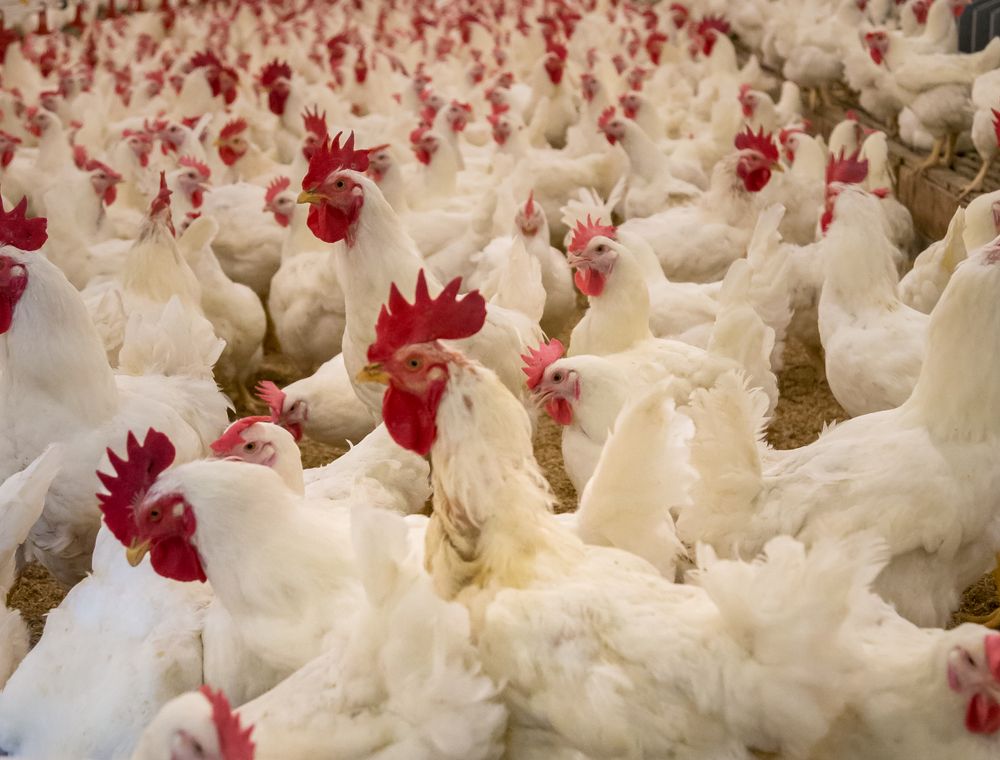
Short answer: A broiler lighting programme is about feed intake, rest and leg strength, not about bringing birds into lay as it does for hens. For most Ghana broiler houses that means bright light in the first days so chicks find feed and water, a slow step down to dim light by the second or third week, and one dark block at the same clock time every day. Keep the timer honest and the dark period dark, and the flock will eat and rest on schedule.
Key takeaways
- Light in a broiler house exists to get birds eating, resting and growing legs strong enough for market weight.
- Run bright light for the first three days, then step down gradually to dim light by weeks two and three.
- Keep one dark block at the same clock time every day, and check it against your phone each week.
- Test brightness at bird height with the feed-bag test, not by how the house looks to you at noon.
- Plan a battery or inverter option for power cuts, and reset the timer after every outage.
Why a broiler house needs a light plan at all
Two houses can take the same chicks, eat the same feed and still finish with a difference you can see on the scale. More often than not, the lights are part of the reason. Not the number of bulbs, but what time they come on, how bright they are at midnight, and whether the person on the night shift remembers to switch them off.
Our day-old chicks leave the hatchery ready for this programme, but the house has to deliver its part.
A layer's light plan is built to bring a hen into lay at the right time. A broiler is never meant to lay, and it is sold at six or seven weeks, so its light plan has a different job. It is there to get the birds eating, to keep them calm enough to rest, and to build legs that can carry a heavy body. If you keep hens as well, read our lighting programme for layers, but do not copy its day lengths onto a broiler house.
Think of the programme as a timetable the birds can learn. A flock that knows when the light comes on will be at the feeder before you reach the door. A flock that gets light at random hours will eat in bursts, sleep in the wrong places and grow unevenly.
What light is doing for the birds
Light tells a bird when to eat and when to rest. Chicks in the first days need enough light to see the feed crumbs and the water, so they can learn where both are. Once they have learned, the light level matters less for finding food and more for how much time the birds spend moving about.
Very long bright periods keep birds active around the clock. They walk, they peck at each other and they stand more, which uses energy that should be going into weight. Some farms that run continuous light see more restless birds and more leg problems in the final weeks, which is why most broiler guides build in a dark period. Dark is not wasted time. It is the time the flock rests, lies down and lets the bones and muscle keep up with the growth.
Light is also a welfare tool. A dim, steady light lets the birds settle, and a flock that settles is easier to walk through, catch and weigh without panic later in the batch.
The programme by age, in one table
The table below is a common pattern for a fast-growing broiler on a Ghana farm. It is a starting point, not a substitute for your breed manual. Where the manual and this table disagree, follow the manual and tell your vet.
| Age | Light hours | Light level | What it is for |
|---|---|---|---|
| Days 1 to 3 | 23 hours on, 1 hour off | Bright, enough to read the feed pan | Finding feed and water in the first days |
| Days 4 to 7 | 20 to 23 hours on | Bright, stepping down slowly | Settling the flock into a routine |
| Week 2 to 3 | 18 to 20 hours on, with a steady dark block | Dimmer, enough to walk without bumping | Rest and leg strength while the body grows |
| Week 4 to sale | 18 to 20 hours on, same dark block every day | Dim, never switched fully off during the day | Calm birds that eat in steady meals |
Two rules sit underneath the table. The dark block should start and end at the same clock time every day, so the flock comes to expect it. And the step-down should be gradual. A house that goes from blazing light on day seven to near darkness on day eight will have birds panicking at the walls for an hour, and some will be hurt doing it.
Bright at the start, dim by the second week
How bright is bright enough? Breed manuals often quote a figure in lux, the unit a light meter reads. Many give a level near 20 to 30 lux in the first days, dropping to something close to 5 lux by the second or third week. Those are useful targets, but most farms do not own a meter, so here is a field test that works.
Stand at the far corner of the house, at the height of a bird's head, and try to read the printing on a feed bag held at arm's length. In the first three days you should be able to read it easily. By week three you should be able to see the birds and the drinkers but struggle with small print. If you can read a newspaper in the middle of the night, the house is too bright. A phone light meter app will give you a rough reading, but do not treat it as exact.
Dimming is easier with a dimmer switch on the bulb circuit, or by simply using fewer bulbs in the second and third weeks. Do not dim by covering a bulb with paper, because it becomes a fire risk and a hot spot in a house full of dust.

Bulbs, spacing and fittings that do not fight the birds
LED bulbs are the sensible choice for most houses in Ghana. They use far less power than the old incandescent lamps, they run cool enough to sit near the litter, and the good ones dim smoothly. Buy from a shop that will tell you the rated lumens, not just the wattage, because a 9 watt LED and a 9 watt tube can throw very different amounts of light.
Flicker is the hidden problem. Cheap LED drivers and dimmers can flicker at a rate you do not see but the birds do. A flicker can make some flocks jumpy and slow to feed. If the birds jump every time the light changes, check the driver and the dimmer before you blame the feed.
Hang fittings high enough to keep them out of reach and out of direct glare at bird height. Space them so that every part of the house has some light, rather than a bright patch under one bulb and dark corners elsewhere. Corners that stay dark are where the late and weak birds hide, and they are the first birds you lose when the house gets crowded.
- Use shades or diffusers so the bulbs do not glare into the birds' eyes
- Mount fittings where the litter and dust cannot reach them easily
- Keep spare bulbs and a spare driver in the store, not in your head
- Check that every fitting is working each morning on the walk round
Open-sided houses and the daylight you cannot switch off
Most broiler houses in Ghana are open at the sides, and that makes the light plan harder. The sun comes up through the curtains at six, the chicks are awake well before you are, and the dark block you planned at midnight is not dark at all if the moon is bright and the neighbour's compound is lit.
The fix is a set of curtains or sacking on the sides that you can close for the dark block and open again in the morning. The harmattan makes this easier to see, because the sun is low and the light comes in flat under the curtain line, and the dust in the air makes the house look brighter than it is. Check the house at midnight with the bulbs off, and fix any gap you can see with your hand.
Ghana's day length is close to twelve hours across most of the year, so the morning is when extra light does the most good for a flock on a long day plan. Do not trust the daylight alone for a broiler in weeks two to six. Use artificial light on the programme you have chosen, and let daylight add to it rather than set the pace.
A worked timing plan for a 100-bird house
Take a small house, around 12 square metres, holding 100 broilers. It has four LED fittings on one circuit with a single dimmer, one timer and two working hand torches. Here is how we would set it, in the order the timer needs it.
| Setting | Week 1 | Week 2 to sale |
|---|---|---|
| Light on | 23 hours a day, lights on at 06:00 and off at 05:00 the next morning, with one hour dark at 02:00 | 18 hours a day, on at 06:00 and off at 00:00 |
| Dark block | One hour, 02:00 to 03:00 | Six hours, 00:00 to 06:00, every day |
| Dimmer | Bright for the first three days, then down a step each day for the next four | Set to dim, adjusted by the field test in week three |
| Night check | Torch round at 23:00 and 05:30 | Torch round at 23:00 only, with the lights off |
The worked plan does not cost much to run. Four LED fittings at a few watts each is a small load on the house circuit, and the timer and dimmer cost less than the feed for one bad morning. The real cost is a timer that is wrong. A timer set to the wrong time for two weeks will change the flock's routine for the whole batch, and you may not notice until the sale weights come in low.
Write the programme on a card and tape it inside the house door. Then anyone who opens the door at night, including a helper or a family member, can see what should be on and what should be off.
Timers, dimmers and the person who touches the switch
A good timer does the job that people do badly, which is switching on and off at the same minute every day. Use a mechanical or digital timer with a battery backup, and check the time on it weekly against your phone. Digital timers are the most common cause of a light plan that quietly drifts, because the clock resets after a power cut and nobody notices.
Put the dimmer where the farm manager can reach it, but out of the reach of the birds and the children. Put a plastic cover over the switch if the house gets busy, so nobody flips it by accident while walking past at night.
Make a rule that only one person changes the light settings, and that the change is written in the daily book with the date. We have seen houses where three people each thought they were helping, and the flock lived through a different light schedule every week.
Need chicks for your next batch?
Send breed, number and town. We reply with price, hatch date and delivery cost in writing.
Dumsor: what to do when the power goes at night
Power cuts are part of farming in Ghana, and a broiler flock does not care whether the cut was planned. Your first job when the lights go out at night is to find out whether the flock is safe, not to switch everything back on. Use a torch, look at the birds, and listen. Calm, spread-out birds are fine. Birds piling in a corner, or calling loudly, need attention.
If the brooder heat runs on electricity, a cut in the first weeks is an emergency. Have gas or a battery backup ready for the brooder and do not leave chicks in a cold house while you wait for the grid. Our power and backup guide works through the loads and the options in detail.
For the lights themselves, a few battery lamps or a small inverter are enough for a house of this size. Do not run the whole house on bright light when the power returns, because the birds will go from dark to glare in a moment. Bring the lights back in steps, and check the timer afterwards, since many timers have to be reset after an outage.
Signs the programme is wrong
The flock will tell you whether the light plan is working, if you know what to look for. These are the signs we see most often on farms that have drifted off the plan.
- Birds still asleep at the feeder when the lights have been on for an hour, which points to a late start or a house that is too dark in the morning
- Birds awake and walking at midnight, which points to lights that are too bright at night or a dark block that is not dark
- Uneven weights between the front and back of the house, which often means a dark corner that holds the late birds
- Crowding at the walls or in one corner when the lights change, which points to a step-down that was too sudden
- A rise in birds with weak legs or sitting down early in the batch, which is a reason to check the dark block and the light level together with your vet
Do not change three things at once when you see a sign. Change one setting, wait two or three days, and watch the flock again. If the sample weights are falling behind, compare them with our weight chart before you change anything else. If the crowding is the real problem, our stocking density guide helps you check whether the house is simply too full.
Mistakes we see with broiler lighting
Most lighting mistakes come from good intentions. A farmer adds a bulb because the house looks dark, turns the lights on at night to check on the birds, or leaves a dimmer at full because they cannot be bothered to turn it down. Each one is small. Together they change the routine the birds are living by.
The worst one we see is the all-night light left on because the owner is afraid of the dark. A flock under continuous light for weeks will eat, walk and stand around in a pattern that is hard to undo, and the weight curve shows it later. The second worst is a timer that was set once and never checked, which is why we put the weekly check on the list below.
One more: farmers who run a light plan for the chicks and then forget to change it at week two. The birds need a step down. Put the step on the calendar, not in your memory.
Lighting checklist before the chicks arrive
- Confirm the light plan for the strain in your breed manual, and write it on a card inside the door.
- Set the timer to the clock times for week one, and check it against your phone.
- Test every fitting, and replace any bulb or driver that flickers or hums.
- Walk the house at night with the lights off and find every gap in the curtains.
- Stand at the far corner and run the field test with the feed bag, so you know what bright looks like.
- Set up battery lamps or an inverter for the dumsor nights, and test them once.
- Weekly, check the timer clock, the dimmer setting and the dark block, and write the check in the daily book.
If you want the chicks to arrive into a house that is ready, use our order form or WhatsApp +233 24 915 1503. Tell us your delivery town and the number of birds, and we will send the figures back before any money changes hands. Strains that suit a light-driven routine are described on our broiler chick page, and our breed guide shows how the strains differ in growth rate. Delivery to your town is set out on our delivery page, and the broiler house setup guide covers where the fittings and the brooder go before the chicks arrive.
Questions farmers ask
Should broilers have a dark period in Ghana?
Yes. Most broiler guides build in a dark block of several hours each day, usually around six hours once the birds are past the first week. The dark period lets the flock rest and lie down, which supports leg strength while the body grows. Keep the dark block at the same clock time every day, and make sure the house is dark enough that you cannot read a feed label at bird height during it.
Is continuous light better for weight gain?
Not as a rule. Continuous light can keep birds eating for longer, but it also keeps them active, which uses energy and can lead to more leg problems and restless flocks late in the batch. Many farms get a steadier result from a fixed day with a dark block. Follow your strain's manual, and if you want to try a different pattern, change one setting at a time and watch the weight sample.
How bright should a broiler house be?
Bright enough for the chicks to find feed and water in the first three days, then dimmer from the second week. Breed manuals often quote light levels in lux, around 20 to 30 lux at the start and lower later. Without a meter, stand at the far corner at bird height and try to read a feed bag label at arm's length. In week three you should struggle with small print.
Do I need a lux meter to run a lighting programme?
No, but one helps if you run several houses or want to compare programmes. A phone app gives a rough reading that is good enough for checking that the house has changed between weeks. What matters most is consistency: the same bulbs, the same dimmer setting, and the same clock times every day. A cheap meter that you use every week is more useful than an expensive one that stays in the box.
Can I use the same timer I use for layers?
You can use the same type of timer, but the programme on it will be different. Layers are lit to a longer day to bring them into lay, while broilers are lit for feed intake and rest with a dark block built in. Set the timer for the broiler plan you have chosen, and write the plan on a card so the next person knows which programme the timer belongs to.
What should I do during a power cut at night?
Check the birds first with a torch. Calm, spread-out birds are fine, while birds piling in a corner or calling loudly need action. If the brooder runs on electricity, switch to gas or a battery backup straight away. When the power returns, bring the lights back in steps rather than all at once, and reset the timer, because many timers lose their settings after an outage.
Do open-sided broiler houses need a different light plan?
The plan is the same, but the way you deliver it changes. Daylight and moonlight come in through the sides, so you need curtains or sacking that close fully for the dark block. Check the house at night with the bulbs off, and fix any gap with your hand. Without that step, the dark block is only a timer setting, not a dark house.


