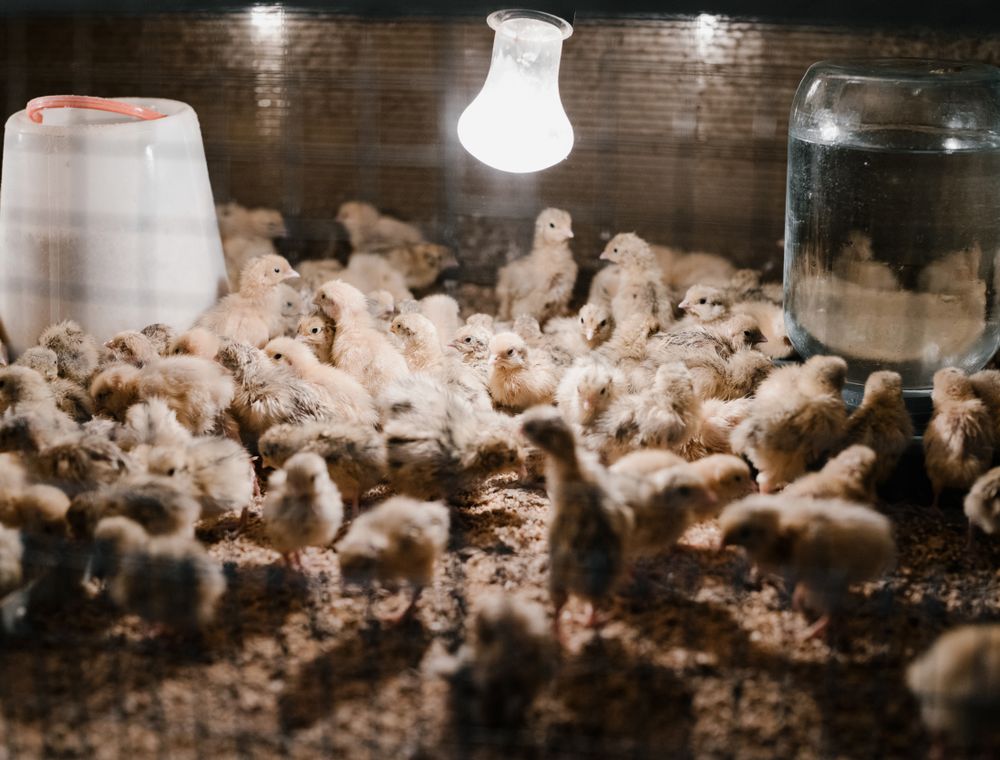
Short answer: A Ghana broiler batch runs on a calendar of small jobs. Brooding, water and feed take most of week one, litter and vaccination checks fill weeks two and three, and from week four the ventilation, the heat and the sale plan change every seven days. Miss one job and the flock rarely dies on the spot, but you pay for it at the scale in week six.
Key takeaways
- Plan the batch backwards from the sale day, then fill each week with a job.
- Week one is warmth first, then water, then feed, in that order.
- Litter in three places in week three tells you more than the feed bag does.
- Change curtains and fans every week from week four, not once at the start.
- Write the record every day, not from memory at the end of the week.
Before the box opens: the week-zero jobs
Most batches that go wrong in week one were lost before the chicks arrived. The house was still damp from washing, the lamp had never been switched on, and the feed bin was half empty because the miller's van was late. Week zero is where you buy time for everything that follows.
Switch the heat source on at least a day before the chicks come. The floor and the air need to reach the target temperature and hold it overnight, not just at noon when you are standing there. Fill the drinkers, place the feeders, and put a thermometer at chick height rather than on the wall, where it reads the room and tells you nothing about the birds.
The road is the other half of week zero. Our chicks leave the hatchery in ventilated boxes of 50 on the day they hatch, and a box that sits in the sun at a bus station for two hours is a different box by the time it reaches you. Ask for the dispatch time when you order, and have someone at the farm ready to take the box in as soon as it lands. Our delivery page explains how the regions are covered and what happens at the farm gate.
- Heat source on 24 hours ahead, and checked again at night
- Thermometer at chick height, read at the drinker line and in the far corner
- Drinkers full of clean water, feeders filled to a shallow level
- Torch, spare bulb, and spare gas or fuel for the brooder
- Someone free to receive the box on the day it arrives
If you are still choosing a strain, read our breed guide before you order, because the calendar in this article assumes a fast-growing bird. Our broiler chick page lists the strains we hatch and how they are boxed.
Week one: warmth, water and getting the chicks to eat
The first seven days have three jobs, in this order: keep the chicks warm, get water into every beak, and get feed into every crop. Warmth comes first because a cold chick stops eating, and a chick that stops eating burns the reserve it arrived with.
Watch the birds rather than the thermometer alone. Chicks piled into one corner are cold. Chicks pushed to the edges, panting with their wings held out, are too hot. Chicks spread evenly across the floor, calling quietly and pecking at the litter, are about right. Move the lamp a little at a time and wait ten minutes before you change it again, because the floor takes longer to settle than you think.
Keep the lights on a steady timer from the first morning. Our lighting programme guide sets out the light hours by age, so the birds are not surprised by a change in the dark.
Scatter feed on clean paper or flat trays for the first two days, in addition to the feeder. Chicks find food by pecking at what they can see, and a chick that cannot find feed in its first day tends to stay small all the way to market. We see this most in brooders where the feeders were filled but nobody was there to show the birds where to start.
Count the box while the driver is still standing there, and write down any dead or weak birds. Send that count, with a photo, to our WhatsApp line on +233 24 915 1503 before the day is out. Losses found on arrival are made good from our next hatch, and the count you sent is what starts that process. Without it, every loss becomes an argument about the road. Our frequently asked questions go through the details.
Week two: vaccination dates and the first proper look at the flock
Our chicks leave the hatchery already vaccinated against Marek's, Newcastle disease (NCD), Gumboro (IBD), infectious bronchitis and coccidiosis, and the batch record comes with them. That record is the first document a vet will ask for when they arrive. Keep it in the house, in a dry folder, not in the bottom of your bag.
Whether the flock needs a booster on the farm, and when, is a decision for your vet. Many farms in Ghana give a Newcastle booster in the drinking water somewhere in the second or third week, and a Gumboro booster around the third week. Treat those as examples of the kind of job that belongs in this week, not as dates to copy. Your vet's programme and the products they use decide the actual days.
Give the flock a proper walk-through at the start of week two. Stand at the door, let the birds settle, and then look at them as a group. Are they spread out? Do the eyes look bright? Are the droppings firm, or watery and pasty? Any bird sitting apart with ruffled feathers should be lifted out, looked at closely and written down. Do not wait for the whole flock to show it.

Week two is also when you start a sample weigh-in. Pick ten birds at random, weigh them on a hanging scale or a bucket on a kitchen scale, and write the average down. Our weight chart article gives the live weights to aim for each week, and the feeding schedule shows how feed should move alongside that curve. One sample tells you very little. Ten samples a week tell you whether the batch is on the curve or drifting off it.
Week three: read the litter before you read the record
By the third week the litter is where the house tells you what is going on. Dry litter that crumbles when you squeeze it is what you want. Wet, sticky litter under the drinkers says the drinkers are leaking or sitting too low. Crusted litter near the walls says the house is not drying out. A sharp ammonia smell at bird height, the kind that makes your eyes water when you bend down, means you have waited too long.
Put your hand into the litter in three places: under a drinker, in the middle of the floor, and near the wall away from the fan. Push your fingers in to the depth of a knuckle. If the bottom is damp, raise or adjust the drinker, fix any leak, and turn the litter by hand. Do not spread fresh shavings over wet litter and hope for the best. It will cake, and the crust will hold the wetness underneath it.
We think farmers spend too long looking at the feed bag and not enough time at the floor. A litter problem that starts in week three shows up as hock burns, dirty birds and a slow flock by week five. It is much cheaper to fix on the day you notice it.
Check the feeders as well. A pan that is empty in the middle and full at the far end means the birds are not reaching the far end at all. Move the feeder in, or add a second one, and write the change in the daily book with the date. Drinker numbers and placement are covered in our water management guide, which is worth reading before the third week rather than after the litter goes wrong.
The calendar on one page
Use this table as the spine of the batch. It is deliberately general, because the exact day of each job depends on the strain you keep, your vet's programme and the weather that week.
| Week | Main jobs | What to watch for |
|---|---|---|
| 0, before arrival | Heat on 24 hours ahead, drinkers and feeders placed, dispatch time agreed | A cold or damp brooder on arrival day |
| 1 | Warmth, water and feed in that order; count on arrival; photo to WhatsApp | Chicks piled in a corner, or not finding feed |
| 2 | Vaccination check with your vet; first ten-bird weigh; walk-through | Ruffled birds apart from the group, watery droppings |
| 3 | Litter check under drinkers; move feeders as needed; ventilation check | Wet, caked litter and ammonia at bird height |
| 4 | Ventilation and curtain changes for heat; fan and drinker check | Birds panting, or crowding at the fan end |
| 5 | Space check for the flock; water line and pressure; buyer and vehicle booked | Birds queuing at drinkers, uneven growth between corners |
| 6 | Sample weigh against the chart; feed withdrawal plan; crates and scale ready | Sample average well behind the curve |
| 7, sale and after | Catch and load in the cool hours; clean out; disinfect and rest the house | Birds stressed in the crate, litter still in the house after sale |
Week four: the first hot afternoon and the fan end
In Kasoa the hot spell can arrive in March and April before the rains, and the flock feels it before you do. By week four the birds are big enough to make their own heat, and the house has to get rid of it. The question is no longer whether the chicks are warm enough. It is whether they can shed heat fast enough at two in the afternoon.
Open the side curtains early in the day and close them before the wind turns, so the house does not swing from cold to hot in an hour. Check that the fans move air at bird height, not just near the ceiling. Stand where the birds are, and feel the air for a few seconds. If it is still, the birds at the far end will tell you first. Gathering at one end, open beaks and wings held away from the body are the signs to act on the same afternoon.
Change the settings every week from now on. A curtain setting that suited the house in week three will be too tight by week five, when the birds are heavier and throw off more heat. Write each change in the record with the time and the weather, so you can see later what worked.
Keep the water clean and check that every drinker is running. Water intake falls quickly in heat, and a bird that drinks less eats less, so a blocked drinker in the afternoon is a bigger problem than it looks from the door.
Week five: the house is full and the timetable tightens
At five weeks a broiler house looks busy. The birds walk into each other, the feeder is never quite empty, and the litter takes a beating. This is when farmers miss the small things: a drinker line that drops pressure at the far end, a feeder pushed to the back, a corner that never gets light.
Walk the house slowly and look at the floor. Birds sleeping in a heap are usually telling you the house is too full or too cold. Birds that stand around the drinkers all day are telling you there are too few drinkers, or they are too slow. Count the drinkers and feeders against the flock as it stands now, not the number you bought for the chicks.
It is also the week to lock in the buyer. Confirm the day, the time, the number of birds, the weight range they want, whether they take live or dressed birds, and who is paying for the vehicle. A sale agreed on the phone the night before is a sale that can fall through. A date written down at week five is a date both sides can hold.
Week six: put the sale on the wall
By week six the calendar stops being about the birds and starts being about the sale. Weigh a fresh sample of ten. Compare the average and the spread with the curve. If the average is behind, you have a few days to change what can change: ventilation, water, and the stocking in the worst corner. You cannot make a bird grow in two days, so do not promise a buyer a weight the flock cannot reach.
Plan the feed withdrawal and the catch around the buyer's timing. Our article on catching and loading broilers covers the sale-day work itself. For the calendar, put the withdrawal evening, the catch morning, the crate count and the vehicle time on the wall where everyone can see them. If you have a helper, write their job beside the time.
Order the crates now, not on sale day. Check each one for cracks and sharp edges, and wash and dry them before the day. A broken crate on the morning of sale costs more than the crate.
Need chicks for your next batch?
Send breed, number and town. We reply with price, hatch date and delivery cost in writing.
Sale day, clean-out and the empty week
Once the last bird has gone, the house has a job that many farmers rush. Remove the litter while it is still dry enough to lift, and take it well away from the house, not to a heap at the gate where the next batch's chicks will walk past it. Wash the drinkers, feeders, walls and floor with a proper detergent first, then use the disinfectant your vet recommends, and let the house dry out fully before anything goes back in.
The empty week is worth more than it looks. A house that stands empty and dry for a week breaks the cycle of disease that a rushed clean-out leaves behind. If the weather allows, leave the doors open and keep rodents and wild birds out. Our cleaning guide covers the wash-down step by step.
Keep the sale-day record. The number of birds sold, the weight on the buyer's scale, the number that died after the last sample, and the litter removed all feed into the next batch's plan. Write them down before you sleep that night, while you still remember which corner was wet.
How harmattan and the rains move the dates
Ghana's seasons change the calendar more than most farmers expect. In the harmattan, roughly December to February, the air is dry and dusty, the nights are cold, and the chicks need more heat for longer. Dust settles into feed and onto the litter, and the birds breathe it in. Close the house up at night, keep the brooder warm, and clean dust off the feeders every morning rather than once a week.
The rains come in two main spells across much of the south, usually a long rainy season from around April to June and a shorter one in the autumn. The damp brings its own jobs. Litter takes longer to dry, drinkers leak more in wet weather, and the risk of coccidiosis rises when litter stays moist. A batch that lands in the middle of the long rains needs closer attention to litter in weeks two to four.
If you plan a batch for Christmas, work backwards from the sale date through the harmattan. A batch that arrives in late October and goes to sale in early December spends its last weeks in the dustiest, coldest part of the year, when the birds are growing fastest. Our month-by-month farming calendar lays out the seasons for planning the whole year.
The daily record behind the calendar
A calendar is only as good as what you write on it. Each day, record the date, the number of birds alive, any deaths and the likely cause, the feed used since the last entry, the water and litter check, and the temperature in the morning and the afternoon. Once a week, add the sample weight and the average.
Keep vaccination and medicine entries on their own lines, and always write your vet's name beside any treatment. If you miss a day, write "missed" rather than leaving a blank that you will fill in later from memory. Memory is generous to a good week and harsh to a bad one.
The batch record we send with the chicks goes at the front of the book. Put your own entries after it, so the whole batch, from hatch to sale, sits in one place where the next person on the farm can read it.
Four calendar mistakes we see most
- Planning the sale forwards from the chick day, so the birds are ready in a week when nobody is buying.
- Treating week four as if it were week two. The house, the birds and the weather are all different by then.
- Looking at the feed bag and not at the floor, so a litter problem runs for two weeks before anyone notices.
- Writing the record at the end of the week from memory, which is how a dead bird becomes "a couple of losses".
The fix for all four is the same: a fixed time each day for a fixed job, and a notebook that lives in the house, not in the car.
A weekly checklist you can print and pin up
- Read the temperature and humidity in the morning and the afternoon, and adjust curtains and fans for the day.
- Check that every drinker runs and every feeder has feed at the birds' height.
- Turn and check the litter in three places: under a drinker, mid-floor and by the wall.
- Walk the house slowly, count the dead birds, and lift out any sick or weak bird to record it.
- Weigh a sample of ten birds and write the average and the range beside the chart.
- Confirm this week's vaccination or vet visit, and book the next one.
- Check stock: days of feed left, litter, disinfectant, spare bulbs and fuel.
- Write next week's jobs, and book any buyer, vehicle or crate you will need.
When the next batch is due, use our order form, or send a WhatsApp message on +233 24 915 1503 with the week you want the chicks and the strain you keep.
Questions farmers ask
What is the most important week in a broiler batch?
Week one, because the chicks you receive are only as good as the first seven days allow them to be. Warmth, water and feed decide how quickly the birds catch up with the growth curve. Many farmers think weeks four to six matter most because the birds look big then, but a chick that was cold and slow in week one rarely closes the gap. Get the brooder right before the box arrives, and check the birds at the drinkers and feeders every morning for the first week.
Does the calendar change for Sasso or Kuroiler birds?
The shape of the calendar stays the same, but the timing moves. Slower-growing birds such as Sasso and Kuroiler stay in each stage longer, so you should not rush the calendar to match a Ross 308 table. Their sale date comes later and the sale weight is lower. Use our breed pages to match the calendar to the bird you actually have in the house.
How often should I check the litter?
Look at it every day, and put your hand into it in three places once a week from the first week onward. Litter that looks dry on top but is wet underneath is easy to miss until you dig. Turn it by hand where it is caking, fix a leaking drinker the same day, and keep the ventilation running so moisture leaves the house instead of settling on the floor.
When should I call my vet?
Call the same day if birds are dying faster than usual, if many birds sit apart with ruffled feathers, if droppings change colour or consistency across the house, or if birds gasp or twist their necks. Do not wait for the next routine visit. If you think the problem could spread to other farms, also tell your district veterinary office. Have the batch record and your daily notes ready when you call.
Do I need to weigh birds every week?
Yes, from week two, using a sample of ten birds weighed at about the same time each week. One weigh-in tells you little. A weekly average and the spread between the lightest and heaviest birds tell you whether the flock is on track. Compare the numbers with the chart for your strain, and act in the week you see the gap rather than after the sale.
What should I do if chicks arrive dead?
Count them while the box is still in front of you, then send the count and a photo to our WhatsApp on +233 24 915 1503 the same day. The replacement comes from our next hatch at no charge, and the count is what makes it quick. Keep the box and note the time you received it, because a clear record protects both sides.
How long does a broiler batch take from chick to sale?
Most farmers in our area sell between five and seven weeks, depending on the strain, the buyer and the weight they want. The calendar runs to week seven because the sale and the clean-out are part of the batch. Plan for the empty week after the clean-out too, because it decides how the next batch starts.


