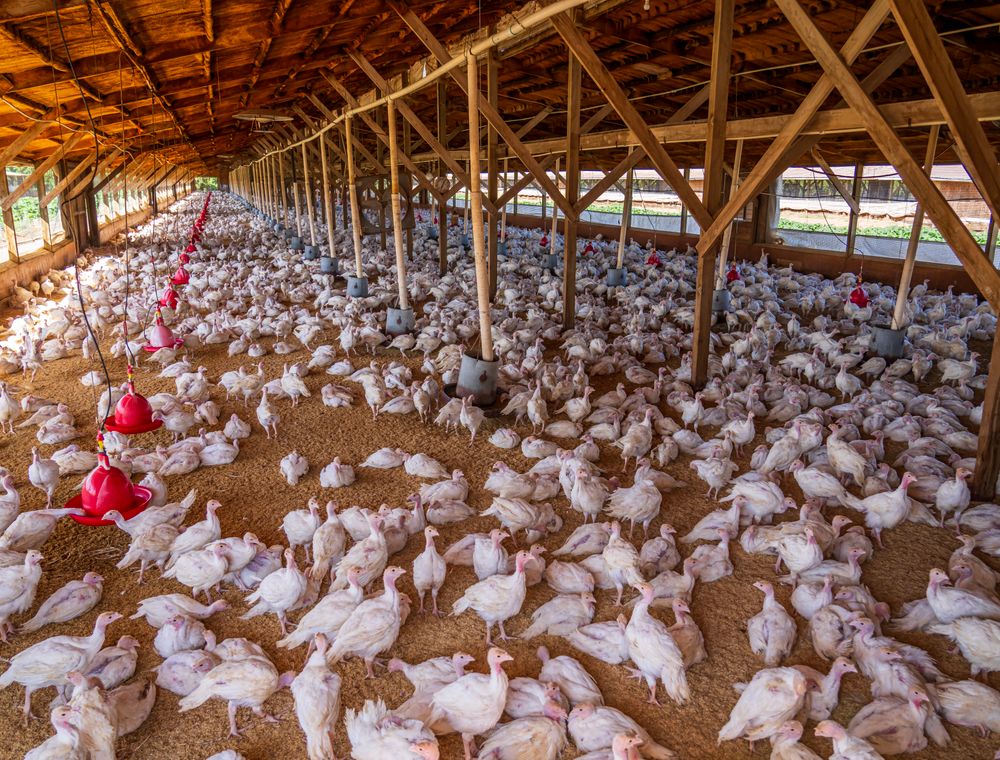
Short answer: Between flocks, empty the house, remove all the litter, dry sweep, wash from the top down, dry the house fully, then disinfect and let it rest for one to two weeks before the next chicks arrive. Disinfectant does nothing through dirt, so the washing and drying do most of the work. Plan about two to three weeks of downtime from the day the last bird leaves to the day the next batch comes in, and use a dry spell if you can.
Key takeaways
- A swept floor is not a clean house. Germs hide in dust, litter residue, cracks and the underside of equipment.
- Wash from the top down, then dry completely, then disinfect. Disinfectant on a wet, dirty surface is wasted money.
- Mix disinfectant exactly to the label, and give it the contact time the label asks for.
- Rest the empty house for one to two weeks where you can. Rest and drying break the cycle that a quick clean leaves behind.
- Use a written checklist, and do not bring chicks into a house that has not passed every step.
The swept floor is not a clean house
The last birds went out on Saturday. By Monday the house has been swept, the floor looks grey and tidy, and the farmer is ready to bring in the next lot. Two weeks later the new chicks are coughing. The house was swept. It was never cleaned.
A flock leaves a lot behind. There is fine dust in the rafters, a crust of litter on the walls, droppings in the cracks of the floor, and feather and feed residue under every feeder line. Germs live in all of it. A disinfectant sprayed over that layer will not reach the organisms underneath, and what it does reach is quickly used up on the dirt.
At our hatchery we say the same thing about the incubator and the brooder. The work that matters happens before the product goes on, and the rest period after it is what lets the house be what you think it is.
Why a rest period matters more than most farmers think
Washing and disinfecting break the chain. Resting the house breaks the timing. Some organisms that survive the wash are still alive in the cracks and the wood. Others need time without a host to die off. Pests such as darkling beetles and mites can carry problems from one flock to the next if the house sits open between batches. Rest lets the drying finish and gives you time to see what is left.
The rest also gives you a chance to catch problems early. Mice have a nest in the corner, a wall has a gap, or the drinker line leaks. Those are much easier to fix while the house is empty.
In Ghana the rest is often the first thing to be squeezed. A farmer wants the house back in use, and the next batch is already booked. Our advice is simple. Plan the rest into the booking, and treat it as part of the batch, not as spare time.
Plan the empty house before the last bird leaves
The clean-out goes faster when the water, the power, the tools and the labour are sorted out before the birds leave. Think about it on paper a week in advance.
- Water. Pressure washing uses a lot of water. Check that the tank is full, or that you can fill it, before the wash day. If you have no pump, a knapsack sprayer and a bucket will do the job, slower.
- Power. If the pressure washer runs on electricity, plan for dumsor. A petrol pump or a backup is worth having for the wash day.
- Weather. Aim for the dry season if you can. A house washed in the middle of the rains can take a week to dry properly, and damp corners are where problems start.
- Chemicals. Buy the detergent and the disinfectant before the house is empty. Check the label, the storage needs and the expiry date.
- Labour. Two people working together, one washing and one checking, is much better than one tired person doing it all in a day.
- Protection. Gloves, boots, a mask for the dust and a towel for your face. Put them in the kit before you start.
Also decide where the used litter will go. A pile next to the house is a source for the next flock. Our article on composting poultry litter safely shows a heap that works, and the guide to using poultry manure covers the crops that benefit.
Step one: empty the house and take out the litter
Once the last bird has left, make the house a place for equipment and litter only. Start by taking out everything that can come out: feeders, drinkers, nest boxes, perches, brooder rings, sacks, buckets and the tools you no longer need in the house.
- Walk the house once with a notebook. Write down any holes, broken panels, leaks or damaged floor.
- Remove all the litter, every bit of it, down to the floor. Load it into a closed trailer or bag, not into the open.
- Carry the litter to the composting area, away from the house, wells and drains.
- Sweep the floor clean of the loose layer that remains. Leave the dust for the next step.
- Check the power points, fans and light fittings, and note what needs a repair.
Do not use the litter from one house on the next house, or on the feed store floor. A bag of litter taken out of the house and dropped by the road is a common way for a problem to travel.
Step two: dust, cobwebs and the top of the house
Dust is where most of the germs travel, and it is the part of the job most people skip. Work from the top of the house down, so that the dust you knock off the roof falls onto the floor you will clean afterwards.
- Wear a dust mask and eye protection. Harmattan dust makes this step harder, so do it on a damp morning if you can.
- Knock down cobwebs and dust from the roof beams, the fan housings, the light fittings and the top of the walls with a broom or a soft brush.
- Dampen the dust before you sweep if the house is dry. A light spray of water keeps the dust down and stops it going back into the air.
- Sweep the walls and corners, then the floor. Do not blow air around with a leaf blower or a fan, because you will simply move the dust.
Dust control is also a question of ventilation. The same house that holds the dust while it is occupied can hold it for days after the birds leave. Our article on poultry house ventilation in Ghana covers how air moves through the building.
Step three: the equipment is part of the house
Feeders, drinkers and nest boxes are where feed, water and droppings sit for weeks. They need to be washed as carefully as the walls, and they need to be dried on their own.
- Dismantle the feeders and drinkers wherever you can. Drinker nipples and bell parts come out, so take them apart and wash each piece.
- Soak the parts in warm water with detergent for the time the detergent label asks for. Overnight soaking is fine for the worst items.
- Scrub the parts with a brush, paying attention to the joints and the threads, where biofilm builds up.
- Rinse them well. Check the water lines for slime or scale, and flush them through.
- Stand the parts out in the sun to dry, not stacked in the house.
Keep a colour code for brushes and buckets. A red brush for the litter area, a blue one for the drinkers, and a yellow one for the nests keeps the dirtiest tools away from the cleanest work. It sounds small. It stops a lot of carry-over.
Step four: wash the house from the top down
Washing is the step that makes the rest work. Use warm or cold water and a detergent made for poultry houses or for general cleaning. Work in sections, so that you can see where you have been.
| Area | Why it matters | How to do it |
|---|---|---|
| Roof beams and fan housings | Dust and cobwebs that fall back on everything | Wash first, from a height, with the spray moving downward |
| Walls and posts | Litter residue and droppings stuck to the surface | Apply detergent, let it soak, then scrub and rinse |
| Doors, windows and vents | Dirt collects in the frames and gaps | Open them fully and wash the frames and edges |
| Floor and corners | Where the heaviest layer of organic matter sits | Pay the most attention to corners, cracks and under the feeder lines |
| Around the water lines | Leaks and slime build up here | Check for drips and wet patches after washing |
After the detergent has done its job, rinse from the top down again, so that the dirty water runs out of the house and not across the clean areas. Keep the water going towards a drain or a sump that is away from the chick area and the drinking water.

If you can see anything still stuck to the surface, the wash is not finished. Scrape the spot, apply detergent again and wash. You will be tempted to call it clean at this point. Do not.
Step five: dry the house completely before you disinfect
A disinfectant sprayed on a wet floor is diluted before it can work. Dry the house before you disinfect it, and you will get more out of the product you paid for.
- Open every door, window and vent, and run the fans if you have power. Let the air move through the house for as long as you can.
- Leave the house to dry for two to three days in dry weather. In the rains, it can take much longer, and you should not rush it.
- Check the corners, the feeder lines and the underside of the walls. They stay damp long after the floor looks dry.
- Put the equipment out to dry in the sun, and bring it back in only when it is dry to the touch.
In the harmattan, the air is dry and the house will dry quickly, but the dust returns quickly too. Keep the doors closed when the dust is up, and open them again when the air is calm. Drying is not the same as airing, and a dry house can still be dusty.
Step six: disinfect according to the label
Disinfection is the last chemical step, and it is where farmers most often go wrong by doing too much or too little. Use a disinfectant that is approved for poultry, follow the label on dilution and contact time, and do not mix products together unless the label says it is safe.
- Measure the water and the disinfectant carefully. Use a measuring cup and write the amount on the container, so the next person does it the same way.
- Start at the top, spray the roof, walls and beams, then the floor and the corners, then the equipment.
- Cover every surface, including the underside of the feeders and the inside of the nest boxes. A spray that misses the corners leaves the problems there.
- Keep the house closed for the contact time on the label. Do not open it early because you are impatient.
- Wear gloves, boots and a mask, and wash your hands after you finish.
Our article on disinfectants and footbaths for poultry farms goes through how to choose a product and what to do with the footbath. Keep the bottles away from the feed and from children, and follow your vet's advice if you are unsure which product fits your house.
Need chicks for your next batch?
Send breed, number and town. We reply with price, hatch date and delivery cost in writing.
Step seven: the rest period, and what to check during it
Once the disinfectant has dried, close the house and leave it alone. This is the rest. A rest of one to two weeks is what we aim for. If the next batch is due sooner, you can shorten it, but you lose some of the benefit and you should tell your vet.
The rest is not a holiday for the farm. Walk the outside of the house every few days. Look for holes that rats or snakes could use, for flies, for wet patches, and for anything that has crept in. A house that has been closed for a week can have a mouse living in it by the time you return. Our article on rodent and snake control covers the traps and the sealing.
If you see signs of pests inside the house, deal with them before the chicks arrive. Your vet can advise on suitable products for mites and beetles, and the reason to ask is simple: a product used in the wrong way or at the wrong strength can leave residues that the chicks then breathe or peck.
Setting up for the next batch
The last day of downtime is for setting up, not for cleaning. Put the house back together with a list in hand, and check it before the chicks come in.
- Refit the drinkers and feeders, and run water through the lines to check for leaks and blockages.
- Lay fresh, dry litter at the depth your vet and the house design call for. Do not use the old litter, even if it looks clean.
- Set the brooder, check the heat, and test the thermometer at chick height. Our article on setting up the brooder before day-old chicks arrive gives the layout.
- Check the ventilation, the fans and the gaps once more with the house closed.
- Write the date the house was cleaned and disinfected in the record book, with the product name and the rest period.
Once the chicks are in, keep the house under the same watch as the last flock. A clean start is only the start, and our article on all-in all-out poultry farming explains how to keep the batches apart from one to the next.
How much downtime to plan, stage by stage
Most farms that run an honest clean-out need two to three weeks between flocks. The table shows where the time goes, so you can plan the booking around it instead of squeezing the rest.
| Stage | Typical time | Check before you move on |
|---|---|---|
| Empty the house and remove litter | 1 day | No birds, no litter, equipment out |
| Dry sweep and dust control | 1 day | Roof, walls and floor free of loose dust |
| Dismantle and wash equipment | 1 to 2 days | Parts clean inside and out, lines flushed |
| Wash the house | 1 to 2 days | No visible residue, corners and joints done |
| Dry the house | 2 to 3 days in dry weather, longer in the rains | Corners dry to the touch |
| Disinfect | 1 day | Contact time met, every surface covered |
| Rest the house | 7 to 14 days | No pest signs, house closed and sealed |
| Set up for the next batch | 1 to 2 days | Water running, litter in, brooder checked |
Add the table to the calendar for the house, and fix the chick arrival date only after the last stage is ticked off. If one stage slips, move the chick date. Do not move the stages forward to catch up.
Mistakes we see most often in the clean-out
The house that gets a bad start often had a good intention and a rushed execution. These are the mistakes we see most.
- Disinfecting a dirty house. The product is used up on the dirt, and the germs underneath survive.
- Spraying a wet house. The disinfectant is diluted before it can act, and the damp keeps the problem alive.
- Skipping the roof. The dust from the rafters falls on the clean floor the next day.
- Washing equipment in the same bucket. Dirty water moves from one part to the next, and the clean parts go back dirtier than they came out.
- Dumping litter by the house. The litter becomes the source for the next flock, and the rain carries it back in.
- Bringing the chicks in early. The rest is cut to two days, and the chicks start with a problem they did not bring with them.
Pick the one that your farm is most likely to do, and write it on the checklist as a line to check.
The cost of the empty weeks, against the cost of a bad batch
Downtime is money you do not earn for those weeks, and that is the honest objection to a proper clean. Here is the sum we use with farmers, with the starting prices from our list.
Say the house holds 500 birds. Ross 308 chicks start from GH₵20 each, so a full house of birds costs GH₵10,000 before feed, labour or housing. Suppose the clean-out adds two weeks of downtime to your plan. You lose two weeks of use from the house, which is real, but you have not spent a cedi on the birds during that time, and the house is not yet earning.
Now picture the other route. You skip the drying and the rest to save the two weeks. The next batch arrives, and a respiratory problem moves through the house. Lose 10 per cent of the birds and you have lost GH₵1,000 in chicks alone, before feed, treatment, vet fees and the sales you missed. A bad batch can cost many times the downtime it was meant to save.
The numbers change with your flock and your market. The principle does not. A clean house with a rest is the cheapest insurance on the farm, and it is much cheaper than the batch you lose from skipping it.
When you are ready to restock, the day-old chicks prices page sets out the current starting prices, and the broiler chicks page shows the options. The order form is on the homepage, and our WhatsApp line is +233 24 915 1503 if you want to plan the batch date.
Questions farmers ask
How long should the house stay empty between flocks?
Aim for one to two weeks of rest after the wash, disinfection and drying. A shorter rest is sometimes unavoidable, but the benefit drops. Plan two to three weeks in total from the day the last bird leaves to the day the next batch arrives, and treat the rest as part of the batch.
Do I have to use a pressure washer?
No. A pressure washer saves time and water, but a knapsack sprayer, a stiff brush and a bucket of detergent will do a proper job if you give it time. What matters is that the surfaces are washed, rinsed and dried, not the machine you used.
Can I use the old litter again?
No. Used litter carries the organisms from the last flock, and it can keep them alive in the house. Remove all of it, compost it away from the house, and lay new, dry litter for the next batch. Old litter that looks clean on top is often the worst part, because the wet layer underneath holds the problem.
Should I disinfect before or after washing?
After. Wash first, dry completely, then disinfect. A disinfectant applied over dirt or on a wet surface loses much of its strength, and the germs underneath keep their place. Read the label, because it may describe a cleaning step of its own, and follow its order exactly. If the label and this article disagree, the label and your vet win.
What do I do about the dust in harmattan?
Work on a damp morning if you can, and wear a mask. Dampen the dust before you sweep, and do not blow it about with a fan. Keep the doors closed when the wind is up, and open them when the air settles. Dust control matters in harmattan because the dust carries the germs.
How do I know the house is ready for chicks?
The house is ready when every stage on your checklist is ticked, the rest period has been completed, the drinkers run without leaks, the litter is dry and fresh, and the brooder is at the right temperature when you test it at chick height. Write the date in the record book.
Is it worth cleaning the house if I only have a small flock?
Yes, and the reason is the same. Small flocks are still exposed to the same organisms, and a small house is quicker to clean properly. Use the same steps, the same order and the same rest, even if the house is only a few metres long.


