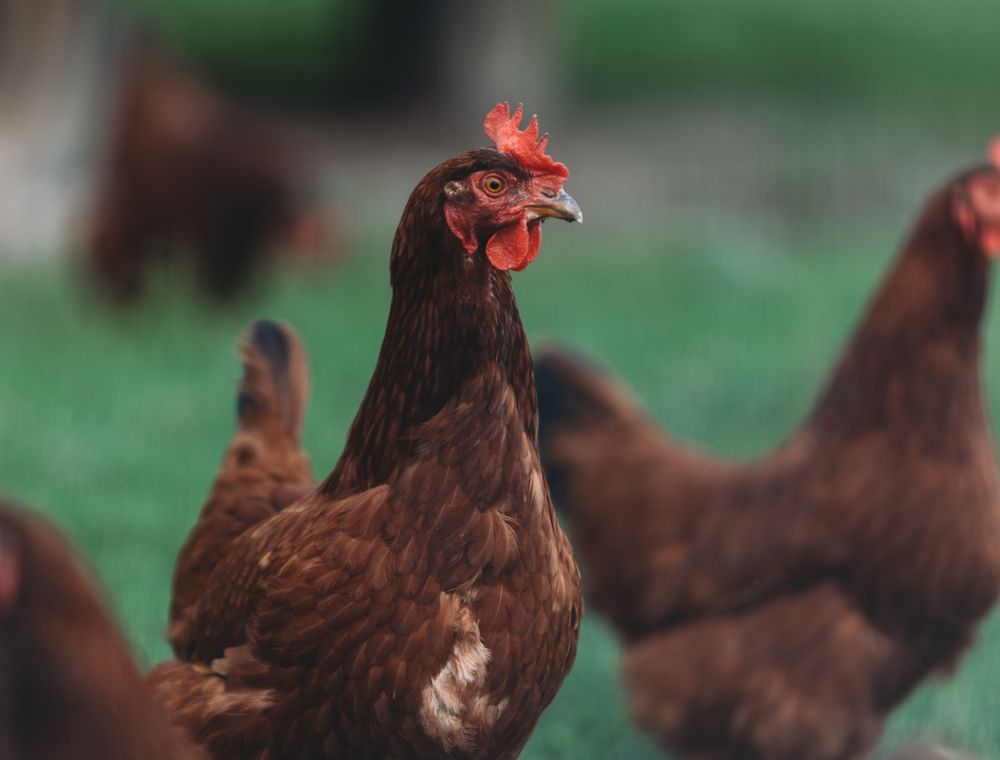
Short answer: To catch chickens in Ghana without hurting them or stopping the flock laying, work at dusk or early morning, keep the number of birds you handle at once small, and hold each bird with one hand under the breast and the wings folded in. Rough handling does damage you cannot see at once, through bruising, broken joints and stress that cuts egg production for days. A planned, quiet catch costs a few extra seconds and saves far more than that in eggs and in birds you can sell.
Key takeaways
- Catch at dusk or early morning, when the birds are settled on the perch and the heat is down.
- Hold the bird with one hand under the breast and the wings folded in, never by the neck, tail or one leg.
- Handle small numbers at a time, and never chase birds into a corner where they pile up.
- Heavy broilers need both hands, and a lift from the front of the body rather than the leg.
- Count and check the birds as you crate them, and write the numbers down for the buyer.
The bird you catch badly stops laying for a week
A hen that has been chased round a yard for twenty minutes does not come back to the nest box the same day. She stands at the back of the house, eats less, and drops her egg rate for days. Multiply that by a flock, and a rough catch in the morning can cost you more eggs than the feed bill for the week.
Most farmers already know that. What they do not always see is how small the difference is between a calm catch and a bad one. The method takes a few seconds longer. The bird is handled by one person, from a low position, with a steady hand, and nobody runs. This article is about that difference, for layers, cockerels, spent hens and broilers close to market weight.
What rough handling costs you
Rough handling does three kinds of damage, and only one of them is visible. The obvious one is the broken wing, the snapped leg or the bird that will not stand again. The second is bruising, which is hard to see through feathers but turns into a dark patch on the breast of a broiler or a sore keel on a layer. The third is stress, which is invisible until the eggs stop or the weight stops coming on.
Stress is the one people underestimate. A bird that panics releases a rush of hormones that changes how she uses feed and how she lays. A flock that has been chased on Monday morning often looks fine on Monday afternoon and then goes off lay on Wednesday. If you cannot tell where the drop came from, it is worth looking back at how you caught the birds that week. Heat makes the same drop worse, as our piece on heat and egg drop explains.
There is also the pile. Birds that are chased into a corner pile up on each other, and the ones at the bottom can be crushed or suffocated. We have seen farms lose more birds to one bad round-up in a closed yard than they lost to disease that year. Keep the flock moving slowly, leave the corners open, and never chase birds into a space they cannot leave.
Catch at dusk or early morning, not at midday
Chickens are easiest to catch when they are settled, and that means the roost at dusk or the period just before full daylight. Birds on the perch do not run, they do not flap, and they can be lifted one at a time without a crowd. Work with a small, dim torch or a red light pointed at the floor, not in the bird's face. Bright white light in the eyes sets off the panic response faster than anything else.
Midday is the worst time. The birds are hot, they are spread out in the shade, and the ones you chase will pant for an hour afterwards. Heat and handling together kill birds, and we see more deaths after a midday round-up than after a cool morning one. The same caution applies to our heat stress guidance for broilers, which covers the signs to watch for after any catch. If you must catch in the day, do it early, use a shaded spot, and give the birds water within a few minutes.
Plan the job before you start. Decide how many birds you need, where they are going, and how you will get them there. A catch that is planned in two minutes tends to be a calm catch. A catch that is improvised in the middle of the yard tends to become a chase.
Matching the method to the job
Different jobs need different approaches. A single hen for a sick check is not the same as forty broilers for a buyer, and a cockerel that is fighting with the others needs a different hand from a spent hen that is going to the pot. The table sets out what we would do in each case, and the mistake we see most often in each row.
| The job | Best approach | Birds handled at once | The mistake we see most |
|---|---|---|---|
| One bird for a health check | Catch from the perch at dusk, or from a corner with a soft net | One | Grabbing by a wing, which tears feathers and wrenches the joint |
| A few layers for culling or sale | Pen them in a small space, then take them one at a time | Two or three | Taking birds from the pen in the open yard, where the rest scatter |
| A cockerel that is bullying the flock | Remove him at night, when he is on the perch and quiet | One | Chasing him around the yard, which raises the stress for every bird |
| Broilers at market weight | Herd them gently into a corner or a pen, then lift with both hands | Two to four, in a short line | Lifting by one leg, which snaps joints in a heavy bird |
| Spent hens for the pot or the market | Catch at dusk and crate them immediately | Several, in a crate | Leaving them in a hot crate in the sun while you finish the rest |
The common thread is simple. Keep the number of birds you are handling at once small, keep the approach low and quiet, and get the bird into a crate or a pen before the next one starts to panic. If you are catching birds for a trim, the same gentle grip applies, and our beak trimming article explains when a trim is worth doing at all.
Hold it right: wings, body and legs
Once you have the bird, the grip decides whether she stays calm. Reach in from the side, not from above, so the bird does not see your hand coming down on her back. Slide one hand under the breast and bring the bird's body against your forearm. Fold the wings in against her sides with your other hand, and keep them there. A bird with free wings beats herself against your hand, and the flapping does the damage.
Hold the legs between two fingers so the bird cannot kick you, and let the feet hang rather than pulling them. Keep the head forward and level, not down, and keep the bird's weight supported under the body. Carry her close to your chest with the head facing forward so she can see where she is going. A bird held that way settles in a few seconds, and that is the reason it is worth learning properly.

Do not hold a bird by the neck, the tail or one leg. Do not swing her. Do not let her hang upside down for longer than you need to. Each of those habits has cost us birds that looked fine when they went into the crate and died in it an hour later.
Catching in a free-range run or a big house
Free-range birds are harder to catch because they know the yard better than you do. If you are still deciding which birds suit a yard like that, our guide to the best chickens for free range in Ghana is a good starting point. They will run to the far fence, slip under the gate and hide behind the water tank. Do not try to outrun them. Walk slowly, stay low, and let the flock drift towards an open pen or a catch net that has been set up in advance. The net should be soft, with no hard frame that catches the wings, and it should be held low so birds can be lifted out of it.
In a big house the rules are the same, only the distances are longer. Work from one end, leave the far side open for the birds to move away from you, and keep the lights low. If you have to move several birds in the same session, rest the flock between catches. Ten minutes of quiet makes the next catch easier than another two minutes of chasing.
Before you open any gate, check where the birds will go. A gate that opens on to a road or into a drain is the place where the one bird you did not plan for ends up injured.
Broilers close to market weight need more care
A broiler at around 2.5 kg is heavy, round and fragile at the same time. Her legs are carrying more than they were built for at a younger age, and her breast is soft where it has been lying on the litter. Catching her needs both hands and a firm, even support. Lift her from the front of the body, bring her close and keep her legs under her. Never lift a heavy bird by one leg, because the joint can pull out of its socket before you feel it.
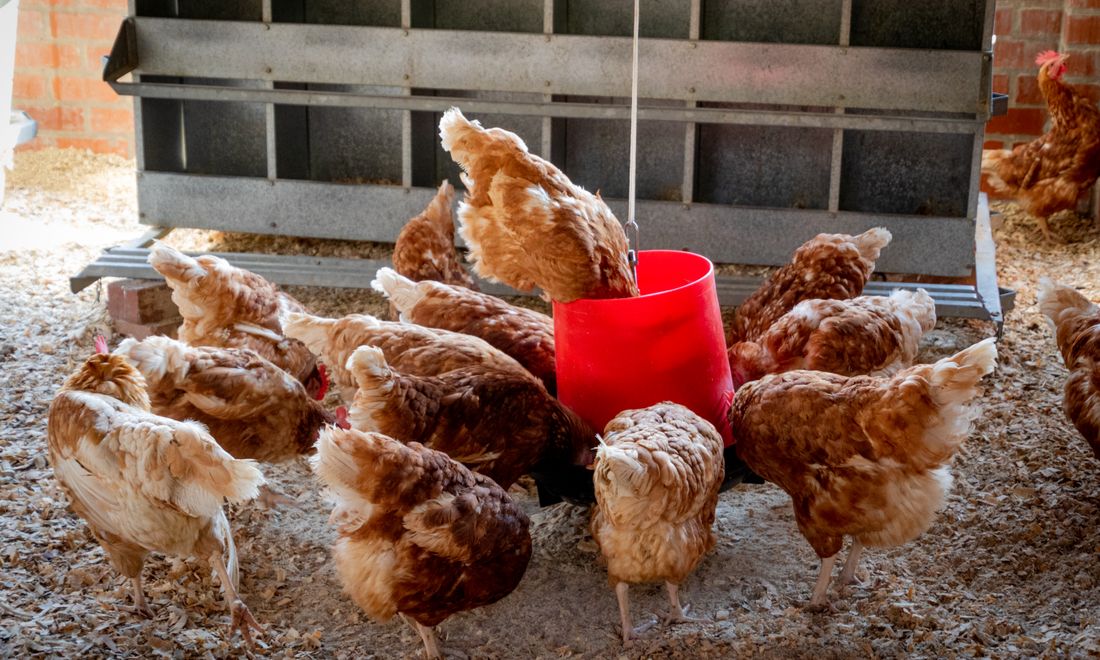
Move broilers in small groups in the cool part of the day, and move them slowly. Heavy birds overheat quickly when they are chased, and a broiler that pants for twenty minutes can die of heat stress hours later even when it looked fine on the crate. Our piece on when to sell broilers covers the timing side, and it matters here, because a bird caught in the right week and in a cool hour arrives at the buyer in better shape. Our broiler weight chart by week helps you judge when the birds are ready to catch.
If you are planning a new broiler cycle, you can look at our broiler day-old chicks page and place an order through the order form. For questions on a particular batch or a catch that went wrong, message us on WhatsApp at +233 24 915 1503.
A broiler with a snapped leg or a bruised breast cannot be sold as a live bird at full price. Count the injured birds at the end of each catch, and write the number down. If the injuries keep coming on the same catch day, the method needs changing, not the buyer.
Need chicks for your next batch?
Send breed, number and town. We reply with price, hatch date and delivery cost in writing.
From the hand to the crate
The carry from the catch point to the crate is where many birds are hurt, because the handler is hurrying and the bird is struggling. Walk, do not run, and keep the bird close to your body. If you are carrying more than one, hold them with the heads facing the same way so they do not peck or claw at each other on the way.
Put birds into the crate gently, head first in most cases, and do not stuff them in. A bird that is pushed in with her wing folded underneath will come out with a broken wing. Leave room for every bird to sit down, and do not stack the crates in the sun while you finish the job. Our article on transporting live birds to market covers the crate, the vehicle and the timing in full, so this section stays with the handling itself.
Count the birds into the crate as you go, and write the number on the crate or in your notebook. A miscount at the crate is the one that surprises a buyer at the other end.
Look over a bird while you have her
A bird you have already caught is the easiest bird to look at. Take thirty seconds before she goes back in the pen. Look at the eyes, which should be bright and open. Check the comb and wattles for colour and any swelling. Feel the crop, which should be soft and not full and hard when she has been fasting. Run a hand along the keel to check it is straight and not sore, and look under the tail and the feathers around the vent for dirt, scabs or swelling.
If something looks wrong, do not let it slide. A bird with a swollen face, a runny nose or a drooping wing needs a closer look, and our guide on what to do with a sick chicken sets out the first steps while you wait for your vet. This check is not a diagnosis. It is the habit that tells you something has changed before the next bird dies.
Family members and new helpers
On a family farm, the children and the helpers catch birds too, and they usually have no training. That is fine, as long as the rules are clear and the first lessons are supervised. Teach one grip, the same grip, every time. Teach the wings-in rule and the no-swinging rule before anyone touches a bird alone. A helper who will also give vaccines should learn the steps in our guide to vaccinating chickens before they go near a vial. Set a fixed number of birds for beginners to carry, starting with one.
New helpers should practise on birds that are not being sold that week, and on a bird that is already quiet on the perch. Watch the first ten catches. Most people settle in quickly, but a beginner who chases once, sees a bird panic and learns that the panic is contagious tends to be more careful from then on. If a helper keeps grabbing by the neck or the tail after you have explained it, move them to another job.
A checklist for every catch
Keep this near the pen door, and read it before the first bird comes out.
- Pick the time: dusk or early morning, with the birds settled and the heat down.
- Decide how many birds you need, where they are going, and how many you can handle at once.
- Set up the pen, crate or net before you open anything, with no gaps the birds can slip through.
- Use a dim light pointed at the floor, not into the eyes of the birds.
- Approach low and slow, from the side, and keep the flock drifting rather than running.
- Grip with one hand under the breast and the wings folded in, and hold the legs between your fingers.
- Keep the head forward, the body upright and the legs under the bird, and never swing or hold by the neck or tail.
- Carry the bird close, walk rather than run, and crate her gently with room to sit down.
- Count the birds into the crate, check the injured ones, and write the numbers down.
- Give the flock quiet before the next catch, and keep the crates out of the sun.
Questions farmers ask
What is the safest way to catch a single hen?
Wait until she is on the perch at dusk, then approach from the side with a dim light pointed at the floor. Lift her with one hand under the breast and the wings folded, and carry her close to your body with the head forward. If she is on the floor, pen her gently against a wall or a corner and take her from there, rather than reaching in while she is running.
Can I catch birds during the day in the rainy season?
It is better to wait. Wet floors make birds slip, wet feathers make them heavier and harder to hold, and a bird that is cold and wet after a chase can get sick. If you must catch in the day, choose the cooler hours, keep the crate in the shade and give the flock water as soon as the catch is finished.
How many birds can I carry at once?
Only as many as you can hold properly, which for most people means one or two in each hand for smaller birds, and one at a time for heavy broilers. The rule is that the wings stay folded and the legs stay supported. If a bird starts to struggle or slip, put her down on the floor and start again, rather than gripping harder.
Does handling stress actually reduce egg production?
Yes, it can. A hen that is frightened by a chase releases stress hormones that affect how she uses feed and how she lays, and a flock that is chased repeatedly can drop its laying for several days. The drop often appears a day or two after the catch, so it is easy to miss. Note the catch dates in your record and watch the egg count afterwards.
Should I use a net or catch by hand?
Use a soft net for free-range birds and for a crowded house, because it lets you lift a bird without a chase. Use your hands for a single bird at dusk. Avoid hard-framed nets or any tool that catches the wings, because a net that snags a wing causes the same damage as a rough grip.
How do I catch a cockerel that is fighting the others?
Remove him at night, when he is on the perch and quiet. Take him in one hand, keep his wings folded, and place him in a separate pen. Do not chase him round the yard, because that raises the stress for every bird. If the fighting has caused wounds, check him over before he goes back, and read our article on cockerel farming in Ghana for how to manage a mixed group.
What do I do if a bird is injured during catching?
Separate her at once, check for a broken wing or leg, and keep her quiet with water and feed close by. A bird with a clean small wound can usually recover in a pen of her own. A bird with a broken leg or a wing that hangs at an odd angle should be assessed by your vet, who may decide on humane culling. Do not return an injured bird to the flock where the others can peck at the wound.


