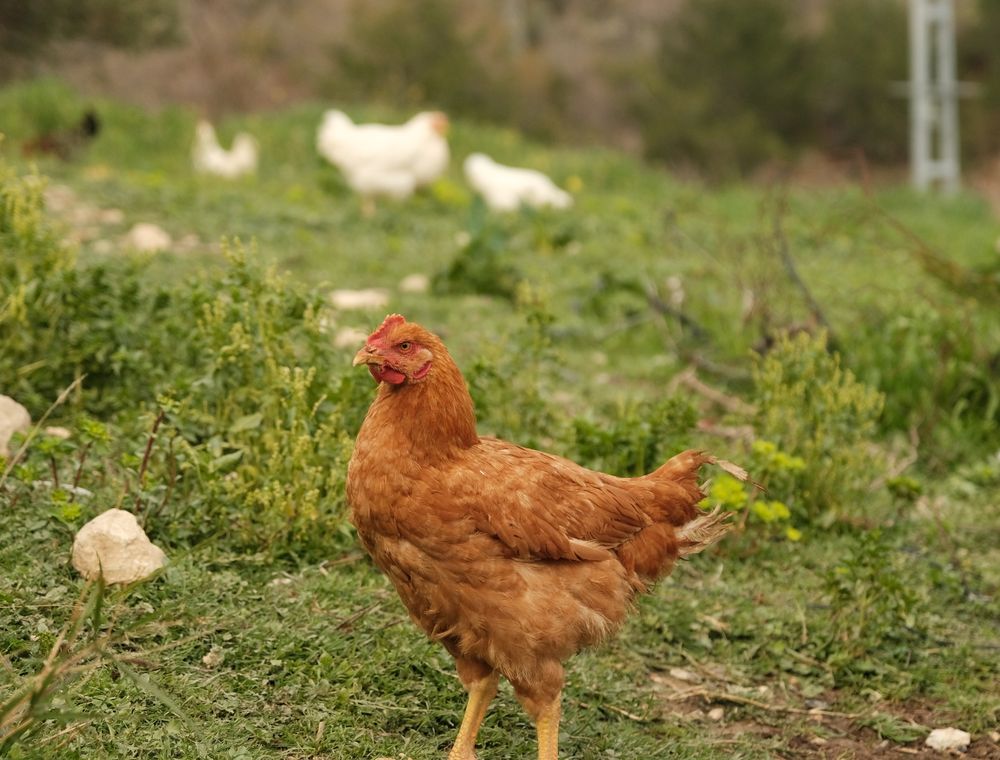
Short answer: The best free-range chickens in Ghana are the dual-purpose birds that forage hard and stay healthy on a mix of foraged food and supplementary feed. Kuroiler and Noiler lead the list, with Sasso close behind for meat, and Plymouth Rock is the calm choice for a small homestead run. Free range cuts the feed bill, but predators, theft and parasites are the usual reasons a flock shrinks, so the night house and the fence matter as much as the breed.
Key takeaways
- Foraging ability only lowers your feed bill if the bird also survives the open range.
- Kuroiler and Noiler forage and scavenge well, and they are the safest starting point for mixed systems.
- Predators, not hunger, are the usual reason a free-range flock gets smaller.
- Feed at the same time each evening so the birds learn to come home and roost where you can count them.
- A breed cannot fix an open gate, a leaky night house or a flock with no shade.
What free range really asks of a bird
What does a free-range chicken eat in Ghana? In the rains, a good share of its diet is grass seed, termites, insects and green shoots. In the harmattan there is almost nothing out there, and the feed bill comes back to you in full.
Free range is not a label you can stick on a flock. It asks a bird to walk further, find more of its own food, roost somewhere it chooses, take shade at midday and stay alert to things that want to eat it. Some birds manage all of that without fuss. Others spend the day standing by the gate looking hungry.
Three traits decide how well a breed copes. The first is foraging drive, the urge to scratch and peck for seeds, grit, insects and green matter. The second is wariness, meaning how quickly a bird notices a hawk, a dog or a snake and gets under cover. The third is heat tolerance, because a free-range bird spends its middle of the day in full sun if you let it. Most breeds have some of each. The question is which balance suits your site.
Season changes the answer. In the rains the ground greens up, insects come out and a flock can cover a good part of its own diet. In the dry months the dust hangs in the air, the grass dies back and there is very little to find. Plan the feed bill for the dry season as if the range were empty, because for much of the year it is close to that.
Kuroiler: the scavenger that keeps its weight
Kuroiler is the bird we recommend most often for a mixed free-range system. It is active, it forages well and it holds its condition on a range where some other birds would thin out. It is dual-purpose, so the hens lay and the spent birds and cockerels go to the table.
What it needs from you is a steady supplement. A free-range Kuroiler on good forage still benefits from a grower or layer feed, and a flock that gets its supplement at the same time every day learns to come back to the house for it. Give the birds a roost they can reach and a coop they will actually use. The Kuroiler and Noiler chicks start from GH₵11 a chick, and the breed notes are in the Kuroiler guide.
Noiler: lower input, steady in the open
Noiler suits a keeper who cannot give a flock much daily attention. It is hardy, it forages and it puts up with less than perfect care. At GH₵11 a chick it is a low-cost way to fill a range with birds that are still there at the end of the season, which is more than some cheaper birds can say.
The trade-off is speed and the amount of meat. Noiler takes a long time to finish, so do not plan a sale date on a broiler timetable. Treat it as a bird that gives eggs and then meat over a longer period, and build the cash flow around that. The Noiler guide sets out the detail.
Sasso on range: the coloured bird that still wants a feed plan
Sasso is a coloured meat bird with enough forage in it to suit a semi-open run. It searches for food through the day, and if a steady grower feed is also on offer it grows out to a firm, coloured bird that many buyers like. Expect ten to fourteen weeks to market rather than a broiler's six.
The mistake we see is turning Sasso loose on a bare yard with no feed and then wondering why it is slow. A range supplies a share of the diet, not all of it. The second mistake is running Sasso on a fast broiler routine, which crowds the birds and wastes the foraging you chose the bird for. The Sasso page has the chick details, and the Sasso chicken guide covers range set-up in more depth.
Plymouth Rock: calm enough for a small homestead run
Plymouth Rock is not a wild forager. It is a calm, steady bird that stays closer to the house, which suits a compound with a fence and a few trees better than an open field. At GH₵7 a chick, or GH₵350 for a box of 50, it is one of the cheapest starts we sell.
It will scratch and pick at the ground and lay steadily for a family. Do not expect it to find all its own food, and keep the supplement going through the dry season. The full profile is in the Plymouth Rock guide for Ghana.
Brown layers on range: possible, with less control
Hy-Line Brown and other brown layers can be kept on range, and some families get good results. But a layer is bred to turn commercial feed into eggs, and it does not forage as well as a dual-purpose bird. On a free-range site it loses condition quickly when the feed programme slips, and it is more exposed to predators because it spends more time in the open looking for food.
If you want brown eggs from a range flock, we would keep the layers in a managed house with a covered run, and let a Kuroiler or Noiler do the scavenging. The layer chicks page covers the options, and the Hy-Line Brown guide explains what a layer needs day to day.
Guinea fowl as an alarm system
Guinea fowl are not chickens, but they belong on a free-range farm for one reason. They raise the alarm. A flock of keets raised on the range calls loudly when a hawk or a stray dog shows up, and that noise gives your chickens time to get under cover. They also forage hard for insects and seed, which takes some pressure off the feed bag.
Guinea fowl keets are GH₵17 each, or GH₵850 for a box of 50. They grow more slowly than chickens and they are noisy, which matters if you have close neighbours. Read the guinea fowl farming guide before you mix them with chickens, and see the guinea fowl keets page for supply.
Table: free-range fit at a glance
These ratings are our judgment from hatching and selling these birds, set against how the breeds are generally described. They are not measured trial results. Treat them as a shortlist, then check them against your own birds.
| Breed | Foraging | Wariness | Heat tolerance | Feed reliance | From (GH₵ a chick) |
|---|---|---|---|---|---|
| Kuroiler | High | Good | Good | Medium | 11 |
| Noiler | High | Good | Good | Medium | 11 |
| Sasso | Medium to high | Medium | Good | Medium to high | 13 |
| Plymouth Rock | Medium | Good | Fair | Medium | 7 |
| Guinea fowl keets | High | Very good | Good | Low to medium | 17 |
| Hy-Line Brown | Low to medium | Fair | Fair | High | 23 |
Need chicks for your next batch?
Send breed, number and town. We reply with price, hatch date and delivery cost in writing.
Feeding a free-range flock without losing the saving
Free range saves money only if the birds get enough from the range to cut the feed bill, and only if they still eat enough to stay healthy. Set one feeding time in the late afternoon. Birds that know their feed comes at dusk will come home to eat it, which makes them easy to count and easy to shut in.
- Give a measured supplement every day, not a heap on the ground when you remember.
- Keep grit and shell available for layers, and use the layer feeding guide for amounts.
- Put feed and water under cover so they stay dry in the rains and clean in the dust.
- Never feed mouldy scraps. Mould in a free-range flock is a quick route to illness.
- Weigh the feed you put out for two weeks and compare it with the flock's condition. That tells you whether the range is pulling its weight.
Keeping predators and theft out
Predators are the reason most free-range flocks shrink. Hawks take chicks and small birds from the open. Dogs, cats, mongooses and snakes take what they can reach. Some losses are simply people. The answer is a secure night house, a fence that stops the flock wandering onto a road, and a count every evening.
The roost should be high enough to keep birds off the ground and enclosed enough that a dog cannot reach in. Check the house for gaps every week. A bird taken at dusk is usually taken through a gap someone noticed and did not fix. Guinea fowl help, and so does a dog that stays by the house and is trained not to hunt chickens. Keep the grounds clear too, because long grass and rubbish give snakes and rats somewhere to live.
Checklist before you let them out
- Build or check a night house that closes on every side and stays dry inside.
- Fence the range so the flock cannot reach a road, a drain or a neighbour's crop.
- Set a fixed evening feed time and keep to it.
- Walk the range and clear rubbish, broken glass and long grass near the house.
- Plan midday shade, using trees, a roofed corner or a windbreak.
- Count the flock at dusk and again at dawn for the first month.
- Ask your vet for a worming and vaccination plan that fits a range flock.
Our view: breed first, then the fence
If we were stocking a free-range site tomorrow, we would put Kuroiler or Noiler in for the bulk of the flock, add Sasso if you want a coloured meat bird with range instinct, and keep a small number of Plymouth Rock for the homestead feel. Keep brown layers in a managed house unless you have a clear reason to run them on range.
Send us a photo of your site on WhatsApp at +233 24 915 1503, with the number of birds you have in mind and a rough idea of how much range you have. We will say which breed suits the space. Our day-old chicks page explains what we supply, and the delivery page covers all 16 regions.
Questions farmers ask
What is the best chicken for free range in Ghana?
For most mixed free-range systems, Kuroiler and Noiler are the strongest choices. They forage, they cope with variable food and they are dual-purpose, so the flock gives eggs and meat. Sasso is a good option if you want a coloured meat bird with more forage in it, and Plymouth Rock suits a small homestead run where the birds stay close to the house.
Can I free range broilers?
It is a poor fit. Fast broilers are bred to grow quickly on a controlled feed programme, and they do not forage well. Free range wastes their energy and exposes them to weather and predators, and the weights you planned for will slip. If you want a range bird for meat, a coloured dual-purpose breed is the better match for the job.
Do free-range chickens still need feed?
Yes. The range can supply a share of the diet in the rains and very little in the dry season. Plan to feed a measured supplement every day, and adjust it by season and by the flock's condition. A bird that looks thin on the range usually needs more feed, not less, and a bird that is bulging at the crop has been eating scraps somewhere.
How many birds can I keep on free range?
There is no single answer, because the size and cover of the range matter more than the number on paper. Start with a number you can fence, house and count each evening. For a small compound that is often a modest flock. On a larger plot you can grow the flock once the first season shows you what your range will carry.
Why do free-range chickens keep disappearing?
The usual causes are an open night house, a gap in the fence, a dog or cat that hunts, a hawk on a chick and, sometimes, theft. Count the birds every evening and walk the fence weekly. Most losses stop once the gap is found and closed, so the count is your early warning system.
Are free-range eggs better than cage eggs?
They are not automatically better. Eggs from a range flock often have deeper yolks when the birds forage well, but the difference depends on the diet and on the bird. What the buyer notices most is clean eggs, a consistent size and a steady supply, and a range flock can struggle to deliver all three without good management.
Can I keep guinea fowl with chickens?
Yes, many farmers do. Guinea fowl give an alarm call when a predator appears and they forage hard, which helps the whole flock. They can be noisy and they grow more slowly, so think about your neighbours and the time you have. Keep their housing and feed sensible for both species, and check the guinea fowl guide before you add them.


