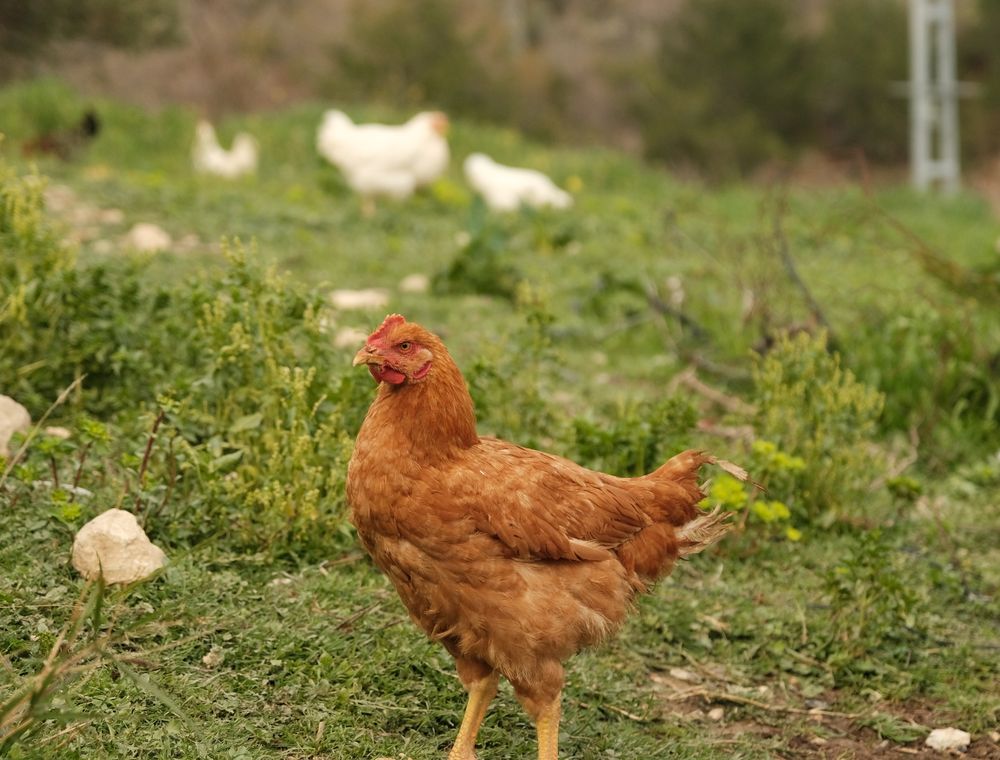
Short answer: Sasso is a slow-growing, French-bred meat chicken known for hardiness, foraging ability and firm, well-flavoured meat. It usually takes about 10 to 14 weeks to reach market weight, so it suits farmers who sell to households, restaurants and festive buyers and can wait for their return. At Halaal Farms, day-old Sasso chicks start from GH₵13 each, sold in boxes of 50.
Key takeaways
- Sasso is a slow-growing meat bird: plan for roughly 10 to 14 weeks to market, not six.
- It does best with shade, space and access to forage, which cuts the purchased feed bill on free range.
- The meat is firmer and more flavourful, and buyers who know local chicken will pay for that difference.
- Feed cost per bird is higher than a broiler's, so the economics depend on how well you time the sale.
- Day-old Sasso chicks start from GH₵13 each, in boxes of 50, with one box as the minimum order.
What makes a Sasso different
Many farmers who call us about Sasso assume it is simply a slower broiler. It is not. Sasso is a French-bred meat chicken selected for foraging ability, hardiness and good meat quality rather than for the fastest possible weight gain. That choice shapes everything else you will do with the flock, from the size of the run to the day you decide to sell.
A fast broiler is designed to reach market size in roughly six weeks, which means controlled houses, consistent feed and close watch over legs and heart health. A Sasso asks for more time, more space and a little more patience. In return it copes better with open-sided sheds and outdoor pens, and its meat develops the firmer texture that many Ghanaian cooks prefer for light soup, groundnut soup and grilled chicken.
At our hatchery in Kasoa we have found Sasso chicks settle quickly after transport and stay close to shade and water rather than wandering far. They are calmer to handle than many local scavengers, which makes weighing and inspection less stressful for both you and the flock. If you want to see how Sasso sits alongside the other breeds we supply, our breed overview lays them out side by side.
How fast Sasso grows and when to sell
Plan for a longer cycle than you would with a broiler. Most Sasso flocks are sold somewhere between about 10 and 14 weeks, depending on the line, the feed programme and how much of the day the birds spend outdoors. The calendar is only a guide. Your own weights should decide the sale date.
A simple weekly routine keeps the flock on track:
- Weigh ten birds chosen at random, at the same time of day, and write down the average.
- Compare this week's average with last week's. A steady climb is the goal, and a flat week is a warning.
- Check feed bins, water flow and shade before you change the ration.
- Look at legs and feet for swelling, limping or birds sitting apart from the rest.
- Choose the next sale batch and tell your buyer at least two weeks ahead so they can plan their own week.
Keep the weights in the same notebook as your feed and mortality records. When a sale goes badly, those three columns usually tell you why.
Meat quality, texture and flavour
Slower growth gives muscle time to develop. The result is a leaner carcass with firmer flesh and a deeper, more chicken-forward flavour than a six-week broiler. That is why Sasso often suits dishes where the bird is the star, such as grilled chicken, a clear soup or a slow stew, rather than a bird that mainly carries a heavy sauce.
Skin colour can vary between lines and between flocks. Yellow skin is often associated with pasture-raised birds, and some buyers pay more for it, but do not promise a particular colour unless your own birds show it. Diet, access to grass, age at slaughter and genetics all play a part.
Testing meat quality before you commit
Before you sell a whole flock to one buyer, slaughter and cook a few birds from different ages. Ask two or three people who buy chicken regularly to taste them without knowing the age. Their comments on texture and taste will tell you more than any growth chart.
Setting up a free-range run for Sasso
Free range is where Sasso earns its keep, but it is also where most losses come from when the set-up is careless. Kasoa and the wider Central Region have a long rainy season that turns open ground to mud, and a dry spell when bare soil bakes hard and dusty. Both extremes change how you should arrange the run.

- Shade first. Put up shade before the birds go outside, not after the first hot afternoon. Trees with a broad canopy work well, and shade netting over a dry, sheltered patch is a sensible addition.
- Drainage. Raise feeders and drinkers on a platform or a flat stone base, and keep them out of the lowest corner of the run where water collects.
- Fencing and predators. Dogs, snakes and birds of prey are a real risk. Use mesh that a dog cannot push through and shut the flock into a secure house at night.
- Water points. Spread several water points around the run so the birds do not crowd one spot during the afternoon heat.
Rotate the outdoor area when you can. Ground that has been grazed bare carries a heavier load of worm eggs and coccidia, so a second paddock, even a small one, usually pays for itself within a season.
A feeding plan that works with free range
Free-range Sasso birds eat grass, seeds, insects and worms, so they need less purchased feed than birds kept in a closed house. That saving is real, but it is not a reason to skip the ration. Forage alone does not supply enough protein and energy for steady growth, and a flock that relies on scratching will be lighter at sale time.
| Feed phase | Typical age | What it is for | Notes for Ghana |
|---|---|---|---|
| Starter crumb | 0 to 4 weeks | Early feathering and bone development | Keep it fresh; damp feed turns mouldy quickly in humid weather |
| Grower mash or pellet | 5 to 8 weeks | Steady muscle growth as the birds move outdoors | Introduce it gradually over three or four days |
| Finisher | 9 weeks to sale | Weight gain for market, at a lower protein level than starter | Adjust to your buyer's preference and to how much forage is available |
Buy feed in quantities you can use within a few weeks, store it off the floor in a dry, ventilated room, and check each bag for weevils and clumps. Feed bought in the rainy season needs the most care, because humidity lets mould and weevils develop quickly.
Health, vaccines and biosecurity
Every chick we sell has been vaccinated at the hatchery against Marek's disease, Newcastle disease (NCD), Gumboro (IBD), infectious bronchitis and coccidiosis. Each batch comes with a batch record, so you know what was given and when. Vaccination protects the flock but does not replace good management, and it does not mean the birds can be left unwatched.
Free-range birds meet more challenges than birds kept indoors: wild birds, rodents, shared water, droppings on wet ground and stray dogs. A practical biosecurity plan for a Sasso flock includes:
- Keep wild birds away from feed and drinkers, and store feed in sealed bins.
- Limit visitors, and wash hands and boots before entering the flock area.
- Clean and disinfect drinkers weekly, and empty them each evening during the wet season.
- Do not mix ages, and do not bring birds in from another farm without a quarantine period.
Follow your vet's advice on any further vaccines, deworming and treatment, and on the withdrawal period before sale. Typical timings differ from farm to farm, so ask your vet to write a schedule for your site rather than copying one from another farmer.
Where Sasso sells in Ghana
Sasso is a product for a particular kind of buyer. It is not the cheapest chicken per kilogram in the market, and it does not suit a customer who wants a bird in five minutes. It does suit households that cook from scratch, restaurants that serve grilled or stewed chicken, and families buying for church gatherings, naming ceremonies and festive seasons.
Demand peaks around Christmas, Easter and Eid, and at funerals and naming ceremonies throughout the year. Plan your flocks so the birds reach market weight in the weeks before a peak, not the weeks after it. Working backwards from the date is far more reliable than hoping for a good price on the day.
If you are thinking about supplying a restaurant or a regular group of buyers, get in touch through our partner page or on WhatsApp, and agree on live or dressed weight, delivery day and minimum quantity before the chicks are placed.
Need chicks for your next batch?
Send breed, number and town. We reply with price, hatch date and delivery cost in writing.
A worked cost example for 100 birds
Numbers make the decision clearer. The figures below are illustrative, not a forecast. Replace the feed, vaccine and sale figures with your own local prices before you rely on them.
- Chicks. 100 Sasso chicks at the from price of GH₵13 each come to GH₵1,300. That is two boxes of 50, with the final price confirmed in writing before you pay.
- Feed, vaccines and litter. Suppose these average GH₵30 per bird over the cycle. That is GH₵3,000 for 100 birds.
- Losses. Suppose 95 birds survive to sale. That is five birds lost to predators, disease or heat.
- Sales. Suppose you sell the 95 birds at an average of GH₵70 each. That is GH₵6,650.
- Margin before housing and labour. GH₵6,650 less GH₵4,300 for chicks, feed, vaccines and litter leaves GH₵2,350.
The same arithmetic shows why losses and sale timing matter. If the flock is kept three extra weeks and feed rises by a third, most of that margin disappears. Keep weekly weights and a simple feed record so you can see the trend early.
Choosing Sasso over a fast broiler
Use this checklist before you buy. If most of the boxes describe your situation, Sasso is likely to suit you better than a fast broiler.
- You have shade and space for the birds to move outdoors for part of the day.
- You can afford to wait 10 to 14 weeks before your money comes back.
- Your buyers want firmer meat and will pay for a bird they can see was well raised.
- You can manage a free-range run against rain, predators and disease.
- You want a steady, repeatable product rather than a single fast turnover.
If your priority is quick turnover into a bulk market, and you have a controlled house with reliable feed and power, a fast broiler such as the Ross 308 or the Cobb 500 may be a better fit. Our Ross 308 guide and Cobb 500 guide explain how those birds behave, and our comparison of broilers, layers and Sasso sets out the decision in more detail.
Buying day-old Sasso chicks from Halaal Farms
Our Sasso chicks start from GH₵13 each and are sold in boxes of 50. The minimum order is one box. Orders of 1,000 chicks or more are quoted individually, so message us with your number and your location before you set the budget.
Chicks leave the hatchery on the day they hatch, packed in ventilated boxes. We deliver to all 16 regions of Ghana, and you can also collect from the farm in Opeikuma, Kasoa. The delivery cost is confirmed with you before you pay. We accept mobile money, bank transfer and cash, and you receive the price in writing first. We do not take online payment.
When the box arrives, count the chicks in front of the driver or helper if you can. Any dead on arrival is replaced free in our next hatch. Send a photo of the dead birds and your count to +233 24 915 1503 on WhatsApp the same day, so we can match it to your batch. You can place your order here, read the Sasso chick page for current details, or compare all breeds on our day-old chick prices guide.
Mistakes we see most often with Sasso flocks
Most problems we hear about are not caused by the breed. They come from treating a slow-growing bird like a fast one.
- Selling at broiler age. Birds sold at six weeks are small and lightly fleshed, and buyers notice straight away.
- Overcrowding the outdoor run. A few extra birds in a small space turns a free-range flock into a muddy, sick one.
- No shade before the first heat. Birds moved into full sun often pant, eat less and lose weight.
- Changing feed without a plan. Switching phases abruptly upsets digestion and slows growth for days.
- Ignoring weights. A flock that looks healthy can be a week or more behind its target.
- Letting birds roam onto roads or into neighbours' compounds, which leads to losses and disputes.
Questions farmers ask
Is Sasso chicken the same as a broiler?
No. A Sasso is a slow-growing, free-range meat chicken, while a broiler such as the Ross 308 or Cobb 500 is bred to reach market weight in about six weeks. Sasso needs more time, more space and more patience, but it copes better with outdoor living and produces firmer meat. Choose according to your housing, your buyers and how long you can wait for income.
How long does a Sasso chicken take to reach market weight?
Most Sasso flocks are sold between about 10 and 14 weeks old, depending on the line, the feed programme and how much time the birds spend outdoors. Use weekly weights from a random sample of birds, rather than the calendar alone, to decide when to sell. Follow your vet's advice on any withdrawal period before the birds leave the farm.
Can Sasso birds be kept free range in Ghana's rainy season?
Yes, provided the run is built for wet weather. Raise feeders and drinkers above the mud, give the flock roofed shelter and shade, rotate the outdoor paddock where possible, and shut the birds in a secure house at night. Watch closely for worms and coccidia, which thrive in damp, heavily grazed ground, and ask your vet for a deworming plan that suits your site.
How much does a day-old Sasso chick cost from Halaal Farms?
Day-old Sasso chicks start from GH₵13 each, sold in boxes of 50, so one box starts from GH₵650. The minimum order is one box, and orders of 1,000 chicks or more are quoted individually. The final price is confirmed in writing before you pay, and you can pay by mobile money, bank transfer or cash.
Do Sasso chickens lay eggs?
Sasso hens do lay, but the breed is chosen mainly for meat and free-range performance rather than egg numbers. A Sasso hen will produce far fewer eggs than a dedicated commercial layer. If your main goal is eggs, a layer breed is the better choice, and you can compare the options in our guide to the best layer breeds for Ghana.
What vaccines do Halaal Farms Sasso chicks receive?
Every chick is vaccinated at the hatchery against Marek's disease, Newcastle disease, Gumboro, infectious bronchitis and coccidiosis, and each batch comes with a batch record. Vaccination does not replace good management. Your vet should set the schedule for any follow-up doses on your farm, and you should keep the batch record with your own flock records.
What should I do if some Sasso chicks arrive dead?
Count the chicks on arrival and take a photo of the dead birds in the box. Send the photo and your count to +233 24 915 1503 on WhatsApp the same day. Dead on arrival chicks are replaced free in our next hatch, so keep the carcasses until we have confirmed the count.


