Short answer: Leg trouble in broilers comes from three places: bones and joints that cannot keep up with fast growth, wet litter that burns the hocks and feet, and infections that settle into a joint. Most farms see a mix of all three, so the answer is a daily walk that checks how birds stand, sit and feed. Fix the litter first, since it is the cheapest change with the fastest result. Follow your vet's advice on any joint that is hot, swollen or not settling.
Key takeaways
- A broiler that sits down in the middle of the house is telling you something hurts, not that she is tired.
- Hock burns are a litter problem first. Dry the litter before you blame the feed.
- Count the lame birds each day in the same pen. A rising number is the early warning you need.
- Hot, swollen joints are an infection question for your vet, not a feed question.
- A bird that cannot reach feed and water within a day or two should be culled humanely.
Ask why she is sitting down
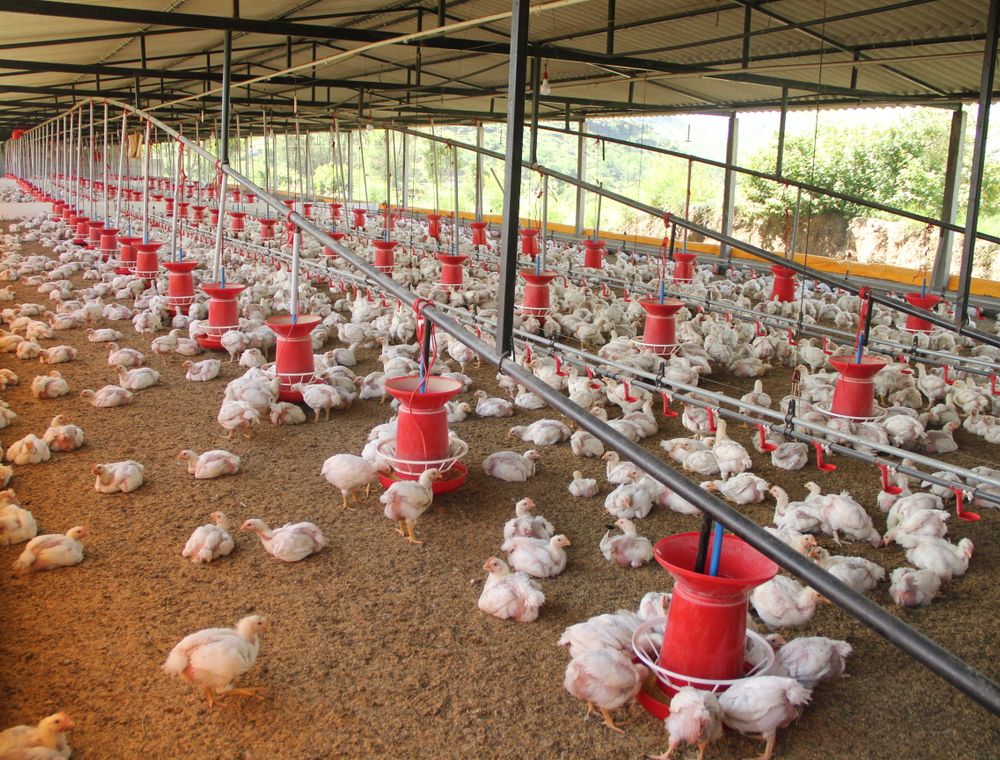
A broiler that sits down in the middle of the house at week five is not tired. She is telling you that her legs hurt, or that she has given up on the walk to the feeder. Healthy birds stand, walk and feed in short, regular bursts. Lame birds drop out of that rhythm long before they stop eating altogether.
The trouble is that a sitting bird looks much like a resting bird from the door. You have to walk closer, watch for a minute and pick the bird up if you need to. The farms that lose the fewest birds to lameness are the ones where somebody does that every morning, not only when the weights drop. Our team at the hatchery sees the same pattern on the farms we visit: the flocks that look fine from the gate often have a few birds sitting in the far corner.
The three families of leg trouble
When we talk to farmers about lame broilers, we sort the causes into three groups before we touch the feed. The groups need different fixes, and mixing them up is how a bad flock gets worse. The table below is the starting point we use on the phone.
| Problem | What you see | Likely cause | First check |
|---|---|---|---|
| Hock burn (footpad dermatitis) | Brown or black scabs on the hock and sole, birds sitting on them | Wet, caked litter and ammonia | Fist test and drinker leaks |
| Bent or twisted legs | Legs turned in or out, birds walking on the hock | Growth outpacing the skeleton, mineral balance | Weight against chart, feed phase and premix |
| Hot, swollen joint | Puffy, warm hock or knee, lameness on one leg | Bacterial infection of the joint | Isolate, then call the vet |
| Slipping on the floor | Splayed legs and a wide stance, especially in young birds | Smooth or wet floors | Cover the floor, check the first week |
Only the first and last rows are cheap to fix on the day. Bent legs and joint infections need time and a vet, which is why the litter and the floor get the attention first.
Hock burns: the litter's bill
A hock burn starts as a rough, reddened patch on the bottom of the hock. Within a week it turns brown and then black, and the bird sits on it because it hurts to stand. Sitting keeps the bird in the wet litter, which makes the patch worse. That loop is why a small problem becomes a flock problem in ten days.
Hock burn is an ammonia and moisture problem. Litter that is wet from a leaking drinker, a roof that drips at the eaves or a house that is closed up on a damp night all feed it. You cannot fix the scabs by changing the feed, and no feed will dry the litter for you. Find the wet patch, remove it and dry the area, and the new lesions stop.
Our litter notes cover the wet-patch routine in more detail. In practice we tell farmers to look at the hocks of ten birds from different corners once a week. Lift the foot, look at the pad and the hock, and score what you see. You will catch the early burns that the walk misses, and the proportion across the house tells you whether the litter is getting worse.
Walking the house with a purpose
A quick walk is not enough. Walk slowly, down one side and back up the middle, and stop at each feeder line. Look for birds that are standing on one leg, birds with the wings held out for balance, birds that take three or four steps and sit, and birds that get pushed off the feeder. Count them out loud or on a slip of paper. A number you can compare from one day to the next is worth ten impressions.
Walk at the same time each day, ideally before the lights come up fully and before the feeders are filled. Crowding makes the count harder, so check the stocking density too if the pen looks packed. A bird that is lame is easier to see when the flock is quiet. Once the whole house is up and feeding, the weak ones disappear into the crowd.
Why fast growers carry more leg trouble
A broiler's muscles grow much faster than the bones and joints that carry them. The breast and thigh can gain weight in a week that the leg bones cannot match. That gap is why the birds that look best at week five are often the ones with the worst legs. Ross 308 and Cobb 500 are very good at putting on weight, and that is the reason their legs need managing with more care, not less.
Growth also goes wrong when the bird is pushed. A flock on a high-energy finisher, a long bright light period and a feeder line that never empties will grow faster than the skeleton. The fix is to keep the gain on the chart. Our weight chart by week is the number we ask farmers to hold each week, and a flock that falls behind it for two weeks running needs a look at the mortality causes as well as the feed, and the Ross 308 guide explains why the curve matters more than the final weight.
Keeping litter dry in the rainy season
In Kasoa the rains come in two bursts, a heavy one from April to July and a lighter spell through the autumn. A house that stayed dry in the harmattan can be a swamp by the end of May. The usual leak is not the roof. It is the drinker line, the nipple that drips when a bird knocks it, or the gutter that splashes onto the floor by the door.
When the rains start, raise the drinker lines a few centimetres and check every nipple by hand. Put fresh shavings at the door and under the drinkers where the litter stays damp. Do not hose down the litter to wash it, because you will set the floor into a crust. Turn the top layer by hand, and pull the caked patches out rather than mixing them through the whole house. The deep litter guide covers the longer routine if you run a deep-litter floor.
Watch the corners that never get sun. Those are the first to fail, and they are the ones the walk tends to skip.
Slippery floors and the first week
Leg trouble starts earlier than most farmers think. Chicks that run on smooth concrete or a slick plastic sheet in the first week splay their legs, because they cannot grip. A splayed chick usually recovers if it is moved to a grip surface quickly, but a bird that spent a week sliding around can carry the weak leg into the grower phase.
Put paper or a fine, dry litter over any smooth area in the brooder, and take the paper away once the chicks are steady on their feet. Check the edge of the brooding ring as well, because the chicks gather there and the floor is often wet. A bird that is steady on day seven is far less likely to be lame at week five.
Feed balance and the bird you did not expect
Feed alone rarely causes a lame flock on its own, but a poor feed can make every other problem worse. We see the trouble most with home-mixed rations that have too little premix, cheap calcium sources added by guesswork, or a phase change made on the wrong day. A bag that is short on the minerals that bone formation needs will show in the legs about two weeks after the feed goes in.
If you mix your own feed, weigh every ingredient and keep the premix in the proportion the supplier gives. The mixing guide is the place to start if you weigh your own feed, and the formulation basics are a useful read on why one ingredient added by feel can throw the whole ration off. If you buy ready feed, keep the bag labels and the batch numbers, and tell your supplier when the legs start to look wrong. They can check the mill sample against the spec. Follow your vet's advice before you add anything extra to the ration.
Need chicks for your next batch?
Send breed, number and town. We reply with price, hatch date and delivery cost in writing.
Infections in the joint
A hot, swollen hock that moves stiffly is a different problem from a scab. The joint is infected, often with bacteria that got in through a wound or a bruise, and the bird is in real pain. A single bird with this picture is worth isolating the same day. Keep her in a clean pen with dry litter, away from the drinkers, and do not let her share the feeder with the flock.
Do not lance the joint yourself or pour anything into it. Your vet can drain it, check whether the infection is spreading and advise on what treatment is appropriate. If three or four birds show the same swelling in a week, that is a flock problem and needs a post-mortem on a fresh bird, not a guess. Follow your vet's advice on every step, including whether a bird should be culled.
What 6 per cent lame birds cost: a worked example
Put numbers on it. Say 1,000 Ross 308 chicks went in at GH₵20 each (the price list has the current figures), and by week five 6 per cent of the flock is walking badly or sitting most of the day. That is 60 birds. Each lame bird eats less, grows more slowly and gets pushed away from the feeder by the others.
Two things happen. Some birds die or are culled early, and each one takes its sale value with it. At GH₵110 a bird, sixty of them would cost GH₵6,600. The second thing is quieter. If the 60 birds each finish 0.5 kg short of the weight you planned, you lose 30 kg of meat. At the GH₵44 per kilogram that our live-bird price works out to, that is another GH₵1,320 you did not sell.
Those are the numbers that make the daily walk worth doing. A two-minute count on a cold morning costs nothing compared with a pen of birds that stops growing in the second half of the crop.
The daily walk checklist
- Walk the house before the feeders are filled and before the flock is fully up.
- Count the birds that are sitting, standing on one leg or walking with the wings out.
- Note the count by pen or by area so you can see where it is concentrated.
- Check the drinker line and every nipple near the door and the corners.
- Do the fist test on three patches of litter and record the result.
- Once a week, lift the feet of ten birds from different areas and score the hocks.
- Weigh a sample of birds and compare them with your chart.
- Write the lame count and any deaths in the record with the date and the house.
When to call the vet, and when to cull
Call your vet the same day if you see hot swollen joints in more than one bird, if the lame count rises two days running, or if birds that were walking yesterday cannot stand today. Those three signs point to infection or a feed problem that will spread without help. Bring the lame birds, the feed bag labels, the batch record from the hatch and the litter notes for the past two weeks.
Culling is the honest answer for a bird that cannot reach feed or water and is not improving after a day or two of rest and clean litter. Follow your vet's advice on how to do it humanely and where to dispose of the carcass. Do not let a bird that cannot reach the drinker keep losing condition in the corner while you hope for the best. That is not kindness. It is a slow death that also spreads disease through the pen.
Restocking? Start with our broiler chicks page, then call +233 24 915 1503 if you want the batch record talked through before you pay.
Questions farmers ask
What is the most common cause of lameness in broilers?
On most farms it is a combination of wet litter and fast growth. The bones and joints are working hard, and wet, ammonia-rich litter burns the hocks and feet the bird rests on. There is rarely one cause, so fix the litter and keep the growth on the chart at the same time, rather than waiting to see which one matters.
How can I tell a hock burn from an infected hock?
A hock burn is a dry brown or black scab on the underside of the hock, and the joint itself is not hot or swollen. An infected hock is puffy, warm and tender, and the bird may limp on one leg or refuse to stand. Burns are a litter fix. Infected joints need your vet, and you should isolate the bird while you wait for the visit.
Will moving the feeders help a lame bird?
Often, yes. A bird with sore legs cannot walk far, so a feeder and drinker that sit within a few steps of where she rests will keep her eating and drinking. Lower the lines as the birds grow, and check that the lame bird can reach both without having to climb or fight through the crowd.
Does lighting affect leg problems?
It can. Long periods of bright light encourage the birds to eat constantly and grow fast, which puts more load on the legs. A managed dark period gives the bird time to rest and lets the skeleton keep up. Talk to your supplier before changing the lighting programme, because a sudden cut in light can cause its own problems.
Should I cull a bird that is walking badly?
Not straight away. A bird that can still reach the feed and water, and is improving with clean dry litter and rest, can stay in the flock. A bird that cannot reach either, or that has not improved after a day or two, should be culled humanely. Follow your vet's advice on the method and on disposal.
Are leg problems a sign that my chicks were poor quality?
Not usually. Leg trouble in broilers mostly develops on the farm, after the second week, because of growth rate, litter, feed and floors. Good chicks help the whole flock, but the walk and the house do most of the work. The batch record we send shows what your chicks were vaccinated against and when they hatched.
Do vaccines protect against lameness?
Not directly. The hatchery vaccines cover Marek's, Newcastle, Gumboro, infectious bronchitis and coccidiosis. Marek's can cause paralysis that looks like leg weakness in older birds, which is why a paralysed bird should be checked by a vet. Bacterial joint infection and bone problems need the house and feed management described here.


