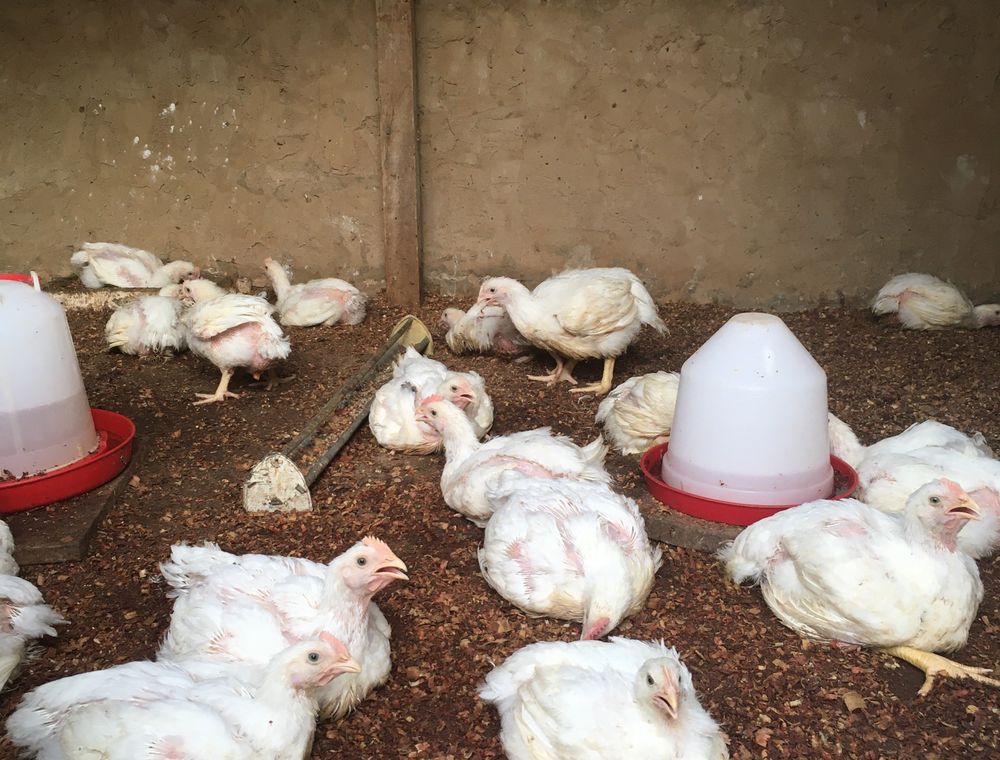
Short answer: Water vaccination works only when every bird drinks its share of the dose inside the window the label allows, so the job is mostly arithmetic and timing. Measure how much your flock really drinks, take normal water away for the period your vet sets, mix the vaccine in clean water at the label temperature, and check the far end of every run until the window closes. Follow your vet's advice on every step, especially the water-off period.
Key takeaways
- Work out the volume from what the flock drinks in the window, measured in your own house, not from the tank size.
- Take normal water away at the agreed time, and write the start and end on the house board.
- Mix in clean, chlorine-free water at the temperature on the label, with only the stabiliser the label names.
- Check the drinkers for count, flow, height and cleanliness before the window opens.
- Empty the leftover at the end of the window and record the volumes and times.
Start with how much they will drink, not how much you have
Water vaccination fails for a dull reason. The farmer mixes a tank of vaccine water, the birds drink the first third in twenty minutes, and the rest sits in the line until someone pours it away at dusk. The birds that drank early got the dose. The late drinkers, usually the ones at the far end of the house, got nothing, and nobody can tell which birds those were.
So the first question is never "how much water do I have?" It is "how much will this flock drink in the window the label allows?" Answer that one honestly and the rest of the job follows from it. If you are new to the method, our general guide to vaccinating chickens explains the other routes and why each one exists.
Why water suits big flocks, and where it hides failure
Drinking water is the practical route when you have hundreds of birds and no realistic way to catch each one. It takes a few hours instead of a week, and it puts no hands on the birds. It also gives you the least control. Intake changes with how old the flock is, how hot the afternoon gets, the pressure in the line, how clean the drinkers are, and how many birds are sick and sitting in a corner.

Plan for that variation instead of hoping it goes away. Count the drinkers, measure the intake, and check the far end of every run. If you do those three things, water vaccination becomes a routine. If you skip them, the flock tells you the truth only when the birds start to fall ill.
Houses that will be vaccinated this way should be set up for it from the first day, so the drinkers are already in the right places when the chicks come in. Our broiler day-old chicks and layer day-old chicks pages are a starting point if you are planning a new house.
Measuring intake in your own house
Don't rely on a figure from a chart. Measure your own flock on a normal day for three days in a row. Fill the drinker tank to a marked level in the morning, then measure what is left after a fixed number of hours, and divide the difference by the number of birds. Do it in the cool part of the day and again in the hot part, because the two figures will differ, sometimes by a lot. If your tank is fed from a storage tank, our guide to water supply and storage on the farm explains how to keep the source steady enough to measure.
Here is an example with made-up numbers, so you can follow the arithmetic. Say you have 240 birds of about three weeks old. At seven in the morning the tank is filled to a 200-litre mark, and at ten you measure 150 litres left. So 50 litres went down over those three hours. Divide 50 litres by 240 birds and you get about 0.2 litres per bird over that stretch.
Now plan the vaccine. Work from the heavy end of what you measured, not the average, so the water runs out only when the birds have finished. A flock that drinks hard in the heat will empty a tank faster than the same flock on a cool morning, and the volume you mix has to cover the hot day.
Taking the normal water away first, and for how long
The birds have to be thirsty enough to drink the vaccine water fully, so the ordinary drinking water comes out of the house for a set period beforehand. Many labels and vets set this as a short window, often a couple of hours, but the product and your vet decide the figure. Do not take a time from a neighbour's farm, and do not take it from this article. Your vaccination schedule should show which vaccines in the programme are given this way, and when.
Choose the time of day with care. In Ghana's heat, birds left without water through a long afternoon start to pant and stress. Early morning or late afternoon, when the house is cooler, is the usual choice, and it lets you watch the birds through the whole window rather than in the worst of the sun.
Write the start and end times on the house board, so the person on the next shift knows the house is in a water-off period and doesn't refill the line out of habit. A tap left running at a shift change has undone more than one careful session.
Stabilisers, skimmed milk and what to leave out of the mix
Some water-route vaccines are formulated to be used with a stabiliser, most often skimmed milk powder, which helps keep the vaccine stable in water and protects it while it sits in the line. Some labels ask for a stabiliser, some forbid one, and some name a particular product. Use exactly what the label lists, in the amount it lists, and nothing else.
Plain milk from the kitchen is not the same as skimmed milk powder, and it goes off quickly in the heat. Don't add sugar, electrolytes, medicines or other products to the vaccine water unless your vet has said that the combination is safe. Every extra ingredient is a variable you cannot measure once it is in the tank.
Clean water for the mix, and the chlorine problem
The water you mix with should be clean and free of chlorine. Chlorine can destroy a live product in the bucket long before a bird drinks it, and a dose that has been chlorinated is a dose you cannot trust. Use rainwater from a clean tank, or water that has been allowed to stand in an open container so the chlorine can escape, if your vet agrees that method suits the product. Our water quality guide covers testing and tank cleaning in depth. The vaccine mix is a separate, short-lived problem, and it needs its own care. Keep the bottle itself cold until you mix it, as our vaccine cold chain guide explains.
Check the temperature of the water as well. Cold water from a deep tank may be too cold for the label, and water sitting in a black drum in the sun may be too warm. Use the temperature the label gives, and check it with a thermometer, not with your hand.
Setting out the drinkers so every bird gets a turn
Count your drinkers before you mix. A drinker that is blocked, leaking or sitting empty at one end of the house is a bird that does not get the dose. Walk the line and make sure the water reaches the far end of each run. If the pressure drops there, raise the tank or cut the number of drinkers on that run, rather than adding more birds to a section that cannot reach its share.

Set the drinkers at a height the birds can reach without stretching. Young birds stand on the litter and need lower drinkers, the same principle that applies to a brooder ring in the first weeks. Older birds need more space around the rim, and a bully will perch on a drinker and keep the others away from it.
| Drinker check | What to look for | What to do about it |
|---|---|---|
| Count | Enough drinkers for the flock at this age | Add drinkers before mixing, never during the window |
| Flow | Water reaches the last drinker on every run | Check the pipe, the tap and the tank height |
| Height | Birds drink without stretching or standing in the pan | Lower or raise the drinkers to suit the age |
| Cleanliness | No slime, dirt or feed in the drinker | Clean before the window opens, not inside it |
| Position | Drinkers spread across the house, not bunched | Move part of the line to the far side of the feeders |
Watching the window close, and what to do with the leftover
Stay in the house for the whole window. You are not there to supervise the birds. You are there to see whether they are drinking, and whether the drinkers are running dry. Walk to the far end of each run about every twenty minutes. A line that runs dry too early tells you the flock is thirstier than you planned, and a line still full at the end tells you the flock drank less than you expected.
When the window closes, empty the leftover vaccine water into a container and throw it away. Do not top up the line with plain water to make it look full. Plain water dilutes the dose for any bird that drinks late. Write down the volume you mixed, the volume left, and the time the last line emptied.
Need chicks for your next batch?
Send breed, number and town. We reply with price, hatch date and delivery cost in writing.
Mistakes we see on water-vaccination day
Most of these are about attention rather than knowledge. A farmer who knows the label still loses the dose by walking out of the house in the middle of the window. If you have a small flock that you can catch and hold, the eye-drop and spray method gives you a dose you can watch going in, so you may not need the water route at all.
- Mixing the vaccine in the main tank and letting the flock drink from it before the window opens
- Using a line with a rusty smell or a disinfectant residue, which spoils the dose
- Withdrawing water for too long on a hot day, so the birds panic and crowd the feeders
- Adding a handful of something "for the birds" to a mix that was already measured
- Stopping the checks after the first hour, when the late drinkers are still in the house
A worked timetable for a 300-bird house
Take a house of 300 birds about four weeks old, in a dry-season week with a hot afternoon. The vet has set a water-off period of two hours, starting at seven in the morning. Your own measurements show an average morning intake of about 0.25 litres per bird over two hours. Multiply it out: 300 birds at 0.25 litres is 75 litres. Add a margin of a fifth, which is 15 litres, and you mix about 90 litres. These numbers are an illustration. Measure your own house before you copy them.
| Time | Action | Check |
|---|---|---|
| 6:30 a.m. | Clean the drinkers, confirm the count and the water temperature | Count drinkers against the plan |
| 6:45 a.m. | Mix the vaccine in clean water at the label temperature, with any stabiliser the label names | Measure the volume and write it down |
| 7:00 a.m. | Remove the normal water lines and fill the vaccine lines | Start the timer |
| 7:20 a.m. | First walk to the far end of each run | Are the lines moving, and are birds drinking? |
| 8:00 a.m. | Second walk, and a look at the tank level | Compare the level with the expected drop |
| 9:00 a.m. | Final walk, then empty the leftover and restore normal water | Write the volume left and the time the last line emptied |
Notice what the timetable does not do. It does not add plain water to fill a gap, and it does not let the window run past its end because the birds look busy. The end of the window is the end.
The record that makes the next session easier
Write down the date, the batch number, the vaccine name, the volume mixed, the volume left, the start and end times, the water temperature, the number of drinkers and any bird you saw struggling. Keep the sheet with the vaccine box, so the next person can see what happened last time. Over a few sessions the record shows how your flock drinks, and whether you should mix more or less next time.
A record also makes the vet's job easier. If birds react after a session, the sheet tells the vet the route, the window, the intake and the water source. Without it, the vet is guessing, and so are you. Unsure about a flock size? Send the numbers to +233 24 915 1503 on WhatsApp, but let your vet set the programme. You can also place chick orders through our order form, and our frequently asked questions cover the basics of getting chicks to the farm.
A checklist for water vaccination day
Print this list, tape it up near the vaccine box, and work through it in order.
- Confirm the vaccine, batch and route against your vet's written programme
- Count the drinkers and walk every run to check the flow
- Measure the intake and work out the volume from the heavy end of your figures
- Clean the drinkers before the window, and check the water temperature
- Mix in clean, chlorine-free water at the temperature on the label
- Withdraw normal water at the agreed time, and mark the house board
- Walk the far end of the runs every twenty minutes until the window closes
- Empty the leftover, restore normal water, and record the volumes and times
Questions farmers ask
Can I vaccinate a large flock through its drinking water?
Yes. Water is the usual choice for large flocks because it reaches many birds at once. It only works when every bird drinks during the window, so plan the drinkers, the intake and the water-off period before you mix. Follow your vet's advice on whether a particular vaccine is suitable for water, because not every product is labelled for this route.
How long should I take the water away before vaccinating?
Follow the label and your vet. A short water-off period, often a couple of hours, is common, but the right figure depends on the product, the age of the birds and the weather. Don't copy a time from another farm. Choose a cool part of the day, and write the start and end times on the house board.
Can I mix the vaccine with chlorinated tap water?
Avoid it unless the label says otherwise. Chlorine can destroy a live product before the birds drink it. Use clean, chlorine-free water at the temperature the label gives. If you are not sure which water to use, ask your vet, and check your water source in the way our water quality guide describes.
Should I add skimmed milk to the vaccine water?
Only if the label or your vet asks for it. Some vaccines are formulated for a stabiliser, and the label names the product and the amount. Plain kitchen milk is not a substitute for skimmed milk powder, and milk left in the line in the heat goes off quickly, which can spoil the whole session.
What if some birds never drink the vaccine water?
Some birds will always drink less, especially sick, weak or bullied birds. Check the far end of the house, separate any bird that looks unwell, and talk to your vet about the ones that were missed. Do not refill the line with plain water in the middle of the window to make up the gap.
Why do I need to empty the leftover vaccine water?
Leftover vaccine water is diluted by any plain water added to it, and it may have spoiled in the heat. Empty it at the end of the window and throw it away. Write down how much was left, because the leftover volume tells you how the flock actually drank.
Is water vaccination the same as eye-drop vaccination?
No. Water gives a dose through drinking, so you have less control over how much each bird gets. Eye-drop gives a dose you can watch going in, one bird at a time. Your vet chooses the route for each vaccine, and the label says which routes are allowed for that product.


